Inspiration and information for filmmakers everywhere
April 21, 2013 by neiloseman

Back to the Future

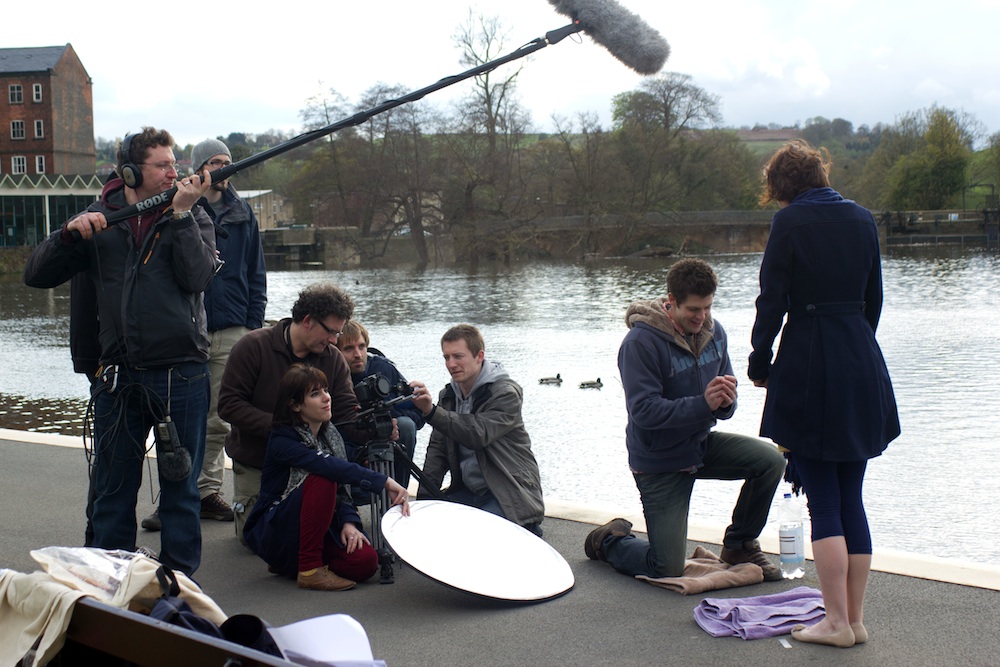
The first day of shooting on Stop/Eject. Photo: Paul Bednall

The first day of shooting on Stop/Eject. Photo: Paul Bednall

Like Janus I’m looking forwards and backwards today, the first anniversary of Stop/Eject‘s shoot beginning. First of all, here are a few key things I’ve learnt from making Stop/Eject:

With the project drawing near to completion, my thoughts are turning towards my next films. As regular readers will know, writer Tommy Draper has been working on a feature-length version of Stop/Eject for some time.

However, I feel that trying to get a feature financed with me as director right now wouldn’t be much easier than it was a couple of years ago when I was trying to get The Dark Side of the Earth made. So I intend to make another short film first. It’s too early to reveal any details, but I can tell you that after advertising on Shooting People I’ve teamed up with a writer called Kevin O’Connor who is currently working on a third draft script based on a one-line idea of mine.

I’ll also be entering Virgin Media Shorts again this year, and my wife Katie is hard at work on a puppet for that. Intrigued? You ought to be.

Stay tuned for the latest news on all of these projects, and I’ll leave you with a reminder of what we were up to this time last year.

  •   •   •   •   •
October 29, 2012 by neiloseman

Stop/Eject: Shoot Day 4

Better late than never – it’s the £1,000 public reward in our crowd-funding campaign: a behind-the-scenes look at the fourth day of shooting. As usual, big thanks to Sophie for editing this.

We’re just £22 away from the £1,100 Mystery Reward. Stay tuned to find out what that will be.

  •   •   •   •   •
October 7, 2012 by neiloseman

Stop/Eject: Shoot Day 3

Here’s the £800 public reward for Stop/Eject: a fly-on-the-wall’s view of the third day of the shoot. Thanks to Sophie for editing this.

We still haven’t caught up with the total, which stands at £906, so look out for the FX breakdown on this blog next weekend.

  •   •   •   •   •
August 16, 2012 by neiloseman

Inside the Director’s Folder

A camera operator needs batteries, lenses, cards, filters. A wardrobe supervisor has racks of costumes. A sound recordist carries a dead cat on a stick. But a director needs only his folder. Like Her Majesty’s handbag, the contents of this hallowed portfolio have forever been a mystery. Until now.

Here’s what I kept in my Stop/Eject folder while shooting the film:

To-do list

To-do list

The first thing I see on opening the folder is a to-do list. These are all things that need doing the day before the shoot begins, including things that I need to pack in the van for the journey up to Derbyshire.

Budget

Budget

A copy of the production budget comes next, with highlighted figures like catering and travel being the ones that are still available to spend.

Schedule

Schedule

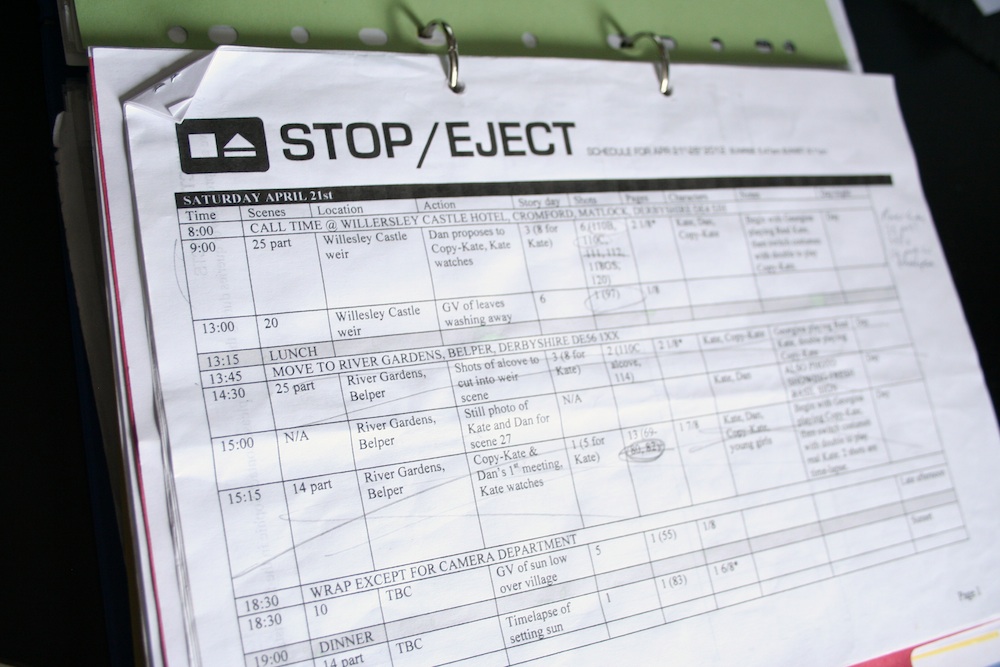
Next up is the schedule, one of several documents I can satisfyingly cross parts off as the shoot progresses. You can download the schedule here.

Contacts

Contacts

A list of contact details for the cast, crew, locations and people we’re borrowing props and equipment from.

Script

Script

Then we come to the script. The fact that it’s this far back in the folder tells you how many other things a director who is also co-producing and has no AD has on his mind. Ideally the script and the storyboards would be the only things in my folder. You can see that I’ve drawn tram lines. Normally a script supervisor does this during shooting to indicate which part of the scene a shot covers, but I’ve drawn them in advance to remind me which part of the scene I want each shot to cover.

Storyboards

Storyboards

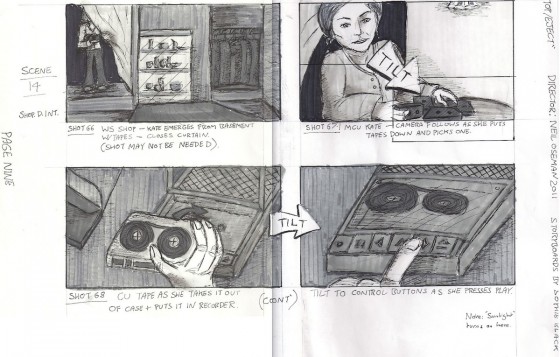
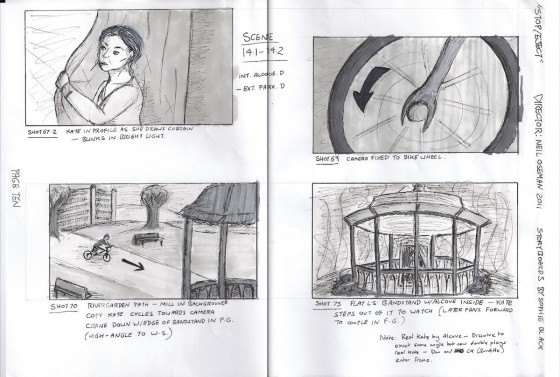
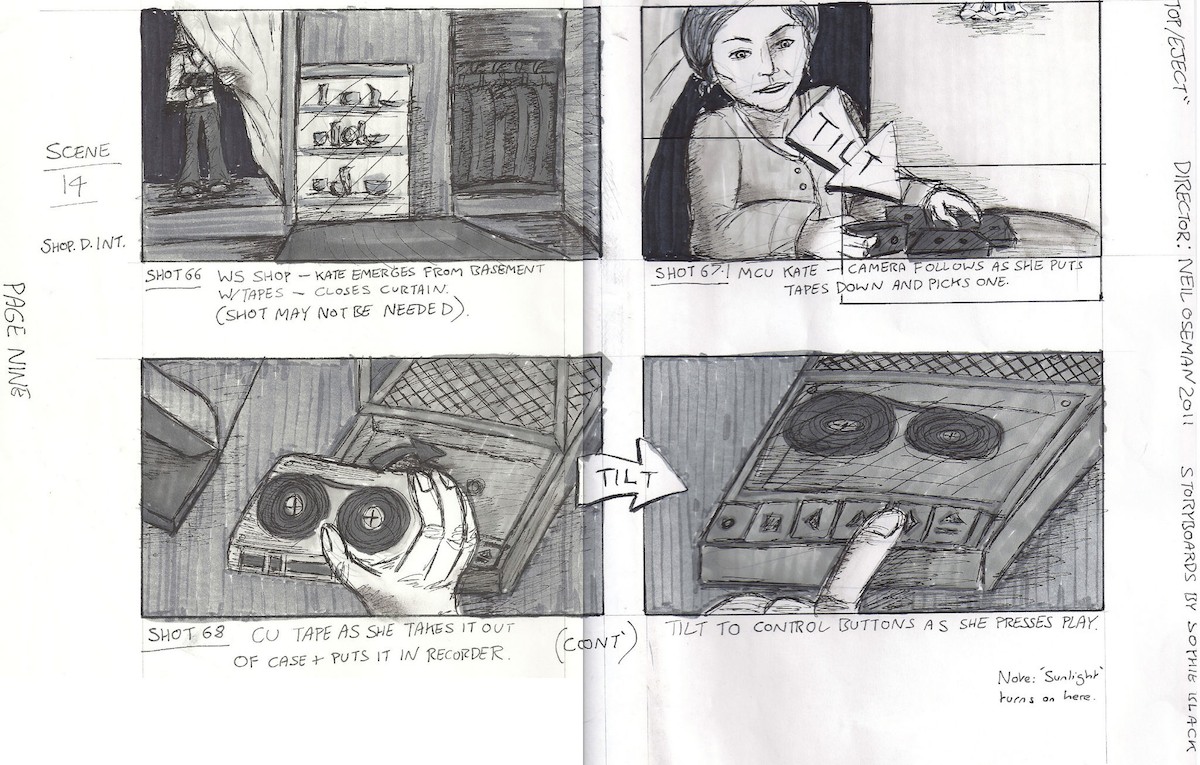
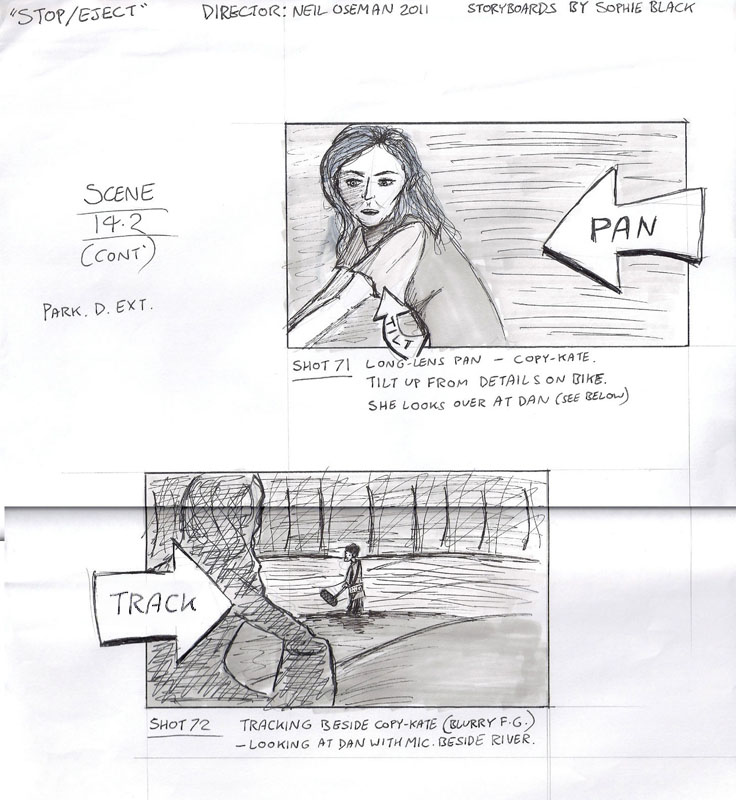
The largest section of my folder is the storyboards. The ones with the pink highlights are shots I felt would make good production photos, the idea being that we would switch the camera to stills mode after the take and snap a few – but we usually forgot.

Lighting plans

Lighting plans

Next are the lighting plans for each location. I covered these in detail in my lighting breakdown posts.

Artwork

Artwork

Sophie’s concept art is next. Not much use by the time you’re in production, since it’s all been built and dressed already, but nice to look at.

Expenses forms

Expenses forms

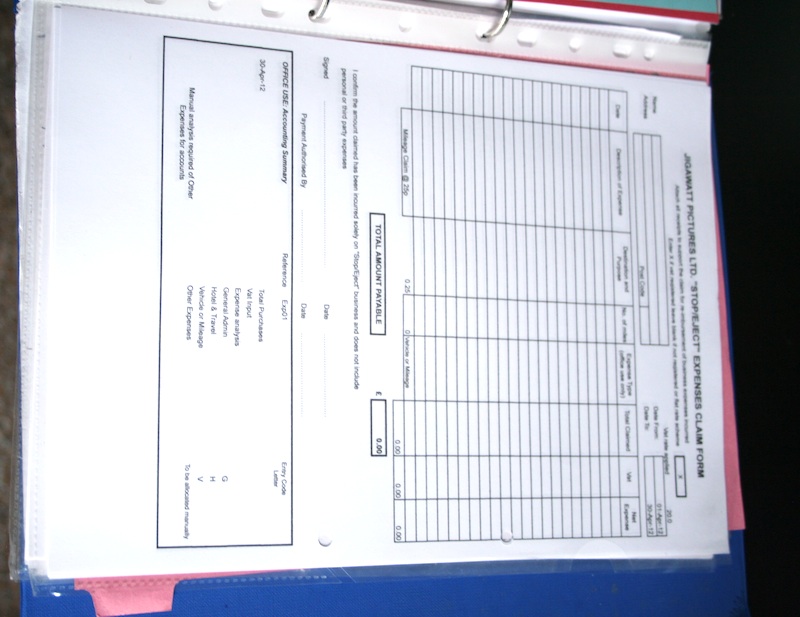
Then comes a wallet of expenses forms for the cast and crew to fill in. This is based on a template from Terry Cartwright’s DIY Accounting package.

Insurance policy

Insurance policy

Finally, I carry a copy of the public and employer’s liability insurance documents in case any location owners ask to see it.

  •   •   •   •   •
July 25, 2012 by neiloseman

Living in Magpie

This image of the stairs gives you a flavour of Magpie's building-site-ness. Photo: Colin Smith

This image of the stairs gives you a flavour of Magpie's building-site-ness. Photo: Colin Smith

Stop/Eject‘s post-production crowd-funding campaign has been stuck at £440 for a little while now. As gentle encouragement to anyone out there who hasn’t contributed yet, or intended to but has forgotten or just not got around to it yet, here’s a taste of what we went through to make this film. What follows is a record of what it was like to stay and work in Magpie, Stop/Eject’s main location. Lest we forget.

First off, let me say thank you once again to Matt Hibbs, who was extremely kind in letting us use his premises not only as a location but as crew accommodation too. I don’t think I’ve ever met such a helpful and laid-back location owner, and without his positive attitude the shoot would have been much more challenging. So nothing that follows should be construed as a complaint. We knew what we were getting into, and we certainly got far more from Matt & co. than we had any right to expect.

Magpie once occupied just the ground floor of a four storey Victorian building. At the time of our shoot (late April), Matt had just purchased the upper floors, formerly a B&B, and was in the process of expanding his shop into them. So while the ground floor remained a working shop (and our key location), the rest of the place was a building site. Most of the refurbishment was taking place on the first floor, with the second and third storeys being used, prior to our arrival, for storage of tools and stock.

Katie loads the van at the back of Magpie. Photo: Colin Smith

Katie loads the van at the back of Magpie. Photo: Colin Smith

The first thing I noticed when we arrived there the day before the shoot was that it was a lot dustier than I remembered from the recce. Everything was coated in brick dust, which made noses itch, throats dry and eyes water throughout the shoot. Sleeping in the building probably wasn’t very wise from a health point of view, even after Katie had hoovered.

Besides Katie and I, Col, Rick and Johnny were staying there too – four nights for most of us. We set up airbeds and sleeping bags in some of the second floor rooms. The first couple of nights there was loud music pumping out of the bar next door. And it was cold. The only radiator we ever found working was on the ground floor, at the back of the shop. Everywhere else was damn chilly by 3am.

Not to mention dark. Many of the light fittings had no bulbs in, and torchlight was usually required to find your way around at night.

Ablutions were another issue. Matt and his builders had kindly reconnected the plumbing in the second floor bathroom, so in theory we could shower, although stepping out of it into the freezing bathroom was not fun. But after the first night the hot water was found to be leaking into the shop, so Matt had to disconnect it. So it was cold showers, strip-washes or trips to Sophie’s place after that.

Deborah Bennett makes up Libby Wattis in our kitchen-cum-HMUW-cum-Colin's-bedroom. Photo: Katie Lake

Deborah Bennett makes up Libby Wattis in our kitchen-cum-HMUW-cum-Colin's-bedroom. Photo: Katie Lake

We brought a fridge with us, lent by Nic Millington, and a microwave and toaster, and Col’s hot plate, so we were able to make rudimentary meals. There was no potable water in the building, so we had to use bottled stuff from Sainsbury’s.

We were all very glad when Tuesday arrived and we could shift camp to Sophie’s house. Apart from Johnny, who claimed he got a better night’s sleep at Magpie. There’s no pleasing some people.

I encourage you to see our sadomasochistic sojourn at Magpie as a sponsored suffering. For example, you could sponsor us £5 a night for living in the conditions I’ve just described – that’s £20 total – and you’d get a digital download and an invite to the premiere. Sound like a good deal? Head on over to stopejectmovie.com and make your donation so we can complete Stop/Eject and make living in Magpie worthwhile.

Magpie's upper floors (formerly a B&B) extended above the neighbouring bar, Twenty Ten. Photo: Colin Smith

Magpie's upper floors (formerly a B&B) extended above the neighbouring bar, Twenty Ten. Photo: Colin Smith

  •   •   •   •   •
July 5, 2012 by neiloseman

Moulding Natural Light

Today I’m going to take a brief look at what you can do to shape natural light when you’re filming outside and you don’t have the budget for big HMIs or massive silks hanging from cranes.

Firstly, choose the right direction to shoot in. Work out where the sun is going to be at the time you need to film the scene and decide whether you want to shoot into the light, with your back to it or at an angle. There are iPhone apps that will tell you where the sun’s going to be if you’re too lazy to figure it out for yourself. Remember the sun moves left to right across the sky in the northern hemisphere.

Amateur photographers are often told not to shoot towards the sun. This is simply because amateurs will be using auto-exposure, which will close the iris right up as soon as the sun flares into the lens and leave you with a silhouette. As a professional, you’ll be setting your camera manually, so you can expose for the shadows and let the backlight from the sun blow out beautifully.

Here’s a shot from Stop/Eject where we made the most of this effect, and really lucked out with the reflections in the water:

All the evidence you need that shooting towards the sun is good.

All the evidence you need that shooting towards the sun is good.

Using a reflector on the banks of the Derwent. Photo: Paul Bednall

Using a reflector on the banks of the Derwent. Photo: Paul Bednall

Out the bottom of frame is a reflector, bouncing some of the sunlight back at the actors – and it’s being wiggled by a crew member to suggest it’s a watery reflection.

Collapsible reflector

Collapsible reflector

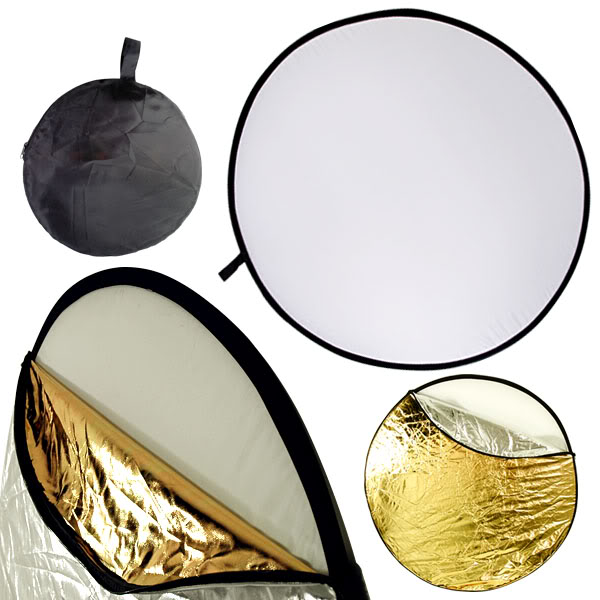
If you don’t have a reflector you should drop what you’re doing and order one now off Amazon. They’re less than £10 and have a reversible zip-off cover giving the options of white, silver or gold surfaces to reflect off, or black to block light. If you remove the cover entirely you’re left with a translucent white disc which can be used to diffuse light, as we’ll see shortly.

If you choose to shoot with your back to the sun, you won’t be able to affect the light in your wide shots without big-budget gear, but you can transform your close-ups.

Let’s look at another example from Stop/Eject, before we did anything to the light:

Before

Before

Georgina Sherrington (“Kate”) is facing directly towards the sun, which is behind and above camera. As you can see, the light is incredibly harsh and the shadows are so dark that you can’t see her eyes; an effect that would only have got worse had I stopped down to prevent the highlights blowing out.

Two reflectors were required to sort this out. The first, with cover removed, was held over her head so that the sunlight hitting her face would have to pass through the translucent material and be diffused. (The diffusion is actually less significant than the amount of light the material blocks.) A second reflector was held out of the bottom of frame, bouncing sunlight back into the shadows on her face and putting a sparkle in her eyes.

After

After

A much nicer image.

If it’s a cloudy day – and let’s face it, this is the overwhelming likelihood here in the UK – the above techniques will still work, but much more subtly. If you have access to a power supply, try to set up a lamp to get some eye-sparkle and fill in your actors’ faces.

In 2008 I DPed a short set entirely in a forest: Into the Woods, directed by Matt Taabu. I knew that getting light into people’s eye sockets was going to be a major challenge, so I insisted on hiring a battery-powered 200W daylight par. We put a layer of tough-spun diffuser on this and the gaffer hand-held it for most shots, aiming it into the talent’s face. You can see the eye-sparkle it produced in this production still:

Branko Tomovic in Into the Woods (2008, dir. Matt Taabu). Photo: Alex Bender

Branko Tomovic in Into the Woods (2008, dir. Matt Taabu). Photo: Alex Bender

So if you’re DPing a daylight exterior, don’t think that means you can rest on your laurels. It’s still up to you to create the right mood and make the talent look their best.

  •   •   •   •   •
June 23, 2012 by neiloseman

The Value of a Full Crew

A rare moment to consult the script. Photo: Sophie Black

A rare moment to consult the script. Photo: Sophie Black

Col constantly ribs me about the lack of a first assistant director on Stop/Eject, and the consequent lack of adherence to the schedule. But as I edit the film, I’m appreciating more and more the other duties of a first AD and the consequences of those duties going undischarged.

Because part of the first’s job is to literally assist the director – to help them keep track of things which can easily get forgotten amidst the chaos of filming. Things like crossing the line, getting enough coverage and not missing out bits of the script. (Two other crew members that a big budget production will have who will also be looking out for those things are the script supervisor and the editor – because the editor will be cutting the material the day after you shoot it, and may be able to tell you before you leave a location that you need an extra shot.)

So here are some examples of the moronic cock-ups I made, which might well have been avoided if I’d had a first and/or a script supervisor looking out for me:

  • Tommy Draper wrote a great stage direction in one scene: “She opens the fridge. It’s as empty as her life.” Unfortunately I chose to shoot it in a way that made it impossible to tell the fridge was empty, because I didn’t pay close enough attention to the script during filming.
  • In another scene, I wrote that the cellophane is torn off an object before it is used. I included that detail in the script because, as a writer, I knew that otherwise the audience would not necessarily understand the important point that the object was brand new and unused. Somehow this got dropped from the scene during rehearsals, and it wasn’t until I saw the film edited together that I realised how crucial the cellophane was.
  • In scene seven, the most complex of the film, we decided during rehearsals to alter the timing of an incident. One side effect of this – which again I didn’t notice until I saw the edit – was that the shots I had storyboarded (and thus the shots that I filmed) no longer established satisfactorily the whereabouts of one of the characters at a critical moment.
  • In scene 24 I crossed the line. You can see this at the very end of the trailer.
The Dark Side of the Earth's 1st AD Andrew McEwan (right) on set

The Dark Side of the Earth's first AD Andrew McEwan (right) on set. Photo: Richard Unger

The omission of things in the script are particularly annoying (a) because I co-wrote the bloody thing and should have noticed, and (b) because any good writer takes care to be economical with words and only put in things which are important.

Some of these things can be fixed with pick-ups. For example, I filmed a close-up of my wife’s hands unwrapping the cellophane in our flat recently. But others have no solution beyond a major reshoot, which would be very hard to justify. So what you end up with is a subtle erosion of the quality of the film, and this is one of the reasons that a more expensive film looks more expensive. A bigger crew does mean more attention to detail and thus higher production values in every respect.

I share these thoughts with you not because I’m any less proud of Stop/Eject or feel like I need to make excuses for it, but simply to pass on a lesson the project has taught me. It’s very easy to think of a first assistant director as merely a time-keeper, but if you work without one you should appreciate that there are other strings to their bow, and your project may suffer more lasting effects than just a tired cast and crew.

  •   •   •   •   •
June 19, 2012 by neiloseman

Microwave Shot

Blue Peter microwave

Blue Peter microwave

Shot 104 on my Stop/Eject storyboards has been loitering for a long time. Originally slated for the last day of principal photography, it got dropped and has been bothering the back of my mind ever since. It’s a bird’s eye view of a ready meal turning slowly in a microwave… if the hypothetical bird flew into the microwave before Kate shut it, and survived long enough to look down on anything. (The shot is part of the circles theme that runs throughout the film, which I blogged about earlier in the year.)

Back in the autumn we bought an old microwave, my intention being to rip the top off for the shot. Even though I was clearly not planning to turn the thing on after dismembering it so, safety concerns were voiced and thoughts turned to mocking up a microwave interior.

I finally filmed the shot this morning, and I don’t think anyone – including me – expected it to be achieved in the incredibly low-tech fashion it was. I folded up a piece of old foam board and punched a hole in the middle of it, and gaffer-taped an allen key to the bottom of the circular plate so I could rotate it through the hole from underneath. See the captions for more details:

So that’s another shot ticked off the list.

Final shot

The final shot

If you’re in Hereford, come along to the test screening tomorrow (Wednesday June 20th) at 3pm. It’s in the downstairs lecture theatre at Hereford College of Art’s Media Centre on Bath Street. Non-students are welcome; just sign is as visiting Christabel Gingell. I need all the feedback I can get to finesse the edit.

  •   •   •   •   •
June 17, 2012 by neiloseman

Things That Slowed Us Down

Several weeks ago I evaluated Stop/Eject’s shooting schedule. As noted in that post, we got behind schedule more than once during production. Today I want to look at the reasons why, so I can remind myself next time I draw up a schedule, and so that you lovely readers can perhaps pre-empt similar problems on your own projects.

  • Self shooter

    Self shooter. Photo: Paul Bednall

    Lack of a First Assistant Director. The key role of this crew member is to keep things running to schedule, and we didn’t have one. Two people were lined up and then dropped out due to paying work, and no other applicants were forthcoming. Difficult to see what could have been done to avoid this, other than raising more money to pay everyone.

  • Lack of a separate Director of Photography and Camera Operator. I chose to act as my own DP on Stop/Eject and, when operator Rick Goldsmith was only able to do half of the shoot, chose not to find a replacement for the remainder and fill that role myself as well. This is something I’ve done on many of my previous productions, so I knew full well that it wasn’t a good idea; it slows things down and it reduces the time I can spend working with the actors. But I did it anyway because I figured any DP worth their salt would balk at the pathetic equipment we had available.
  • Steve Giller

    Steve Giller assembles the alcove. Photo: Paul Bednall

    Lack of other skilled crew. There were only two people on the crew who were really handy with power tools, Col and Steve Giller, and Steve was only around for a couple of days. So when we arrived at a new location and had to assemble the alcove set and rig lights from the ceiling, there were only one or two people doing these two most time-consuming tasks. Solution: ask around in pre-production for DIYers who fancy helping out on a film.

  • Large number of costume changes. With eleven story days and a lead actress playing two different versions of her character, there was a lot of costume swapping, each one accompanied by a hair and make-up change too. I’d advise you to always try to minimise the number of story days in your script, and to carefully schedule your shoot to reduce the number of switches.
  • Hair and make-up changes take time.

    Hair and make-up changes take time. Photo: Katie Lake

    Large number of locations. Even though we found several locations in one building, there was still a lot of moving around, which wastes huge amounts of time. Ideally you should shoot in only one location each day.

  • Fatigue. As mentioned in my earlier post, scheduling long days and/or wrapping late gets you into a destructive cycle because your cast and crew work slower the next day due to lack of sleep.
  • Composition issues. This is an odd one which nobody foresaw. We shot in the Cinemascope aspect ratio, 2:35:1, which is a very wide frame, but we had many scenes set in the alcove, which was a tall, narrow set. Think about how wide a 2.35:1 shot has to be to see the head of a standing actress and a tape recorder on a two foot high table at the same time, and how much will be revealed at the sides of frame. Combine this with the fact that some alcove scenes were shot in a corridor at the back of the shop location that was only half the width the alcove was meant to be, so one wall always had to be out of frame. And then factor in that you can’t compress the vertical space by going for a high angle shot because then you won’t see the face of the actress as she looks down at the recorder, and you can’t compress it with a low angle shot because you’ll reveal the lights hanging from the ceiling. Yes, it was a nightmare shooting in that little alcove. There was a lot of time wasted in scratching my head over how to cover the scenes effectively while framing out the wall and the lights. This might seem like a very esoteric problem, but I can derive three points of good general advice from it:
    1. Alcove headaches

      Alcove headaches. Photo: Paul Bednall

      Think carefully when choosing the aspect ratio for your film. Consider the shape and size of your key locations and props. When making The Dark Side of the Earth‘s pilot, DP Oliver Downey pointed out that the tall, spindly Swordsman puppet and the tall training room set were not well suited to the 2.35:1 anamorphic ratio we were shooting.

    2. Think twice before rigging lights to the ceiling. This is very much a double-edged sword. Although it takes a long time to hang lamps from the ceiling, once they’re up there you will find it relatively quick to light each of your set-ups. But if you then realise that the ceiling’s going to be in shot, taking those lamps down or altering your composition to frame them out could be a big time-waster.
    3. Small locations will slow you down. Working in a confined space with lots of lamps, grip and mics is slow, hot and unpleasant. Avoid it wherever possible. More space means lights can be quickly set up on stands further away, rather than having to be rigged time-consumingly to walls or furniture.

So those are the main things that slowed down Stop/Eject, and of course there are many, many other things that can hold you up when shooting. And although many of these are impossible to foresee or prevent, a little thinking time in pre-production can identify a lot of these issues and help you plan accordingly.

  •   •   •   •   •
June 10, 2012 by neiloseman

Stop/Eject Lighting Breakdown #4: Basement

As regular readers will know, I spent some time in pre-production planning the lighting of Stop/Eject‘s basement scenes – filmed at Strutt’s North Mill in Belper – even going so far as to mock up some previz images in Photoshop. Click here to read the post and see those images.

Basement lighting plan

Basement lighting plan

However, the best-laid plans of mice and men gang aft agley, and they ganged a bit agley in this case.

My lighting plan followed the concept I outlined in that pre-production blog post, which was to put lamps in between all the pillars on one side of the basement, representing daylight from unseen windows. Col and the runners duly set these up on the day, gelling them successively bluer along the length of the room, to enhance the feeling of depth.

However, none of the staff at the location were able to disable the fire alarm, which sadly meant we couldn’t use the smoke machine. So no cinematic shafts of light, and a blow to my second method of showcasing the fantastic depth of the location. (Possibly if we had warned them in advance about the smoke they could have found out how to disable the alarm. Oh well, lesson learnt.)

The third way I wanted to create depth was by turning off alternating fluorescent tubes on the ceiling, so that every other pillar would be in darkness. In the final analysis it seemed pointless to do this, as many of the tubes were on the blink anyway and so there were already plenty of shadows. One of the tubes kept flickering, which was a nice little touch.

I went with a tungsten white balance, which gave the greenest look to the fluorescent tubes. (On a side note, I find my 20mm Sigma registers this green spike much more than my other lenses.) Since the “daylight” was blue, I had created a colour scheme that had no contrast at all, being all cool. This despite all my previz and planning. Yes, I am an idiot.

Looking at the rushes again now, I see that despite using the Sigma lens, the fluorescent light has come out quite yellow, so there is a bit of colour contrast after all. Dumb luck: 1, Neil’s skill: 0.

basement wide

The existing overhead fluorescent tubes do most of the work in this wide shot, with some patches of "daylight" from our blue-gelled Arrilites and work-lights in the background.

It will be fine when it’s graded, but it could have been so much better if only we could have used smoke.

Next up was a tracking-two shot over the shelves. I chose to shoot this from the opposite side of the basement to the “daylight” lamps, so that they would backlight the talent rather than giving us flat, boring front-light. We cheated the positions of two of these lamps massively so that they would both hit Kate (Georgina Sherrington) and Alice (Therese Collins) without being in shot.

Some front-light was required, because the overhead tubes weren’t lighting the ladies sufficiently or giving a very flattering look. So we rigged a fluorescent studio light over the camera. This isn’t generally a good place to put a lamp, but when you’ve got some good backlight going on you can get away with some flatness elsewhere. Ironically, this fluroescent lamp – which had a daylight-balanced bulb – needed fluorescent gel on it to get the green look I wanted, to suggest the light was coming from the overhead tubes.

Backlights hit Kate (Georgina Sherrington) and Alice (Therese Collins) from either side.

Backlights hit Kate (Georgina Sherrington) and Alice (Therese Collins) from either side.

The basement was one of the few scenes in Stop/Eject in which moody close-ups with dark, unfilled shadows were justified.

One of the blue-gelled 800W Arrilites which had served as backlight in the two-shot now acted as Alice’s key. The edge-light on her hair comes from one of the overhead tubes.

basement Alice

Alice (Therese Collins)

Another of those backlights became a key for Kate’s close-up. The yellowish fill is from the overhead tubes, while backlight is from another blue-gelled Arrilite positioned in a way that bore no resemblance to any previous lighting. (When you’re pushed for time as a DP, you often have to chose between making it look good or maintaining lighting continuity.)

basement Kate

Kate (Georgina Sherrington)

Incidentally, the trio of shots we’ve just covered – the two-shot and the corresponding singles – conform roughly to a lighting template I call “cross-backlighting”. This model consists of two backlights in the two-shot, one out of each side of frame, one of which immediately becomes a key for each close-up. There’s more info on cross-backlighting in The Ten Minute Lighting Masterclass, one of the bonus features you get when you rent the deluxe package of Going to Hell: The Making of Soul Searcher.

That brings the Stop/Eject lighting breakdown to a close. I hope you’ve found it useful. I’m more than happy to answer any lighting questions here in the comments or on the Stop/Eject Facebook page.

The next public reward is Sophie’s great little podcast about the first day of the shoot, which will go online when we reach £400, so be sure to visit stopejectmovie.com and help us get there. Thanks everyone!

  •   •   •   •   •