One thing I often find myself struggling with as a filmmaker is clarity of motivation and storyline. It’s amazing how easily an audience can misinterpret something – or perhaps I should say how easily they can interpret it differently from the director, writer, etc. Here are some examples:
- Stop/Eject‘s protagonist Kate is a costume designer, though this is never stated explicitly, and the scene that might have hinted most at it was deleted early on in the editing process. In the opening scene she enters a charity shop and gets a scrapbook of costume designs out of her bag to refer to whilst browsing the clothing rack. But after trimming the scene to improve the pace, the sequence of events in the locked edit became: Kate enters the charity shop with her husband Dan; she approaches a clothing rack and opens her bag; we then cut to Dan asking the shopkeeper how much a record is, drawing her away from Kate’s location. In short, it looked like Kate was opening her bag to do some shoplifting and Dan was abetting her by distracting the shopkeeper. I was blind to this because I knew Kate’s real intention, but my wife picked it up as soon as she saw it. Despite having locked the edit, on spotting this issue we hastily cut out the shot of Kate opening her bag.
- In the same scene in Stop/Eject, Alice the shopkeeper was filmed looking at her watch. The intention was to show that she knew the cassette in the magic tape recorder needed turning over very soon, and was weighing up whether she had time to answer Dan’s query first. But test audiences thought that, given Alice’s mysterious connection to the time-travelling tape recorder, she was looking at her watch because she knew that any minute now an accident was going to happen, which indeed it does at the end of the scene. The solution was to simply cut Alice’s watch check.
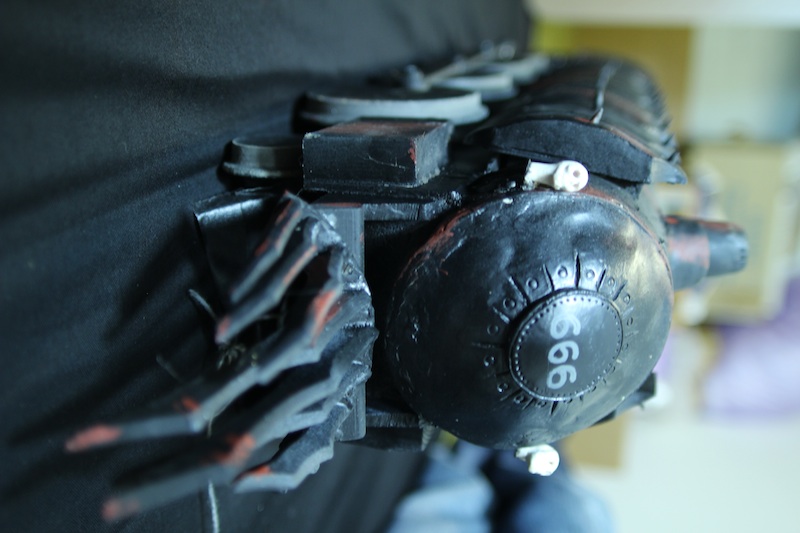
- My 2012 Virgin Media Shorts entry, Ghost-trainspotting, is about a deceased nerd who spots trains of an equally ghostly nature. His ghostly nature, however, is not revealed until late in the film. This revelation comes in the form of (a) him ascending into the clouds in a shaft of heavenly light, his final mission on earth being complete, and (b) a closing shot of his photo in a shrine. But we had to cut the shrine shot due to the competition’s strict length limit, and some viewers thought the shaft of heavenly light looked more like he was being beamed up by aliens. Result? A complete misunderstanding of the story. Sadly, with the competition deadline upon me, I was unable to correct this issue in time.
Audiences aren’t stupid; you just have to remember that they haven’t read the script, been on the set and worked on the edit for months. They’re coming to it completely fresh, and if the right clues aren’t in the film, they have little chance of interpreting it as you intended.
This is why test screenings are so important. Happily most of these types of issues can be resolved fairly easily by cutting something out or adding a line of ADR, but unless you show your edit to fresh eyes you probably won’t even know they are issues in the first place.
 Download Ghost-trainspotting script (.pdf, 61kb)