A master is a wide shot that covers all the action in a scene. The theory is that, should you run out of time or your lead actor suddenly gets injured or some other calamity prevents you shooting any coverage, at least you’ve captured the whole scene in a useable, if not ideal, form.
I have always been a fan of shooting masters. I remember once reading about a Hollywood film with a lot of puppets – it might have been Walter Murch’s 1985 Return to Oz – which fell seriously behind schedule. A producer or consultant was dispatched to the set to get things back on track, and concluded that part of the problem was a lack of masters. The director had been avoiding them because it was impossible to hide the puppeteers and rigging in wide shots, and instead was shooting scenes in smaller, tighter pieces. As a consequence, the cast and crew never saw the whole scene played out and struggled to understand how each piece fitted in, causing mistakes and necessitating time-consuming explanations.
For me, that’s the key benefit of masters: getting everyone on the same page so that the coverage goes faster.
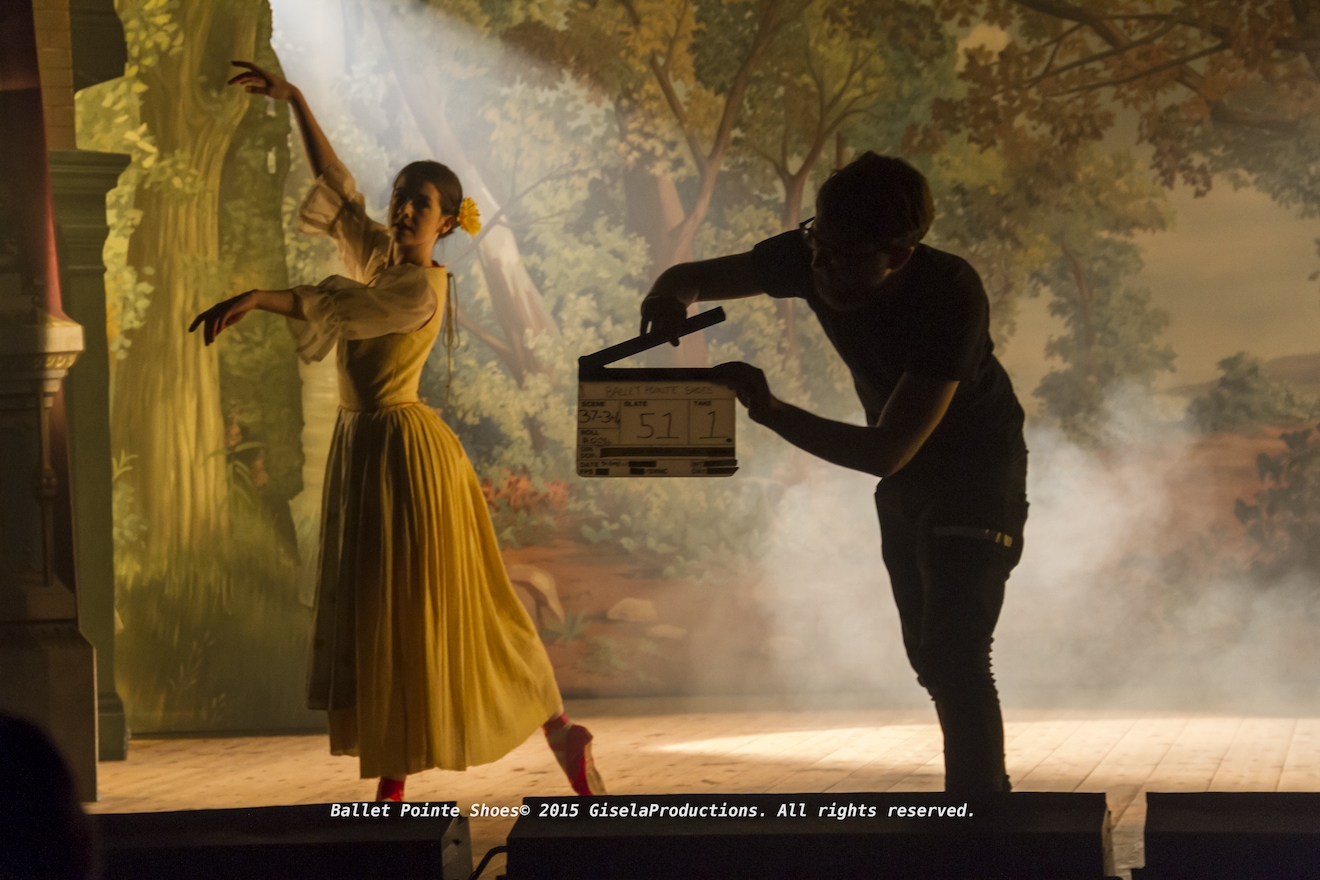
A master shot of mine from “Forever Alone”, a student film I helped out on several years back
You can dig yourself into holes if you don’t start with a wide. A small part of the set gets dressed and lit, a small part of the scene gets rehearsed, and then when you come to do the next part you realise it’s not going to fit together. A key prop that should have been in the background was forgotten because it wasn’t relevant to the first small piece; now you can’t put it in because you’ll break continuity. A light source that looked beautiful in that mid-shot is impossible to replicate in a later wide without seeing lamps or rigging. However much you might plan these things, inevitably in the heat of filming you get tunnel vision about the shot in front of you and everything else fades away. And it’s easy for a director, who has the whole film running on a cinema screen in their head, to forget that everyone else can’t see it as clearly.
Not starting with a wide also robs a DP of that vital, low-pressure time to light the whole set, getting all the sources in place that will be needed for the scene, so that re-lights for coverage can be quick and smooth. It also ties the editor’s hands somewhat if they haven’t got a wide shot to fall back on to get around problems.
So there are many benefits to masters. But lately I’ve been wondering if it’s dogmatic to say that they’re essential. I’ve worked with a few directors who have shot scenes in small, controlled pieces with great confidence and success.
Not shooting a master on “Harvey Greenfield is Running Late”. Photo: Mikey Kowalczyk
Last year I worked on a comedy that has a scene set at a school play, the main action taking place in the audience. Jonnie Howard, the director, was not interested in shooting a master of the hall showing the audience, the stage and the whole chunk of play that is performed during the action. All he wanted of the play was to capture certain, specific beats in mid-shots. He didn’t even know what was happening on stage the rest of the time. He knew exactly when he was going to cut to those shots, and more importantly that it would be funnier to only ever see those random moments. He also recognised that it was easier on the child actors to be given instructions for short takes, shot by shot, rather than having to learn a protacted performance.
Not shooting masters saved us valuable time on that film. It’s not the right approach for every project; it depends on the director, how well they’re able to visualise the edit, and how much flexibility they want the editor to have. It depends on the actors too; some are more able to break things down into small pieces without getting lost, while others always like to have the run-up of “going from the top”.
There is a halfway house, which is to rehearse the whole scene, but not to shoot it. This requires clear communication with the 1st AD, however, or you’ll find that certain actors who aren’t in the first shot are still tied up in make-up when you want to rehearse. Like any way of working, it’s always best to be clear about it with your key collaborators up front, so that the pros can be maximised, the cons can be minimised, and everyone does their best work most efficiently.
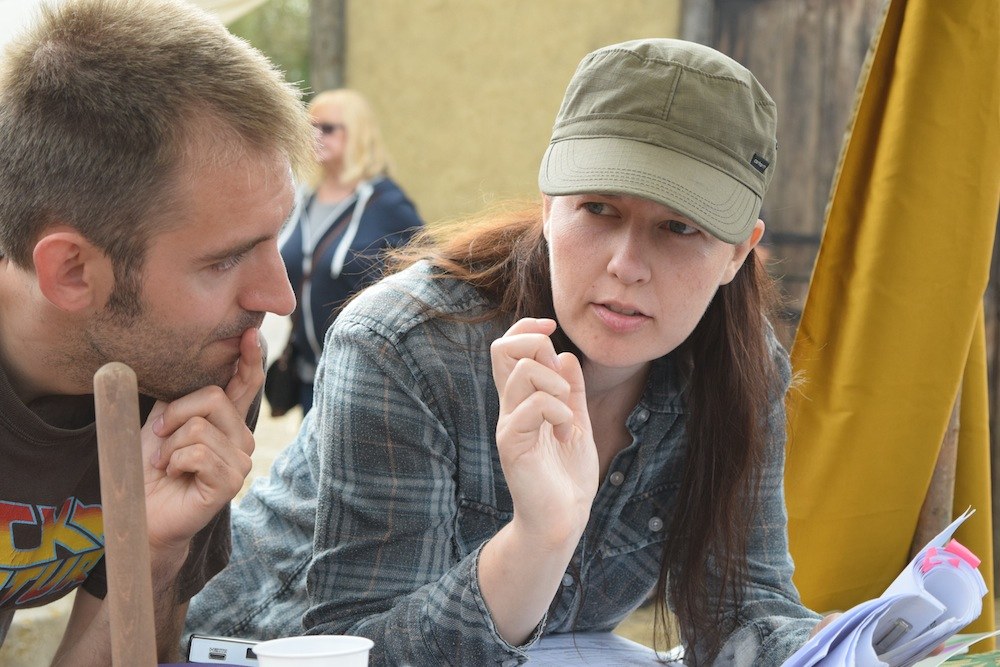
Discussing shots with director Kate Madison on the set of “Ren: The Girl with the Mark”. Photo: Michael Hudson
A thorough plan for shots and lighting can save lots of time on set, but no battle plan survives contact with the enemy. To what extent should a DP prepare?
How much camera angles are planned – and by whom – varies tremendously in my experience. Some directors will prepare a complete shot-list or storyboard and send it to the DP for feedback; others will keep it close to their chest until the time of shooting. Some don’t do one at all, either preferring to improvise on the day in collaboration with the DP, or occasionally asking the DP to plan all the shots alone.
A shot-list can be hard to interpret by itself, particularly if there’s a lot of camera movement. Overhead blocking diagrams, perhaps done in Shot Designer or a general graphics app, make things a lot clearer. Storyboards are very useful too, be they beautifully and time-consumingly drawn, or hastily scribbled thumbnails.
An Artemis shot from “Hamlet” using stand-ins
On a feature I shot last year, we were afforded the luxury of extensive rehearsals with the cast on location. I spent the time snapping photos with Artemis Pro, the viewfinder app, and ultimately output PDF storyboards of every scene; the 1st AD distributed these with the call-sheets every morning. That level of preparedness is rare unless complex stunts or VFX are involved, but it’s incredibly useful for all the departments. The art department in particular were able to see at a glance what they did and didn’t need to dress.
One of my unused storyboards from “The Little Mermaid”
Beware though: being prepared can kill spontaneity if you’re not careful. Years ago I directed a film that had a scene supposedly set at the top of a football stadium’s lighting tower; we were going to cheat it on a platform just a few feet high, and I storyboarded it accordingly. When we changed the location to a walkway in a brewery – genuinely 20ft off the ground – I stuck to the storyboards and ended up without any shots that showcased the height of the setting.
If the various departments have prepared based on your storyboards, not keeping to them can make you unpopular. So storyboards are a double-edged sword, and expectations should be carefully managed regarding how closely they will be adhered to.
The amount of planning that the DP puts into lighting will vary greatly with budget. On a micro-budget film – or a daytime soap like Doctors – you may not see the location until the day you shoot there. But on a high-end production shooting in a large soundstage you may have to agree a detailed lighting plot with the gaffer and pre-rigging crew days or weeks in advance.
Having enough crew to pre-rig upcoming scenes is one of the first things you benefit from as a DP moving up the ladder of budgets. Communicating to the gaffer what you want to achieve then becomes very important, so that when you walk onto the set with the rest of the cast and crew the broad strokes of the lighting are ready to go, and just need tweaking once the blocking has been done.
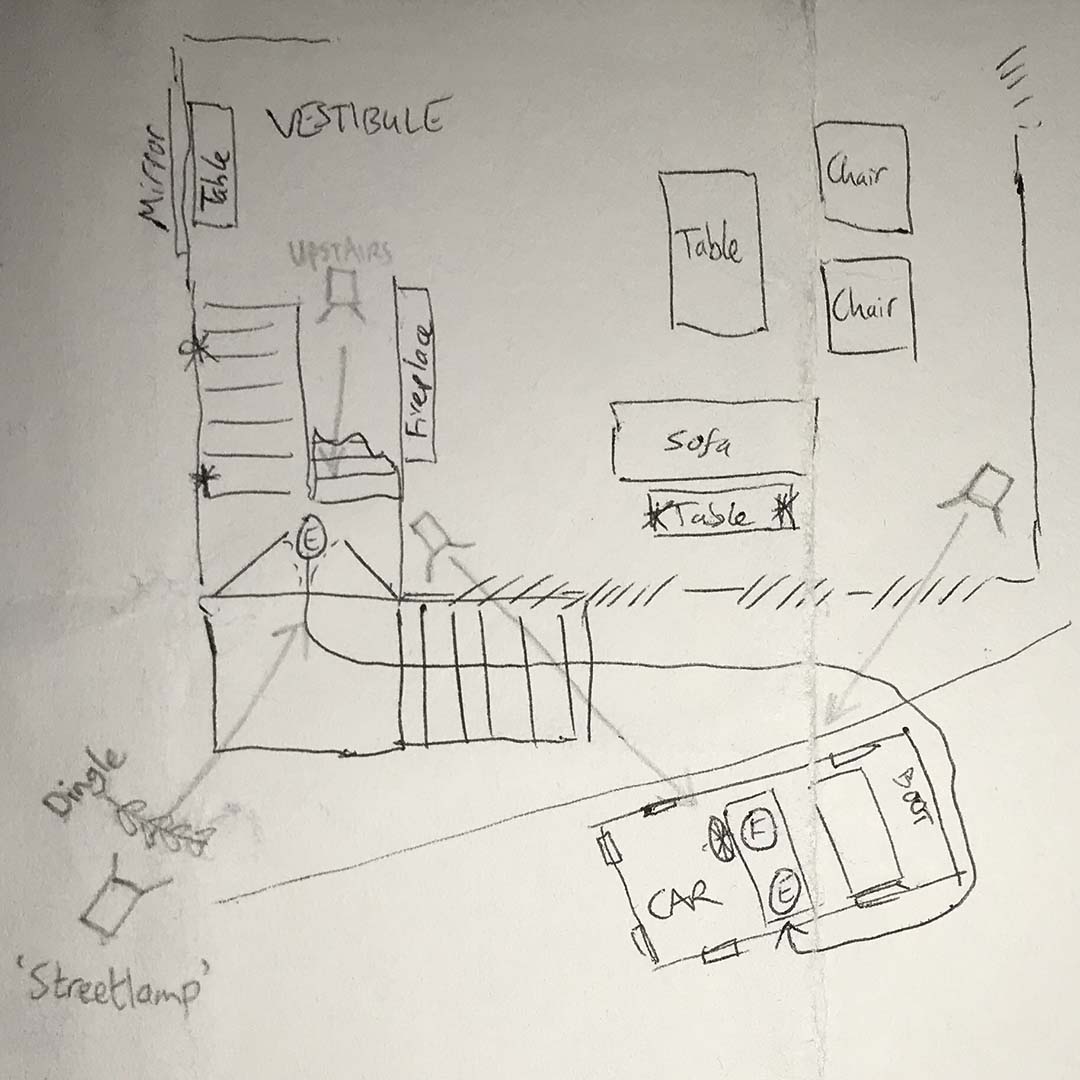
My lighting plan for a night exterior scene in “Exit Eve”
Blocking is usually the biggest barrier to preparedness. Most films have no rehearsals before the shoot begins, so you can never quite know where the actors will feel it is best to stand until they arrive on set on the day. So a lighting plan must be more about lighting the space than anything else, just trying to make sure there are sources in roughly the right places to cover any likely actor positions suggested by the script, director or layout of the set.
Whether a detailed lighting plan needs to be drawn up or not depends on the size and complexity of the set-up, but also how confident you feel that the gaffer understands exactly what you want. I often find that a few recces and conversations along with some brief written notes are enough, but the more money that’s being spent, the more crucial it is to leave no room for misunderstandings.
Again, Shot Designer is a popular solution for creating lighting plans, but some DPs use less specialised apps like Notability, and there’s nothing wrong with good old pencil and paper.
Overall, the best approach is to have a good plan, but to keep your eyes and mind open to better ideas on the day.
For more about apps that DPs can use to help them prep and shoot, see my article “Tools of the Trade” on britishcinematographer.co.uk.
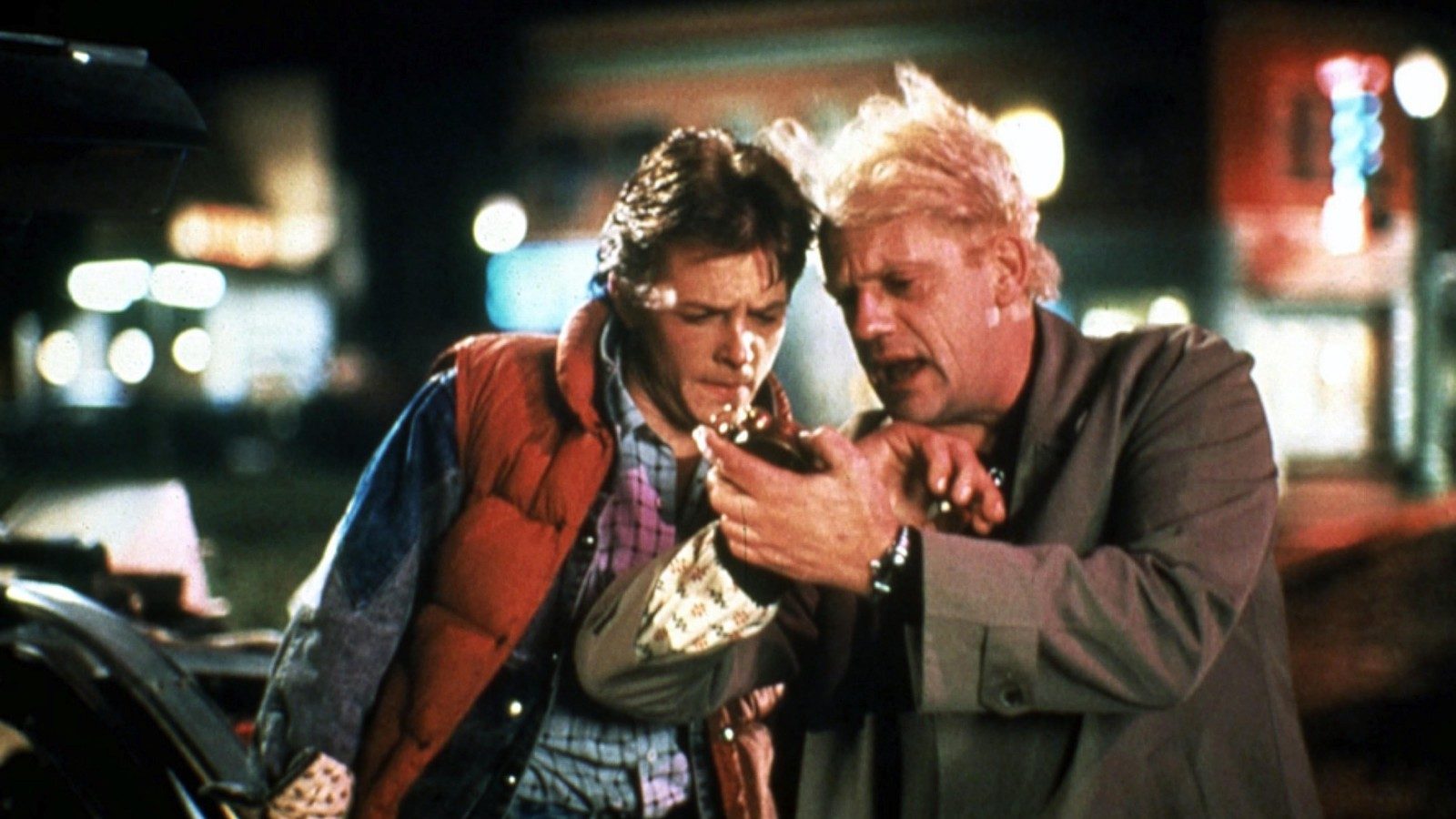
With the runaway success of the first instalment, there was no way that Universal Pictures weren’t going to make another Back to the Future, with or without creators Bob Gale and Robert Zemeckis. So after confirming that Michael J. Fox and Christopher Lloyd were willing to reprise their roles as Marty McFly and Doc Emmett Brown, the producer and director got together to thrash out story ideas.
They knew from the fan mail which had been pouring in that they had to pick up the saga where they had left off: with Doc, Marty and his girlfriend Jennifer zooming into the future to do “something about your kids!” They soon hit upon the idea of an almanac of sport results being taken from 2015 into the past by Marty’s nemesis Biff Tannen (Thomas F. Wilson), resulting in a “Biff-horrific” alternate 1985 which Marty and Doc must undo by journeying into the past themselves.
Gale’s first draft of the sequel, written up while Zemeckis was away in England shooting Who Framed Roger Rabbit?, had Biff giving the almanac to his younger self in 1967. Marty would don bell-bottom trousers and love beads to blend into the hippy culture, meet his older siblings as very young children and his mother Lorraine as an anti-war protestor, and endanger his own existence again by preventing his parents going on the second honeymoon during which he was conceived.
Upon returning from England and reading the draft, Zemeckis had two main notes: add a fourth act set in the Wild West, and how about 1955 again instead of 1967? “We could actually do what the audience really, really wants, which is to go back and revisit the movie they just saw,” Zemeckis later explained. “That is the thing that excited me most, this idea of seeing the same movie from a different angle.”
Adding the Wild West act ballooned the script to over two-and-a-half hours with an estimated budget of $60 million, far more than Universal wanted to spend. So Gale revised the screenplay, expanding it further with a neat point in the middle where it could be split in half. As two films, each budgeted at $35 million but shot back-to-back over 11 months, the project was much more appealing to the studio. However, it was still a bold and unusual move for Universal to green-light two sequels simultaneously, something that it’s easy to forget in these days of long-form movie franchises planned out years in advance.
A sticking point was Crispin Glover. As Marty’s father George McFly he had been a difficult actor to work with on the first film, and now he was demanding more than a ten-fold pay increase to appear in the sequels. “Crispin… asked for the same money that Michael J. Fox was receiving, as well as script approval and director approval,” according to Gale. He gave Glover’s agent two weeks to come back with a more realistic offer, but it didn’t come. Glover would not be reprising his role.
Jeffrey Weissman in prosthetic make-up as George McFly
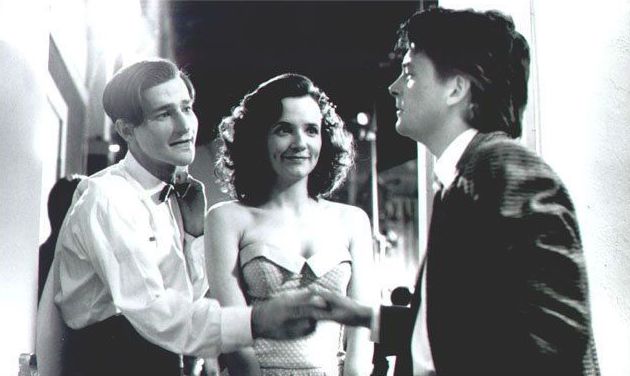
Gale accordingly made George dead in the Biff-horrific 1985, and Zemeckis employed several tricks to accomplish his other scenes. These included the reuse of footage from Part I, and hanging cheap replacement actor Jeffrey Weissman upside-down in a futuristic back brace throughout the 2015 scenes. Life casts of Glover’s face taken for the ageing effects in Part I were even used to produce prosthetic make-up appliances for Weissman so that he would resemble Glover more closely. “Oh, Crispin ain’t going to like this,” Fox reportedly remarked, and he was right. Glover would go on to successfully sue the production for using his likeness without permission, with the case triggering new Screen Actors Guild rules about likeness rights.
Make-up was a huge part of the second film, since all the main actors had to portray their characters at at least two different ages, and some played other members of the family too. A 3am start in the make-up chair was not unusual, the prosthetics became hot and uncomfortable during the long working days, and the chemicals used in their application and removal burnt the actors’ skin. “It was a true psychological challenge to retain enough concentration to approach the character correctly and maintain the performance,” said Wilson at the time.
Filming began in February 1989 with the ’55 scenes. To save time and money, only one side of the Hill Valley set – still standing on the Universal backlot – was dressed for this period. The company then shot on stage for a few weeks before returning to the backlot in March, by which time production designer Rick Carter and his team had transformed the set into a gangland nightmare to represent Biff-horrific 1985. In May the company revisited the Hill Valley set once more to record the 2015 scenes.
When the real 2015 rolled around, many were quick to compare the film’s vision of the future to reality, but Gale always knew that he would fail if he tried to make genuine predictions. “We decided that the only way to deal with it was to make it optimistic, and have a good time with it.” Microwave meals had begun to compete with home cooking in the ‘80s, so Gale invented a leap forward with the pizza-inflating food hydrator. Kids watched too much TV, so he envisaged a future in which this was taken to a ridiculous extreme, with Marty Jr. watching six channels simultaneously – not a million miles from today’s device-filled reality.
While the opening instalment of the trilogy had been relatively light on visual effects, Part II required everything from groundbreaking split-screens to flying cars and hoverboards. This last employed a range of techniques mostly involving Fox, Wilson and three other actors, plus five operators, hanging from cranes by wires. While every effort was made to hide these wires from camera – even to the extent of designing the set with a lot of camouflaging vertical lines – the film went down in VFX history as one of the first uses of digital wire removal.
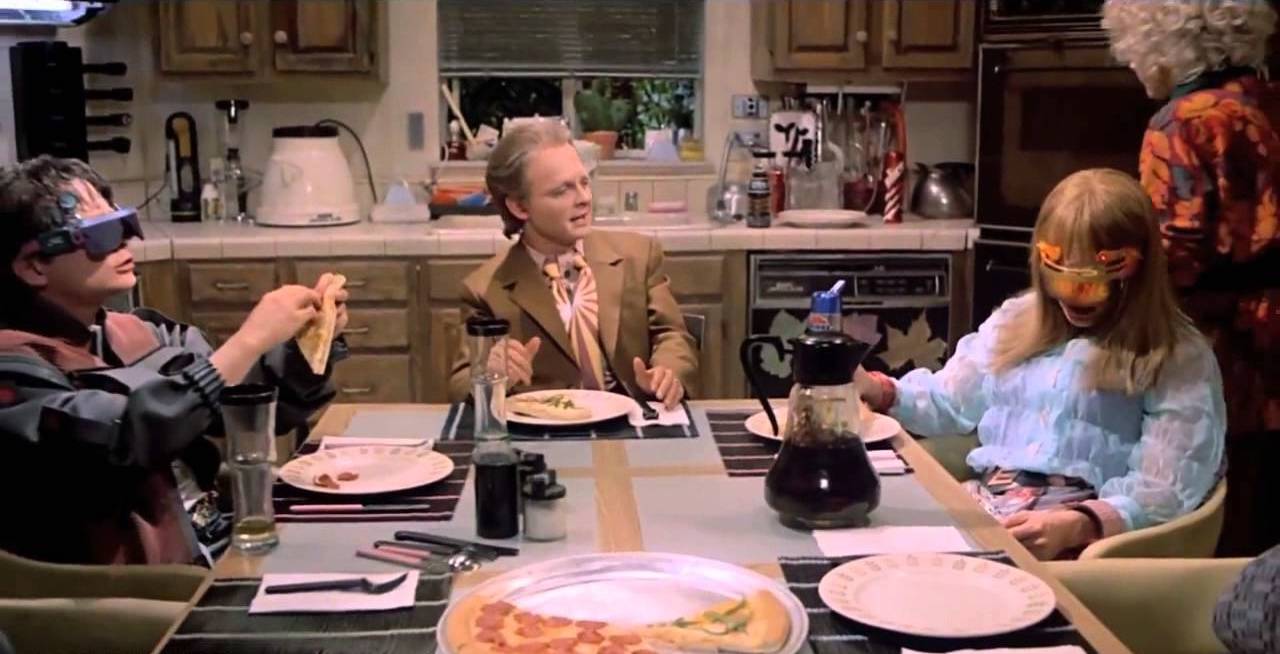
But perhaps the most complex effect in the film was a seemingly innocuous dinner scene in which Marty, Marty Jr. and Marlene McFly all share a pizza. The complication was that all three roles were played by Michael J. Fox. To photograph the scene and numerous others in which cast members portrayed old and young versions of themselves, visual effects wizards Industrial Light & Magic developed a system called VistaGlide.
Based on the motion control rigs that had been used to shoot spaceships for Star Wars, the VistaGlide camera was mounted on a computer-controlled dolly. For the dinner scene, Fox was first filmed as old Marty by a human camera operator, with the VistaGlide recording its movements. Once Fox had switched to his Marty Jr. or Marlene costume and make-up, the rig could automatically repeat the camerawork while piping Fox’s earlier dialogue to a hidden earpiece so that he could speak to himself. Later the three elements were painstakingly and seamlessly assembled using hand-drawn masks and an analogue device called an optical printer.
The technically challenging Part II shoot came to an end on August 1st, 1989, as the team captured the last pieces of the rain-drenched scene in which Marty receives a 70-year-old letter telling him that Doc is living in the Old West. Four weeks later, the whole cast and crew were following Doc’s example as they began filming Part III.
In order to have open country visible beyond the edges of 1885’s Hill Valley, the filmmakers opted to leave the Universal backlot and build a set 350 miles north in Sonora, California. The town – which had appeared in classic westerns like High Noon and Pale Rider – was chosen for its extant railway line and its genuine 19th century steam locomotive which would form a pivotal part of the plot.
Joining the cast was Mary Steenburgen as Doc’s love interest Clara. Initially unsure about the role, she was persuaded to take it by her children who were fans of the original film. “I confess to having been infatuated with her, and I think it was mutual,” LLoyd later admitted of his co-star. Though the pair never got involved, Part III’s romantic subplot did provide the veteran of over 30 films with his first on-screen kiss.
By all accounts, an enjoyable time was had by the whole cast and crew in the fresh air and open spaces of Sonora. Fox, who had simultaneously been working on Family Ties during the first two films, finally had the time to relax between scenes, even leading fishing trips to a nearby lake.
The set acquired the nickname “Club Hill Valley” as a volleyball court, mini golf and shooting range were constructed. “We had a great caterer,” recalled director of photography Dean Cundey, “but everybody would rush their meal so that they could get off to spend the rest of their lunch hour in their favourite activity.”
There was one person who was not relaxed, however: Robert Zemeckis. Part II was due for release on November 20th, about halfway through the shoot for Part III. While filming the action-packed climax in which the steam train propels the DeLorean to 88mph, the director was simultaneously supervising the sound mix for the previous instalment. After wrapping at the railway line, Zemeckis would fly to Burbank and eat his dinner on the dubbing stage while giving the sound team notes. He’d then sleep at the Sheraton Universal and get up at 4:30am to fly back to Sonora.
The train sequence had plenty of other challenges. Multiple DeLoreans had been employed in the making of the trilogy so far, including a lightweight fibreglass version that was lifted on cables or hoisted on a forklift for Part II’s flying scenes, and two off-road versions housing Volkswagen racing engines for Part III’s desert work. Another was now outfitted with railway wheels by physical effects designer Michael Lantieri. “One of the scariest things to do was the DeLorean doing the wheelie in front of the train,” he noted in 2015. “We had cables and had it hooked to the front of the train… A big cylinder would raise the front of the car.”
The film’s insurance company was unhappy about the risks of putting Michael J. Fox inside a car that could potentially derail and be crushed by the train, so whenever it was not possible to use a stunt double the action was played out in reverse; the locomotive would pull the DeLorean, and the footage would subsequently be run backwards.
The makers of Mission: Impossible 7 recently drove a full-scale mock-up of a steam locomotive off an unfinished bridge, but Back to the Future’s team opted to accomplish a very similar stunt in miniature. A quarter-scale locomotive was constructed along with a matching DeLorean, and propelled to its doom at 20mph with six cameras covering the action. Marty, of course, has returned safely to 1985 moments earlier.
Part III wrapped on January 12th, 1990 and was released on May 25th, just six months after Part II. Although each instalment made less money than its predecessor, the trilogy as a whole grossed almost $1 billion around the world, about ten times its total production cost. The franchise spawned a theme park ride, an animated series, comics and most recently a West End musical.
But what about Part IV? Thomas F. Wilson is a stand-up comedian as well as an actor, and on YouTube you can find a track of his called “Biff’s Questions Song” which humorously answers the most common queries he gets from fans. The penultimate chorus reveals all: “Do you all hang out together? No we don’t / How’s Crispin Glover? Never talk to him / Back to the Future IV? Not happening / Stop asking me the question!”
Spaceman from Pluto is a 1985 sci-fi comedy starring Eric Stoltz and Christopher Lloyd. Lloyd plays Professor Brown, an eccentric scientist with a pet chimp, who builds a time machine out of an old fridge. Stoltz portrays a teenage video pirate, Marty McFly, who is accidentally sent back to the 1950s in the machine. After almost wiping himself from existence by endangering his parents’ first meeting, Marty returns to his own time using the power generated by an atomic bomb test in the Nevada desert.
Fortunately this movie was released in some alternate version of history. In our timeline it went through a number of changes in writing and production to become the blockbuster classic Back to the Future.
For co-writer and producer Bob Gale it all started when he came across his father’s highschool yearbook and realised that, had he and his father been peers, they would never have been friends. Spotting the comedy potential in the concept of a teenager going to school with his parents, Gale sat down with co-writer and director Robert Zemeckis to develop a script.
The pair knew they needed a time machine and decided that it would be created by a backyard inventor rather than some government organisation. “I can’t really put my finger on when I stumbled on the idea of time travel,” said Gale in 2002, “whether it was from watching The Twilight Zone, reading Superman comics, or when the H.G. Wells Time Machine – the George Pal movie – came out, but I do remember being totally fascinated by that film.”
Writer-director Robert Zemeckis & writer-producer Bob Gale
Getting Back to the Future made proved challenging. Most of the studios that Gale and Zemeckis approached found the script too sweet and innocent compared with the typical R-rated teen movies of the time. Disney, on the other hand, felt that the mother-falls-for-son plot was too taboo.
Making matters worse was the duo’s less than spectacular track record. Their first two feature films, I Wanna Hold Your Hand and Used Cars, were both box office flops. They even had the dubious honour of writing the least successful film of Steven Spielberg’s directorial career so far, 1941.
Everything changed when Michael Douglas hired Zemeckis to direct 1984’s Romancing the Stone. The adventure romp was a hit and suddenly everyone in the notoriously fickle Hollywood wanted Back to the Future. Spielberg, who had always loved the script, signed on as executive producer and – after a false start at Columbia – the movie was green-lit by Universal Pictures.
Studio president Sid Sheinberg requested a number of script changes. Professor Brown became “Doc” and his chimp became a dog. Marty’s video piracy (which would have explained his possession of the camcorder with which he films the time machine’s test run) was written out, as the studio were understandably unwilling to promote the revenue-slashing crime.
Sheinberg also hated the title Back to the Future and wanted it changed to Spaceman from Pluto, a reference to the comic clutched by the Peabody children after the DeLorean crashes into their barn on arriving in 1955. Zemeckis and Gale turned to Spielberg to help them dodge this title without offending Sheinberg; his solution was to send a memo saying what a big laugh they all got out of Sheinberg’s joke. The studio president never mentioned it again.
The title Back to the Future was retained, but the barn scene did prompt another change. By this point the writers had realised that an immobile fridge was not dramatic or practical as a time machine, and were searching for a suitable vehicle for Doc to build it into. They chose the slick, stainless steel DeLorean with its futuristic gull-wing doors so that the Peabody family could mistake it for a UFO.
Budget concerns drove the elimination of the A-bomb scene. Shooting on location and building the miniatures of the bomb and its test tower were estimated to cost $1 million. Switching the power source to a lightning bolt not only saved this money by keeping all the action in Hill Valley, it enhanced the time metaphor represented by the clock tower as well as giving Doc an active part in the climax rather than being stuck in a blast bunker with a walkie-talkie.
The filmmakers’ first choice for the role of Marty McFly was Michael J. Fox, the 23-year-old star of sitcom Family Ties. But that show’s creator, Gary David Goldberg, refused to even let Fox see the Back to the Future script, fearing the actor would love it and resent Goldberg for not releasing him from his Family Ties commitment.
A disappointed Zemeckis accordingly began screen-testing other actors, eventually narrowing the choice down to C. Thomas Howell (best known for the coming-of-age drama The Outsiders) and Eric Stoltz (who had appeared in Fast Times at Ridgemont High and The Wild Life). It seems that Sid Sheinberg was Stoltz’s most vocal advocate. Gale recalled the studio president declaring: “I’m so convinced that Eric is going to be great in this part, if it doesn’t work out you can recast it and start all over again.”
No-one expected that to actually happen.
Filming began on November 26th, 1984. The logistics of transforming a real town into Hill Valley in both 1955 and 1985 were daunting, so instead production designer Lawrence G. Paull adapted the town square set on Universal Studios’ backlot, which had originally been built for the 1948 film noir An Act of Murder.
Special effects supervisor Kevin Pike had taken three DeLoreans and, working to concept art by the legendary Ron Cobb amongst others, fitted them with a variety of aircraft surplus parts and other junk to create the iconic time machine. The “Mr. Fusion” generator added to the vehicle in the final scene started life as a coffee grinder.
Cast in the role of Doc Brown was Christopher Lloyd, whose prior roles included a Klingon commander in Star Trek III: The Search for Spock, a psychiatric patient in One Flew Over the Cuckoo’s Nest and five years in the sitcom Taxi. In another alternate timeline he wasn’t involved in Back to the Future either, having binned the script in favour of a stage role in New York; it was his wife who made him reconsider.
Basing the character on the conductor Leopold Stokowski, Lloyd made the Doc larger than life. Eric Stoltz had a very different approach, a method approach, focusing on the serious aspect of Marty’s out-of-time predicament and apparently ignoring the fact that he was starring in a comedy. “Eric didn’t get it,” camera assistant Clyde E. Bryan remembered in 2015. “Eric didn’t understand the physical, pratfall type of humour that Bob [Zemeckis] was looking for.”
By the sixth week of filming, almost halfway through the schedule, Zemeckis knew he had a huge problem. After conferring with Gale and his fellow producer Neil Canton, the director asked Spielberg to come to the editing suite and watch the 45-minute rough cut of everything that had been shot so far. All the filmmakers agreed that Stoltz had to go.
Unwilling to have Universal shut down the film and suffer the attendant negative press, Zemeckis kept filming with Stoltz for another week, with most of the cast and crew unaware of the situation. Meanwhile, behind the scenes, Canton worked out exactly how much reshoots would cost ($4 million) while Zemeckis and Gale went back to Goldberg at Family Ties, begging him to let Michael J. Fox take the role. Goldberg agreed on condition that the TV show would take priority. Fox himself claims to have merely weighed the script in his hand before agreeing to do it.
During the lunch break on Thursday, January 10th, 1985, halfway through filming the DeLorean’s test run in the car park of the Twin Pines Mall, Zemeckis called Stoltz into his trailer and broke the bad news. By the following Monday, Michael J. Fox was Marty McFly.
The young actor’s schedule was exhausting. He would wake at 9am, work on Family Ties from 10am to 6:30pm, get driven to Universal and shoot Back to the Future until 2:30am. Any scenes that required Marty in daylight had to be filmed at weekends.
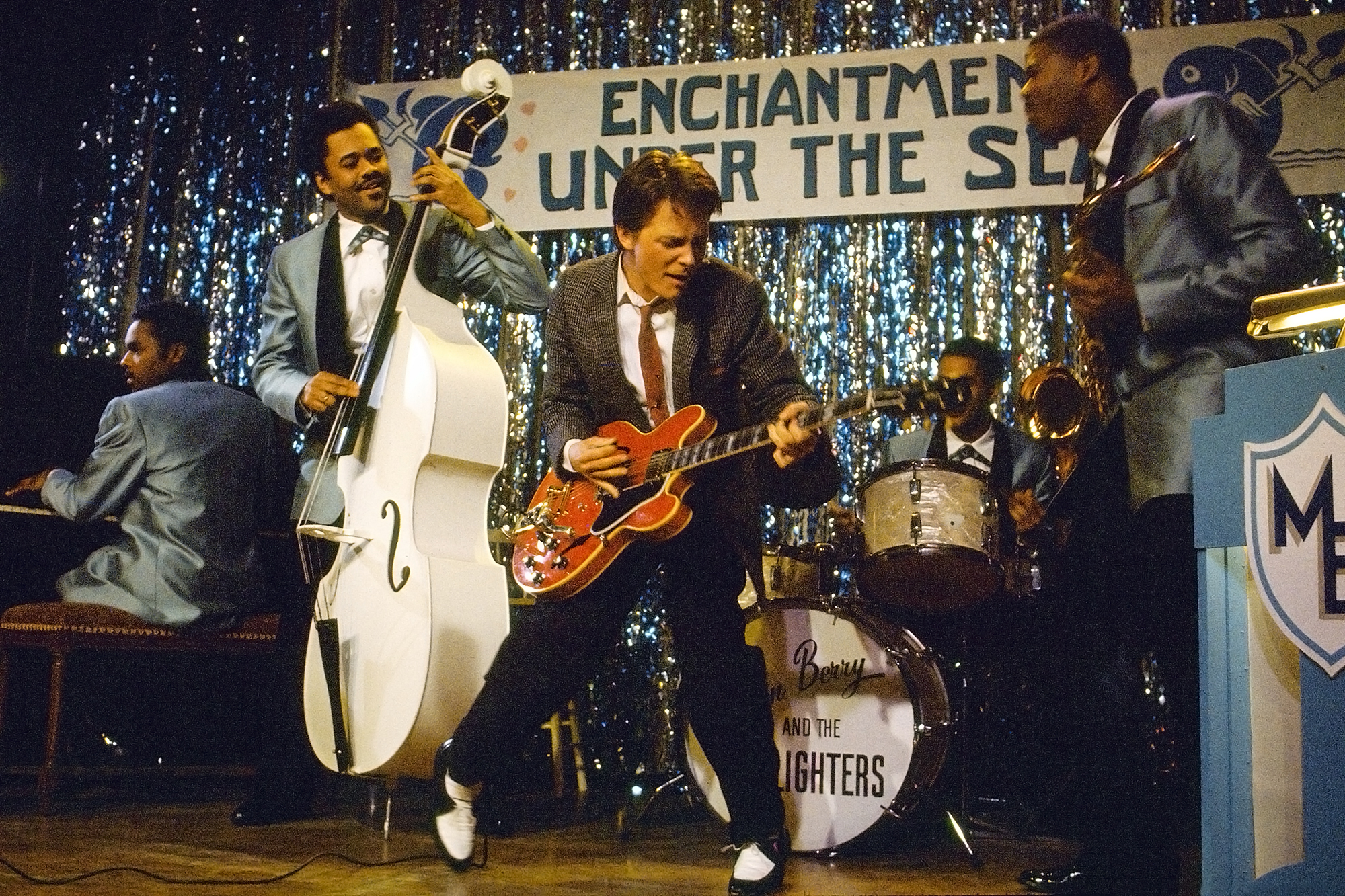
Nonetheless, Fox somehow managed to squeeze in guitar lessons in preparation for Marty’s performance at the Enchantment Under the Sea Dance. He already had some experience with the instrument, but was determined to learn to play “Johnny B. Goode” note for note so that he could finger-sync perfectly to the pre-recorded track. Marty’s singing voice was provided by Mark Campbell, while the energetic choreography of his performance incorporated the signature moves of Pete Townshend, Jimi Hendrix and Eric Clapton as well as Chuck Berry.
The scene is one of the most memorable in the movie, but Zemeckis and Gale were very worried about it during editing. “It’s the only scene that doesn’t advance story or character, and we didn’t know how that was going to play,” said Gale. A preview screening in San Jose removed any doubts; the audience loved “Johnny B. Goode” and everything else about the movie.
After a second preview, this time with Sid Sheinberg in attendance, Universal realised they were onto a winner and moved the film’s release date up to the July 4th weekend, paying through the nose to accelerate post-production.
“I want it to be violent,” Zemeckis told the animators creating the effect of the DeLorean breaking the time barrier, “something akin to a Neanderthal sitting on the hood of the car, chipping away at the fabric of time in front of him.” The hand-drawn cell animation combined with built-in lighting on the car and actual fire trails that had been captured on location, plus additional pyrotechnics overlaid after the fact, created the signature effect.
Meanwhile, Alan Silvestri assembled the largest orchestra in Universal’s history to record Back to the Future’s iconic score, and a tie-in single was provided by Huey Lewis and the News. The latter took a couple of attempts to get right; Lewis’ first submission was a minor-key track that didn’t work at all, according to Zemeckis. It was only after the filmmaker showed Lewis the skateboarding scene that he understood the upbeat mood required and composed “The Power of Love”.
Fox was away filming a Family Ties special in England when Back to the Future was released. He was surprised to get a call from his agent telling him that it was the biggest film in America. It spent 12 weeks at the top of the US box office charts and quickly became part of popular culture, with even Presidents Reagan and Bush Senior giving speeches about taking the country “back to the future”. To date it has grossed almost $400 million.
Summing up the film’s appeal in 2002, Gale offered: “There’s something very special about this story that everyone can identify with, the idea of trying to imagine what your parents were like when they were kids – that just touches everybody.”
When Back to the Future was released on VHS in May 1986, fans noticed a small change from the theatrical version. There as expected was the DeLorean’s lift-off and departure to the future – originally intended by Zemeckis and Gale simply as a joke on which to end the story. But now, sandwiched between that final scene and the end credits, was a caption.
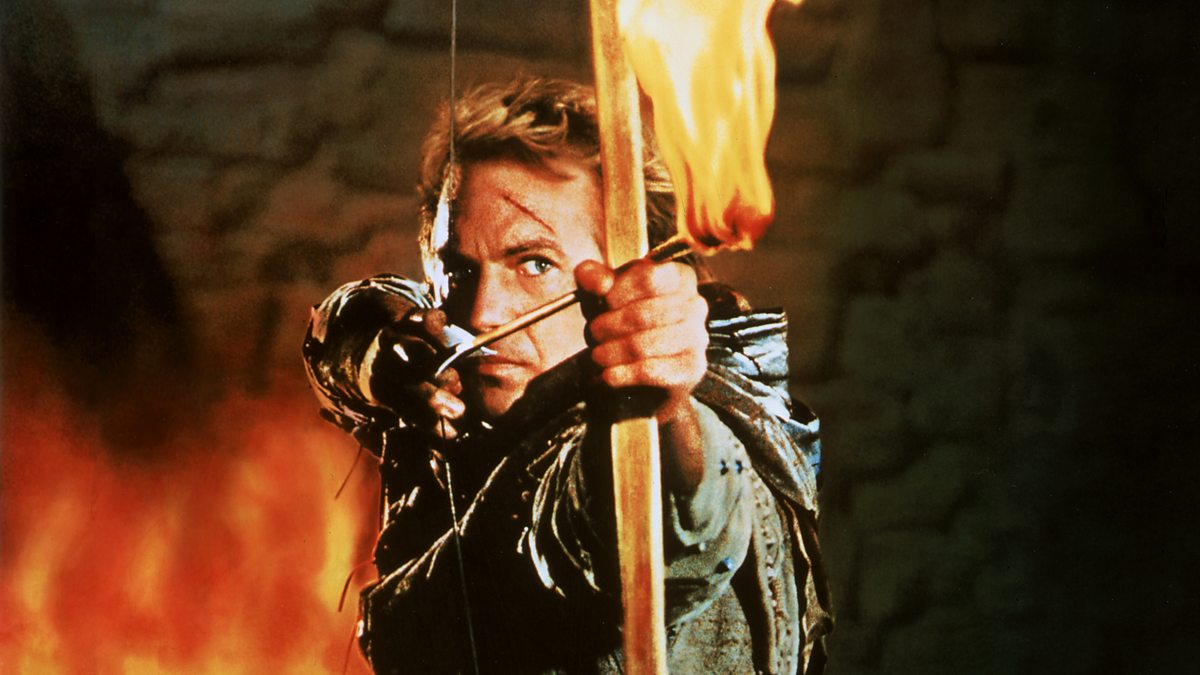
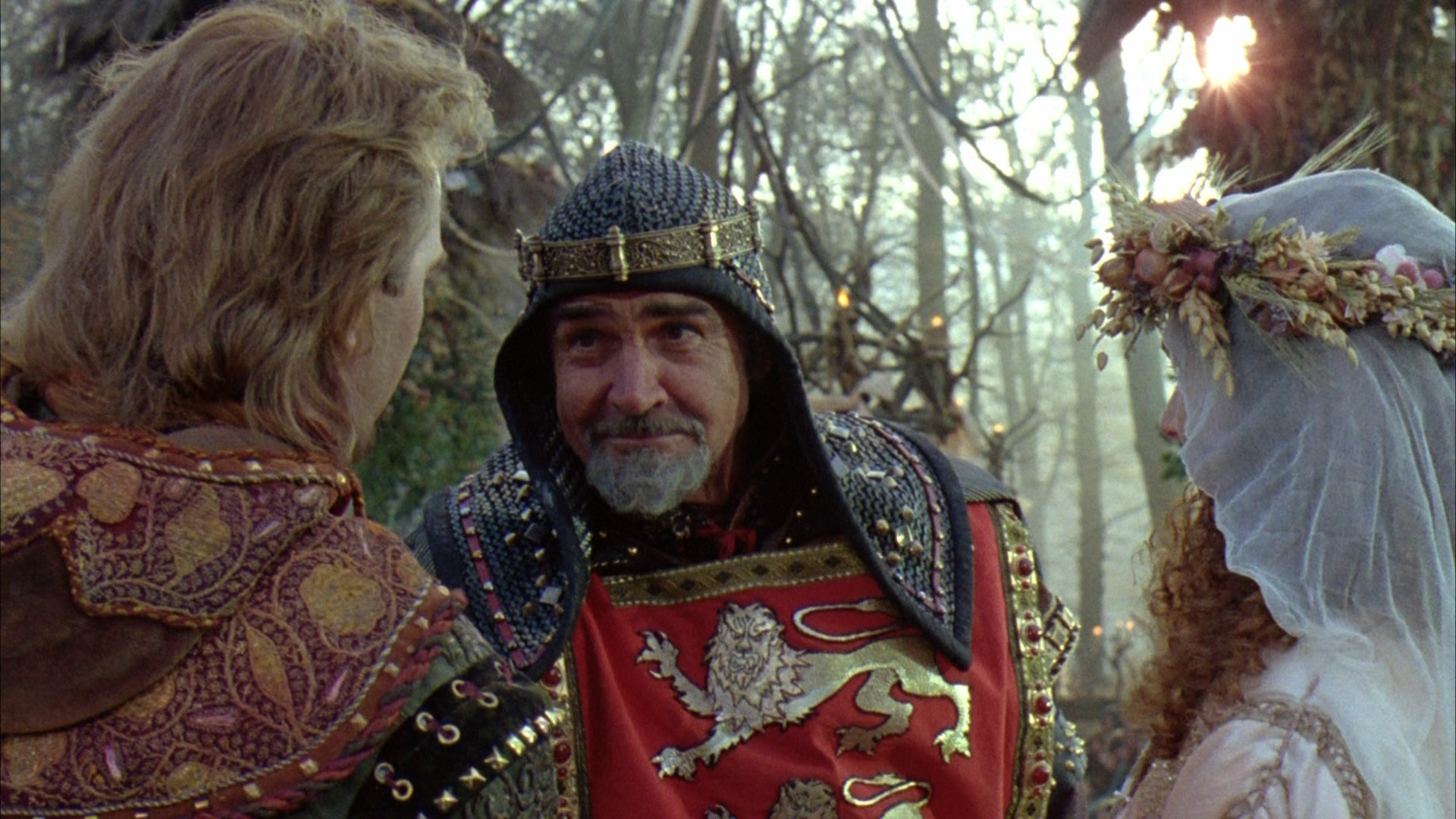
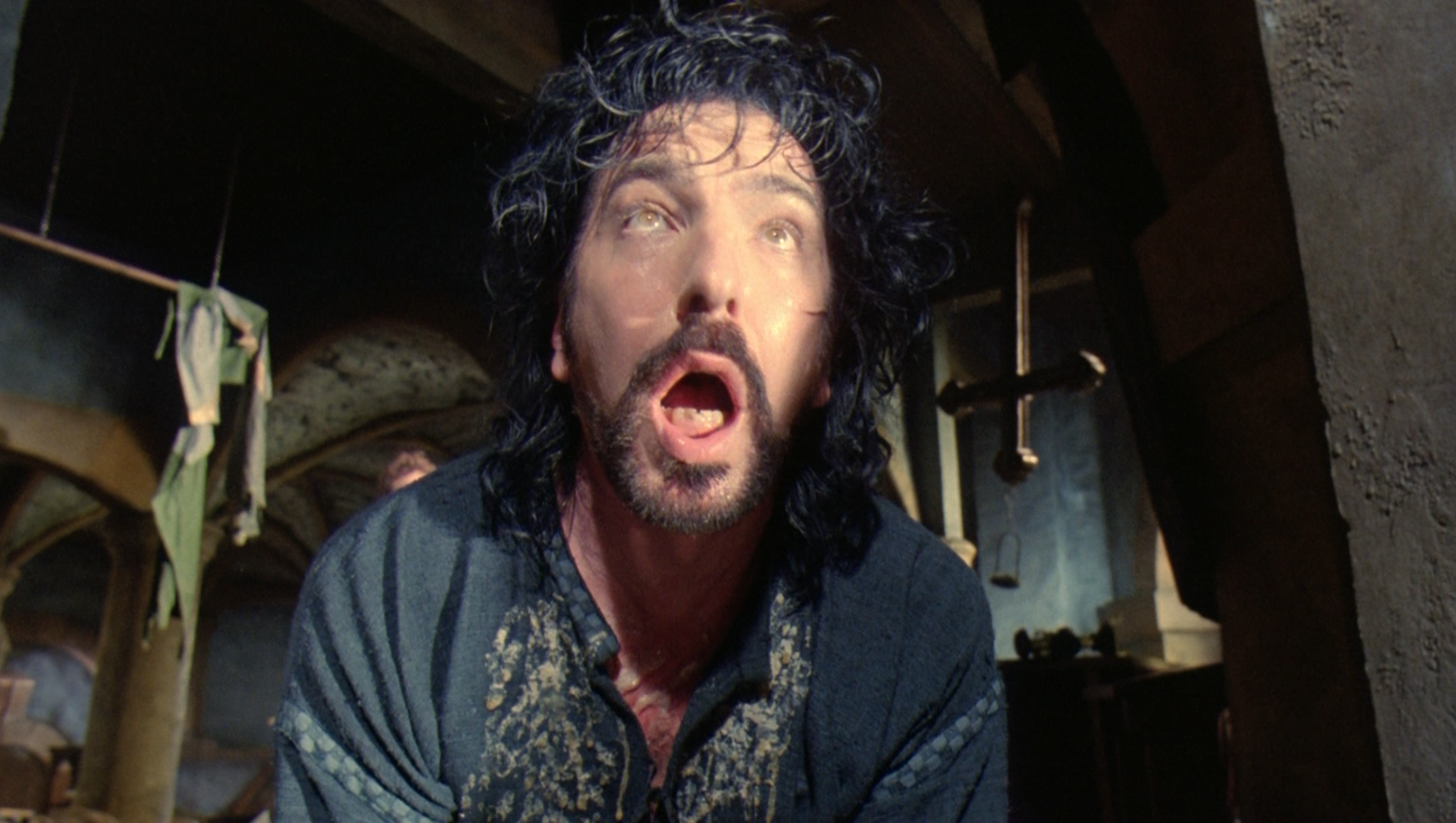
Alan Rickman’s scenery-chomping Sheriff of Nottingham may be widely considered the best thing in Robin Hood: Prince of Thieves, but there is plenty more to enjoy in this classic action romp even now, 31 years on from its release.
“There was gold on the page,” claimed executive producer David Nicksay of the screenplay by Pen Densham and John Watson, which he read in early 1990. Both Fox and Tri-Star were working on their own Robin Hood movies, so Nicksay’s comparatively small company, Morgan Creek Productions, had to move fast to avoid being buried at the box office.
Director Kevin Reynolds was hired for his previous collaborations with Kevin Costner, having given the star his big break on 1988’s Fandango as well as directing part of Dances With Wolves. Following a scant ten weeks of prep, Reynolds launched into shooting Prince of Thieves against the ticking clock of the approaching winter.
The English weather was as cooperative as you might imagine, but no-one could have predicted that unusual winds would cause Heathrow to divert all its flights over the Buckinghamshire forest standing in for Sherwood, playing havoc with the sound.
Kevin Costner – who had coincidentally been offered and turned down Fox’s Robin Hood – arrived from the Dances With Wolves editing room just three days before filming began. His very first scene required him to jump out of a rowboat on the Sussex coast and wade to shore, even as his woollen cloak soaked up half his bodyweight in water. Later he spent four days immersed in the freezing waters of Aysgarth Falls, North Yorkshire, for the sequence in which his character battles Little John.
The crew also shot in Wiltshire, Northumberland and even Carcassonne in France, but never set foot in Nottinghamshire. The film’s most derided geographical anomaly is the stop-off at Hadrian’s Wall, which somehow falls on Robin’s route from Dover to Nottingham.
The character’s accent is also geographically challenged, partly due to a disagreement between the two Kevins about whether an English Costner would be distracting for audiences. The result is best summed up by the man himself on the DVD commentary: “Well, there’s my dumb-ass accent. It was something I wanted to do, and I wasn’t very good at it.”
Test screenings were positive but showed that Rickman’s sheriff – whose part had been beefed up by Reynolds in last-minute rewrites – was more popular than Costner’s hero. The producers insisted on redressing the balance in the edit, leading to Reynolds storming out and a 2009 director’s cut that reinstated Rickman’s extra material. (The two Kevins got over their differences in time for 1995’s Waterworld… and I’m sure they’re both very glad about that.)
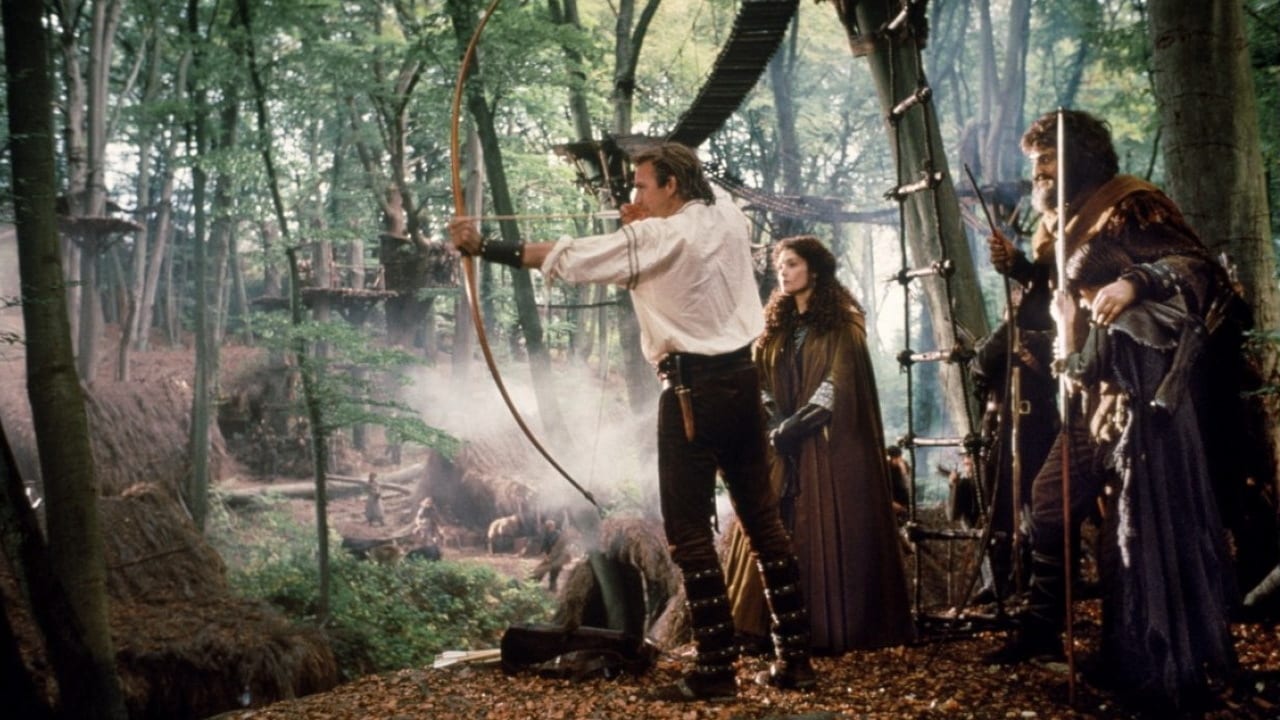
Legendary cinematographer Doug Milsome ensured that Prince of Thieves’ visuals were beyond reproach. To capture sweeping views of the forest hideout he mounted a Wescam – a camera stabiliser typically used for helicopter shots – to a truss erected between the trees.
The famous arrow POV shot, hurtling through the woods, took a week to plan and execute. A static arrow was blue-screened over a travelling forest plate photographed at a stately one frame per second. Originally intended just for the trailer, the shot caused such a buzz amongst the public that it was written into the film itself.
Another highlight is the score by Michael Kamen, who based his love theme on an actual medieval tune. For the tie-in single, Bryan Adams and his keyboardist Mutt Lange took that same theme and added lyrics, turning it into the power ballad “(Everything I Do) I Do It For You”. The track garnered an Oscar nomination and won a Grammy, and spent 16 weeks at the top of the UK charts, a run still unbeaten today.
The achievements of the film itself were more mixed. Alan Rickman bagged a Bafta for his spirited turn as the Sheriff of Nottingham, while Kevin Costner won a Golden Raspberry for Worst Actor, and Christian Slater was nominated for Worst Supporting Actor. The lacklustre reviews did no harm to the box office though; Robin Hood: Prince of Thieves was the second-highest grossing film of 1991, surpassed only by Terminator 2: Judgment Day.
And what about the other Robin Hood films that Reynolds and co had raced to beat? Tri-star’s project never left the starting blocks, while Fox’s effort, starring Patrick Bergin and Uma Thurman and exec-produced by Die Hard’s John McTiernan, went straight to television. In fact the only film to challenge Prince of Thieves for many years was the Mel Brooks comedy, Robin Hood: Men in Tights. This parody is surely the ultimate evidence of Prince of Thieves’ cultural impact.
For five decades in a row, Citizen Kane was voted the greatest film of all time in Sight & Sound’s International Critic’s Choice poll. Although pipped to the top spot by Vertigo in the latest poll, there are still plenty of filmmakers, academics and fans who consider actor-director Orson Welles’ 1941 debut the very pinnacle of cinematic accomplishment.
The spoilt son of a hotelier and a concert pianist, Orson Welles found fame in 1938 when he directed and starred in a radio adaptation of The War of the Worlds which was so convincing that thousands thought it was real and fled their homes. Not long afterwards, RKO, one of the five big studios of Hollywood’s Golden Age, offered a generous two-picture deal to the 24-year-old who had never made a film before and didn’t much want to.
12 months and two abandoned concepts later, Welles teamed with screenplay-fixer Herman J. Mankiewicz, whose past projects included The Wizard of Oz, to script the rise and fall of a powerful newspaper magnate based on William Randolph Hearst. The pair went through five drafts, making changes for creative, financial and legal reasons (hoping to avoid a lawsuit from Hearst).
The story’s fictionalised press baron, Charles Foster Kane, dies in the opening scene, but his mysterious last word – “Rosebud” – spurs a journalist to investigate his life. The journalist’s interviews with Kane’s friends and associates lead the viewer into extended flashbacks, an innovative structure for the time.
Welles himself took the title role, spending many hours in the make-up chair to portray Kane from youth to old age. Inventive, non-union make-up artist Maurice Seiderman developed new techniques to create convincing wrinkles that would not restrict the actor’s facial expressions. Sometimes Welles would be called as early as 2:30am, holding production meetings while Seiderman worked on him.
“I was just as made-up as a young man as an old man,” Welles said later, noting that he wore a prosthetic nose, face-lifting tape and a corset to satisfy both his own vanity and the demands of the studio for a handsome leading man.
The young auteur – who directed part of the film from a wheelchair after fracturing his ankle – was not easy to work with. Editor Robert Wise said: “He could one moment be guilty of a piece of behaviour that was so outrageous it would make you want to tell him to go to Hell and walk off the picture. Before you could do it he’d come up with some idea that was so brilliant that it would literally have your mouth gaping open, so you never walked. You stayed.”
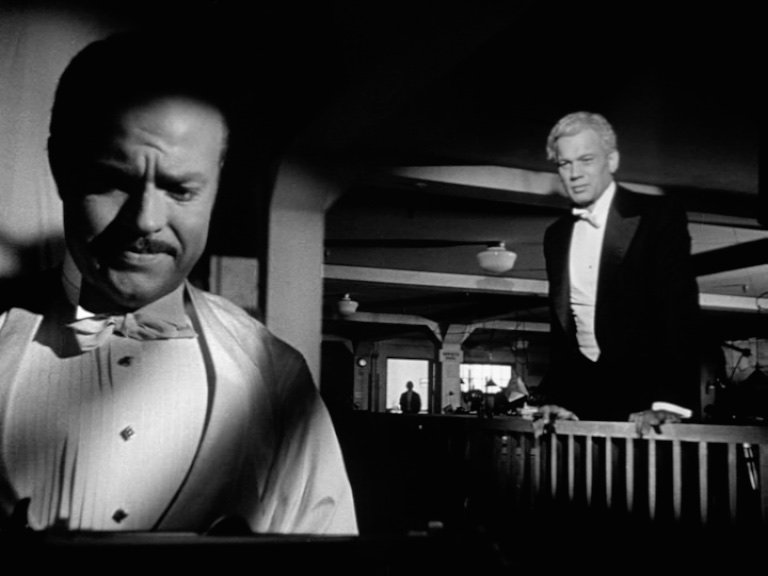
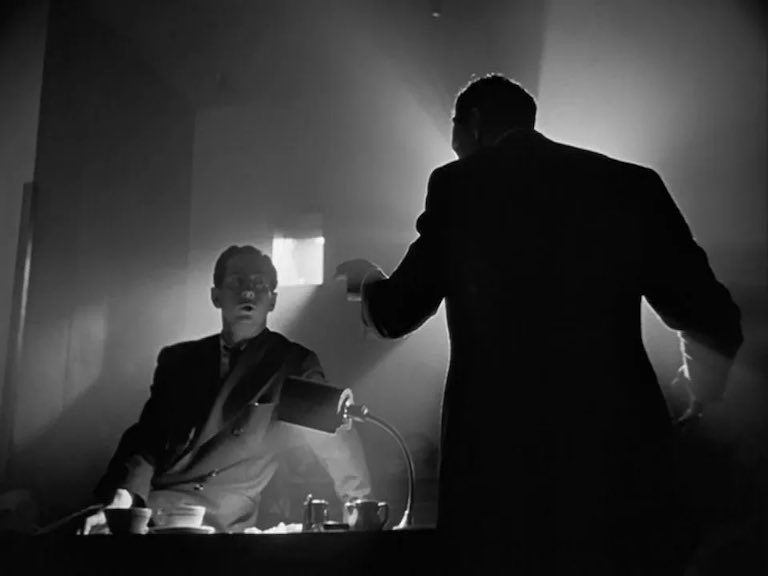
Welles was keen for his film to look different from others, drawing on his experience of directing theatre. The leading DP of the time, Gregg Toland, jumped at the chance to break the rules. Influenced by German Expressionism, he was not afraid of silhouettes and bright shafts of light.
Welles cast many of his Mercury Players – a theatre repertory company he had set up himself – who he knew could handle long takes. He insisted on a large depth of field and often shot from low angles to mimic the experience of a theatre-goer, specifically someone in the front row looking up at the cast. This required many of the sets to have ceilings, unconventionally, and these were made of fabric in some cases so that the boom mic could record through them.
Special effects were used extensively to reduce set-building costs and avoid location shooting wherever possible. One example is a crane-up from a theatre’s stage to a pair of technicians watching from the flies above; the middle part of the shot is a matte painting, bridging the two live-action set pieces. In another scene, the camera travels through a neon sign on the roof of a building and down through the skylight; the rooftop is a miniature, the sign is rigged to split apart as the camera moves through it, and a flash of lightning eases the transition into the live-action set.
“We were under schedule and under budget,” Welles proudly stated in a 1982 interview. He cheated though, because he asked the studio for ten days of camera tests, citing his inexperience behind the lens, and used those ten days to start shooting the movie!
When Citizen Kane was premiered in May 1941, William Randolph Hearst was not fooled by the script tweaks and took the title character as an unflattering portrayal of himself. While he was unable to suppress the film’s release – though not for the want of trying – a smear campaign in his publications ensured it only enjoyed moderate success and that Welles would never have the filmmaking career that such a startling debut should have sparked. It wasn’t until the 1950s that Citizen Kane received the critical acclaim which it still holds today, 81 years on.
Released 40 years ago, Terry Gilliam’s surreal sci-fi adventure Time Bandits remains a supremely imaginative film, defying conventions of plot and never talking down to its target audience of children. Let’s take a time portal back to 1981 and find out how it was made.
“I was broke. I had to write something fast,” Gilliam once said of the film’s origins. By other accounts he conceived Time Bandits when Brazil’s development stalled due to financier Denis O’Brien “not getting it”. (O’Brien was George Harrison’s partner at Handmade Films, which had originally been set up to fund the Monty Python feature Life of Brian.)
After dreaming up the idea of a knight on horseback bursting out of a child’s wardrobe, Gilliam jotted down a mere two sides of notes under the characteristically whimsical heading, “The film that dares not speak its name: a treatment… not a cure”. After describing the opening sequence, in which ten-year-old Kevin is whisked through a time portal by a rabble of robber dwarves while pursued by God, the treatment brazenly states: “And so starts this terrific attempt to get the movie moneybags to part with a few million bucks.”
The moneybags were not convinced, however. O’Brien took Gilliam’s script, co-written with Michael Palin, around LA and returned empty-handed. It was then that O’Brien and Harrison decided to put up the film’s $5 million budget themselves, with the ex-Beatle even mortgaging his office building to do so.
The script was ambitious, featuring as it did a tour of historical settings from the Napoleonic Wars, through Sherwood Forest and ancient Greece, to the deck of the Titanic, and from there into the “Time of Legends”. This last sequence finds the protagonists aboard a boat which turns out to be a hat worn by a giant. Although this might seem a classic product of a Python’s imagination, Gilliam in fact admits to stealing the idea from a book by fantasy artist Brian Froud, who would go on to be a conceptual designer on Time Bandits’ nearest thematic neighbour, the Terry Jones-scripted Labyrinth (1986).
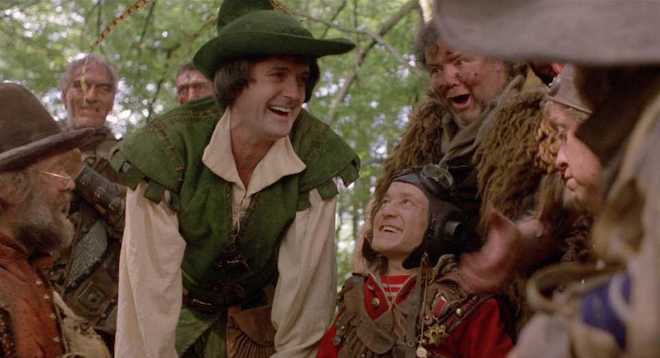
Palin wrote the part of Robin Hood for himself, but O’Brien insisted on casting John Cleese to improve the film’s box office prospects. Palin instead took the role of Vincent, hapless lover of Shelley Duvall’s Pansy. It was Duvall who was hapless, however, when Gilliam climbed some scaffolding to demonstrate to his cast how to fall correctly and ended up landing on her.
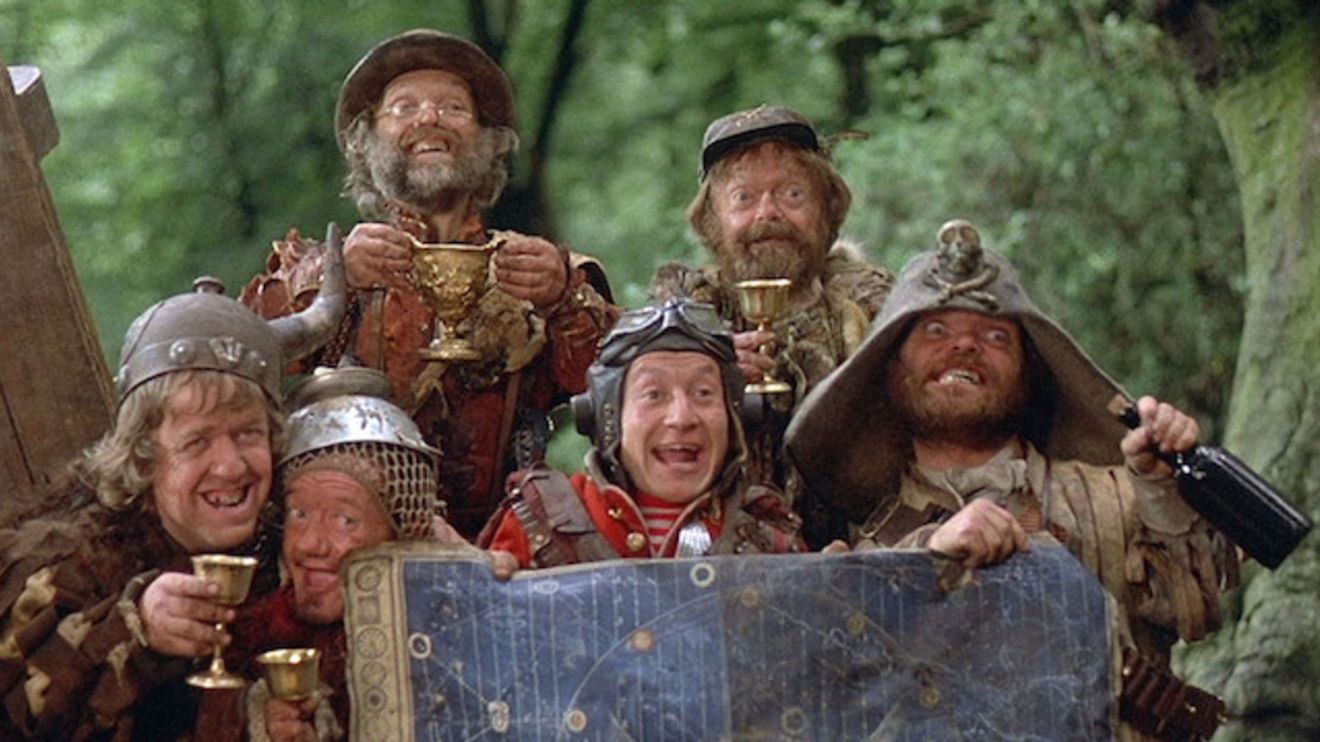
Amongst the actors playing the eponymous Time Bandits were Kenny Baker, best known as R2-D2 in the first six Star Wars films, Jack Purvis, who played a number of Jawas and Ewoks in the same franchise, and David Rappaport, whose extensive credits include episodes of The Young Ones, The Goodies and Not the Nine O’Clock News. A seventh bandit, Horseflesh, was cut over fears that Disney might perceive a Snow White rip-off and sue.
“I always thought of it like the mini Pythons,” said Gilliam of the bandit gang. “There was the leader, then there was the second one who really thought he could do it better…”
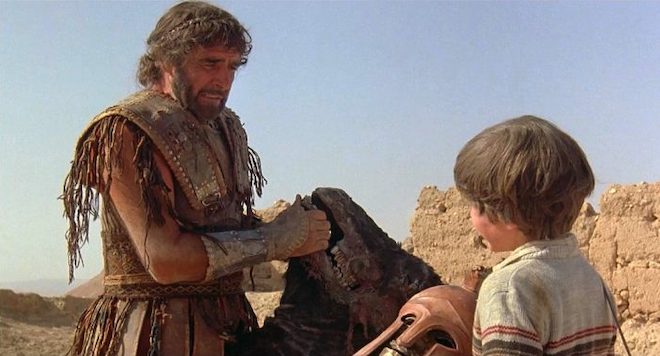
Meanwhile, the screenplay specifically called for the Greek king Agamemnon to be “none other than Sean Connery, or an actor of equal but cheaper stature”. O’Brien, who played golf with Connery, simply offered the part to the man himself. The cheeky Pythons accordingly updated the stage direction to read: “none other than Sean Connery, who it turns out we can afford”.
Nonetheless, creativity was in much greater supply than money, and Gilliam employed clever editing, reverse shots and miniatures to capture his vision within the budget. “I don’t think that there was anyone in America who believed that film cost less than 15 if not 20 million dollars,” O’Brien opined in a 1989 documentary.
O’Brien was not always supportive, however. He wanted to cut certain controversial moments like Vermin (Tiny Ross) eating rats, but Gilliam fought him. “There was a point where I threatened to burn the negative,” the director admitted in the same documentary.
O’Brien particularly hated the famously downbeat ending. Kevin wakes up in his own bed during a house fire, and is rescued by none other than Sean Connery. Connery himself suggested this second role after he proved unavailable to film Agamemnon’s scripted reappearance (and death) in the showdown at the Fortress of Ultimate Darkness.
The controversial moment comes after Connery’s firefighter departs; Kevin’s parents touch a piece of concentrated evil and immediately explode. O’Brien was forced to withdraw his objections to this shocking twist, however, when a test-screening audience chose the ending as their favourite part of the movie. While many fans of Time Bandits might agree, Gilliam believed that the test audience were simply trying to say that they were glad the movie was over!
We’ve all been there. Schedules are tight. Sooner or later the 1st AD, a producer or even the director is going to want to save time by “shooting the rehearsal”. I strongly disagree with this and here’s why.
No matter how great an actor is, they have only a finite amount of performance energy. They can only do so many takes before the results start to go downhill. In my experience, most actors deliver their best performance on take one or two.
So those first takes need to be useable. They need to be in focus. The timing of the camera movement needs to be right. The boom needs to be out of frame. The prop in the drawer that the talent has to take out halfway through the scene needs to be in position, not still in the standby props person’s hand because they didn’t realise we were going that far. The view out of the door that the talent opens at the very end needs to have been dressed and lit. What, you didn’t know they were opening the door because they skipped that in the block-through and you didn’t get a rehearsal? Bummer.
The purpose of a camera rehearsal is to find all these problems without burning the actors’ performance energy. If you roll the camera on the “rehearsal” – and I use quote marks because it isn’t a rehearsal any more – the cast have to deliver a full performance. Maybe a great, spontaneous performance that can’t be repeated. The last thing you want is for a boom shadow to be hovering over their forehead for half the scene.
Things like boom positions and focus pulling especially can only be properly rehearsed with the camera up and the cast moving through their actual positions. And you can talk about a scene all you want, but a moving picture is worth a million words. There’s no substitute for everyone watching the monitor during that rehearsal and seeing exactly what’s required.
Is a camera rehearsal always necessary on every set-up? No, especially if the scene has already been shot from several other angles, or if everyone’s confident that they know how it’s going to unfold, or if the scene demands little emotional commitment from the cast. But it should be the default practice.
Will a camera rehearsal always throw up problems? Of course not. And if it goes perfectly, people will curse that you didn’t roll, and start asking why we bother with camera rehearsals anyway. That’s life.
At Christmas 1978, when Superman: The Movie opened to enthusiastic reviews and record-breaking box office, it was no surprise that a sequel was in the works. What was unusual was that the majority of that sequel had already been filmed, and stranger still, much of it would be re-filmed before Superman II hit cinemas two years later.
Jerry Siegel and Joe Shuster’s comic-book icon had made several superhuman leaps to the screen by the 1970s, but Superman: The Movie was the first big-budget feature film. Producer Pierre Spengler and executive producer father/son team Alexander and Ilya Salkind purchased the rights from DC Comics in 1974 and made a deal to finance not one but two Superman movies on the understanding that Warner Bros. would buy the finished products. Salkind senior had unintentionally pioneered back-to-back shooting the previous year when he decided to split The Three Musketeers – originally intended as a three-hour epic – into two shorter films.
After packaging Superman I and II with A-listers Marlon Brando (as Kryptonian patriarch Jor-El) and Gene Hackman (as the villainous Lex Luthor), the producers hired The Omen director Richard Donner to helm the massive production. Donner cast the unknown Christopher Reeve in the title role, while John Williams was signed to compose what would prove to be one of the most famous soundtracks in cinematic history. Like many big genre productions of the time – Star Wars and Alien to name but two – Superman set up camp in England, with cameras rolling for the first time on March 24th, 1977.
Tom Mankeiwicz (creative consultant), Marlon Brando (Jor-El), Richard Donner (director), Pierre Spengler (producer). Brando is dressed in black to isolate his head for the Fortress of Solitude hologram effects.
“We were shooting scenes from the two films simultaneously, according to production conveniences,” explained creative consultant Tom Mankiewicz in a 2001 documentary. “So when we had Gene Hackman we were shooting scenes from II and scenes from I, or when we were in the Daily Planet we were shooting scenes from both pictures in the Daily Planet, while you were in that set.”
Today – largely thanks to Peter Jackson’s Lord of the Rings trilogy – we are used to enormous, multi-year productions with crew numbers in four figures, but the scale of the dual Superman shoot was unprecedented at the time, eventually reaching nineteen months in duration. It was originally scheduled for eight.
“Dick [Donner] never in the course of the picture got a budget; he never got a schedule,” claimed Mankiewicz. “He was constantly told that he was over schedule, way over budget, but nobody told him what that budget was or how much he was over that budget.”
Given that overspends were funded by Warner Bros. in return for more distribution rights, Spengler and the Salkinds were watching the value of their huge investment trickle away. So despite Donner’s popularity with the rest of the cast and crew, his relationship with the producers became ever more strained, to the point where they weren’t even on speaking terms.
Richard Lester directed iconic Swinging Sixties films like “A Hard Day’s Night” and “The Knack… and How to Get It”.
Ilya Salkind suggested bringing in The Three Musketeers director Richard Lester, who agreed on condition that he would be paid monies still owed to him from that earlier film. By some accounts his role on Superman was that of a mediator between the director and the producers, by others he was a co-producer, second unit director or even a back-up director in case Donner cracked under the pressure of the endless shoot. “Where does this leave… Donner?” asked a newspaper report of the time. “‘Nervous,’ a cast member says.”
Eventually, with the first movie’s release date looming, the filmmakers decided on a change of plan. Superman II would be placed on the back burner in order to prioritise finishing Superman: The Movie – and get it earning money as quickly as possible. At this point, three quarters of the sequel was already in the can, including all scenes featuring Brando and Hackman, both of whom had had contractual wrap dates to meet.
Superman: The Movie was a hit, but Donner would not direct the remainder of its sequel. “They have to want me to do it,” he said of the producers at the time. “It has to be on my terms and I don’t mean financially, I mean control.” Of Spengler specifically, Donner was reported to bluntly state, “If he’s on it – I’m not.”
And indeed Donner was not. The Salkinds had no intention of acceding to his demands. Instead, the former mediator Richard Lester was hired to complete Superman II, and Donner received a telegram telling him that his services were no longer required. “I was ready to get on an airplane and kill,” he recalled years later, “because they were taking my baby away from me.”
Master of miniatures Derek Meddings wets down the New York street. Many miniature effects were reshot simply so Lester could claim directorship of them.
Meanwhile Brando was trying (unsuccessfully) to sue the producers over royalties, and demanded a significant cut of the box office gross from the sequel. Rather than pay this, the producers elected to re-film his scenes, replacing Jor-El with Superman’s mother Lara, as played by Susannah York.
It was far from the only reshooting of Superman II footage that took place. Ironically, given the earlier budget concerns, Lester was permitted to redo large chunks of Donner’s material with a rewritten script in order to earn a credit as director under guild rules. Major changes included a new opening sequence on the Eiffel Tower, Lois Lane’s realisation of Clark Kent’s true identity after he trips and falls into a fireplace, and a different ending in which a magic kiss from Clark erases that realisation from her memory.
Some of the reshoots included Lex Luthor material, but Hackman declined to return out of loyalty to Donner; the result is the fairly obvious use of a double in the climactic Fortress of Solitude scene. The deaths of Geoffrey Unsworth and John Barry, plus creative differences between Lester and John Williams, meant that the sequel team also featured a new DP (Robert Paynter), production designer (Peter Murton) and composer (Ken Thorne) respectively, although significant contributions from all of the original HODs remain in the finished film.
Comparing his own directing style with Donner’s, Lester told interviewers, “I think that Donner was emphasising a kind of grandiose myth… There was a type of epic quality which isn’t in my nature… I’m more quirky and I play around with slightly more unexpected silliness.” Indeed his material is characterised by visual gags and a generally less serious approach, which he would continue into Superman III (1983).
Although some of the unused Donner scenes were incorporated into TV screenings over the years, it was not until the 2001 DVD restoration of the first movie that interest began to build in a release for the full, unseen version of the sequel. When Brando’s footage was rediscovered a few years later, it could finally become a reality.
Footage from Margot Kidder’s 35mm screen test was incorporated into the Donner Cut to show Lois Lane discovering Clark Kent’s true identity. Although causing some minor continuity errors, the scene is far more intelligent than Lester’s rug-tripping revelation.
“I don’t think there is [another] film that had so much footage shot and not used,” remarked editor Michael Thau. A vast cataloguing and restoration effort was undertaken to make useable the footage which had been sitting in Technicolor’s London vault for a quarter of a century. Donner and Mankiewicz returned to oversee and approve the process, which used only the minimum of Lester material necessary to tell a complete story, plus footage from Reeve’s and Margot Kidder’s 35mm screen tests.
Released on DVD in 2006, the Donner Cut suffers from the odd cheap visual effect used to plug plot holes, and a familiar turning-back-time ending which was originally scripted for the sequel but moved to the first film at the last minute. However, for fans of Superman: The Movie, this version of Superman II is much closer in tone and ties in much better in story terms too. The Donner Cut is also less silly than the theatrical version, though it must be said that Lester’s humour contributed in no small part to the sequel’s original success.
Whichever version you prefer, 40 years on from its first release, Superman II is still a fun and thrilling adventure with impressive visuals and an utterly believable central performance from the late, great Christopher Reeve.
We’re all familiar with the “good/fast/cheap” triangle. You can pick any two, but never all three. When it comes to lighting films, I would posit that there is a slightly different triangle of truth labelled “beautiful/realistic/cheap”. When you’re working to a tight budget, a DP often has to choose between beautiful or realistic lighting, where a better-funded cinematographer can have both.
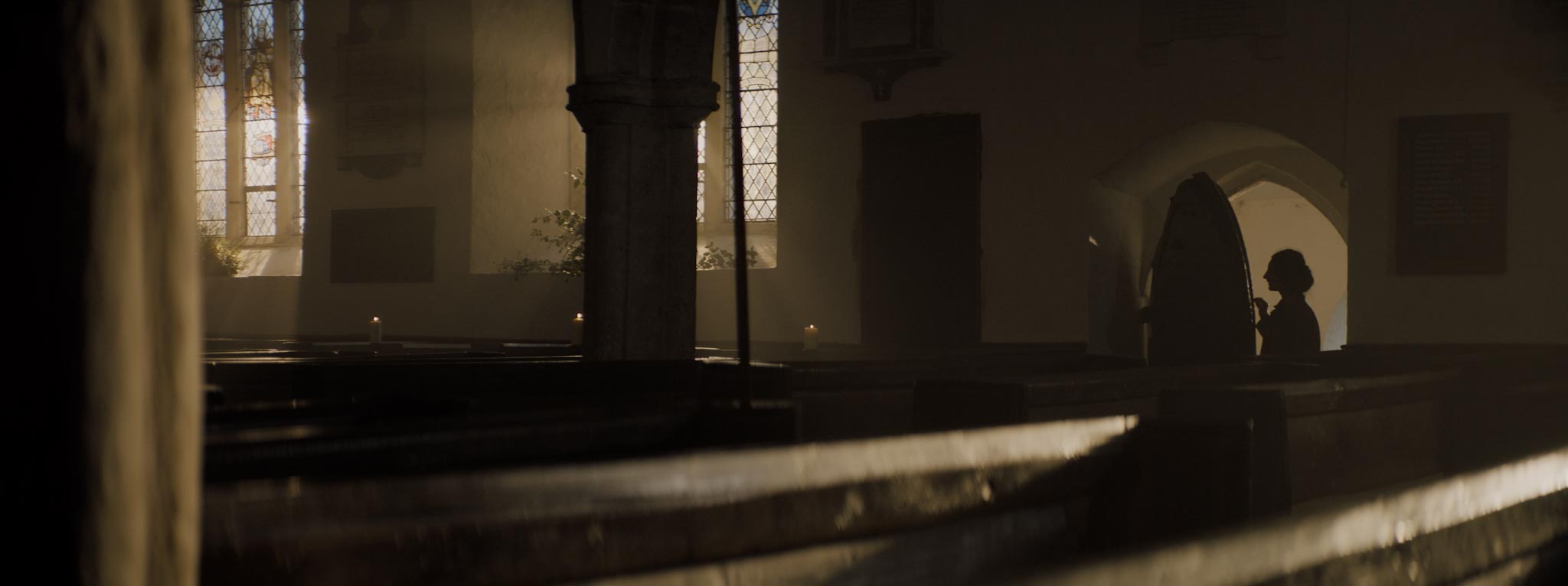
I first started thinking about this in 2018 when I shot Annabel Lee. Specifically it was when we were shooting a scene from this short period drama – directed by Amy Coop – in a church. Our equipment package was on the larger side for a short, but still far from ideal for lighting up a building of that size. Our biggest instrument was a Nine-light Maxi Brute, which is a grid of 1KW par globes, then we had a couple of 2.5K HMIs and nothing else of any signifcant power.
Director Amy Coop during the church recce for “Annabel Lee”
The master shot for the scene was a side-on dolly move parallel to the central aisle, with three large stained-glass windows visible in the background. My choices were either to put a Maxi Brute or an HMI outside each window, to use only natural light, or to key the scene from somewhere inside the building. The first option was beautiful but not realistic, as I shall explain, the second option would have been realistic but not beautiful (and probably under-exposed) and the third would have been neither.
I went with the hard source outside of each window. I could not diffuse or bounce the light because that would have reduced the intensity to pretty much nothing. (Stained-glass windows don’t transmit a lot of light through them.) For the same reason, the lamps had to be pretty close to the glass.
The result is that, during this dolly shot, each of the three lamps is visible at one time or another. You can’t tell they’re lamps – the blown-out panes of glass disguise them – but the fact that there are three of them rather gives away that they are not the sun! (There is also the issue that contiguous scenes outside the church have overcast light, but that is a discontinuity I have noticed in many other films and series.)
I voiced my concerns to Amy at the time – trying to shirk responsibility, I suppose! Fortunately she found it beautiful enough to let the realism slide.
But I couldn’t help thinking that, with a larger budget and thus larger instruments, I could have had both beauty and realism. If I had had three 18K HMIs, for example, plus the pre-rig time to put them on condors or scaffolding towers, they could all have been high enough and far enough back from the windows that they wouldn’t have been seen. I would still have got the same angle of light and the nice shafts in the smoke, but they would have passed much more convincingly as a single sun source. Hell, if I’d had the budget for a 100KW SoftSun then I really could have done it with one source!
There have been many other examples of the beauty/realism problem throughout my career. One that springs to mind is Above the Clouds, where the 2.5K HMI which I was using as a backlight for a night exterior was in an unrealistic position. The ground behind the action sloped downwards, so the HMI on its wind-up stand threw shafts of light upwards. With the money for a cherry-picker, a far more moon-like high-angle could have been achieved. Without such funds, my only alternative was to sacrifice the beauty of a backlight altogether, which I was not willing to do.
The difference between that example and Annabel Lee is that Clouds director Leon Chambers was unable to accept the unrealistic lighting, and ended up cutting around it. So I think it’s quite important to get on the same page as your director when you’re lighting with limited means.
I remember asking Paul Hyett when we were preppingHeretiks, “How do you feel about shafts of ‘sunlight’ coming into a room from two different directions?” He replied that “two different directions is fine, but not three.” That was a very nice, clear drawing of the line between beauty (or at least stylisation) and realism, which helped me enormously during production.
The beauty/realism/cost triangle is one we all have to navigate. Although it might sometimes give us regrets about what could have been, as long we’re on the same page as our directors we should still get results we can all live with.