Inspiration and information for filmmakers everywhere
April 21, 2013 by neiloseman

Back to the Future

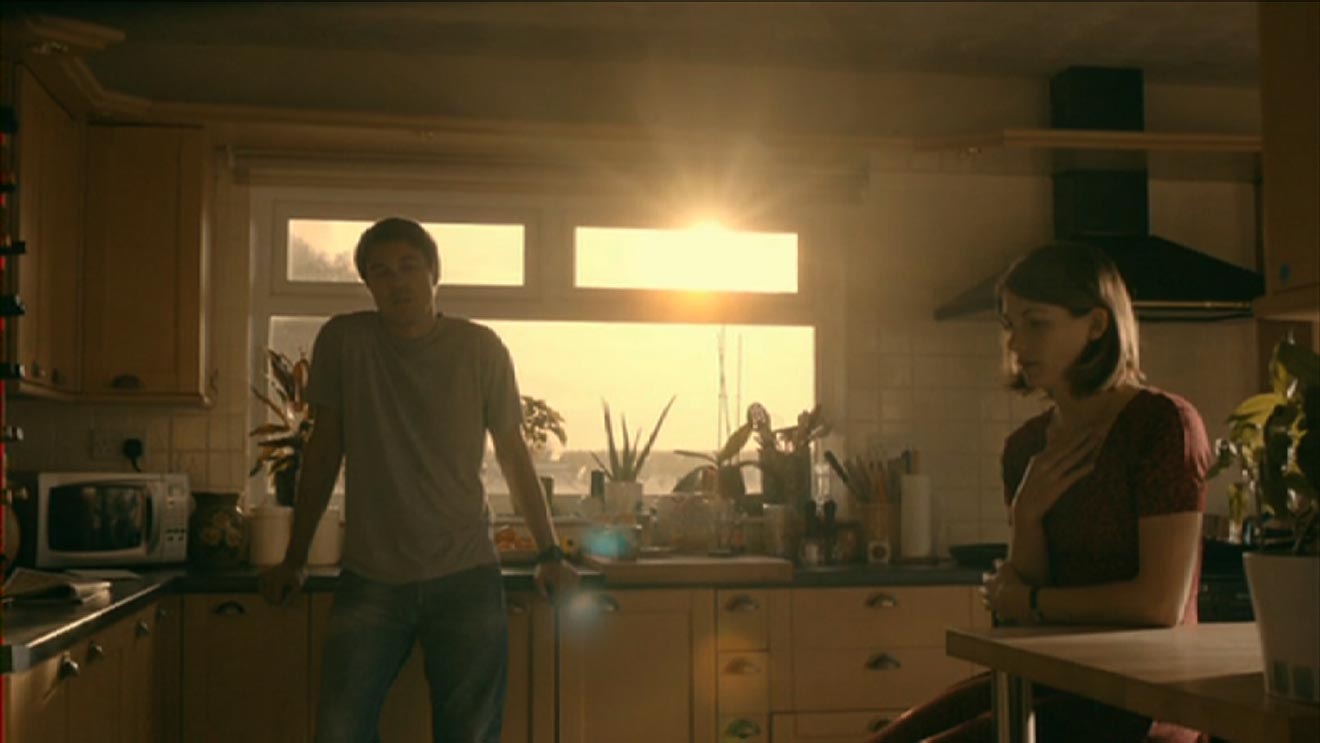
The first day of shooting on Stop/Eject. Photo: Paul Bednall

The first day of shooting on Stop/Eject. Photo: Paul Bednall

Like Janus I’m looking forwards and backwards today, the first anniversary of Stop/Eject‘s shoot beginning. First of all, here are a few key things I’ve learnt from making Stop/Eject:

With the project drawing near to completion, my thoughts are turning towards my next films. As regular readers will know, writer Tommy Draper has been working on a feature-length version of Stop/Eject for some time.

However, I feel that trying to get a feature financed with me as director right now wouldn’t be much easier than it was a couple of years ago when I was trying to get The Dark Side of the Earth made. So I intend to make another short film first. It’s too early to reveal any details, but I can tell you that after advertising on Shooting People I’ve teamed up with a writer called Kevin O’Connor who is currently working on a third draft script based on a one-line idea of mine.

I’ll also be entering Virgin Media Shorts again this year, and my wife Katie is hard at work on a puppet for that. Intrigued? You ought to be.

Stay tuned for the latest news on all of these projects, and I’ll leave you with a reminder of what we were up to this time last year.

  •   •   •   •   •
April 3, 2013 by neiloseman

ADR Podcast

As a belated public reward for passing the £1,400 mark in Stop/Eject‘s crowd-funding campaign (over two months ago!), here is a video podcast from the ADR recording on March 15th. See my earlier blog for more info about how the session went.

Thanks to Gerard Giorgi-Coll for filming this and Soundtree Music for the use of their studio.

  •   •   •   •   •
March 13, 2013 by neiloseman

HENRi

I have to share this amazing short film I discovered recently thanks to nofilmschool.com. HENRi is a 20 minute crowd-funded sci-fi movie about a computer that builds a robot body for itself and tries to become human. It stars Margot Kidder (best known as Lois Lane in the original Superman movies) and Keir Dullea, who flips his famous role as David Bowman in 2001: A Space Odyssey to play the titular computer. But the human characters are only a small part of this film. Shot on beautiful quarter-scale sets, the real star is the HENRi robot, realised through a combination of rod puppetry and first rate CGI. Trust me, this is one of the most unique and awesome shorts you will ever see and well worth every penny of the £1.19 rental fee.

  •   •   •   •   •
February 18, 2013 by neiloseman

It Never Rains but it Pours

This is a clip from the feature-length documentary Going to Hell: The Making of Soul Searcher. You can rent the whole doc digitally from the Distrify player below for a small charge, and you can watch Soul Searcher itself for free at neiloseman.com/soulsearcher

The clip shows how we created a fake downpour for a fight between the outgoing Grim Reaper, Ezekiel (Jonny Lewis, doubled by Simon Wyndham), and his replacement, Joe (Ray Bullock Jnr.). Ironically it was actually raining for real, but not heavily enough to show up on camera with the impact we needed. We’d had some rain bars made (lengths of hosepipe with holes drilled in them, strapped to bamboo canes) but we found the water squirted out in unrealistic jets. Luckily the location – Westons Cider in Much Marcle, Herefordshire – had a high pressure hose and we found that by pointing it upwards the water back down looking like rain.

See last week’s post for how to add rain (and snow) onto scenes after the fact.

  •   •   •   •   •
January 29, 2013 by neiloseman

Tapering Lines and Milky Shadows

Recently I was hired by Astute Graphics to direct an advert-like promotional film for the launch of their new product, an Adobe Illustrator plug-in called WidthScribe. Here is the result:

Laura gets to grips with WidthScribe on a Cintiq touchscreen. Photo: Sophie Black

Laura gets to grips with WidthScribe on a Cintiq touchscreen. Photo: Sophie Black

It was a really fun and creative project, working with a great bunch of people including gaffer and GlideCam operator Colin Smith, designer and make-up artist Sophie Black, actress Laura Markham, and Nick van der Walle from Astute Graphics.

I have noticed a recent trend in adverts for a milky, low-contrast look, and I felt this would be an appropriate project for such a look. I knew that we would be featuring crisp, contrasty vector graphics throughout the film, so it made sense to counterpoint these with live action that was organic, soft and diffuse.

In preparation I set up a picture profile on my Canon 600D with minimum contrast and sharpness, and slightly reduced colour saturation.

On set the front light came from softboxes, reflectors and natural bounce, though always with a strong backlight to prevent the image from looking completely flat. The backlight also produced lens flare which further reduced the contrast of the image by lifting the shadows. In fact, I decided that almost every shot should have a lens flare, to enhance that organic look. Often this meant that Col would stand next to the camera and shine a 100W reporter light into the lens.

Fake sun

The "sun" here is actually a 1,000W Arrilite in the garden. Lens flare and smoke soften the image, while a fluorescent lamp in a softbox provides fill from out of the top right of frame.

Smoke was used in the kitchen scene, again to lift the shadows and diffuse the light. By a stroke of luck, the direct, wintery sunlight I faked in this scene with a 1,000W Arrilite pretending to be the sun was replicated almost exactly by the real sun when we filmed the office scene the following day.

In a future post I’ll reveal the secrets of the driving shots.

  •   •   •   •   •
January 27, 2013 by neiloseman

Scott Benzie: Composer Extraordinaire

Scott Benzie conducts the Worcestershire Symphony Orchestra as they perform his score for Soul Searcher.

Scott Benzie conducts the Worcestershire Symphony Orchestra as they perform his score for Soul Searcher.

Today’s post is an introduction to Scott Benzie, composer of Soul Searcher, The Dark Side of the Earth and now Stop/Eject. (The series on VFX planning will continue next week.)

After becoming interested in music at a relatively late age, thanks to a synthesizer Christmas present and the inspiration of James Horner’s Krull soundtrack, Scott majored in music at Notthingham Trent University. In 2002 he wrote an impressive orchestral score for Jim Groom’s noir feature Room 36, conducting the Westminster Philharmonic Orchestra and recording all 50 minutes of music in a single day. Scott repeated this feat for Soul Searcher three years later, after responding to an advert I posted on Shooting People for a fully orchestral John Williams-style score – a goal which many people mocked as naïve or over-ambitious, but not Scott.

The composer’s other feature film credits include Ten Dead Men (dir. Ross Boyask), Fear Eats the Seoul (dir. Nick Calder), and Dinner with my Sisters (dir. Michael Hapeshis) which was released in UK cinemas last November. Several of Scott’s soundtracks have been released in their own right, including Room 36 which is available on CD from KeepMoving Records.

Scott recently took his first crack at some music for Stop/Eject and this is the result:

This is rough, unmixed and all done with samples. The finished version will, I hope, be recorded with live players. On Soul Searcher  we were able to persuade a choir and a symphony orchestra to perform Scott’s score for us. Here’s a clip from Going to Hell: The Making of Soul Searcher covering the music recording, one of the few things that didn’t go horribly wrong during Soul Searcher’s creation. (Remember that you can watch Going to Hell in full for a small charge at neiloseman.com/soulsearcher and Soul Searcher itself completely free on the same site.)

Visit Scott’s website at www.scottbenzie.co.uk

  •   •   •   •   •
January 23, 2013 by neiloseman

Planning VFX: Computer Generated Imagery

Following on from last week’s thoughts on planning VFX shots, I’m now going to look at the issue of CGI vs. miniatures. In this post I’ll cover some of the advantages of choosing computer generated imagery, and next time I’ll look at the advantages of miniatures. As any regular readers will know, I much prefer miniatures, but I aim to be completely impartial in what follows.

To start off with let’s go back 20 years to Jurassic Park, the movie that really started the CGI revolution, and find out why Steven Spielberg chose this emerging technology over traditional techniques. (Skip to 13:12.)

So Spielberg favoured CGI because it produced more realistic motion. In fact, watching Jurassic Park these days I find the CG dinosaurs are easily differentiated from Stan Winston’s full size animatronics by the fact that the former move much more fluidly. Even when miniatures move “live”, i.e. without stop motion animation – vehicles powered by motors or pulled on hidden wires, for example – the motion is often less realistic than a CGI equivalent because the laws of physics dictate a small thing will always move differently from a large thing.

Next up, here’s a clip from Going to Hell: The Making of Soul Searcher, in which I discuss how I arrived at CGI as the best method of creating the spectral umbilical cords the script required. (You can watch the whole of this feature-length documentary at neiloseman.com/soulsearcher.)

So control was the key thing there. There were 80 shots, many with camera moves, and the umbilical cords had to be locked to the characters. Trying to achieve this with string and cables was just not realistic, or would have required so much manipulation in post as to make shooting a real element pointless. CGI can be controlled completely and adjusted quickly, without the need for reshoots.

Here are some other pros of CGI over traditional techniques:

  • No shooting required, so no crew to pay, feed, transport, etc. On a micro-budget where the crew are unpaid, CGI is completely free, whereas any kind of miniature shoot will always have costs.
  • CG elements can be tracked to moving plates without the need for expensive motion control cameras.
  • There are far more talented and experienced CG artists out there than model-makers.
  • You can create anything you can imagine, without any practical or logistical restrictions.

Can you think of any others? Let me know. Next time I’ll look at the advantages of traditional techniques.

  •   •   •   •   •
December 20, 2012 by neiloseman

Georgina Sherrington: The Worst Witch Interview

A thank you from Georgina Sherrington and an announcement about an exciting new reward for Stop/Eject sponsors: access to an exclusive 20 minute interview with Georgina about her experience of playing Mildred Hubble in the popular ITV children’s series The Worst Witch.

stopejectmovie.com/donate

  •   •   •   •   •
December 7, 2012 by neiloseman

Stop/Eject: December 2012

It’s high time for an update on the progress of Stop/Eject, my magical and moving fantasy-drama about a tape recorder that can stop and rewind time.

First up, thanks to the auctioning-off of a hat worn by lead actress Georgina Sherrington (The Worst Witch), our fundraising total has crossed the £1,200 mark. That means we’re over 80% of the way to our £1,500 target. It also means that the last in our series of behind-the-scenes podcasts from the set of Stop/Eject has been released.

Thanks once again to Sophie Black for editing this, and indeed all of the behind-the-scenes podcasts.

Down in Hay-on-Wye, editor Miguel Ferros is hard at work cutting Stop/Eject itself. I went down there on Tuesday and had a sneak peek at the first few minutes, which is already streets ahead of the version I edited. A fresh pair of eyes is indeed a very valuable thing at this stage in a film’s creation.

Meanwhile, I’ve also been editing – editing Record & Play: The Making of Stop/Eject, a 30 minute documentary which will form the centrepiece of the DVD and Bluray’s bonus features. Several brand-new interviews have been filmed for this, including one with Georgina. At the same time we interviewed her on another subject, and we hope to be revealing this soon as an exciting new reward for sponsors.

Press kit outside cover by Alain Bossuyt

Press kit outside cover by Alain Bossuyt

Alain Bossuyt, who won our poster design competition earlier in the year, has adapted and expanded his eye-catching design into a folder for the press kits. Although it will probably be quite a while before these kits are needed, it’s always useful to have them around just in case. You can find out more about Alain and his work (with the help of Google Translate) at leplanb.fr

Another designer, Andy Roberts, who did all the graphics for the Worcestershire Film Festival, is busy laying out the illustrated script book for those sponsors who selected the Unit Publicist reward. I’m looking forward to seeing what he comes up; I’m sure it will be a fantastic souvenir. Andy’s website is at speakersfive.co.uk

Press kit inside cover by Alain Bossuyt

Press kit inside cover by Alain Bossuyt

This afternoon I was interviewed by Toni McDonald on BBC Radio Hereford & Worcester. If you missed it, you can listen to it online. My part is about 2 hrs 45 mins into the programme.

And on Tuesday, Stop/Eject’s trailer will be screened at the Underwire networking event in Wolverhampton, along with the trailer for producer Sophie Black’s own short film, Ashes. Tickets can be bought online for £5.

Remember – apart from the hat, which was of course a one-off – all of the sponsor rewards mentioned above are still available. So if you want to secure yourself a copy of the DVD or Bluray, bag a ticket to the premiere or get one of the illustrated script books, head on over to stopejectmovie.com/donate and make your contribution.

  •   •   •   •   •
October 29, 2012 by neiloseman

Stop/Eject: Shoot Day 4

Better late than never – it’s the £1,000 public reward in our crowd-funding campaign: a behind-the-scenes look at the fourth day of shooting. As usual, big thanks to Sophie for editing this.

We’re just £22 away from the £1,100 Mystery Reward. Stay tuned to find out what that will be.

  •   •   •   •   •