I’m about halfway through writing my book on the history of Doctor Who’s cinematography. So far I’ve conducted eight interviews, drafted 40,000 words, watched many episodes from all eras of the series (in no sensible order), read three books and numerous magazine articles, and spent untold hours in online research.
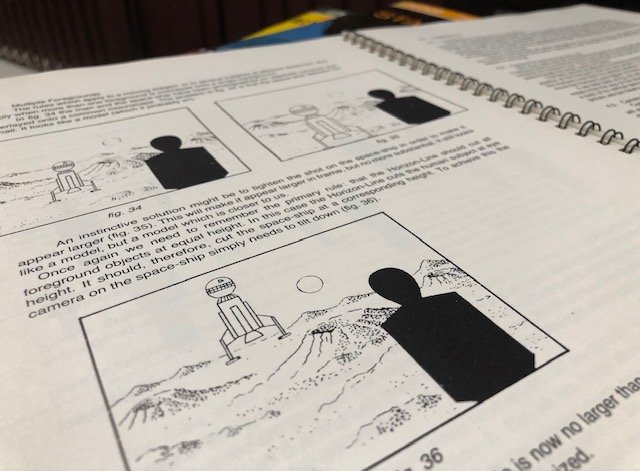
Today I was kindly treated to lunch by a fellow of one of the Cambridge colleges, just a mile down the road from me. His father was a BBC camera op during the 70s, 80s and 90s, worked with six of the first seven Doctors, and was one of the first people I found out about when I started researching the book. Last month I worked on a short film with someone who happened to know his son, hence the lunch. It’s a small world. I came away with a copy of a treatise the father wrote about aligning foreground and background elements in VFX shots. Which is what I was doing in York last week, shooting second-unit blue-screen shots for Mars Express. It’s a very small world.
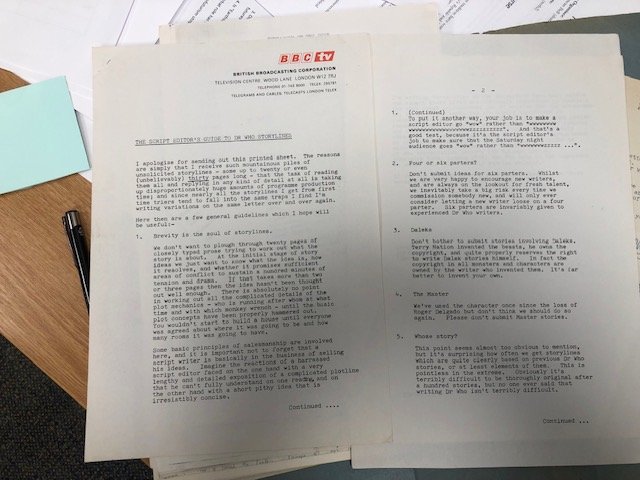
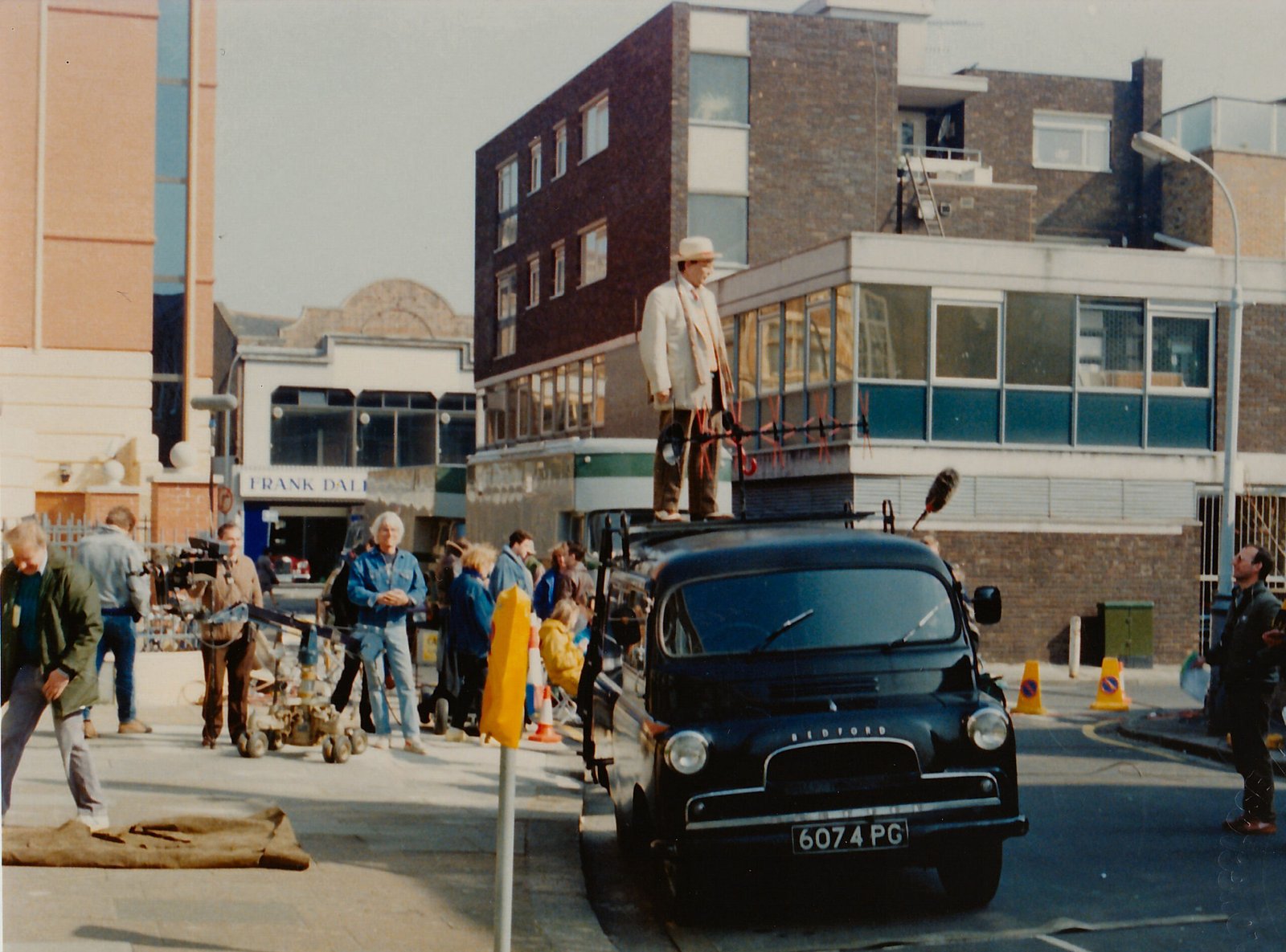
That BBC camera op is one of a small number of Doctor Who’s 20th-Century technical crew who recorded their experiences on the series during their lifetimes. Another was a lighting designer on outside broadcasts. He wrote several columns about his Doctor Who work in an industry magazine. Now a colleague of his has come forward and generously offered me access to his notes.
I’ve come across some real treasure troves of online information. Tech-ops.co.uk is one of them. The British Entertainment History Project is another. For anyone who’s a fan of Waris Hussein, Doctor Who’s first director, they have a three-hour interview with him. The fact that they’ve interviewed camera ops and engineers too, not just above-the-line crew, is extremely useful.
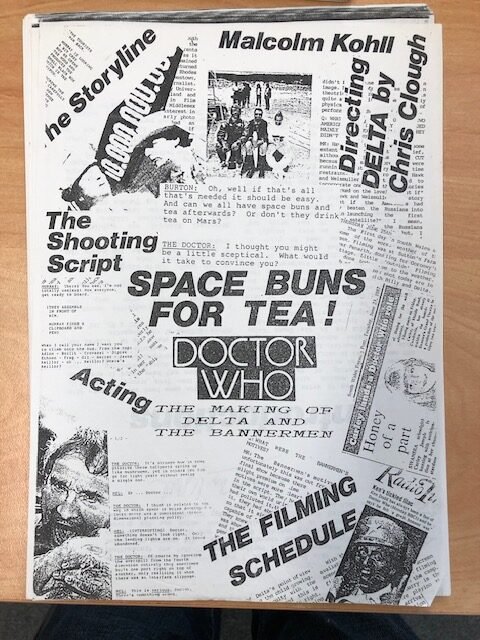
That’s all for now. I’m doing enough writing without doing a bunch more on here too, but enjoy this strangely beautiful photocopier collage on the cover of a fan-made 1987 newsletter.