Happy Doctor Who Day!
My happy Doctor Who day was two days ago, Saturday. It was the day I found out who the four cameramen on the very first episode were.
Many people I speak to, when I tell them I’m writing a book about Doctor Who’s cinematography, picture something with a lot of images and critical analysis. That’s not what I’m doing. I’m writing about the people (camera ops, lighting designers, DPs, gaffers), their experiences, creative contributions, frustrations, and how the Time Lord and the Tardis were part of their careers.
This is difficult with classic Doctor Who, the series that ran from 1963-88. Until 1979 no studio camera operators were credited on screen, and even after that it was only the senior one (out of four or five). They were grouped into numbered crews, and the number of the crew which shot each story is often all that survives – if that. I knew from the camera script that Crew 1 shot Doctor Who’s first episode, but who the individuals were on that crew – well, that took some digging.
There are two ways to know: the person remembered and shared that information online while they were still alive (because so many aren’t any more), or you have the Technical Operations staff list from the correct period.
Certainly some people did remember and share. Sites like tardis.fandom.com and guide.doctorwhonews.net have collated a lot of that info – they were my first calling points when I put together a spreadsheet of all the personnel over the summer. But that’s pot luck. Most of the camera operators who worked on the classic series’ 26 years aren’t on sites like that, or any sites for that matter. Apart from anything else, BBC camera ops (they were employees) worked on an enormous number of programmes, almost a different one every day. They might remember they did a Doctor Who once, but not which story. Particularly if they no longer have their BBC-issue diaries.
The staff lists are a bit more reliable. (Though just because someone was on a crew when a show was made, doesn’t necessarily mean they actually worked on it. They could have been off sick or on holiday.) The problem is finding them. I’d come across several on tech-ops.co.uk – by far the most useful website on the planet while I’ve been researching this book – but not the right ones. I had one from May 1962 and another from September 1965, but the crew line-ups changed so often that I couldn’t be certain what the state of play was in September and October 1963 when Doctor Who’s first episode was shot.
I dug.
I found emails from someone who was on Crew 1 and claimed to have been involved in shooting the title sequence. That turned out to be a red herring because he was in sound, not cameras.
I found a YouTube video about “Doctor Who’s first cameraman”, but neither the ’62 or ’65 staff lists corroborated that, and no one on the BBC Facebook groups I joined seem to have heard of him.
One of my Facebook posts turned up a name I hadn’t considered, a man who was known to have been the senior cameraman on a few Patrick Troughton (Second Doctor) stories, but – as far as I can tell – has never been linked to the first story.
I found an interview with the man who operated the camera that captured the first-ever Dalek POV shot, which meant he was probably on all four of the first stories, because they were all done by Crew 1. That was more promising. And the interview (from 2014) mentioned that Ariel, the BBC’s internal magazine, had covered the Dalek POV thing “about fifteen years ago”. Surely such an article would mentioned other members of the camera crew, or at least have other interesting details?
I spent a day at the British Library looking through Ariels circa 1999. It was only when I picked up the first few from the collection counter in the reading room that I realised Ariel was a weekly publication, not monthly. There were 52 to check, in the unlikely event that “fifteen years ago” was a completely accurate statement. I did find a couple of interesting nuggets for elsewhere in the book, but otherwise the day was a bust.
I went to De Montfort University in Leicestershire and looked through some of their collection of Doctor Who camera scripts and schedules. Again, I found interesting stuff, but got no closer to identifying those first four cameramen.
By this time I had found enough crumbs to guess who they were, but a guess wasn’t good enough. I was obsessed. I could absolutely write a perfectly good book without that information, but I would never be satisfied.
Finally, having exhausted all other avenues, I booked a day at the BBC Written Archive. It would more than blow the last of the advance my publisher had paid me, but I had to know who those four men were.
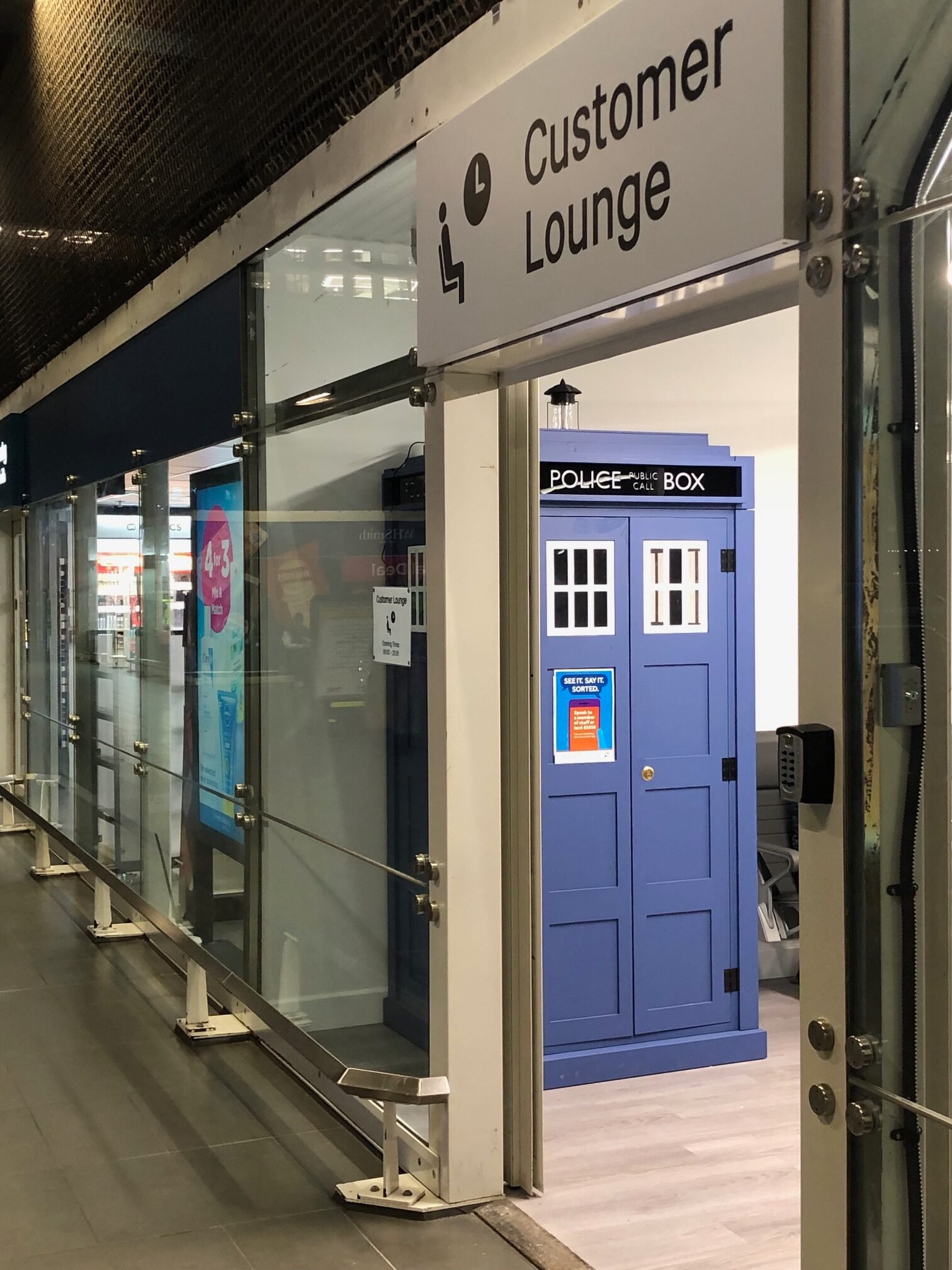
I arrived in Reading at 9am last Thursday. The first thing I saw was a Tardis in the station waiting room. I made my way to the unassuming white BBC bungalow on the northern outskirts of the city. When the Reading reading room opened at 10 I was shown to the shelf that held the staff lists. As soon as I started flicking through them my heart fell. They were not Technical Operations staff lists; they were directories of all departments of the BBC, listing the most senior people in each. They did not list the camera crews. I asked the archivist. She told me – although I had specified that I was after Technical Operations staff lists when I booked the day – that that level of detail hadn’t survived.
I spent the rest of the day looking through production files and more copies of Ariel. Although I found many fascinating things, like how much William Hartnell and Carole Ann Ford were paid for episode five of “The Daleks” (£210 and £63 respectively), and the entire set of storyboards for “Underworld”, I went home dissatisfied. I was never going to know.
On Friday I tried to forget my defeat as I interviewed the father of an old filmmaking acquaintance, who happened to be a camera operator on Doctor Who for four years. I had to quickly rewatch some chunks of his episodes in preparation. (“You’ve managed to turn watching Doctor Who into a job. That’s next-level,” said my flatmate.)
On Saturday morning I followed up on the fragments of new information I had found at the Written Archive. One of these was that “Underworld” was shot by Crew 10 – but who was on Crew 10? Once again I was stuck because I didn’t have the right staff list. I went on tech-ops.co.uk and searched for it, just in case. I had already searched the site several times for staff lists, particularly any from 1963, in my quest to find the first four cameramen.
This time it came up.
I couldn’t quite believe it. “Does that say ‘1963 crew list’?” I asked out loud. Tech-ops.co.uk did not respond, because websites don’t do that, at least not just yet.
I scrolled down to the document in question. It said “1964 crew list”. Okay, not so good, but still better than what I had.
I opened it up. There, under the heading “Crew 1”, were the four cameramen I suspected – but until then could not confirm. Two of them were in a different order than I expected (the crew lists always printed the names in descending seniority), but they were there!
I checked the date. The heading of the page was right; the filename was wrong. This was a 1963 list. A November 1963 list, no less – the exact month Doctor Who began.
63 years ago.
Happy day, oh happy day. Happy Doctor Who Day.