This post first appeared on Ren’s Patreon page.
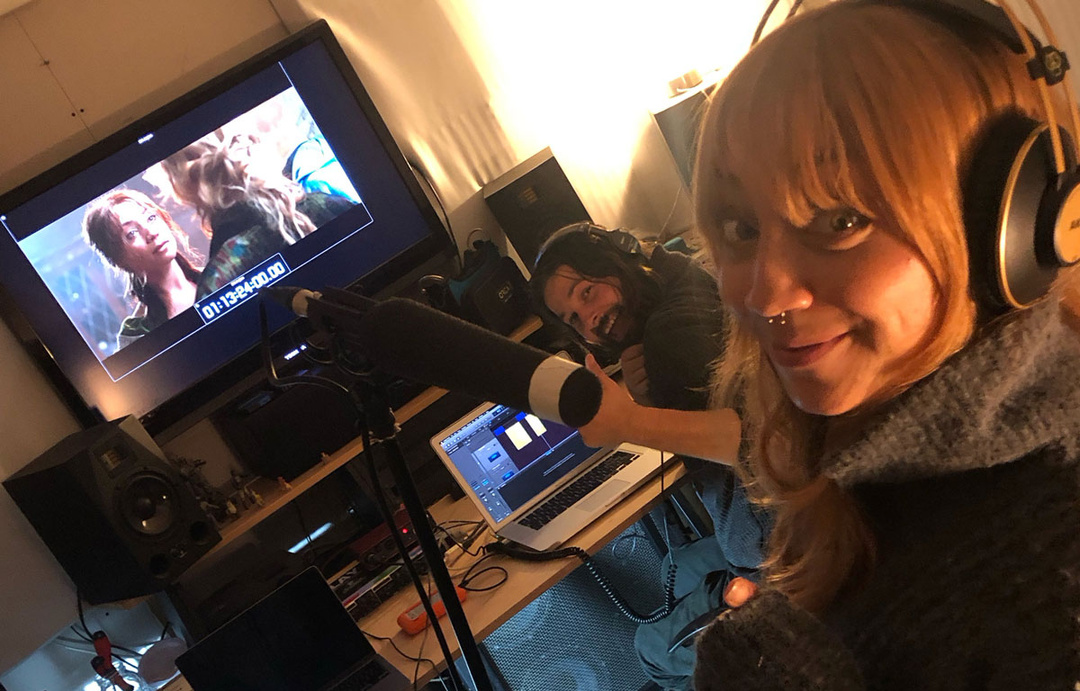
Actively Dubbing Ren is not what ADR stands for. It stands for Additional Dialogue Recording or Automated Dialogue Replacement, depending on who you ask. This is one of the main tasks we’ve been accomplishing since my last update.
Essentially the cast come into Dale’s studio and record old or new lines while watching the footage to keep themselves in sync. This might be because, despite their best and always excellent efforts, Dale and his team couldn’t get clean audio on the day of filming – due to nesting birds in the studio, planes going overhead, crackling fires, or adjacent weddings. Occasionally it’s because a slightly different delivery from the actor would help tell the story a little better. And quite often it’s because we’ve written a whole new line to clarify a plot point or a character’s motivation.
All films go through this process, and I for one really enjoy figuring out ways to strengthen scenes this way. “20 years it’s been left like this,” is a fairly bald piece of exposition, added in response to test audiences asking how long Helgoth had been a ruin. On the other hand, a mocking call of “Run along home to your ma!” (in a different episode) adds to the emotional pressure building on a character and hopefully gives more impact to what happens next. Just a couple of examples of what Actively Dubbing Ren can do.
Elsewhere Mara is working her magic in the colour grading suite at Harbor Picture Company. I’ve just signed off 301 after a bit of back and forth over a flashback. Having graded seven episodes of Ren now, Mara knows the look of the series very well and needs almost no guidance, but occasionally something comes up that needs a little feeling out. The best way to convey ideas about colour grading is with reference images, and sometimes these can be pretty random.
Here are a couple of examples…
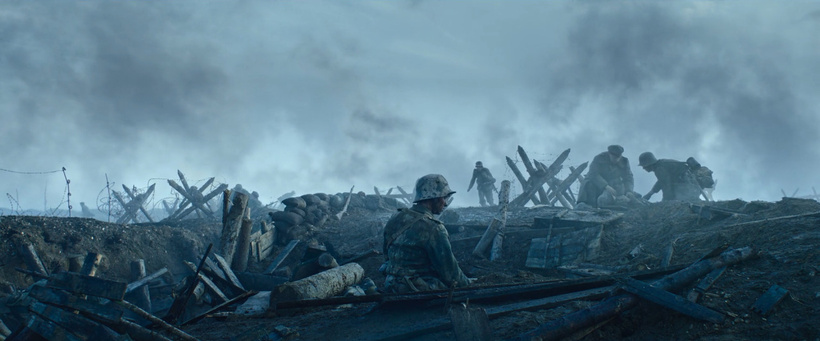
Above is the image I sent to Mara last season for the battlefield flashbacks, which ended up looking like this…
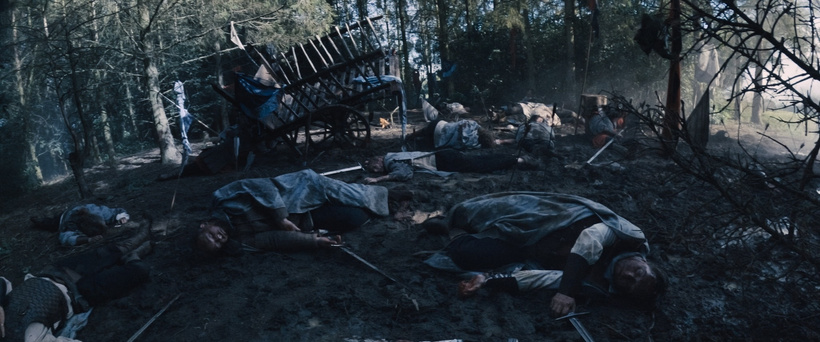
As for the 301 flashback, here’s how it looked before grading… (Professionally we always shoot in a flat colour profile so that we capture the maximum information to grade with.)
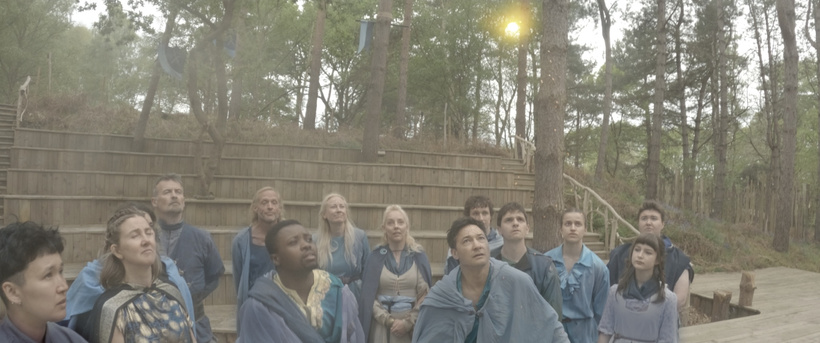
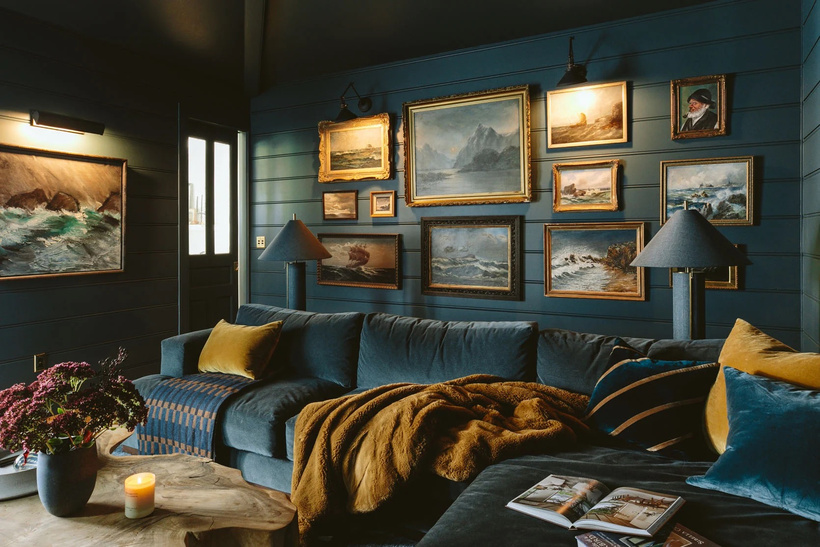
The reference image which I sent to Mara for this scene came from an interior design website…
And here is the final graded image…
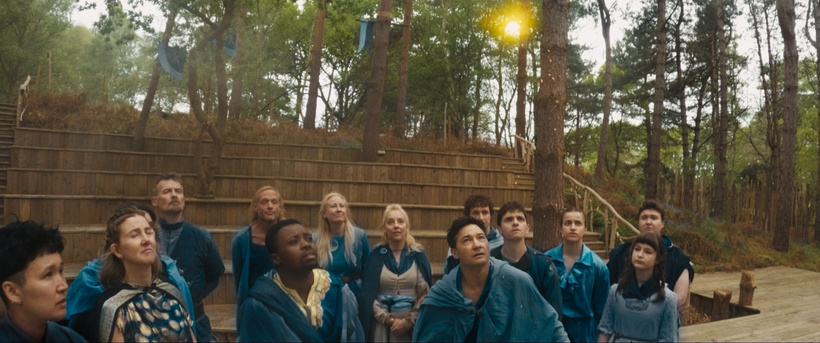
You’ll have noticed the Mahri spirit in the shot, and visual effects are the other big thing that we’ve been working on. The spirit is an interesting one because the look was established in Season One by artists Casen Sperry and James Berridge. I’m not sure what software they were working in, but I’ve used the open-source 3D application Blender to recreate it, the same software I created the title sequence in.
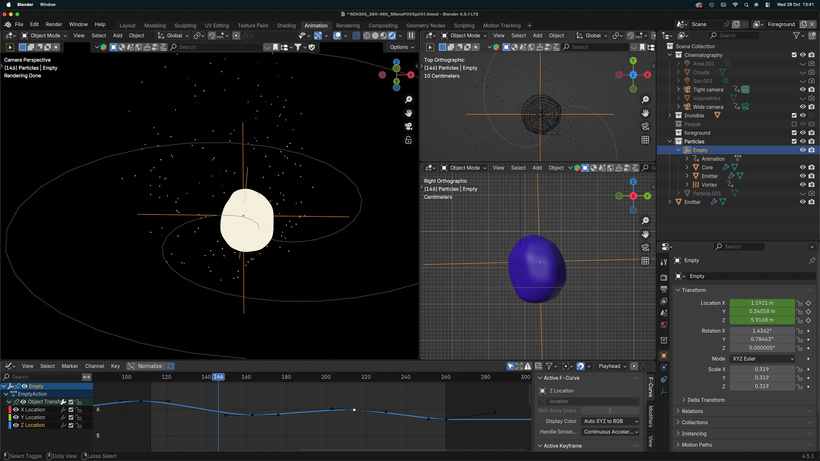
The spirit uses all three kinds of animation that Blender supports: procedural, physics simulations and keyframing. The core of the spirit is a simple sphere which is made to throb and pulse procedurally, i.e. using maths, in this case by applying a noise pattern to its geometry. The particles it emits are a physics simulation. I have complete control over the particles’ mass and velocity when they spring into life, but then they behave according to the level of gravity I’ve set and any additional forces; I’ve attached a vortex force to the core so that the particles orbit it. Finally the gross movement is keyframed, meaning that I position it manually at certain points in the timeline and the software interpolates the positions inbetween. To get the right floaty movement I often look at the spirit’s positions in graph mode and add curves so that it doesn’t just stop and start like a robot. The fun part is that there are many parameters within all this which I can change to give a faceless floaty blob expression and personality.
Whether you guys are having fun reading about this is another question. What do you think of today’s post? What would you like to hear more about in the blog? And less about? Comments please!