Ren: Lighting the Prison Cell

After a month of shooting exteriors, yesterday we shot the first interior set for Ren. Which was just as well since a tropical storm was raging outside and blowing down parts of the exterior village set.

It was a classic prison cell scene, one of those shaft-of-light-through-the-barred-window jobbies. Amanda Stekly and her team did a great job of creating a two-walled set with moss, wet stone and even real snails. Outside the window was a platform to sell the illusion that the cell was below ground level.

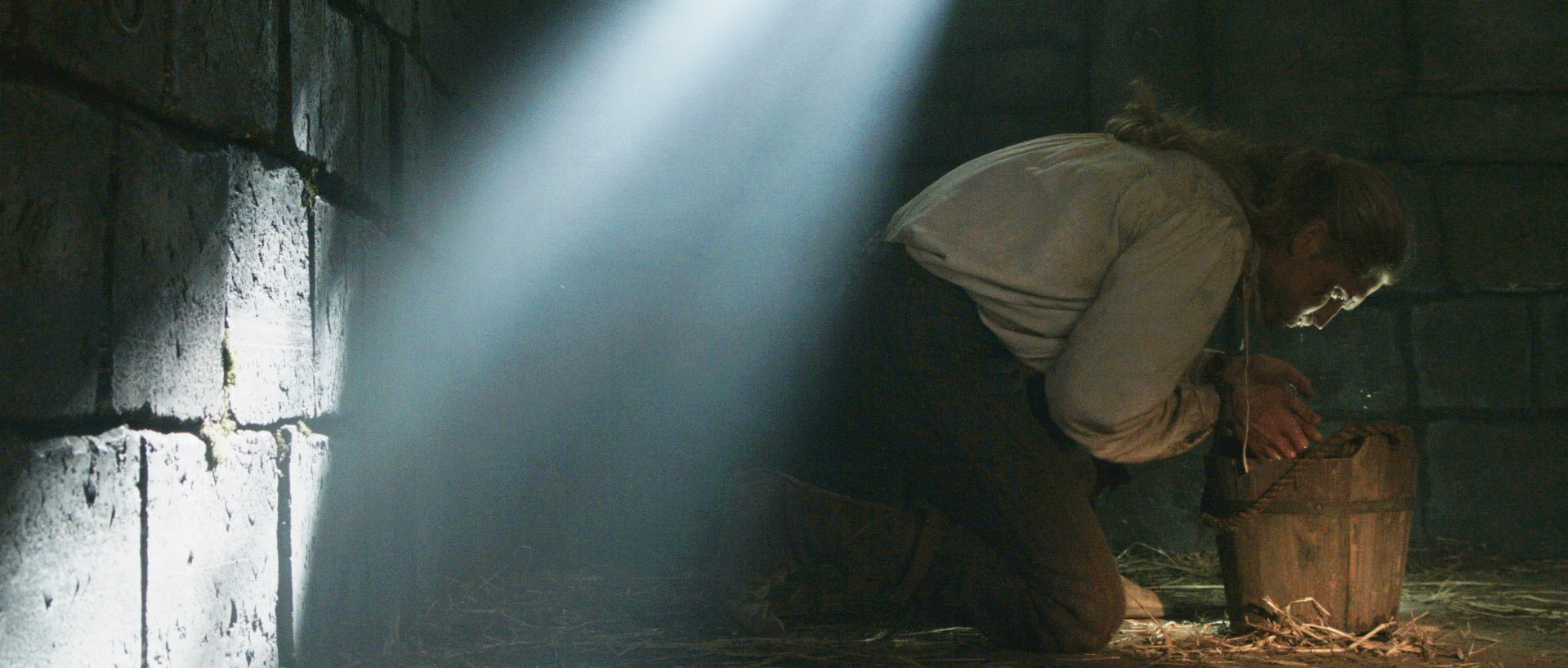
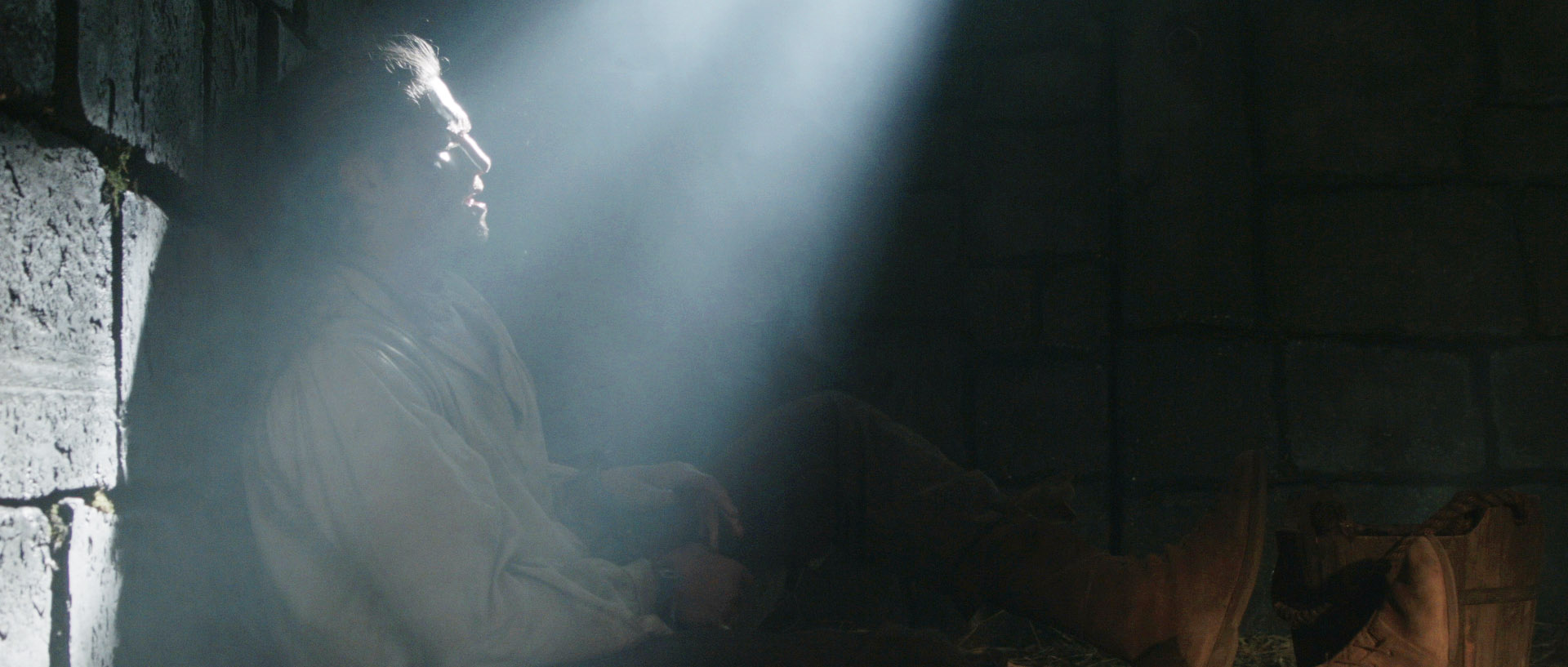
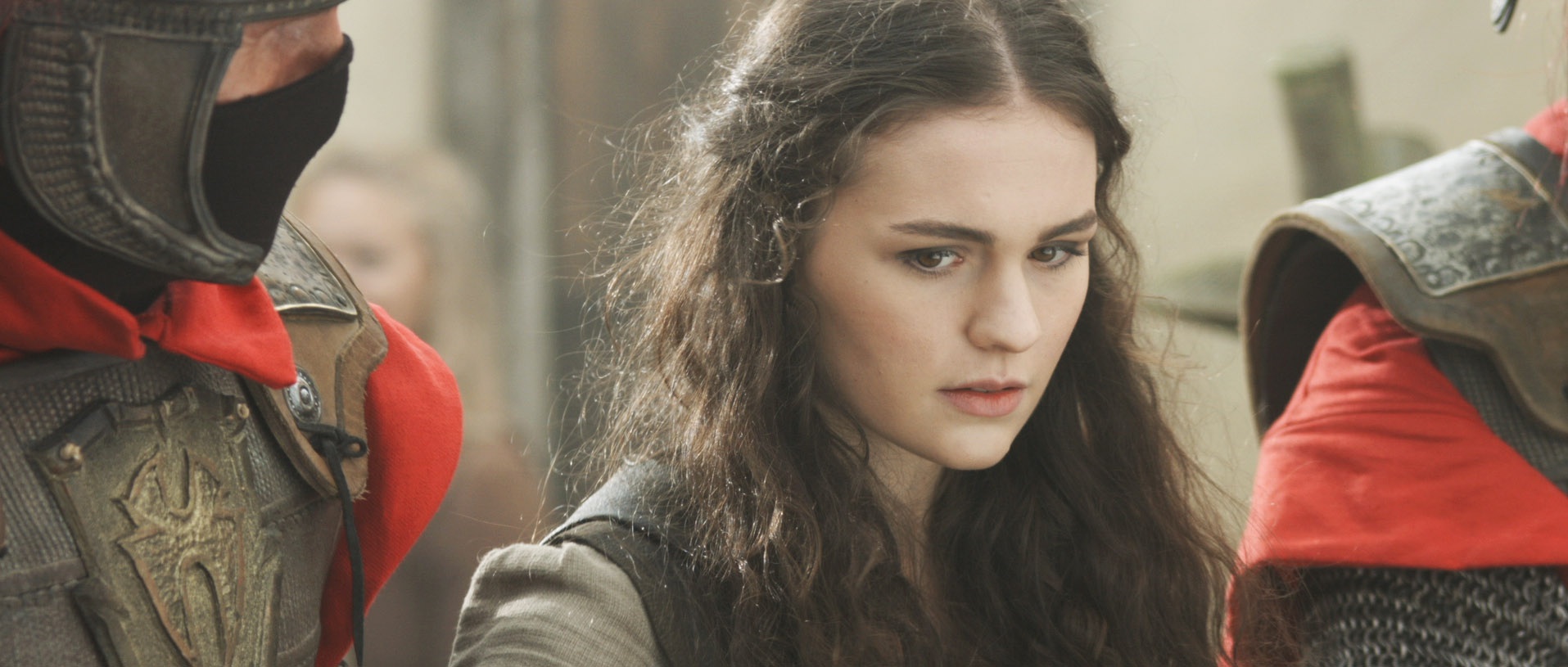
Here are some frames from the scene:

prison1 prison2

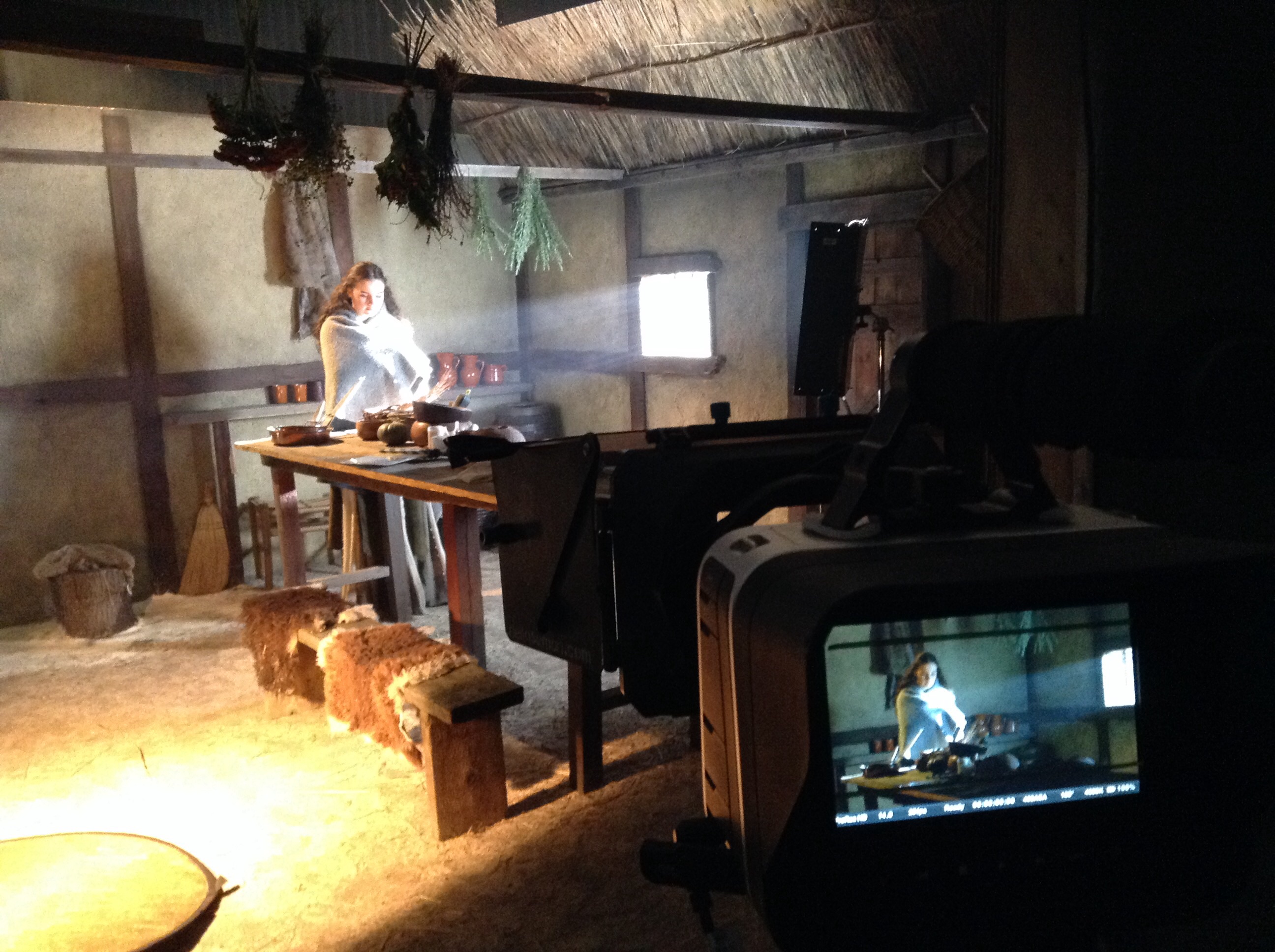
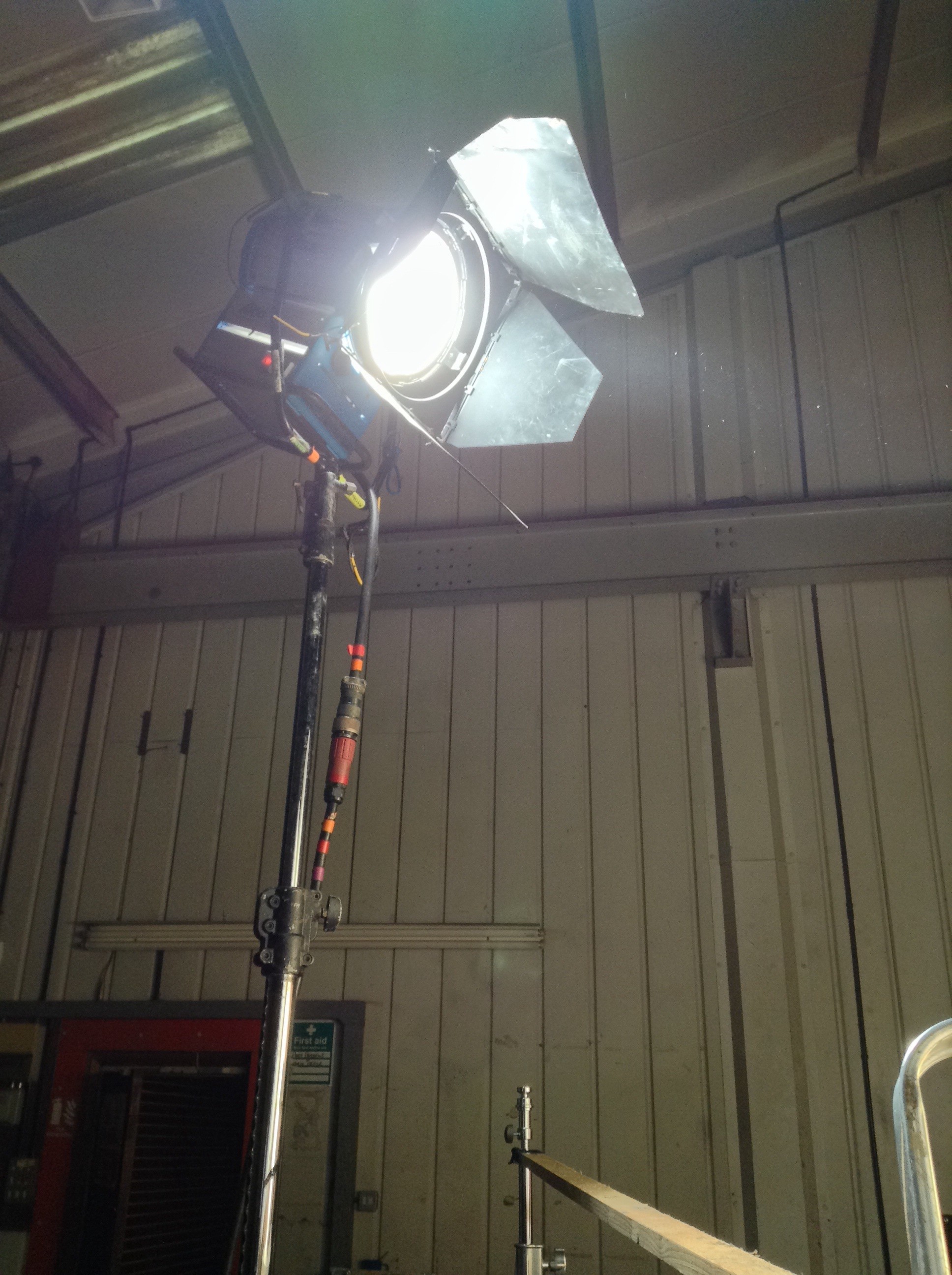
2.5K HMI
2.5K HMI

If you’re going for this shaft-of-light-piercing-the-gloom look, you need three things. Firstly, a powerful, focusable light; I used a 2.5K HMI fresnel. Secondly, you need to accept over-exposure. The only way you will get any detail in the shadows is by exposing bright enough that the highlights – anyone standing in the direct beam of light – will clip. If you don’t like the highlight roll-off characteristics of your camera, stay away from this type of lighting. The cool thing about having a keylight this hot is that when a character moves around in the light, especially if they’re wearing light-coloured clothing, they bounce the light around in interesting and often unpredictable ways.

I shot the scene on Richard Roberts’ Blackmagic Cinema Camera, partly because of ongoing problems getting a monitor signal out of my Production Camera, and partly because of the extra stop of dynamic range the BMCC would give me to milk this high contrast lighting scenario.

The third and very important thing you need is a smoke machine to volumise the shaft of light. (More about using smoke in a future post.)

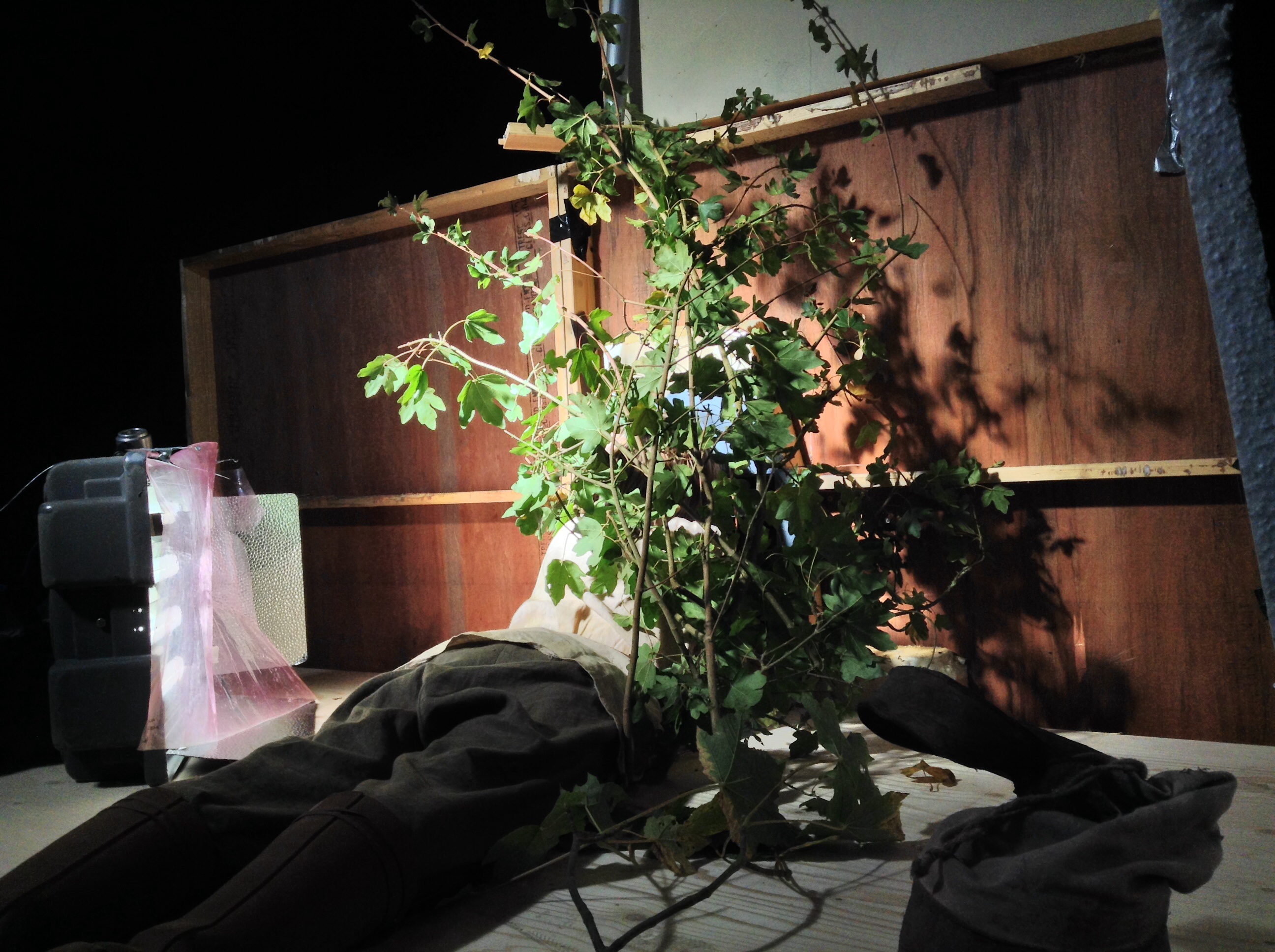
In this view of the platform behind the set, the fluorescent fixture providing indirect "daylight" can be seen on the left, gelled with Quarter Minus Green to remove the green spike in the lamp's output.
In this view from behind the set, the fluorescent fixture providing indirect “daylight” can be seen on the left, gelled with Quarter Minus Green to remove the green spike in the lamp’s output.

In order to give the sense of indirect “sky” light also coming in through the window, I placed a fluorescent outside the window so as to catch some of the side wall of the set. When I first tested the lighting set-up the previous night, I placed a second fluorescent fixture directly above the window to get some edging on the tops of the stones underneath. But I found that the more sources I set up, the less definition I got in the shaft of HMI light, so I dropped the toplight.

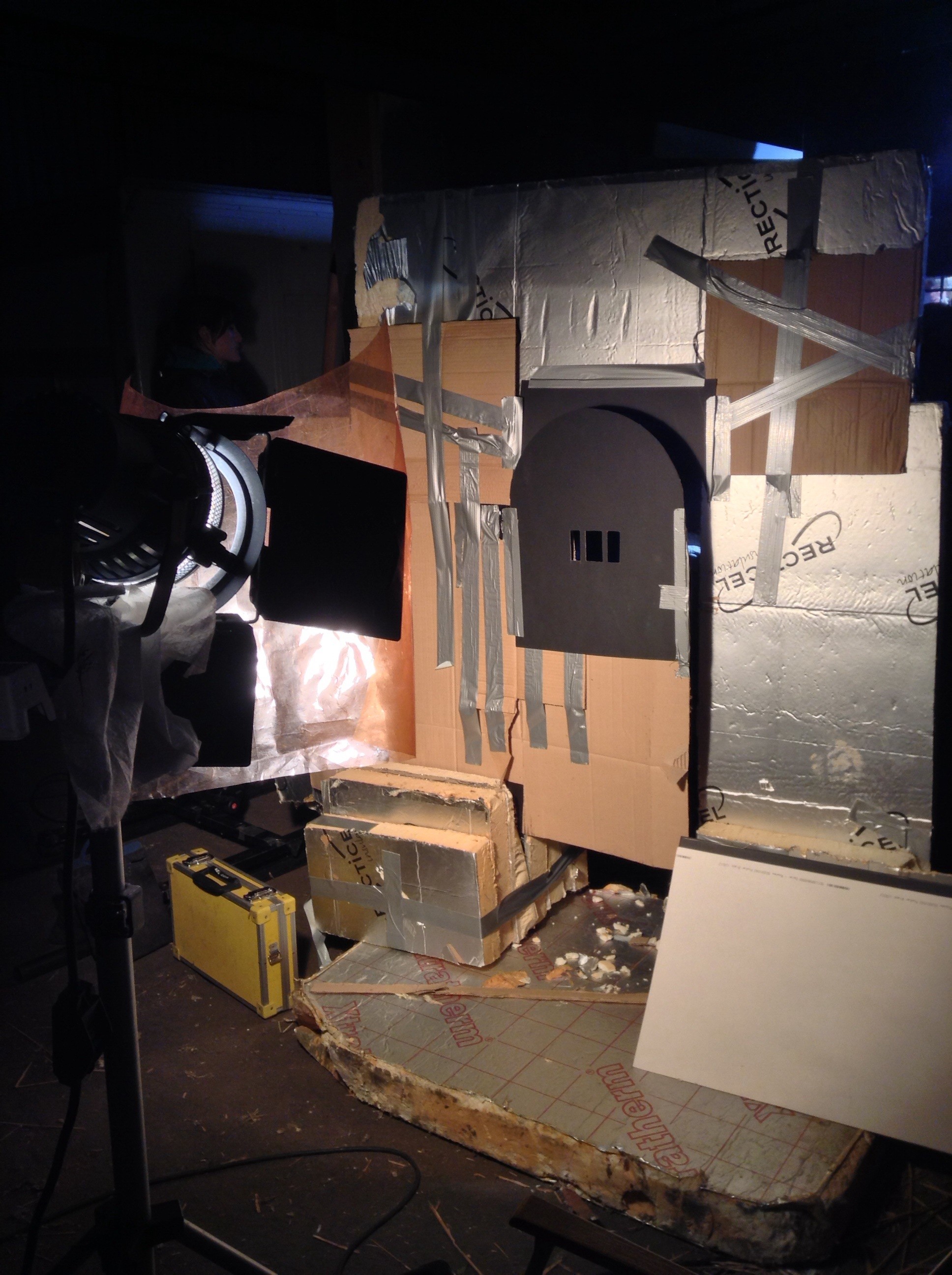
The door gobo
The door gobo

Although the script called for guards to drag Hunter (Duran Fulton Brown) into the cell and shut him in, the two-walled set had no door. So with help from the art department I constructed a ridiculous-looking door in roughly one-third scale, simply to cast the shadow of the door. Behind it I placed a redhead gelled with half CTO, which Richard wiggled during takes to suggest firelight.

The LED hidden behind the bucket

I set the camera to a white balance of 4,500K so that the “daylight” of the HMI would go a little cold and the “firelight” would go really warm.

Our first shot involved Hunter washing his face at a bucket of water, then slumping back into the “sunlight”. We positioned the bucket out of the “sunlight”, in the small patch of light coming through the window of our fake door. But Hunter was still too dark by the bucket. I didn’t want to flood the set with fill and ruin the mood, so I hid a small LED light behind the bucket and diffed it down. This lights Hunter’s face when he leans over it, and hopefully suggests a reflection off the water.

A fluorescent toplight rigged over the bucket for the face-washing close-up
A fluorescent toplight rigged over the bucket for the face-washing close-up. Note the black cloth hanging from one side to reduce spill.

When we moved to a close-up of Hunter washing his face (below), I rigged a fluorescent toplight, suggestive of indirect daylight from the window, and placed a circle of foil at the bottom of the bucket. The idea was that the toplight would reflect off the foil and the surface of the water and light Hunter’s face. It didn’t work, but the toplight itself really made the shot for me. The more you work with an actor, the more you learn the best ways to light them, and I’ve learnt that Duran looks great with toplight.

Foil in the bucket for added bounce

Screen grabs (C) 2014 Mythica Entertainment. Visit www.rentheseries.com for more info.

prison3


Ren: Lighting the Prison Cell

Ren Teaser Trailer Released

The first teaser trailer for Ren has been released today. This is the ambitious fantasy web series I’ve been photographing for the last four weeks. (I also cut this trailer.)

Michael Hudson has produced a series of behind-the-scenes podcasts about Ren. You can listen to me talking about the cinematography, along with all the other talented HoDs talking about the hard work and genius they have brought to bear, at http://www.rentheseries.com/news/ren-podcasts/

Ren Teaser Trailer Released

Ode to Ren

Setting up for one of the crowd scenes

A year after lensing season one of Harriet Sams’ ambitious period web series The First Musketeer, I’ve jumped on board Kate Madison’s equally epic series Ren. Coming from the woman who made Born of the Hope, the incredibly popular Lord of the Rings fan film, it’s no surprise that Ren is a fantasy of Jacksonian proportions. Marked by a powerful ancient spirit and feared by all who see her, the title character starts a journey and discovers that all she thought she knew may have been a lie.

I’ve already posted several blogs about lighting Ren, but now I want to talk more about the project as a whole and the unique experience I’m having on it. Ren is one of those landmark shoots which is so tough but so much fun, where the crew become like family and you hate the idea of it ever ending. As I write this I’m on a train which is taking me away from Cambridgeshire and the drafty studio I’ve come to think of as home, towards a far less exciting shoot. This weekend away on a paid job seems strange and wrong, and I can’t wait to get back to my Ren family on Sunday night.

The studio is an old factory, its workshops filled with sets, props and costumes. For the last three weeks I’ve been sleeping on an air bed in what was probably once a meeting room. Directly above that is the make-up room, and next to that is the production office from which Kate and associate producer Michelle Golder battle daily against a dwindling budget and scheduling headaches to keep this epic web series shooting.

Ronin Traynor choreographs a fight scene with Richard Zeman (left) and Duran Fulton Brown (right)
Ronin Traynor (left) choreographs a fight scene with Richard Zeman (centre) and Duran Fulton Brown (right)

And in the car park is the set, which you may have seen in my video blog. Chris Dane and a team of volunteers spent three months fashioning the medieval village. Miriam Spring Davies has spent countless hours crafting the costumes to beautifully clothe each of the principals, plus a village full of extras and fifteen imposing Kah’nath soldiers. Hans Goosen, who flew over from Germany (I think) to be involved in the project, lived and worked in the studio for weeks while making stunning hero props. And these are just a few of the ridiculously talented and dedicated people who are bringing Ren’s world to life.

Ever since a damp weekend in autumn 2008, which I spent holding an umbrella over a steadicam operator on Born of Hope, I’ve wanted to work properly with Kate. As a maker of ambitious fantasy projects myself, I feel she’s a kindred spirit. When I learnt she was looking for a DP for Ren, I gave her the hard sell, knowing that I couldn’t bear to let anyone else photograph this series. My experiences on The First Musketeer – which shares several cast and crew members with Ren – stood me in excellent stead to approach the fantasy period settings of Kate’s script. I learnt so much on Musketeer about creating texture to sell the period, ageing scenes with smoke, and simulating firelight.

Actor Duran Fulton Brown, director Kate Madison and gaffer Richard Roberts warm their hands over a prop braziere.

When Kate finally picked me, it was too late for me to rearrange other commitments that clashed with the first three days of shooting. I arrived at the studio on a Saturday night with my regular assistant Colin Smith. It was packed with crew and extras who were in the middle of a busy weekend of shooting crowd scenes. The next morning I was launched into Ren, and real life faded like a dream. That was three weeks ago.

Since then the crew has grown and shrunk (mostly shrunk!) with the passing days, as people give up what time they can and then return to their normal lives. For a project so unique and wonderful, we have struggled enormously to attract crew. By the second week I found myself regularly in the production office, gradually taking over scheduling and sometimes attempting to AD the shoot. Lately I’ve been cutting sizzle reels and teaser trailers to help Kate and Michelle sell the project to potential sponsors. It’s a far cry from the promises I made myself earlier this year not to do unpaid work any more, not to edit any more and not to work on anything where I don’t get a proper bed. But somehow Ren has gone beyond being a job, even beyond being an unpaid collaborative project. It’s my life now, and there’s nowhere else I’d rather be. So roll on Monday and the next day of adventure on this crazy, beautiful thing we call Ren: Season One.

Ode to Ren

Lighting Techniques #4: Health Bounce

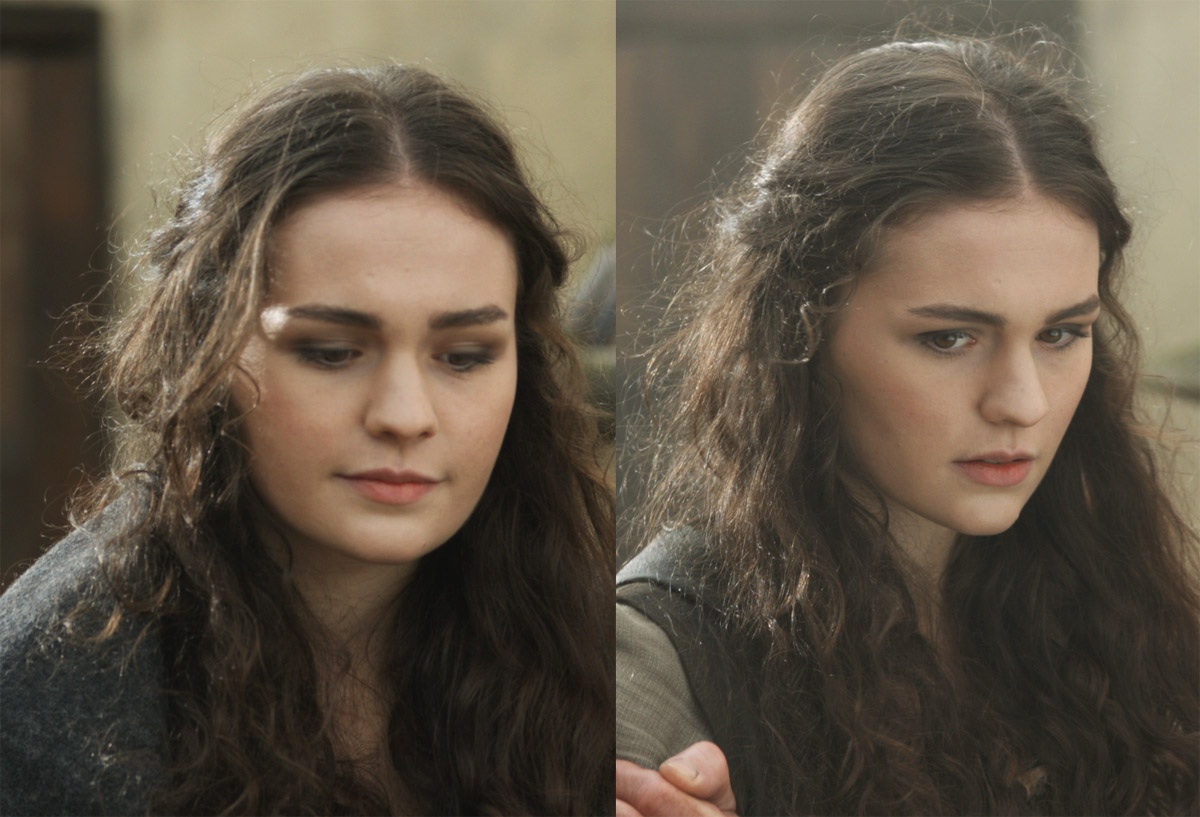
This is a really simple technique but incredibly effective. All you do is put a reflector or a piece of polyboard under the talent’s face. Here’s an example frame from Ren starring Sophie Skelton. This was shot on an overcast day using a 2.5K HMI as backlight.

image

Sophie is very beautiful and the make-up (by Becca Youngs) is great, but the icing on the cake is a simple piece of polyboard out of the bottom of frame. It subtly lifts the shadows on her face and puts a ‘sparkle’ in her eye. That sparkle is actually the poly’s reflection, but it’s amazing how much life and energy that gives. I’m calling this technique the Health Bounce because it’s used a lot in ads for health and beauty products.

Here’s a side-by-side comparison without (left) and with (right) the poly.

image

The human brow has evolved to protect our eyes from sunlight, amongst other things. In an exterior scene, particularly on an overcast day, the light comes predominantly from above, rendering the forehead and the nose the brightest areas, and throwing the eye sockets into shadow. This is a challenge for cinematographers. So much of an actor’s performance is in the eyes – it’s essential to get light into the eye sockets to capture every nuance of that performance. A bounce board underneath the face helps do that.

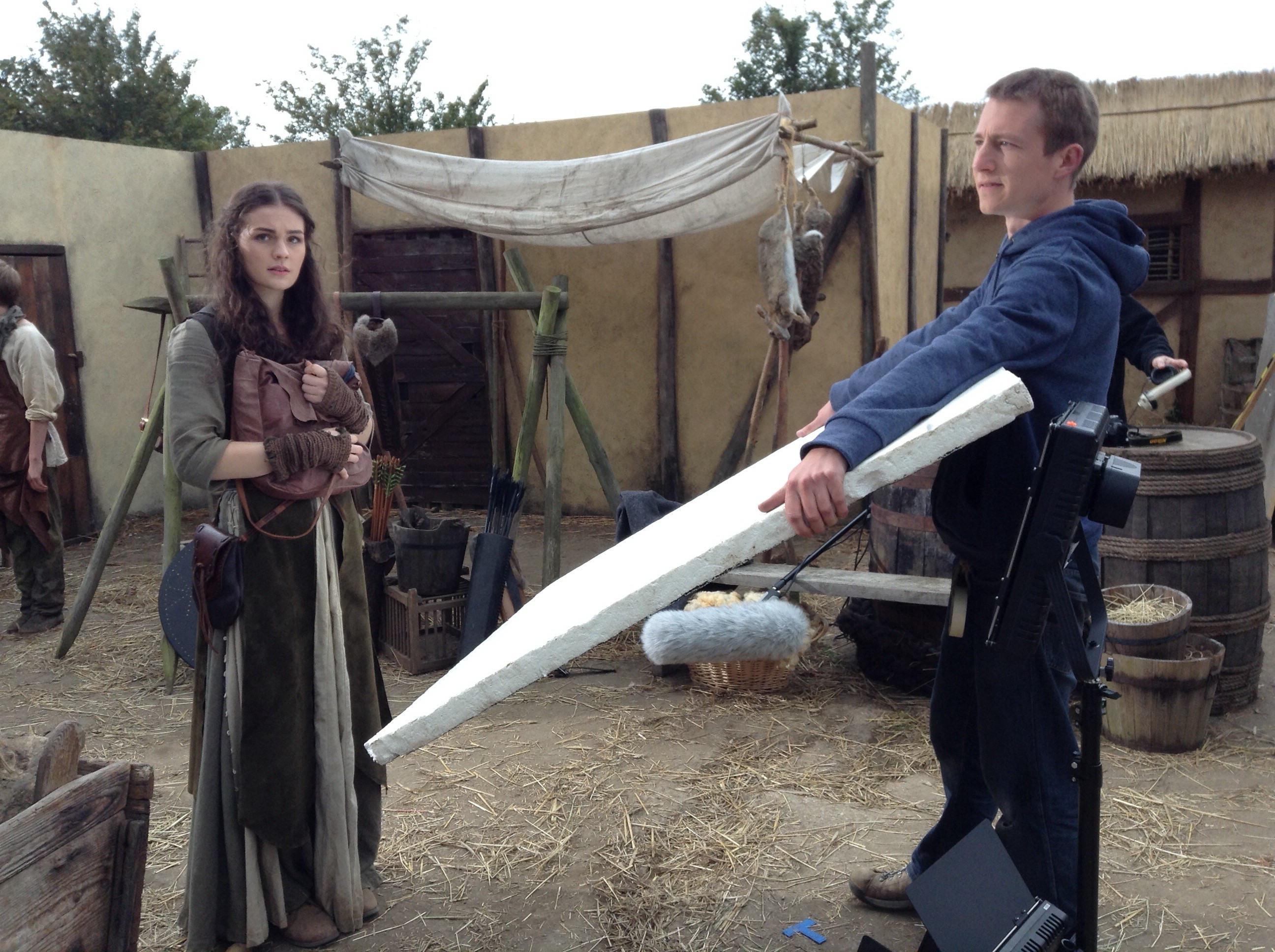
Colin Smith holds the polyboard for the above shot of Sophie
Lighting Techniques #4: Health Bounce

Ren: Night for Day

The 2.5K HMI can be seen here in the lower right, and the fake sky on the top right.

It had to happen sooner or later. On an ambitious series like Ren, with a tight schedule, it was inevitable that we would at some point have to shoot a daylight shot after dark. So I’d given it some thought beforehand. It seemed to me like soft toplight, simulating sky, was what was needed. I figured that a 2.5K HMI fired into an overhead 6×6 silk would do the job, and that’s one of the reasons I pushed production to hire a 2.5 despite the very limited budget.

The moment came yesterday when we got into a time crunch with one of our lead actors (Duran Fulton Brown) and had to complete a scene despite the natural light running out. Fortunately the scene was scripted as evening and we had shot coverage at magic hour and in twilight with an HMI “sunset”. So we weren’t trying to match full-on daytime.

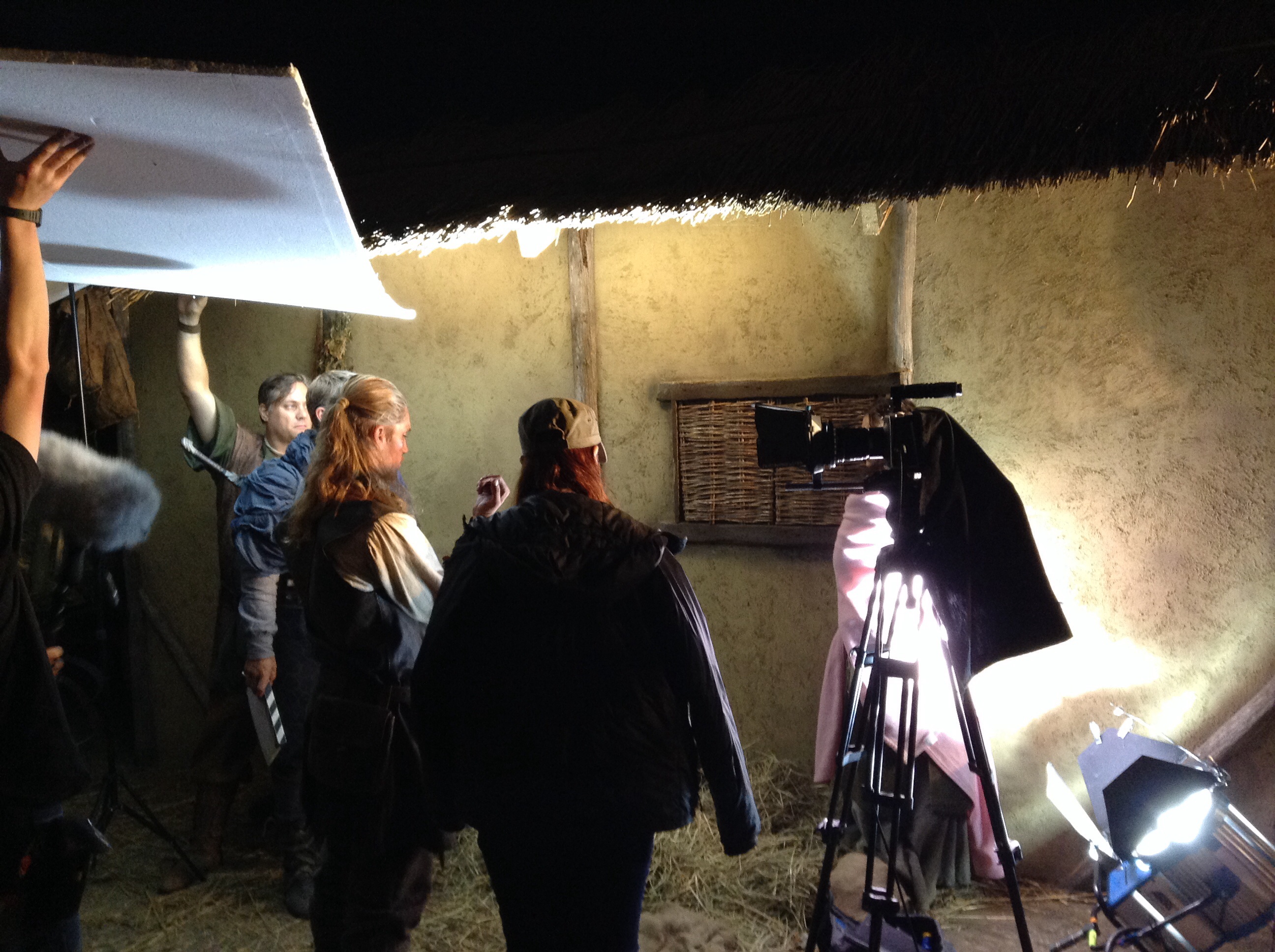
Colin (left) helps hold up the roof. Rich (right) does not. Duran Fulton Brown (centre) plays Hunter.

We used a redhead for the direct “setting sun” light. We had a silk but no sturdy stands to rig it on, so we built a quick roof out of poly and Celotex (matte silver bounce), holding it up with lightweight stands and crew members! We put the 2.5K on the floor in the corner and fired it into this ceiling. The final touch was to fire an LED panel at the back wall to fill in the black shadows that the redhead was casting.

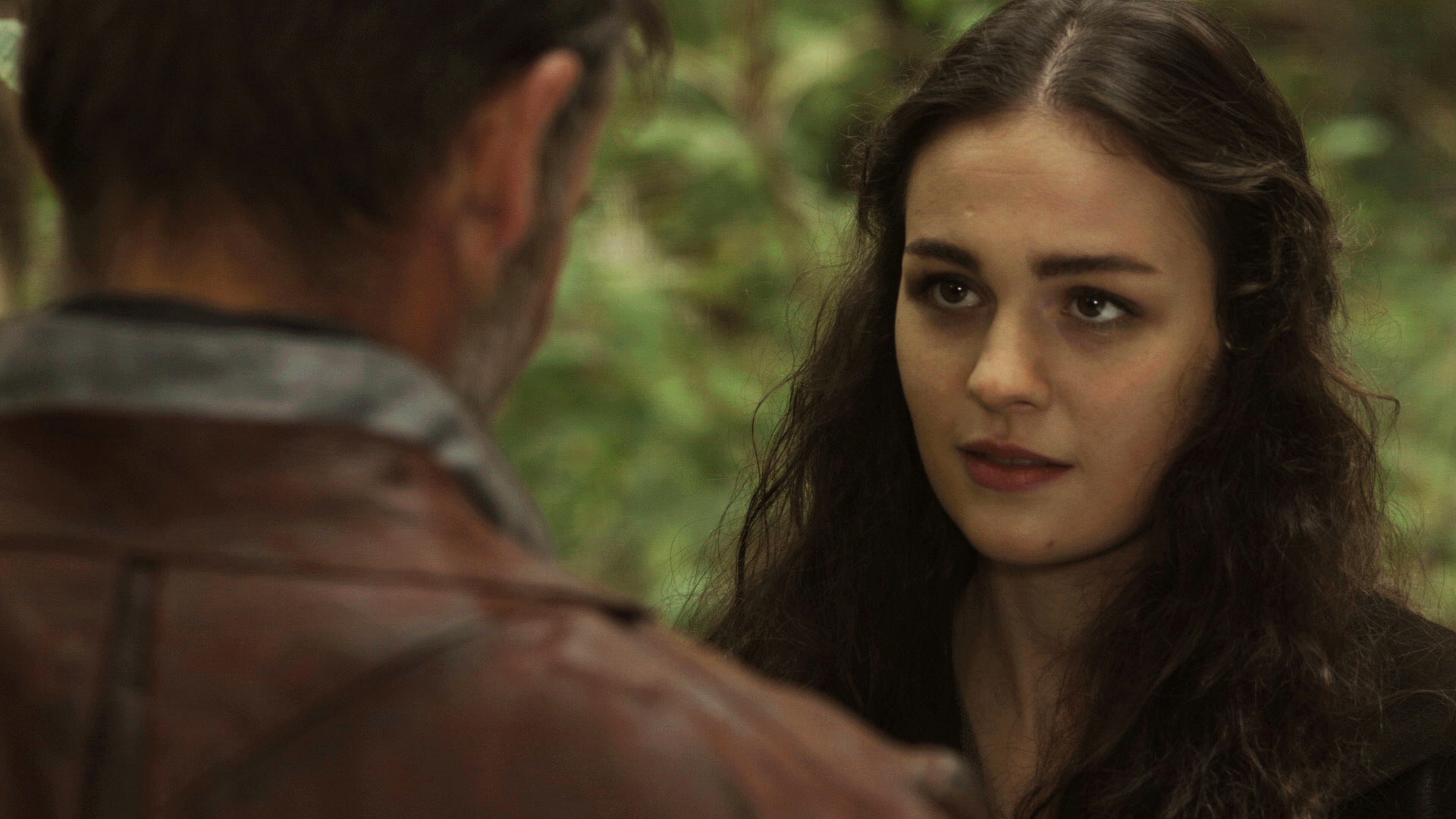
Check out the final shot below. It looks a lot less convincing to me now than it did at the time, but I believe the concept was sound. We just needed more stands to rig the poly at a better angle to get the maximum bounce, including some behind Duran to give a general “sky” backlight. Lessons learnt for the next time!

image


Ren: Night for Day

Ren: Shooting the Exterior Set

Here’s a little video blog about the challenges of shooting on the amazing medieval village set that Chris Dane and others have built for Ren.

I’ve been using the Artemis app a lot to test out lens choices and compositions for “seeing off the set” issues. That way if I’m set up for a shot and we’re waiting on costume or an actor, I can preview the next shot on Artemis and warn Chris that he’ll need to move a wall to hide the car park.

More soon from the set of Ren.

image image


Ren: Shooting the Exterior Set

Ren: Masculine & Feminine Lighting

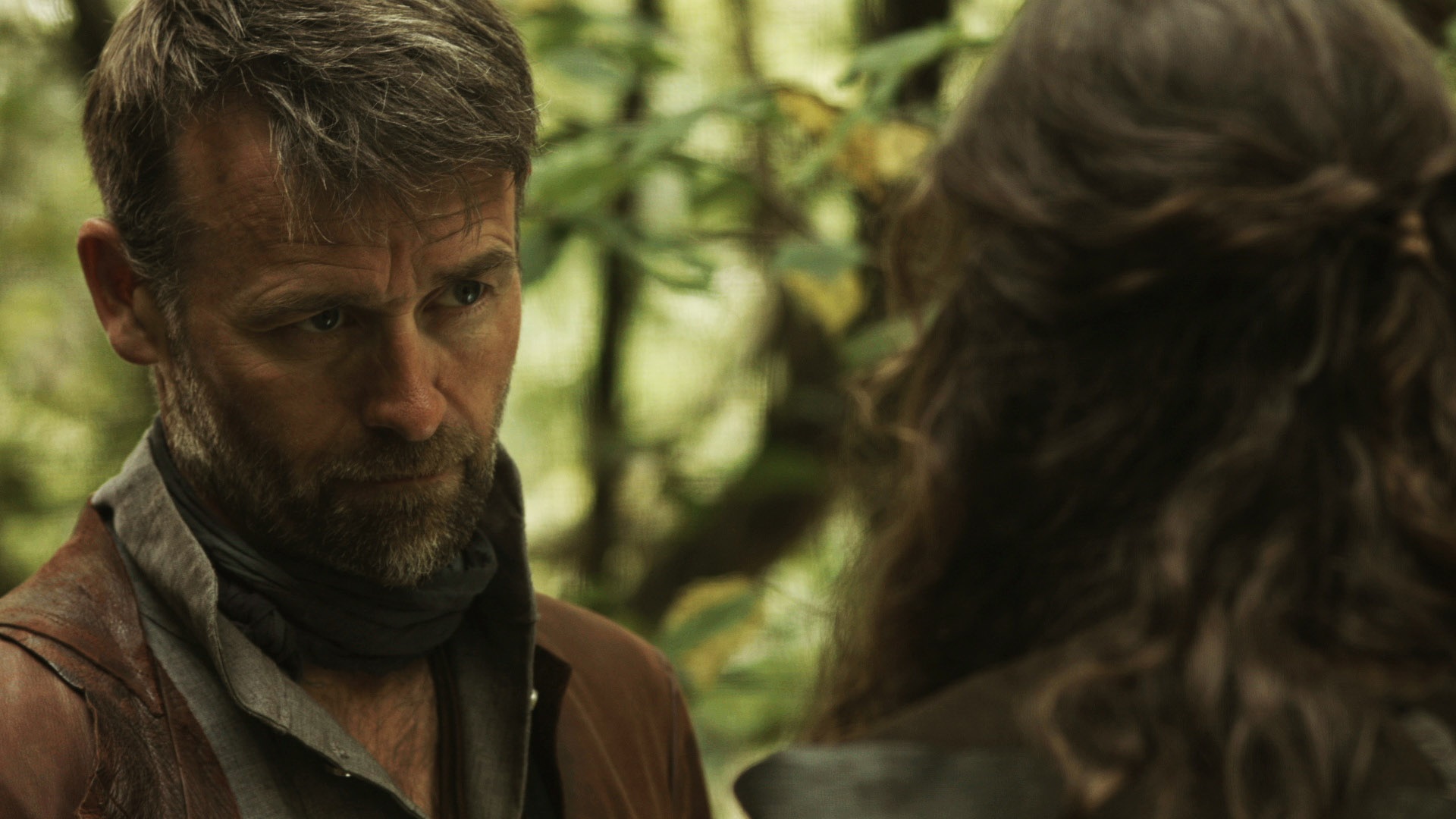
A few days into my tenure as DP on Kate Madison’s ambitious fantasy series, Ren, we filmed a shot/reverse for one of the opening scenes. The scene introduced us to the eponymous Ren (Sophie Skelton) and her friend Karn (Christopher Dane).

Kate described Ren to me as “pure innonence”, while Karn is an older, more worldly character with a difficult past. It seemed to me like classic femine and masculine lighting were called for. Classic feminine lighting is designed to create a soft, flawless, often shadowless face. Classic masculine lighting enhances jaw definition, embraces lines and skin texture and generally creates a rugged look.

Clearly you have to start by casting actors with the right physical characteristics for these roles, which Kate had certainly done, and make-up plays a huge role. The DP is the third part of the triumvirate determining the look of the cast’s faces.

The shot/reverse in question took place under trees in a valley on a cloudy day, so the natural light was very top-lighty (rendering eye sockets dark), with a bit of green bounce here and there.

IMG_1059.JPG

We shot Ren’s close-up first. We had already established in the wide that she was looking towards the sun, albeit a very cloud-obscured one.

There are two ways to create the shadowless look of classic feminine lighting. One is to use a lot of bounce to fill in the shadows. The other is to put the key light directly above the lens, like a flash, so that the shadows are all hidden from the camera’s point of view. Since we’d established Ren was looking in the direction of the sun, I chose the latter method, rigging a small LED panel right above the lens.

Backlighting the hair is another common component of classic feminine lighting, so I had gaffer Richard Roberts hand-bash a second panel as a three-quarter backlight. We had to keep this very subtle since we had established that direct sunlight could not be coming from behind her.

image

I lit Karn’s close-up very differently. His orientation to the sun justified a strong three-quarter backlight from an LED panel off frame left. This picks out Chris’s stubble and jawline nicely.

I decided that his key would be motivated as sunlight reflecting off the river (off camera right). This could jusifiably be coming in from the side, again adding texture and definition to his face. It was achieved by Richard holding a silver-sided collapsible reflector just out of frame. We initially tried wobbling it to suggest the movement of the water, but ended up shooting a safety take without the wobble in case it proved too distracting.

I know that this degree of manipulation and augmentation of natural light is not to every cinematographer’s taste, but I feel it fits perfectly with the show’s fantasy world. My view is that in this world where magic exists, the light is a little bit magical too. Hopefully it will subconsciously help the audience pick up on Ren and Karn’s essential characteristics in this, their first scene.

Find out more about Ren at facebook.com/rentheseries


Ren: Masculine & Feminine Lighting

Lighting Techniques #3: The Window Wrap

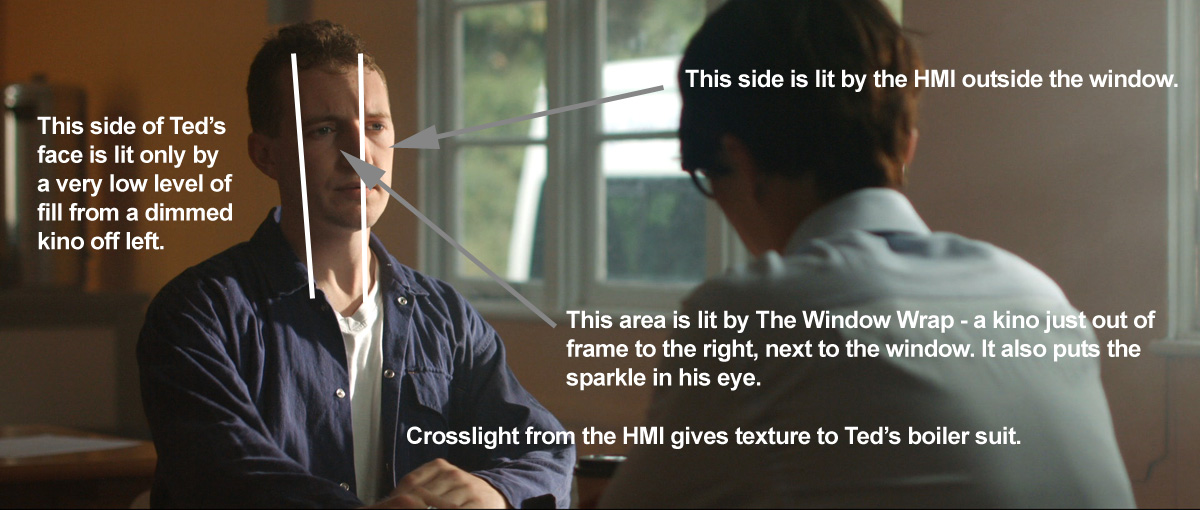
So, you’re shooting a daylight interior. You’ve got an HMI as your “sun” blasting in through the window, giving great backlight when characters are faced away from it, and casting some interesting windowframe shadows when they’re faced towards it. But what if they’re side on to the window?

One side of the actor’s face is hotly lit while the other is in complete shadow. Maybe it’s an edgy or scary scene and you want that look. Fine. But maybe not.

You could just use bounce to generally fill in the rest of the actor’s face. Sure, that will work. But The Window Wrap will look sexier.

Take a Kinoflo and set it up inside the room near enough to the window that the audience can buy it as window light but far enough around that it seems to wrap the harsh HMI light softly around the talent’s face. Crucially, as long as the camera is on the opposite side of the actor’s eyeline to the window, you’re still lighting their downside; the nearest part of their face is still the darkest, but now it’s a smoother transition between the bright light of the downside and the darkness of the upside.

Here’s an example from The Gong Fu Connection with writer/director/actor Ted Duran:

original-shotannotated-shot

Sketch 2014-08-15 19_37_08

This technique was inspired by this lighting workshop video with Eric Kress, DP of The Girl with the Dragon Tattoo (original Swedish version).

Lighting Techniques #3: The Window Wrap

Lighting Techniques #2: Cross-backlighting

A common scenario in filmmaking is that you have two characters standing talking to each other and you need to do a two-shot and an over-the-shoulder of each. A quick way to light this kind of scene is cross-lighting: you set up two lamps so that each lamp serves as one character’s backlight and the other’s keylight.

I practice what I like to call cross-backlighting. What I mean by this is that the lamps are both on the opposite side of the actors’ eyeline to the camera. The result is that the downsides of their faces are lit. (Check out this post on key angles if you’re not sure what I mean by downside.)

This old Soul Searcher lighting featurette covers cross-backlighting around the 5:30 mark.

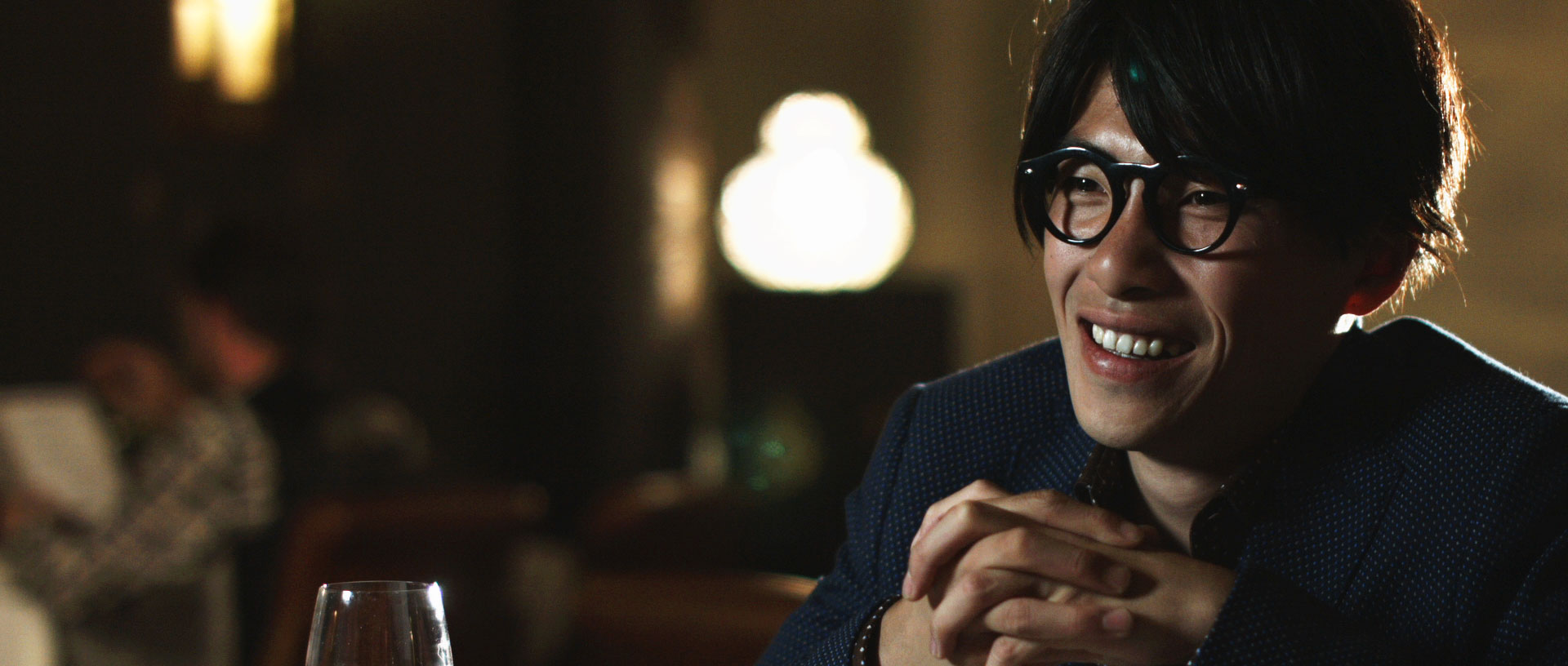
Here’s a super-recent example of cross-backlighting in action, on the set of The Gong Fu Connection. I’ve complicated things a bit though here. I’ve decided I want the characters’ keylights to be softer and cooler in colour than their backlights.

2-shot

So there’s actually a dedo and an LED panel behind each actor. The camera is set to a white balance of 3,200K. Each dedo provides a strong, white backlight, narrowly focused so as not to spill onto the opposite actor’s face. The LED panels, positioned much closer to the talent, provide a slightly softer light with a dialled-in temperature of 4,500K.

Sketch 2014-08-15 07_29_38

Harry

For the close-ups I repurposed the LED panel that wasn’t being used as a background light, dialling it back to 3,200K to match with the location’s existing tungsten lighting that was already doing a lot of the work.

Carmina

When we got to Carmina’s close-up I decided the LED panel alone was still too harsh, so I bounced it off the silver side of a collapsible reflector. I adjusted the panel to an angle where just a little direct light was hitting the side of Carmina’s face, and this kind of blends with the bounced light to provide a gentle wrapping illumination.

Stay tuned for more lighting techniques.

Lighting Techniques #2: Cross-backlighting

Lighting Techniques #1: Three Point Lighting

This is the first in what I plan to be an ongoing series of quick techniques you can apply to your own cinematography. The first few are going to be from The Gong Fu Connection. If you find this post useful, please consider supporting the film over at www.indiegogo.com/projects/the-gong-fu-connection or even just sharing the link.

Let’s start at the beginning with three point lighting. The idea is that you should light a person using three sources:

  1. The KEY light models the face. What does that mean? Well, a face is a weird, lumpy object with lots of sticky-out bits and inny bits, and as a result it looks very different depending on where the main light is coming from. Light it from the front and it will seem flat – noses seem smaller, wrinkles and spots are reduced. Light it from the side and the nose will cast a huge shadow, as will every pimple. See my blog post on key light angles for more on this.
  2. The FILL light prevents the shadows cast by the key light from being completely black. Ideally the fill should be a soft, directionless light so it doesn’t cast its own shadows. The dimmer the fill light (i.e. the greater the key-to-fill ratio), the moodier your scene will look. Sometimes I like to not use any fill at all.
  3. The BACKLIGHT creates a rim of illumination around your subject, cutting them out from the background. It makes the whole image look slick and sparkly.

That’s all very well in theory, but here’s a practical example. This is a close-up of actress Marién Enid in The Gong Fu Connection.

Marien2

Marién’s keylight is an Arrimax M18 – a super-efficient 1.8KW HMI. It has a Straw gel (Lee no. 103)  to warm it up a bit. Why such a powerful lamp? I was using it as backlight on the wide. For this CU it needs to be much softer, so I intercept it a couple of metres from Marién with some tough-spun diffuser (no. 214). I have a roll of the stuff which I carry around. Frequently I slide it like a giant toilet roll onto a C-stand arm, unroll it to the desired length and peg the other end on another stand.

The Kinoflo Tegralite that provides the backlight

You can see that the keylight hits all of the lefthand side of her face (known as the downside, because it’s the side away from camera) but pretty much just her cheek on the righthand side. For my money, this is the optimal key position because it gives the most shape to the face.

The backlight comes from a Kinoflo Tegralite (a 4ft 4-bank kino with a built-in ballast) shining through the doorway behind her. Again, this is a source that had been previously established on the wide shot. You have to think through your set-ups before you set your lamps for your wide, so that they will work for your other angles without so much cheating that everything looks completely different.

Fill is provided by a silver reflector out the bottom left of frame, bouncing the kino back onto the upside of Marién’s face. The ungelled kino gives a nice bit of colour contrast with the straw-gelled M18.

Look out for more lighting techniques coming soon.

Sketch 2014-08-15 07_07_38

Lighting Techniques #1: Three Point Lighting