2.39:1 Composition

In the days of 4:3 cameras, many filmmakers chose to mask off their viewfinders and shoot in 16:9 widescreen. Now that 16:9 is ubiquitous, those of us wanting something more cinematic turn to the glorious 2.39:1, a.k.a. Scope. Choose your aspect ratio carefully though, not just because it “looks cooler”. 2.39 works well if you have lots of landscapes, lots of extras or a wide set. It’s not so great if one of your main sets is a tall, narrow booth, as I found out the hard way on Stop/Eject.

I love composing for the 2.39 ratio. You have so much flexibility on where to put your subject in the frame. The rule of thirds is obsolete here. You can put someone almost anywhere in the 2.39 frame and have it look good. They can be short-sided (placed on the “wrong” side of frame) but still have looking space. They can be just off centre, or they can be squeezed right to the edge. And if it’s a two-shot or a dirty single, you can illustrate the closeness of the characters’ relationship by choosing the distance between them in the frame – anywhere from overlapping (a couple madly in love?) to facing each other across the full width of the widescreen frame (enemies with no common ground?).

Here are some of my favourite examples of 2.39 composition. First up, The Matrix, lensed by Bill Bope. Look at how he uses black space to create a stark minimalism. One of the most powerful things you can do with all that horizontal space is to not use half of it!
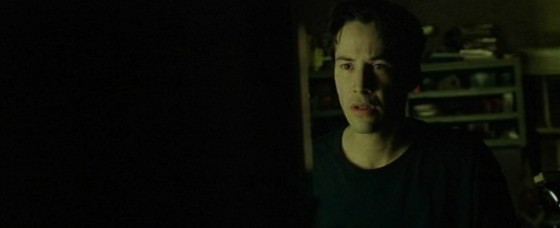
Matrix-black1

Matrix-door

Matrix-Morpheus

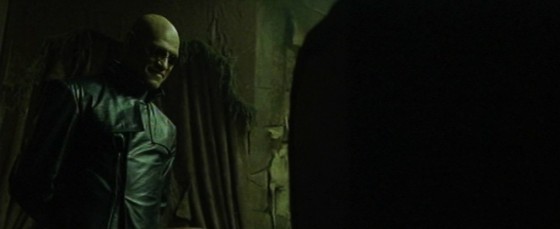
In this close-up (below), Morpheus starts off conventionally framed on the left, but leans forward at a key point, crossing the width of the frame to become short-sided, as pictured. It really makes it feel like he’s getting in your face.

Matrix-Morpheus-shortside

Symmetrical shots become more powerful in 2.39. These ones really help reinforce the rigid, computer-generated nature of the matrix.
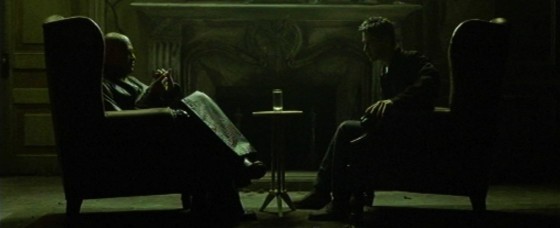
Matrix-chairs-symmetry

Matrix-agents-symmetry

In Donnie Darko (DP: Steven Poster), formal composition (framing characters centrally) is used as a stylistic device in the dream sequences. Again, a powerful symmetry in this wide format.

Donnie1 Donnie2

I love the composition of this shot from Armaggedon (DP: John Schwartzman). He’s on the “wrong” side of frame and he’s barely off centre, but somehow it works beautifully. It almost looks like he’s surging forwards with the flag, rather than seeming dominated by it, like he would if he was on the right of frame.

Armageddon

Jan de Bont’s cinematography in Die Hard is a masterclass in 2.39 composition. Check out the depth in these raking shots.

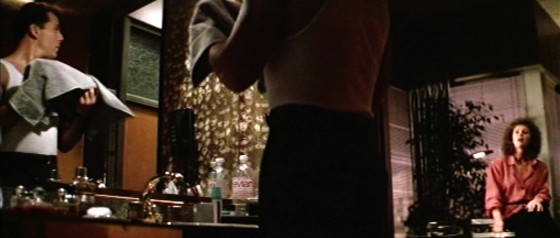
DieHard-Bonnie

DieHard-mirror

Below, De Bont uses the doorway as a symmetrical frame for the composition, which gives Willis license to be anywhere within it.
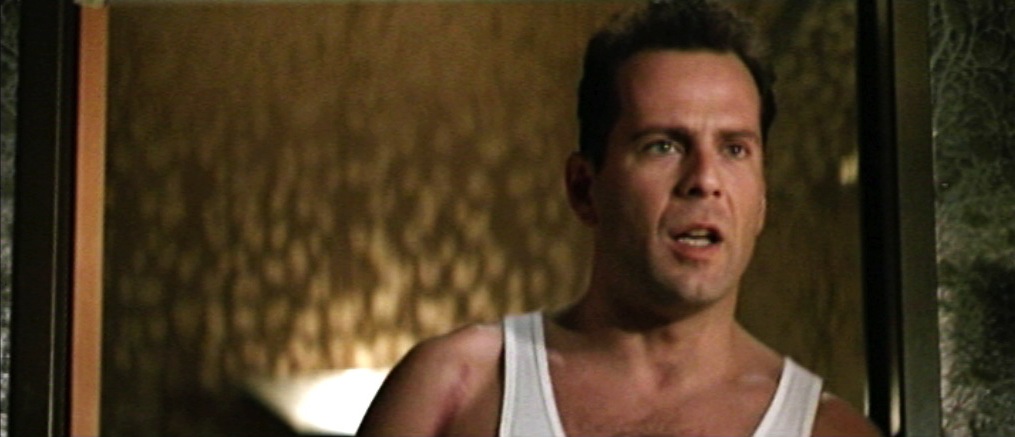
DieHard-CU-shortside

Here’s an interesting lesson in shooting over-the-shoulders in 2.39. Put the foreground actor on the edge of frame and you’ll find it very hard to keep a sense of depth if you put the background actor over on the other side of frame. You need them nearer so the perspective can continue off into the other side of frame, perhaps with other characters (or a statue, in this case) in the deep background or just the set.

DieHard-overshoulder

Here’s a nice bit of short-siding, balanced out by the car.

DieHard-shortside-ext

And finally, I utterly adore this shot/reverse from Alien (DP: Derek Vanlint). If ever a director tells you that shot/reverses have to match, show them this scene. Every rule in the book is broken. He’s shot from a low angle, she’s shot from head height. He’s in a mid, she’s in an MCU. His single is dirty, hers is clean. He’s on the left of frame, and so’s she! But isn’t it gorgeous? Both characters are given power through composition, but in different ways. His power comes from the low angle of the camera. Hers comes from her being placed towards the closer end of the horizontal lines in the set. If she’d been placed on the tapering end, on the right of frame, she would have no power in this scene at all, compositionally. I can’t say whether it’s intentional, but the fact that this compositional power – equal but different – matches the power the characters have in the dialogue and performance, is just exquisite.

Alien-HurtAlien-Weaver

What are your favourite 2.39 movies, and how do they use the frame to help tell the story?

2.39:1 Composition

Candlelight

The First Musketeer – the period web series I DPed in France last September – is edging closer to completion. One of the biggest challenges of the shoot for me was simulating candlelight. Almost every scene had candles in it (albeit fake, yet very convincing, LED ones) and it was always a struggle to make them appear to be shedding authentic light.

A couple of years back I blogged about how I created candlelight for the Wasteland trailer, by hiding ordinary 100W tungsten bulbs behind the set-pieces the candles were standing on. I did this again on The First Musketeer, and it can be very effective.

The main tavern set was dotted with large barrels topped with candles, so it was quick and easy to gaffer-tape pendant fittings with 100W bulbs onto the backs of these barrels. (A piece of blackwrap was interposed to stop the bulbs singeing the barrels.) The advantage of a bare bulb over a fresnel or par fixture is that it sheds light in all directions, just like a candle. So when three people were stood around a barrel, as long as the two at the sides were cheated slightly back out of the barrel’s shadow, it lit them all up fairly convincingly.

A single 100W bulb hidden behind the barrel lights the three Huguenots in the background. A blue-gelled HMI provides backlight.
A single 100W bulb hidden behind the barrel lights the three Huguenots in the background. A blue-gelled HMI provides backlight, while two dedos off the sides of frame cross-light the foreground characters.
Dedo, de-e-edo. Dedo come and me want go home.
Dedo, de-e-edo. Dedo come and me want to go home.

This method doesn’t always work though, and it relies on the candle being sat on something a bulb can be hidden behind.

A dedo creates the pool of light around the background candle here.

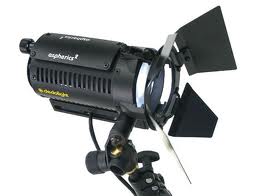
Dedolights are great for creating circles of light to surround candles, and their built-in dimmers make it easy to flicker the light for added realism. But this method has serious drawbacks. Firstly, it lights the candle itself as well as the surroundings, often rendering the flame (or LEDs) almost invisible. Secondly, anyone passing between the dedo and the candle will pass through the beam of light, destroying the illusion. In an ideal world you would rig the dedo to the ceiling and set up a little thin flag to prevent the light hitting the candle itself, but in practice this would usually be difficult and time-consuming to set up.

More recently I’ve tackled the candelight problem again on Ren. The difference was that we were able to use real candles, often double-wicked for enhanced light output. Real candles take care of their own immediate pool of light, so then you only have to worry about beefing up the amount of lighting hitting the talent and the surrounding set.

Again, bare bulbs can be useful for this, but dedos are often best. It’s possible to cheat the dedo positions quite heavily and still get away with it, because they produce such a narrow, controllable beam of light.

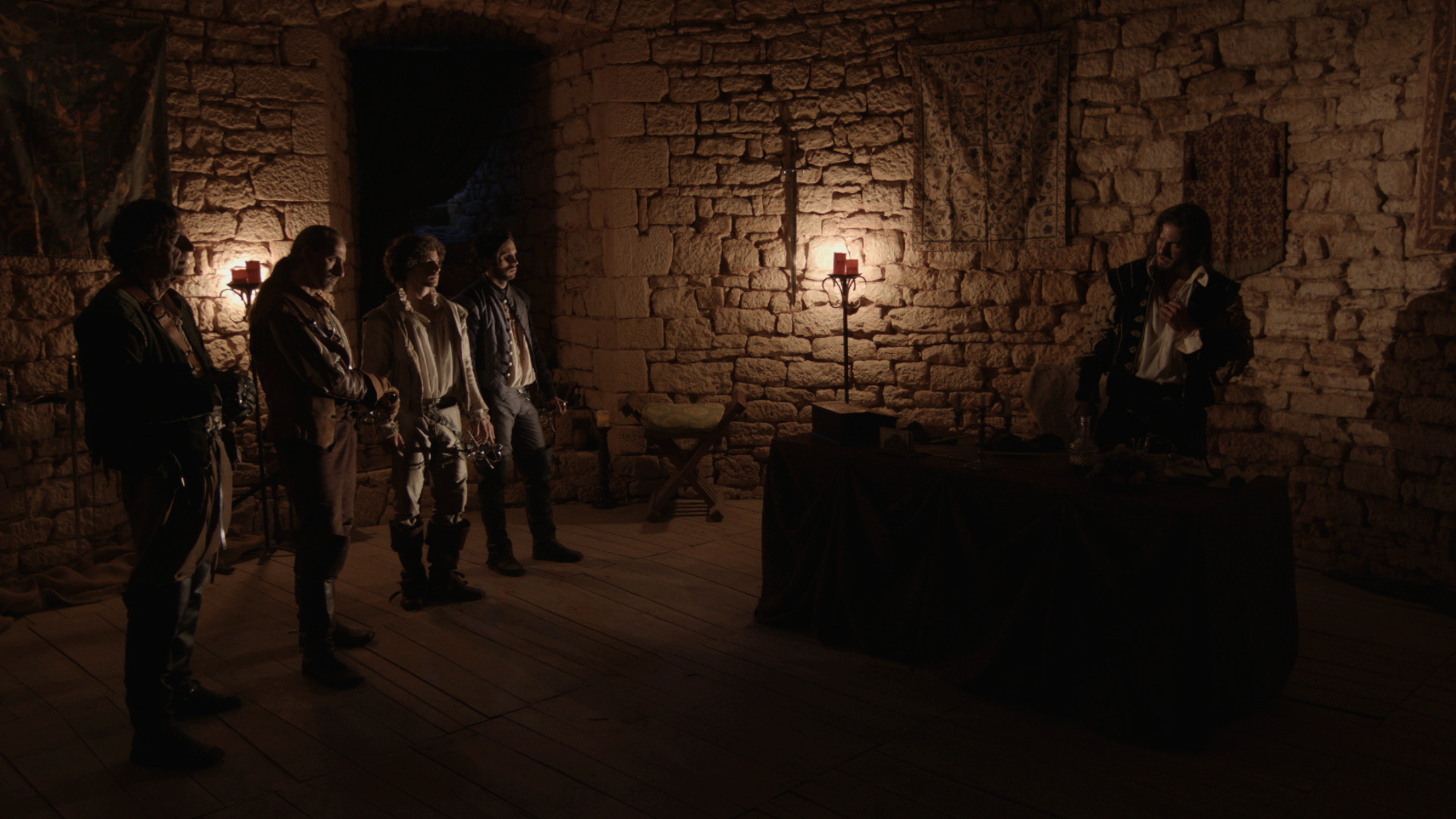
The two candle stands in the background have 100W bulbs hidden behind them. 40W bulbs would have been more suitable, but unfortunately we didn't have any. The light supposedly cast by these candles actually comes from two dedos. The first is at ceiling height off frame left, aimed at the Duke de Luyne (Toby Lorde) on frame right. The second is hidden behind the duke's desk and lights the heroes on frame left
The two candle stands in the background have 100W bulbs hidden behind them. 40W bulbs would have been more suitable, but unfortunately we didn’t have any. The light supposedly cast by these candles actually comes from two dedos. The first is at ceiling height off frame left, aimed at the Duke de Luyne (Toby Lord) on frame right. The second is hidden behind the duke’s desk and lights the heroes on frame left.

What methods have you used to simulate candlelight? Comment on Facebook or tweet me – I’m intrigued to hear.

All images copyright 2014 The First Musketeer. Find out more about the series at www.firstmusketeer.com

Candlelight

Lighting Techniques #5: Smoke

Smoke looks cool, I think we can all agree, but why? What are we trying to achieve when we spray a set with smoke?

In the famous cinematography manual Painting with Light, John Alton says of the cinema experience: “We sit in the dark looking at a light screen; this gives a definite feeling of depth. In order to continue this depth on the screen, the progression from dark to light must be followed up. The spot which should appear to be the most distant should be the lightest, and vice versa…”

Smoke can help you accomplish this dark-to-light depth. Because it’s white, if you spray it in the background then the background will get lighter, while the foreground will remain crisp and contrasty. It’s like standing on top of a hill and looking at more hills receding into the distance. The more distant ones are lighter, less saturated, less contrasty because of the atmospheric haze.

Smoke helps darkly-clad characters stand out from a dark background in The Deaths of John Smith (dir. Roger Harding)
Smoke machine
The Magnum 550: the most powerful smoke machine in the world. Are you feeling lucky, punk?

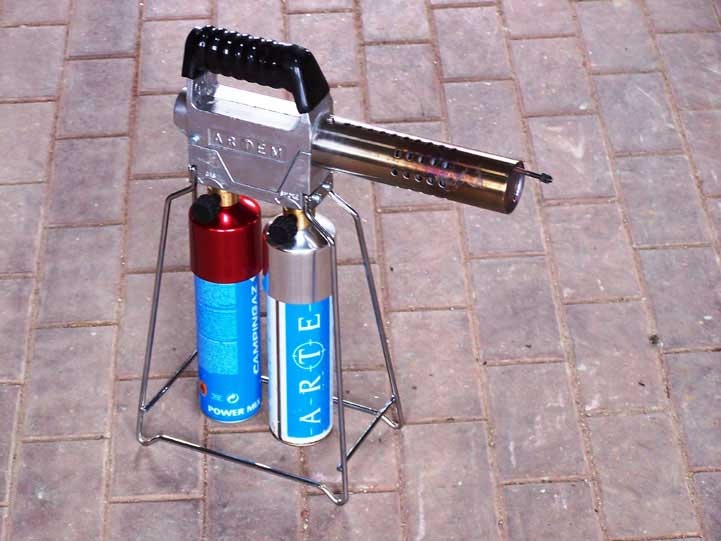
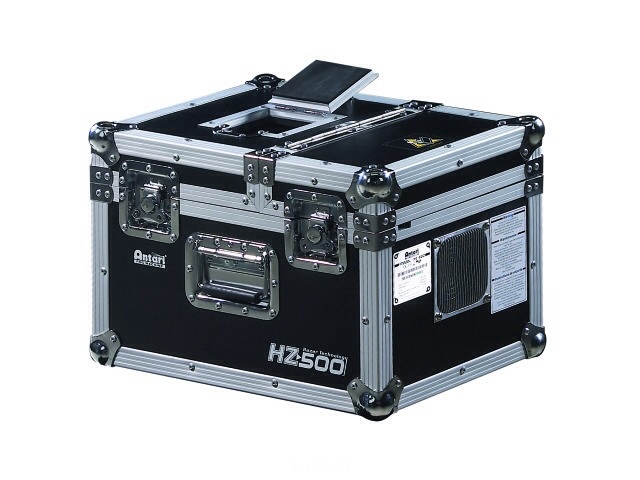
There are a number of ways to produce smoke. I own a Magnum 550, a small electric machine designed for DJs but perfectly useable on set. The smoke fluid is electrically heated until it turns to gas. On Ren we have an Artem smoke gun which uses propane gas cans to heat the smoke. This is handy on location because it doesn’t need a power supply, and it can produce thick clouds of smoke much more quickly than the Magnum.

An Artem smoke gun
An Artem smoke gun

You have to wait for both of these types of machine to heat up before you can use them. Ideally you need a dedicated crew member who is predicting when you might be ready to shoot and heating up the machine in readiness. If you’re outdoors, they also need to stay on top of the wind direction. You may think this would stay fairly constant, but trust me, it doesn’t.

Both types of machine produce wreaths of smoke which usually needs wafting in order to look like general atmosphere. And consistency is a challenge. It’s tricky not to have long takes that start with a lot of smoke and end with none. Both types of machine are too noisy to run during a take, though the sound recordist may agree to let you run an electric machine during pauses in dialogue, and an Artem can continue producing smoke for a little while after the gas is turned off.

A hazer
A hazer

If you’re indoors, a hazer may be more appropriate. This is an electric machine that uses compression rather than heat to vapourise the fluid, then blows it out continuously through a fan. The effect is much more subtle and constant than that produced by a smoke machine.

However you’re generating your smoke, remember to keep it in the background as much as possible. It’s all about making your subject stand out from the background.

You can find out more about smoke and why I use it in my Ren podcast at www.rentheseries.com/news/ren-podcasts.

Smoke used to volumise a shaft of light in Ren (copyright 2014 Mythica Entertainment)
Lighting Techniques #5: Smoke

Ren: Lighting Karn’s House

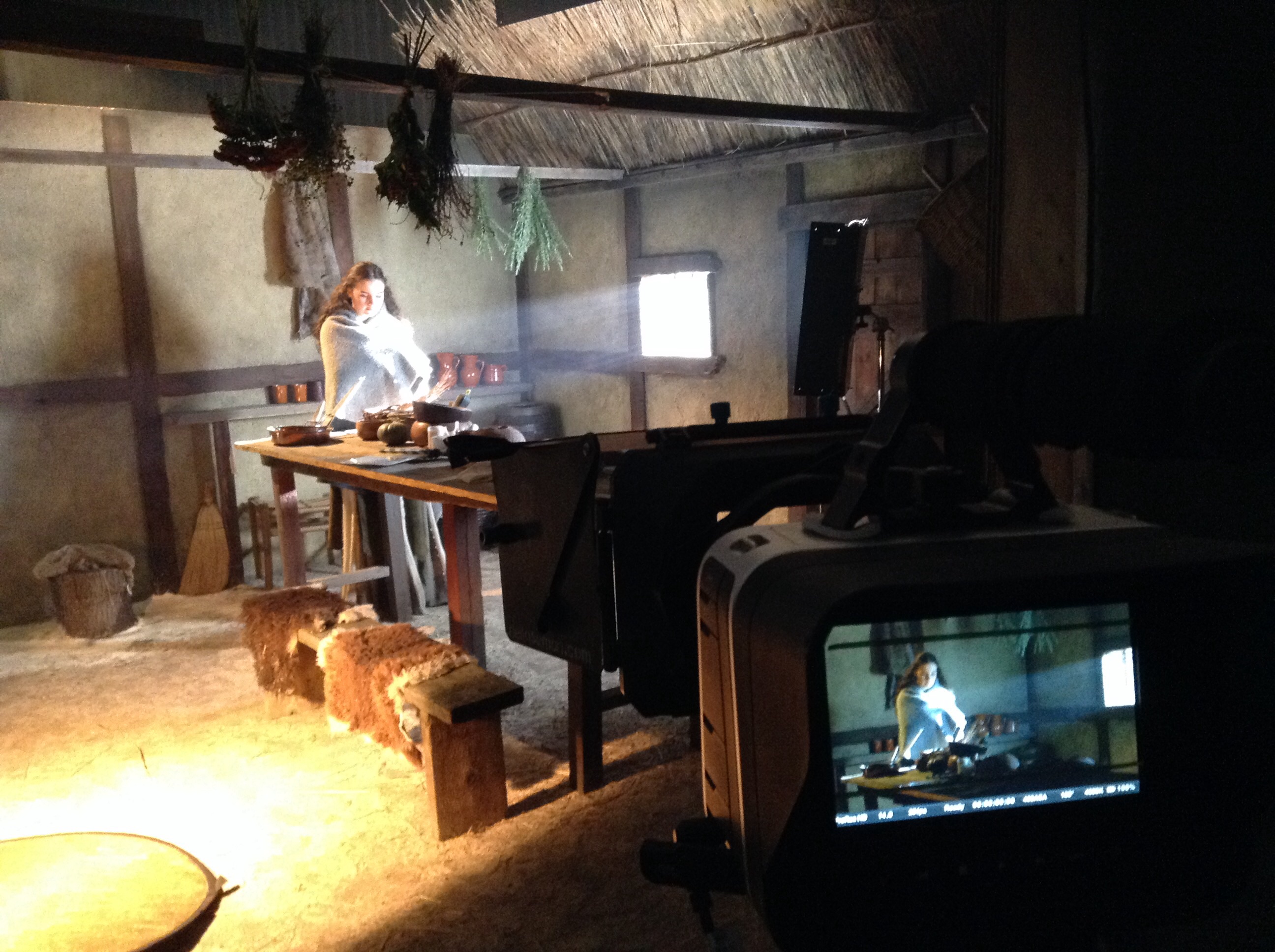
Karn’s house is an awesome set which I had been walking past at Ren Studios for six weeks before I finally got to light it. It didn’t disappoint.

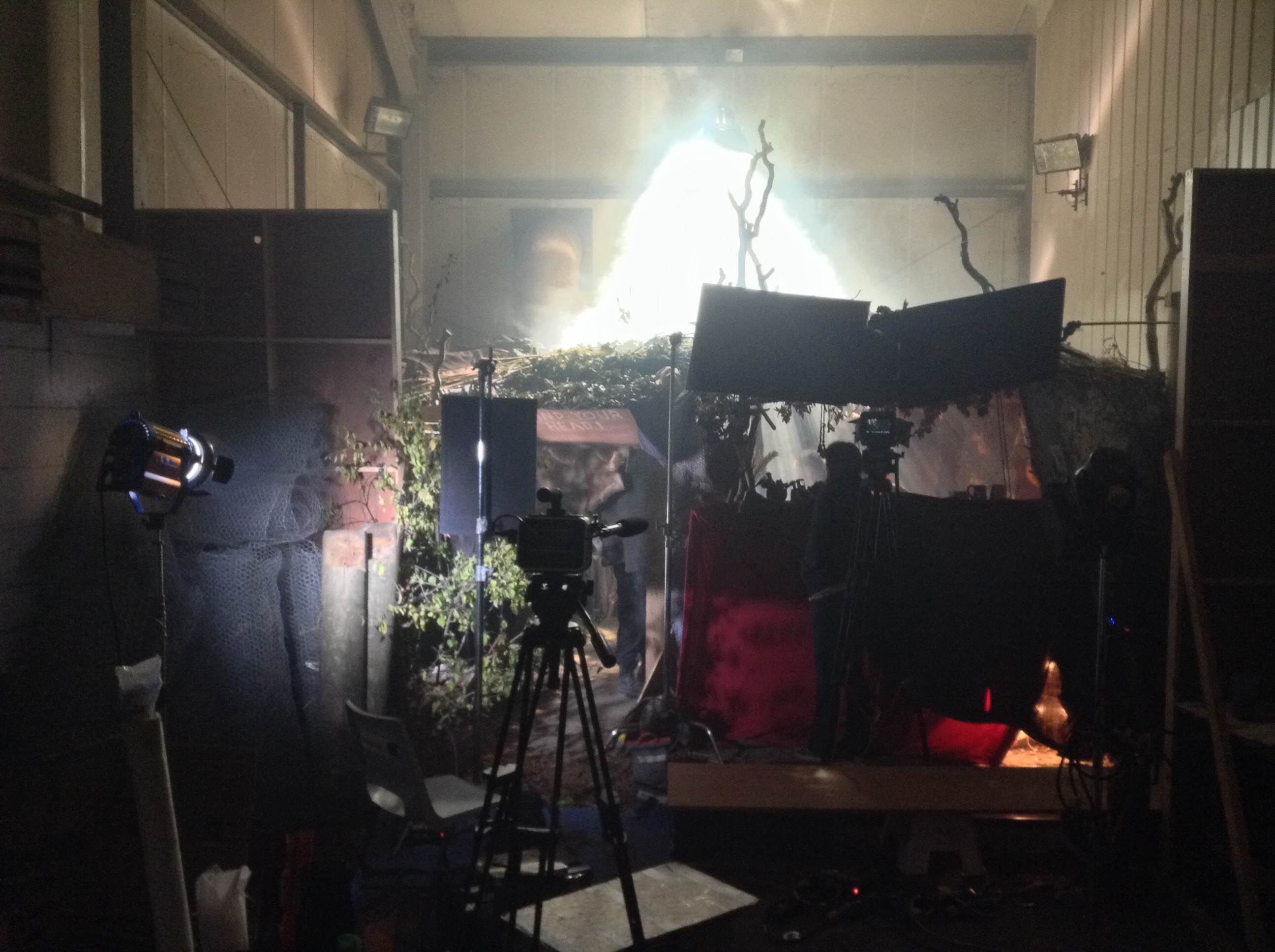
Behind all that smoke at the top is the HMI

In the words of my camera assistant Andy Roughan, I had to John McClane it to get the HMI up on the metal tank behind the set. After climbing onto the tank via a stepladder, I had to shimmy around an incredibly dusty pipe to get to the spot where the lamp needed to be. Getting the lamphead, the low boy stand and sandbags up there was fun. At one point I lost my balance and fell backwards, towards the roof of the set. I shouted a naughty word at the top of my voice, thinking that not only was I going to injure myself quite badly, but I was going to destroy everyone’s favourite set before we’d shot a single thing on it. Fortunately it was so well-built that it took my weight, or at least the part of my weight that I was forced to put on it, and no harm was done. Except that me shouting the naughty word in such a tone of utter panic had given everyone within earshot a minor heart attack.

Squish's cyclotron
Squish’s cyclotron

Why was it so important to get light up behind the set, rather than shining it down through the roof from in front? The answer is smoke. You can’t really see smoke unless it’s backlit, so in order to get those magical shafts of light coming through the set, the HMI had to be at the back.

After shooting the video blog, Andy and gaffer Richard “Squish” Roberts finished building the cyclotron for the firelight effect. This consisted of three 100W bulbs behind a red gel, and two behind an orange gel. I don’t want to give away screengrabs yet,  but you can see the fire effect at work on set dresser Amanda Stekly in this ropey iPad photo:

Set dresser Amanda Stekly, lit by the fake firelight

This fire effect served to light Ren (Sophie Skelton) in the foreground of the master shot very nicely, and separate her from the background through colour contrast. It rendered the 2ft kinoflo shown in the video blog unnecessary.

When we came in for the close-ups I continued to differentiate the characters of Ren and Karn (Christopher Dane) through light quality, as I had in Wales. I brought in an LED fresnel for Karn’s close-up, to get a hard sidelight, then for Ren’s close-up I used the 2ft kino to get a much softer look and from a less severe angle.

It’s a shame there was only one scene to film in this set; it would have been great to use it more. But it will certainly add a lot of production value to the opening episode of the series.

Ren is copyright 2014 Mythica Entertainment. Visit www.rentheseries.com to find out more.

Ren: Lighting Karn’s House

Ren: Lighting Dagron’s House

This is our big interiors week on Ren. The main set is the inside of Ren’s house, which was assembled in a mere three days by Chris Dane and his team, cannibalising the village exterior set. In this video blog I explain how I lit the set.

This set-up worked pretty much as-is for the first big scene in the house, shot on Monday. It was all handheld, so I needed the flexibility to move around with the camera and not worry about lamps on the floor getting in shot. The way I’d lit the set meant that the cast could stand pretty much anywhere and look good, especially since whoever was wiggling the “firelight” reflector could tweak the angle of it to follow any actor threatening to go a bit dark.

100W bulbs hidden behind the dresser for "candlelight"
100W bulbs hidden behind the dresser for “candlelight”

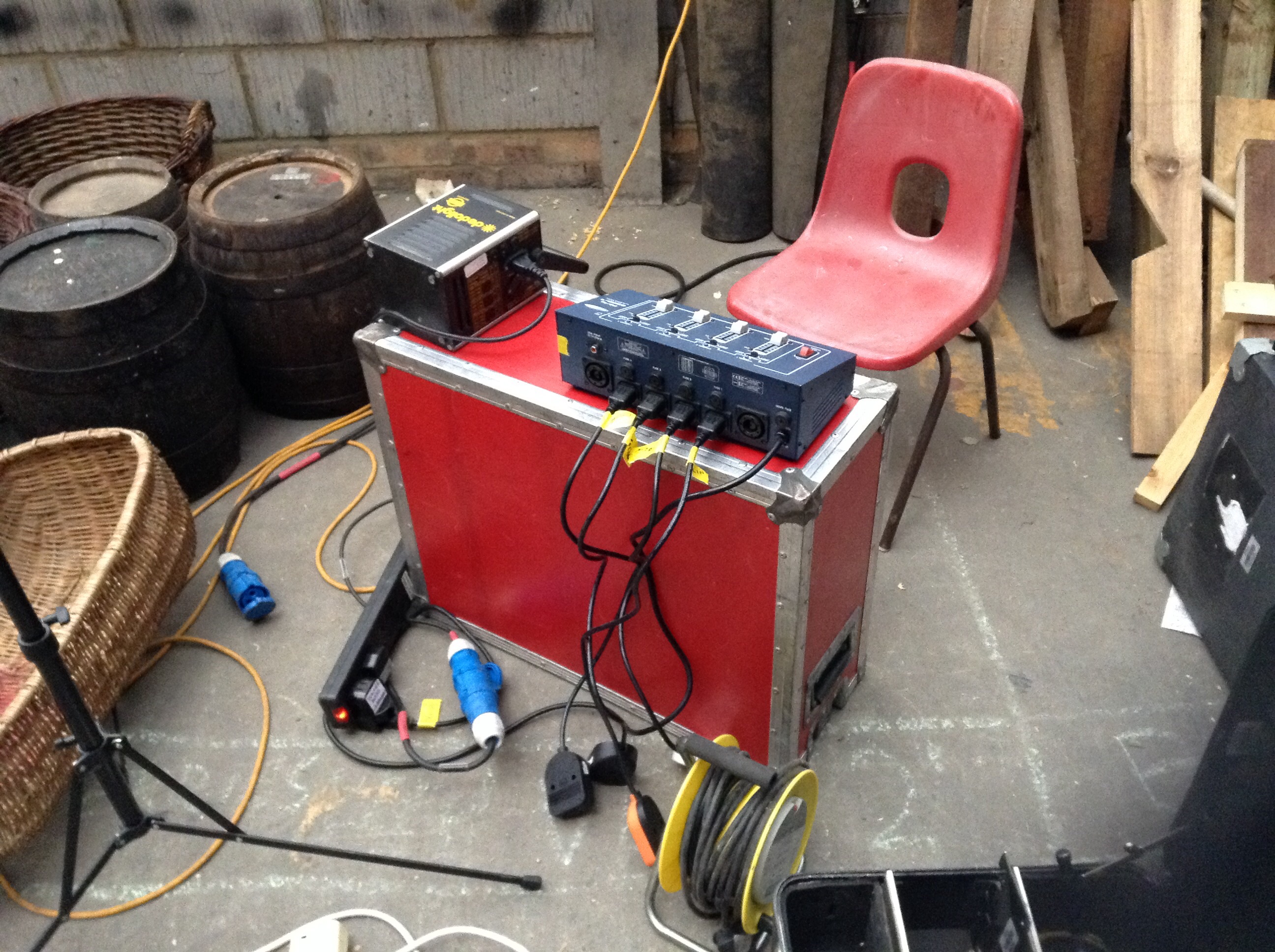
As the bedroom was visible in the background of many shots, I rigged a rough version of the candelight effect I knew I would be using when we got to the bedroom scenes proper. I clipped four 100W tungsten bulbs behind pieces of furniture and cabled them into two channels of the dimmer board Colin kindly lent us. These were then flickered to suggest flames.

image
The dimmer station

The dedo over the table proved to be superfluous. When I saw Claire making candles for the set, I asked her to double-wick them. I’d read in American Cinematographer that they’d done that on Pirates of the Caribbean to boost the light output, and sure enough, once those candles were lit, the dedo wasn’t needed.

The following day I played around with the lighting a bit more. When we came in for close-ups – this time on sticks – I turned off the overhead 4ft kino and brought in a 2ft kino on the floor for Window Wrap (Lighting Technique Number #3). That way the light got into the talent’s eye sockets and was generally more flattering.

The kinoflo on the right acts as Window Wrap

For another scene I decided the fire had gone out, allowing our bad guys to be bathed in cool daylight while the good guys stayed near the candlelight by the bedroom door. It’s nice when you have motivated colour contrast like this in a set and you can play around with which characters are in which colour of light. I look forward to shooting the remaining house scenes and developing some nice candlelight in the bedroom.

Find out more about Ren at www.rentheseries or on Facebook or Twitter.

Ren: Lighting Dagron’s House

Ren: Lighting the Prison Cell

After a month of shooting exteriors, yesterday we shot the first interior set for Ren. Which was just as well since a tropical storm was raging outside and blowing down parts of the exterior village set.

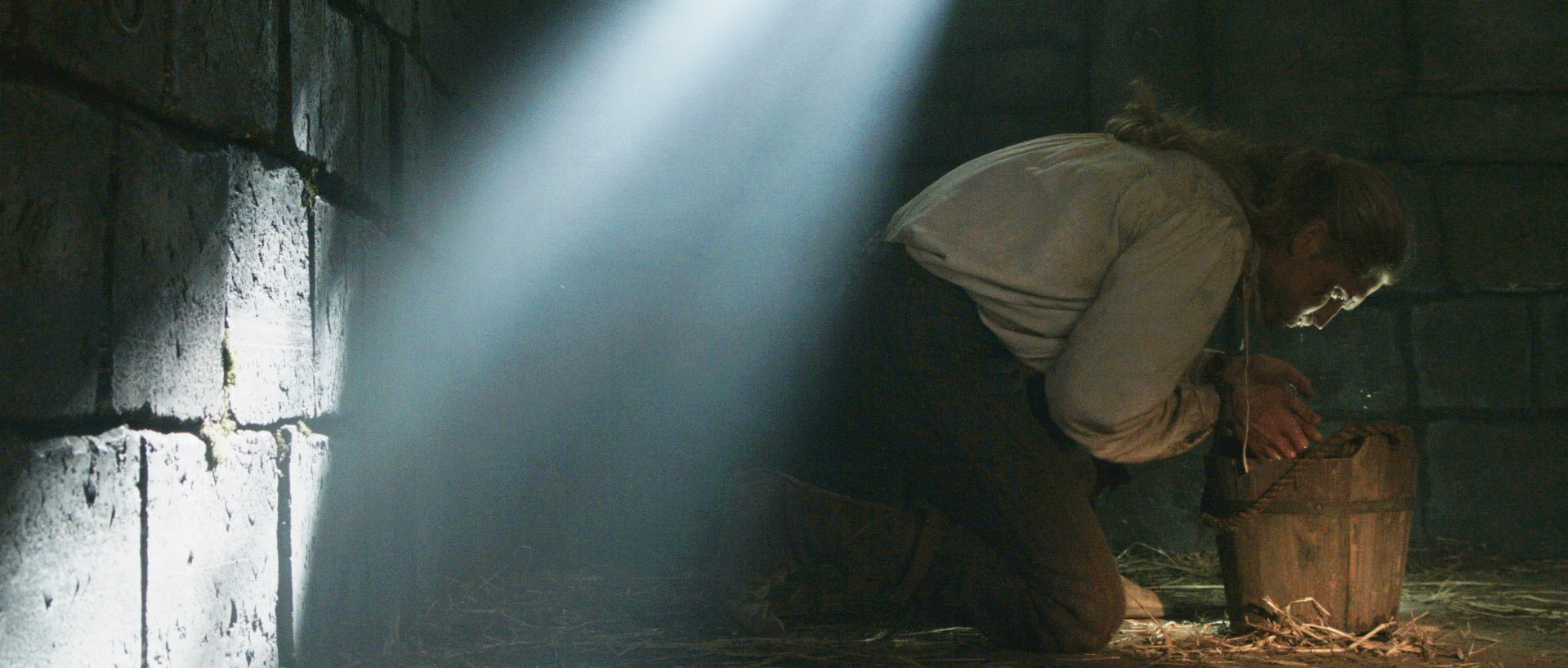
It was a classic prison cell scene, one of those shaft-of-light-through-the-barred-window jobbies. Amanda Stekly and her team did a great job of creating a two-walled set with moss, wet stone and even real snails. Outside the window was a platform to sell the illusion that the cell was below ground level.

Here are some frames from the scene:

prison1 prison2

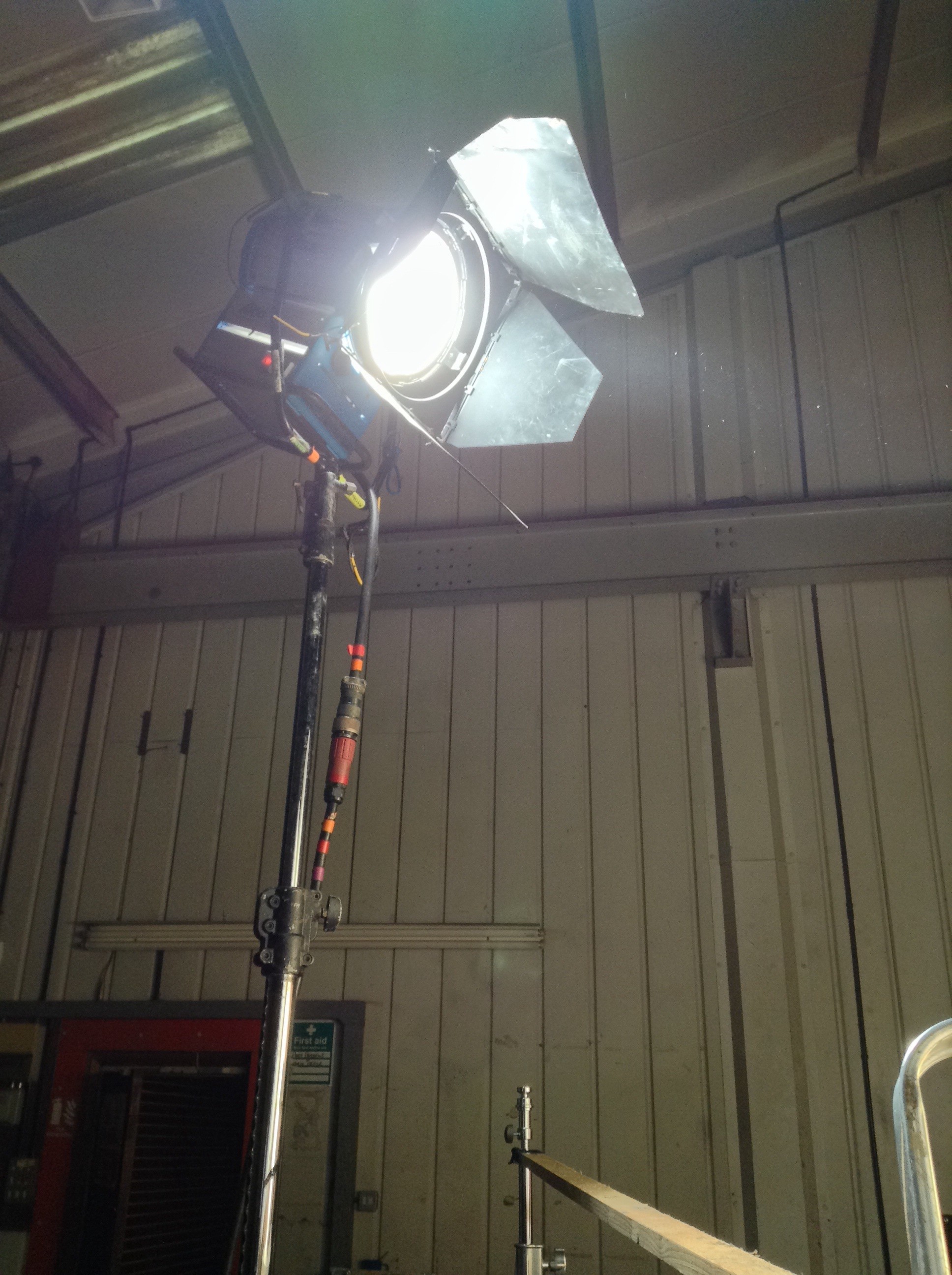
2.5K HMI
2.5K HMI

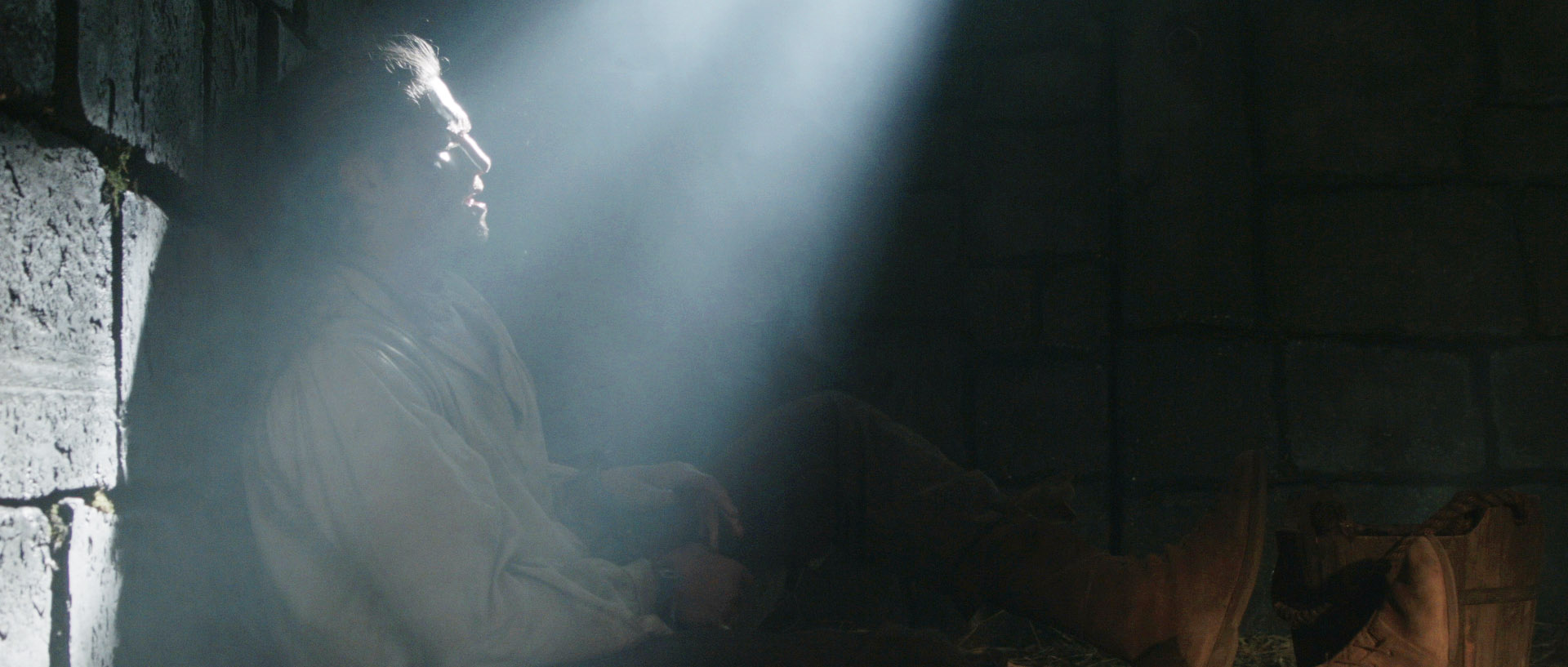
If you’re going for this shaft-of-light-piercing-the-gloom look, you need three things. Firstly, a powerful, focusable light; I used a 2.5K HMI fresnel. Secondly, you need to accept over-exposure. The only way you will get any detail in the shadows is by exposing bright enough that the highlights – anyone standing in the direct beam of light – will clip. If you don’t like the highlight roll-off characteristics of your camera, stay away from this type of lighting. The cool thing about having a keylight this hot is that when a character moves around in the light, especially if they’re wearing light-coloured clothing, they bounce the light around in interesting and often unpredictable ways.

I shot the scene on Richard Roberts’ Blackmagic Cinema Camera, partly because of ongoing problems getting a monitor signal out of my Production Camera, and partly because of the extra stop of dynamic range the BMCC would give me to milk this high contrast lighting scenario.

The third and very important thing you need is a smoke machine to volumise the shaft of light. (More about using smoke in a future post.)

In this view of the platform behind the set, the fluorescent fixture providing indirect "daylight" can be seen on the left, gelled with Quarter Minus Green to remove the green spike in the lamp's output.
In this view from behind the set, the fluorescent fixture providing indirect “daylight” can be seen on the left, gelled with Quarter Minus Green to remove the green spike in the lamp’s output.

In order to give the sense of indirect “sky” light also coming in through the window, I placed a fluorescent outside the window so as to catch some of the side wall of the set. When I first tested the lighting set-up the previous night, I placed a second fluorescent fixture directly above the window to get some edging on the tops of the stones underneath. But I found that the more sources I set up, the less definition I got in the shaft of HMI light, so I dropped the toplight.

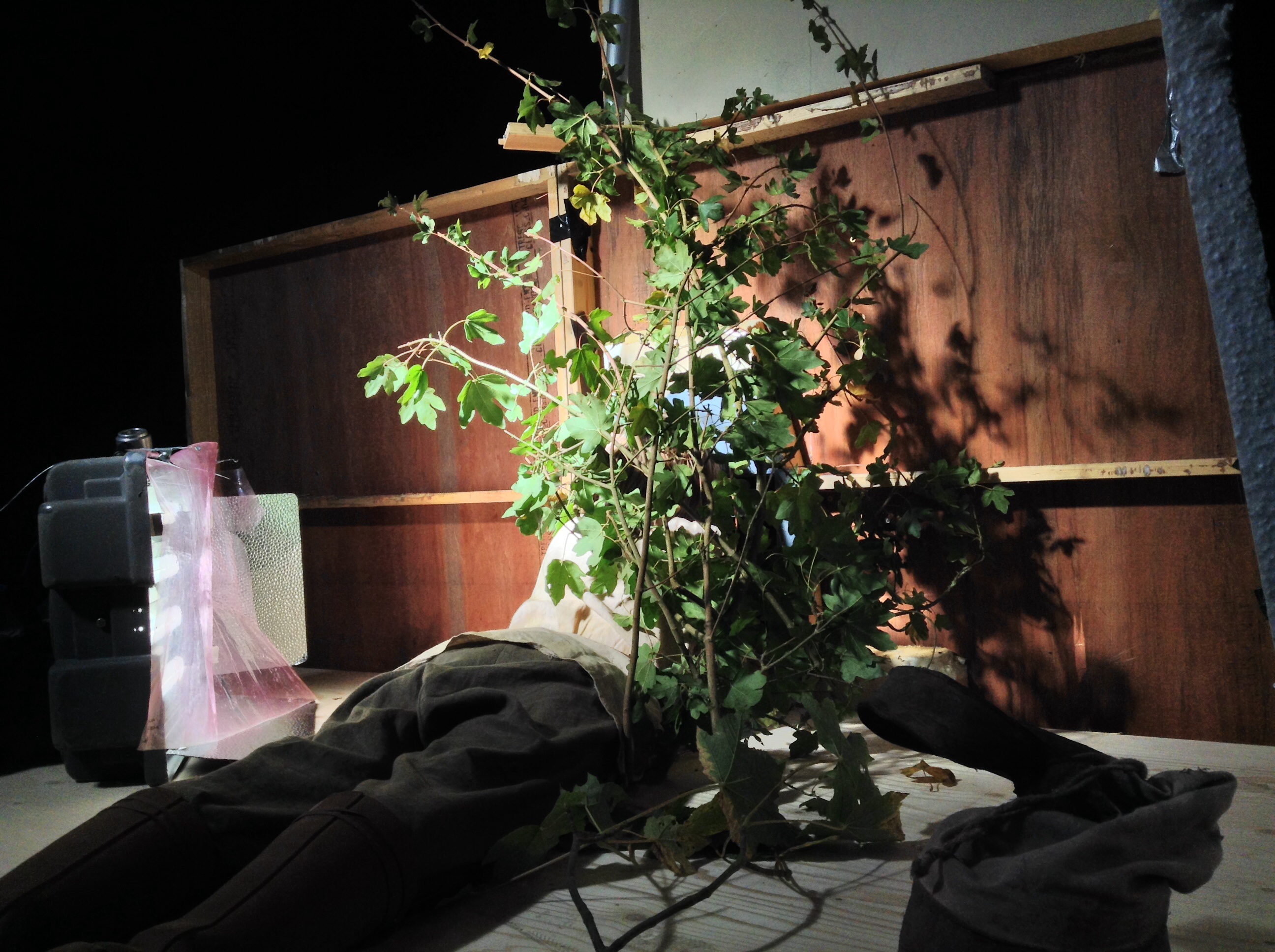
The door gobo
The door gobo

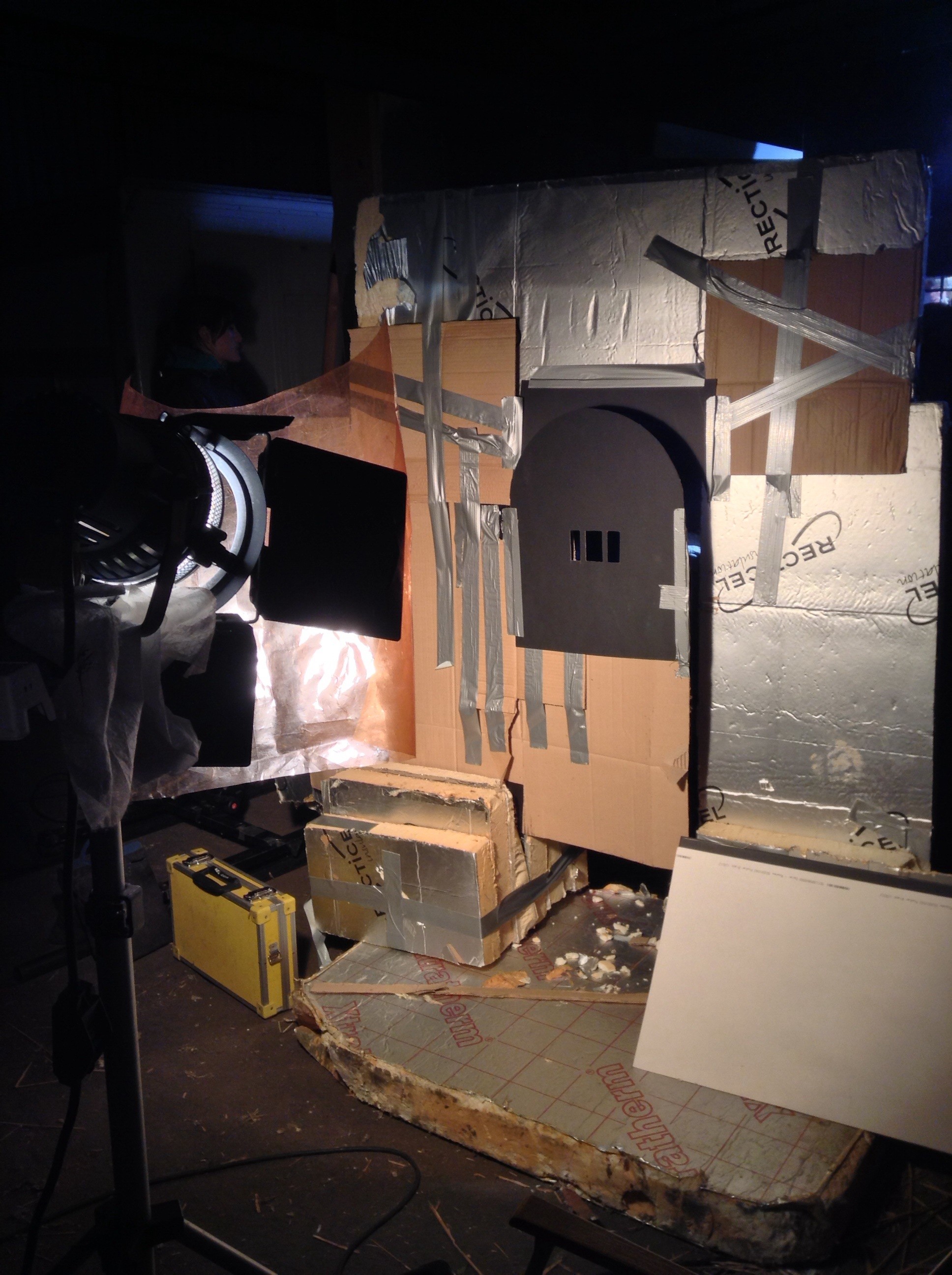
Although the script called for guards to drag Hunter (Duran Fulton Brown) into the cell and shut him in, the two-walled set had no door. So with help from the art department I constructed a ridiculous-looking door in roughly one-third scale, simply to cast the shadow of the door. Behind it I placed a redhead gelled with half CTO, which Richard wiggled during takes to suggest firelight.

The LED hidden behind the bucket

I set the camera to a white balance of 4,500K so that the “daylight” of the HMI would go a little cold and the “firelight” would go really warm.

Our first shot involved Hunter washing his face at a bucket of water, then slumping back into the “sunlight”. We positioned the bucket out of the “sunlight”, in the small patch of light coming through the window of our fake door. But Hunter was still too dark by the bucket. I didn’t want to flood the set with fill and ruin the mood, so I hid a small LED light behind the bucket and diffed it down. This lights Hunter’s face when he leans over it, and hopefully suggests a reflection off the water.

A fluorescent toplight rigged over the bucket for the face-washing close-up
A fluorescent toplight rigged over the bucket for the face-washing close-up. Note the black cloth hanging from one side to reduce spill.

When we moved to a close-up of Hunter washing his face (below), I rigged a fluorescent toplight, suggestive of indirect daylight from the window, and placed a circle of foil at the bottom of the bucket. The idea was that the toplight would reflect off the foil and the surface of the water and light Hunter’s face. It didn’t work, but the toplight itself really made the shot for me. The more you work with an actor, the more you learn the best ways to light them, and I’ve learnt that Duran looks great with toplight.

Foil in the bucket for added bounce

Screen grabs (C) 2014 Mythica Entertainment. Visit www.rentheseries.com for more info.

prison3


Ren: Lighting the Prison Cell

Ren Teaser Trailer Released

The first teaser trailer for Ren has been released today. This is the ambitious fantasy web series I’ve been photographing for the last four weeks. (I also cut this trailer.)

Michael Hudson has produced a series of behind-the-scenes podcasts about Ren. You can listen to me talking about the cinematography, along with all the other talented HoDs talking about the hard work and genius they have brought to bear, at http://www.rentheseries.com/news/ren-podcasts/

Ren Teaser Trailer Released

Working with Other Departments

Art assistant Denise Barry's photo of the cast and crew shortly after arriving in France
The cast and crew of The First Musketeer – one of the best collaborative experiences of my career

Filmmaking is all about teamwork. But sometimes DPs can forget this and ignore the needs of other departments in their quest to get their perfect shot. In recent years I’ve really come to appreciate the importance of forging a good relationship with the other heads of department so as to get the best possible results and foster a good vibe on set.

Take cross-lighting as an example. Cross-light comes in from the side of frame and throws any texture into relief. This might be exactly what you need to show off the detail in a set or a costume and make the art department very happy. Or it might show up things we don’t want to see – the edge of a make-up appliance, or scarring on an actress’s face. In cases like this, a good DP should modify their lighting, no matter how much they love it, so that the make-up or the talent looks their best.

I’d like to collaborate more with make-up artists in the future. I’m sure we’re looking at a lot of the same things when we assess a face and decide how to approach it. Understanding the direction the make-up is going in could spark ideas about how to build on that with light. I once spent a lot of time trying to lighten up the face of an actor who had been made-up very dark; a brief chat with the MUA beforehand could have avoided that wasted time.

Stanley Kubrick’s production designer apparently used to design sets with a master shot in mind. So when you walk onto a set or a dressed location, talk to the designer about where they think it looks best from. They have lived with this set for longer than you have and they may have some great ideas.

It’s also important to respect others’ work. Don’t walk onto a set and start dressing stuff to camera; show the designer the monitor and let them work their magic. And don’t move stuff to get your tripod in without asking permission; they may need to take continuity pictures first so that they can put everything back in the right place later.

The cast and crew of Fled
The cast and crew of Brendan O’Neill’s “Fled”

The same goes for the sound department. If the boom op is struggling with shadows, tweak the lighting to help them out if you can. No film set is complete without a friendly rivalry between the camera and sound departments, but it’s vital this is underpinned by mutual respect. Sometimes there is an attitude on set that the DP outranks the sound recordist; don’t tolerate this. Sound and vision are equally important.

Last but definitely not least is the cinematographer’s relationship with the talent. It’s easy to forget how much important work is going on in an actor’s head. And what are the crew doing while the cast are trying to focus? Cracking jokes, spraying smoke around, turning on dazzling lights, thrusting polyboards in people’s faces, clapping slates and generally being incredibly distracting. Try to be aware of this and minimise it where possible, particularly for very serious or emotional scenes. Explain to the talent why you’re surrounding them with equipment and how it’s making them look good and servicing the story. Foster an environment where they feel they can ask you to move something if it’s distracting. If the acting isn’t good, no-one is going to watch the film long enough to admire the lighting – so do what you can to help the talent.

And remember, when people view your showreel, they’re judging not just the quality of your work, but the overall quality of the films you’ve worked on. In short, help make other people look good and you will look good too.

Working with Other Departments

Lighting Techniques #4: Health Bounce

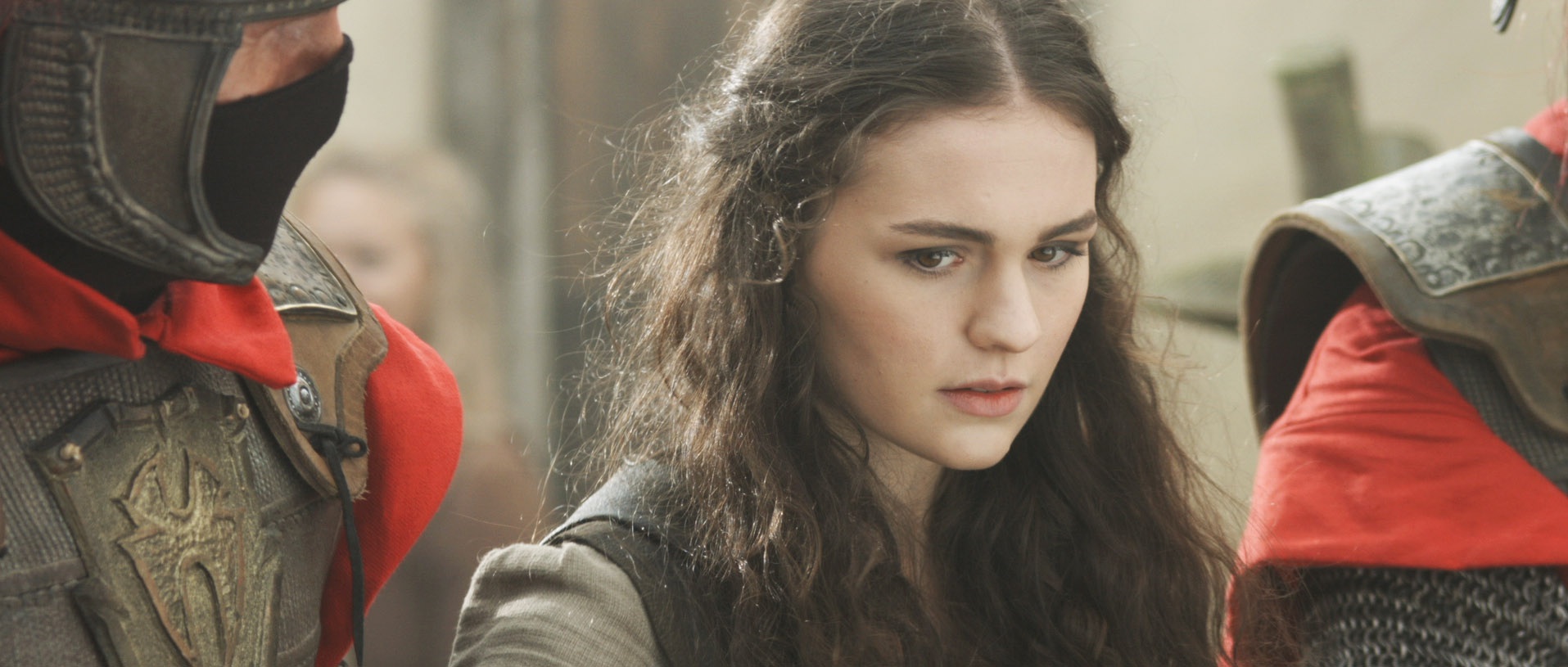
This is a really simple technique but incredibly effective. All you do is put a reflector or a piece of polyboard under the talent’s face. Here’s an example frame from Ren starring Sophie Skelton. This was shot on an overcast day using a 2.5K HMI as backlight.

image

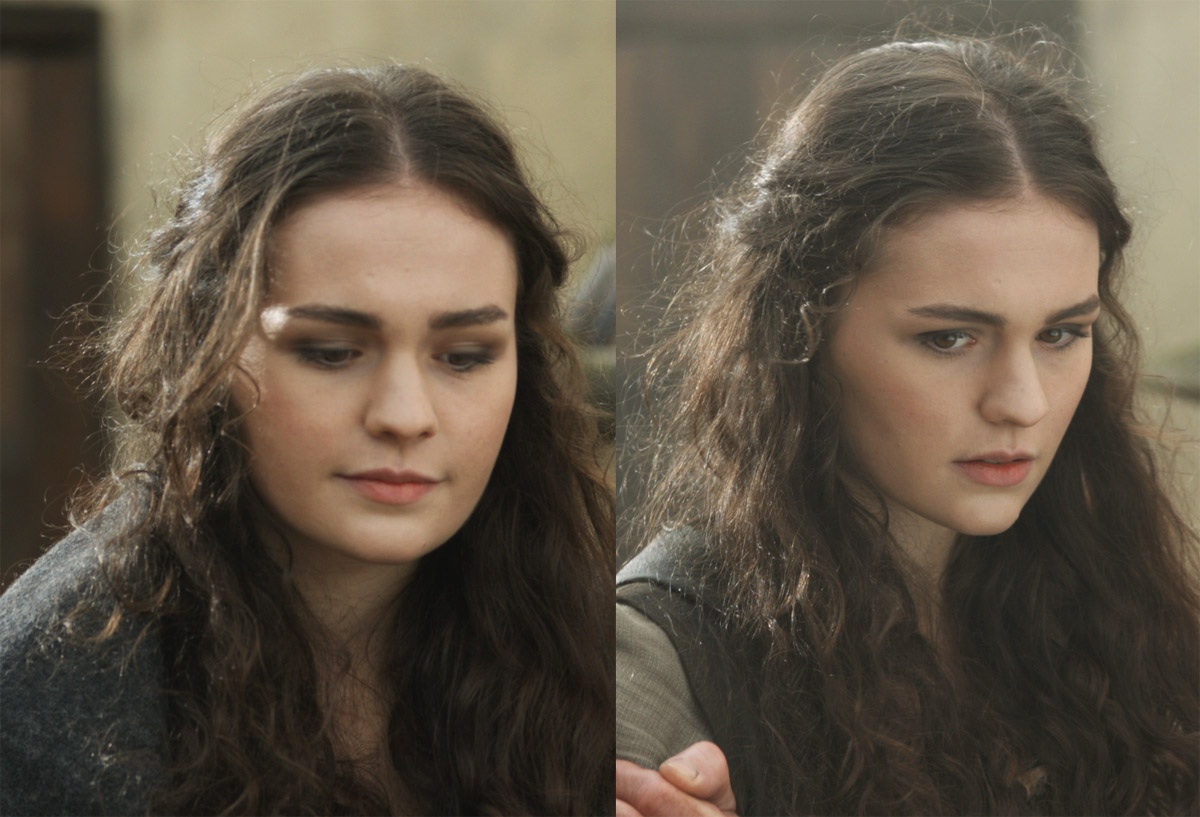
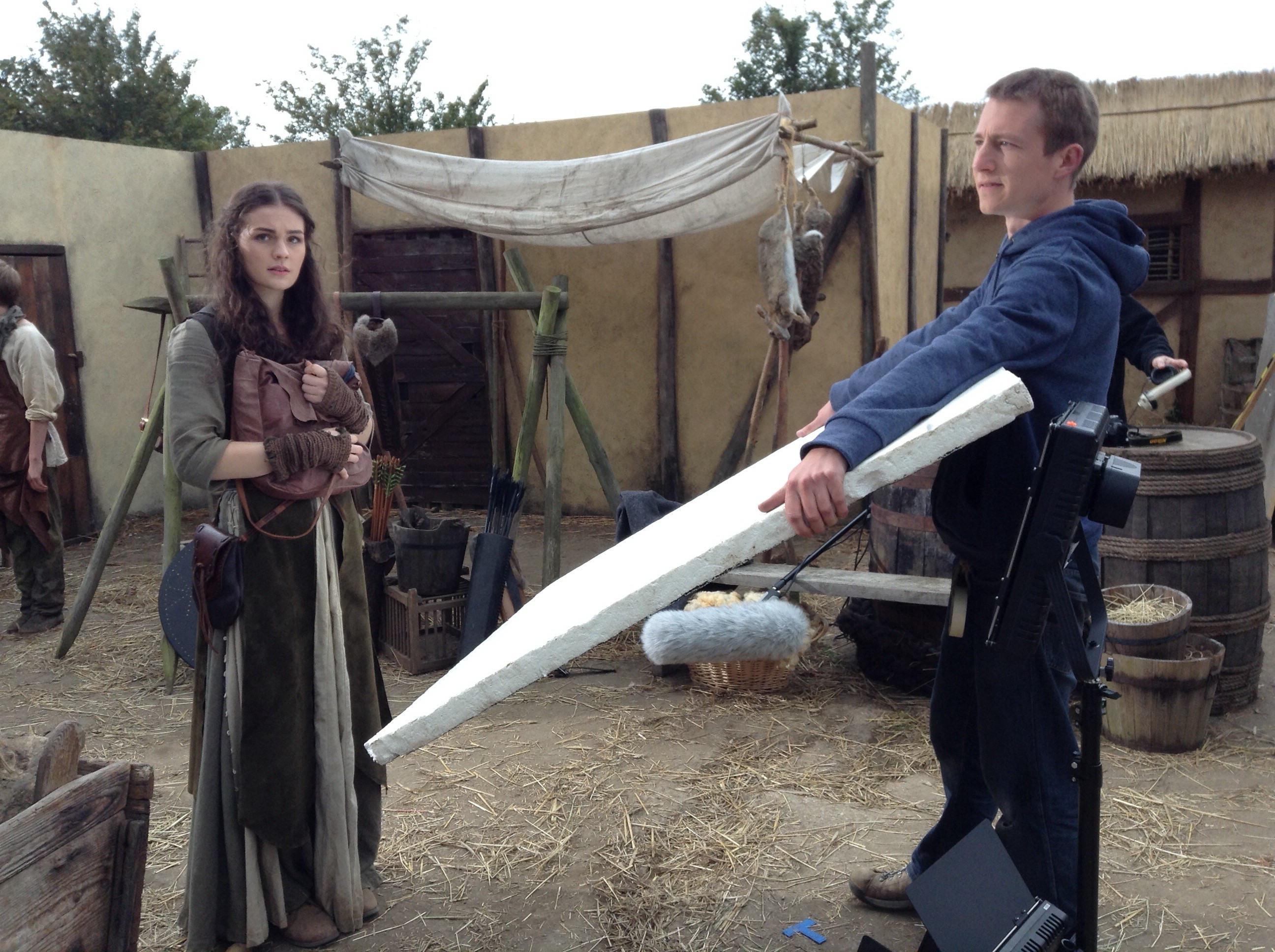
Sophie is very beautiful and the make-up (by Becca Youngs) is great, but the icing on the cake is a simple piece of polyboard out of the bottom of frame. It subtly lifts the shadows on her face and puts a ‘sparkle’ in her eye. That sparkle is actually the poly’s reflection, but it’s amazing how much life and energy that gives. I’m calling this technique the Health Bounce because it’s used a lot in ads for health and beauty products.

Here’s a side-by-side comparison without (left) and with (right) the poly.

image

The human brow has evolved to protect our eyes from sunlight, amongst other things. In an exterior scene, particularly on an overcast day, the light comes predominantly from above, rendering the forehead and the nose the brightest areas, and throwing the eye sockets into shadow. This is a challenge for cinematographers. So much of an actor’s performance is in the eyes – it’s essential to get light into the eye sockets to capture every nuance of that performance. A bounce board underneath the face helps do that.

Colin Smith holds the polyboard for the above shot of Sophie
Lighting Techniques #4: Health Bounce

Ren: Night for Day

The 2.5K HMI can be seen here in the lower right, and the fake sky on the top right.

It had to happen sooner or later. On an ambitious series like Ren, with a tight schedule, it was inevitable that we would at some point have to shoot a daylight shot after dark. So I’d given it some thought beforehand. It seemed to me like soft toplight, simulating sky, was what was needed. I figured that a 2.5K HMI fired into an overhead 6×6 silk would do the job, and that’s one of the reasons I pushed production to hire a 2.5 despite the very limited budget.

The moment came yesterday when we got into a time crunch with one of our lead actors (Duran Fulton Brown) and had to complete a scene despite the natural light running out. Fortunately the scene was scripted as evening and we had shot coverage at magic hour and in twilight with an HMI “sunset”. So we weren’t trying to match full-on daytime.

Colin (left) helps hold up the roof. Rich (right) does not. Duran Fulton Brown (centre) plays Hunter.

We used a redhead for the direct “setting sun” light. We had a silk but no sturdy stands to rig it on, so we built a quick roof out of poly and Celotex (matte silver bounce), holding it up with lightweight stands and crew members! We put the 2.5K on the floor in the corner and fired it into this ceiling. The final touch was to fire an LED panel at the back wall to fill in the black shadows that the redhead was casting.

Check out the final shot below. It looks a lot less convincing to me now than it did at the time, but I believe the concept was sound. We just needed more stands to rig the poly at a better angle to get the maximum bounce, including some behind Duran to give a general “sky” backlight. Lessons learnt for the next time!

image


Ren: Night for Day