Welcome

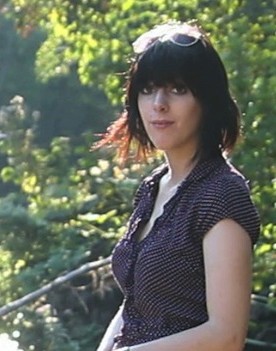
Directing my 35mm pilot for The Dark Side of the Earth
Directing my 35mm pilot for The Dark Side of the Earth (photo: Richard Unger)

Greetings, people of the Interweb, and welcome to NeilOseman.com, the new virtual home of my filmmaking adventures.

I’ve been blogging about the films I make for many years, but up till now these blogs have always been on websites set up specifically for each film. The purpose of this site is to bring all my blogs together, past and present, along with lots of other stuff.

So, you’ll see down below that I’ve already imported the blog from The Beacon, a terrible 75 minute action movie I made in 2001. Over the next few weeks I’ll be integrating the journals from Soul Searcher and The Dark Side of the Earth.

Also coming soon to the site:

  • A page for each of my films, from the short version of Soul Searcher (2000) to The Picnic (2011)
  • Micro-shorts Calf Vader and George & Mark available to view in full
  • Behind-the-scenes featurettes from The Beacon, previously only available on the DVD
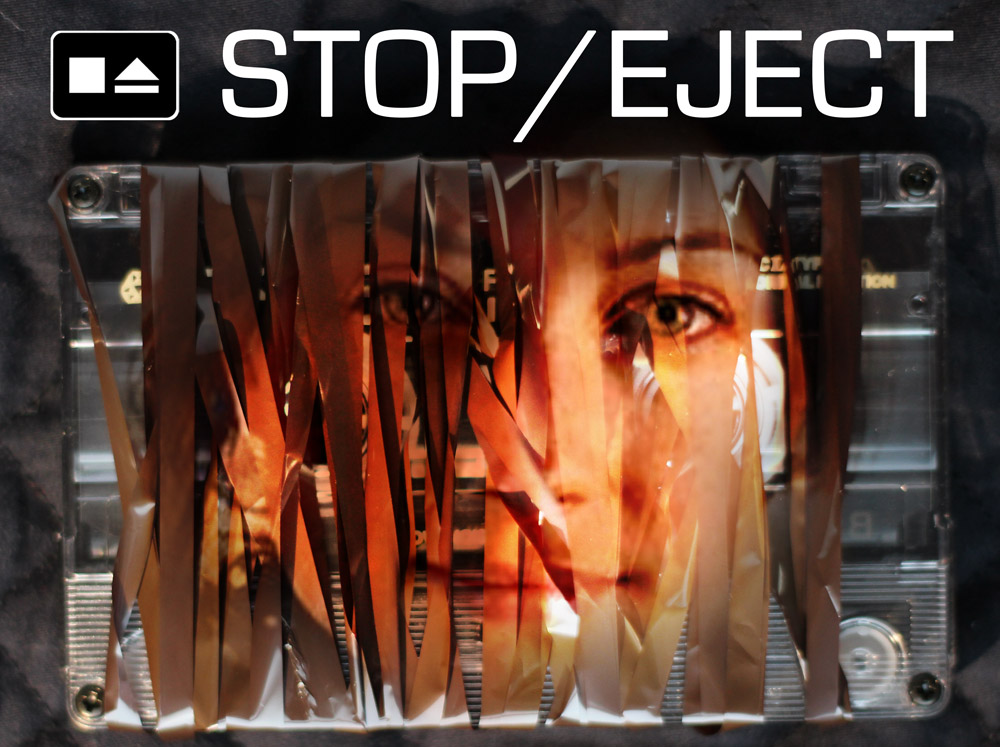
  • Info on my latest short Stop/Eject (a Light Films production)
  • Scripts, schedules, budgets and other useful downloads from my shorts and features

In the mean time, things may move about and perhaps I’ll play with different layouts and colour schemes, so please excuse me as I settle in.

Welcome

Canon 600D HD-DSLR: Sound Advice

Yesterday Ian Preece came over to do a sound test on my new Canon 600D HD-DSLR. Although the new wave of DSLRs capable of shooting full HD video are extremely popular with filmmakers these days, they are designed primarily for taking photographs, which can cause some problems for those more interested in motion pictures. The biggest one is sound.
As far as I know all the HD-DSLRs on the market have a microphone socket and some, like the 600D, allow you to manually adjust the recording level. But where they fall down is that none of them have a headphone socket, so there’s no way of monitoring the sound when you’re recording. If your lapel mic rustles on the interviewee’s jacket, or a gust of wind causes some rumbling, or the cable has been damaged and the sound is intermittently cutting out, you’ll be completely unaware until you play back the shot.
By far the best way to overcome this problem is dual system sound. This means, like shooting on film, you record the sound on a separate device and sync it to the picture later. (Typically with a clapperboard, but software like Plural Eyes can automate the process.) This is all well and good for drama shoots, but if you’re a one-man crew shooting a simple corporate or vlog, having to operate two devices and then spend the time in post syncing the footage is not ideal.
When researching my camera prior to purchase, I found that some people out there had discovered a way to monitor the sound being recorded to it. However, after receiving the camera and trying out this method, I discovered I couldn’t do it. It involved connecting a headphone amplifier to the AV out socket via a special cable. The problem is, as soon as you connect anything to that socket, the camera’s screen shuts off (since it assumes you’ve just plugged it into a TV). There is a firmware hack called Magic Lantern which prevents the screen from shutting off, but a full version is not yet available for the 600D (a relatively new model) and even when it is, I’m not sure I will want to risk it permanently damaging the camera.
(Note: Many DSLR filmmakers don’t care if their screen shuts off, because they’re using an external HDMI monitor as a viewfinder anyway. I’m not doing that, because the 600D has a flip-out screen, and when combined with a simple magnifying viewfinder attachment it becomes the perfect viewfinder.)
So I purchased a Beach Box, since these have a headphone socket. Okay, you’re not monitoring what the camera’s recording but you’re pretty close to it, and if you set it up correctly and keep checking the playback you should theoretically have no problems. Unfortunately, yesterday’s test with Ian did not go well. We tried first without the Beach Box, since he has a mixer with a headphone socket anyway. When this gave strange and unuseable results we turned to the Beach Box, which didn’t work either. Several weird things were going on, but the main one was that when we connected a mic to one stereo channel it came in incredibly loud and distorted, no matter how low we set the recording level, and on the other channel (which should have been silent) there was a very quiet, hissy version of the same audio.
It wasn’t long before we were forced to admit defeat. The Beach Box is going back whence it came, and I’m going to purchase a portable audio recorder and use dual system at all times. I’ll let you know how I get on with that in the coming weeks.
That’s all for now. Next time I’ll discuss the shoulder rig.

Canon 600D HD-DSLR: Sound Advice

The Picnic: Script and Shot List

With my first Virgin Media Shorts entry now out there for all to see, I thought I’d share the script with you. The film’s working title was Two Timing. Here are two different drafts, the first and second (shooting), plus the shot list I drew up.

Download Two Timing first draft script (.doc, 28kb)


Download Two Timing second draft script (.doc, 26kb)


Download Two Timing shot list (.pdf, 93kb)

The Picnic: Script and Shot List

The Dark Side of the Earth: July 17th, 2011

Yesterday I met up with most of the guys from the Dark Side reunion again, to watch all the other films we made in our teens. Nearly five hours of surreal, puerile comedy that wouldn’t make sense to anyone else and barely makes sense to us. I also showed them the finished Video-8 documentary (you can see the trailer on the video page) . I’ve shown it to a few other people as well and it’s gone down quite well. I may well enter it into some festivals.
A few months back on this blog I mentioned that I was looking to buy a new camera and disucssed some of the issues I was weighing up. Well, last week I finally threw my hat in the ring that is the DSLR revolution, about two years late, but, like I keep saying, I’m old now and I can’t be expected to keep up with you young ‘uns any more. I purchased a Canon 600D (or Rebel T3i as it’s known Stateside) and various accessories including a Proaim shoulder rig with follow focus and all the gubbins. I’ve played around with it a bit, but I’ll wait until I’ve shot something proper with it before I give you my thoughts on it.

The Dark Side of the Earth: July 17th, 2011

The Beacon: Looking Back

Sometimes it seems like all I’m doing on this blog is celebrating anniversaries of things I made ages ago. Hence my desire to start making lots of shorts again. Like The Picnic, which you’ve hopefully watched and enjoyed by now.
But in the meantime, today is the tenth anniversary of the start of The Beacon’s shoot. The Beacon is a terrible 75 minute action movie about a bored admin assistant who finds herself the only person standing between a bunch of terrorists and their plot to launch deadly biochemical rockets from the summit of the Worcestershire Beacon in the Malvern Hills. Shot over about five weeks on a pitiful budget of UKP3,000, the film is essentially an excuse to string together lots of action sequences. Many of these are martial arts, some of which look a bit clunky in retrospect; some of them involve shockingly poor CGI (this project was crucial in forming my current opinion of CGI); and a few still hold up today as fun, energetic scenes – such as the infamous Cardboard Chase and the rollicking car chase. All in all, the film borders on the unwatchable, but I learnt a lot from it and without it I couldn’t have done Soul Searcher or any of my subsequent projects.
Of course I kept a blog during the making of The Beacon and I’ll be making all of that available online again later in the year along with lots more related goodies that may help you learn from the few successes and many failures of the film, but for now here is the brief entry I wrote after the first day of photography, a decade ago today:
“Did three gunshot effects. Were cool. Lit everything badly. Was rushed. Finished two and a half hours late. Tired. Watched rushes. Were better than it seemed whilst rushing through filming everything. Wish I’d scheduled more time for everything. Not as if I had to worry about extra budget to pay people for more days. Damn. Maybe next time. Ate Burger Star burger. Was Best By Far.”

The Beacon: Looking Back

The Picnic: July 4th, 2011

“We will not go quietly into the night. We’re going to live on. We’re going to survive! Today we celebrate our independence day.” Yes, today here in Pioneer Valley and all over these glorious US of A those cheeky Yanks are celebrating kicking us Brits out for good. Didn’t do a very good job, did they?
I’m disappointed to find that watching ID4 isn’t a traditional part of the festivities. That movie had the largest number of miniatures ever in a Hollywood film. It was made in that brief era when the high price of nascent CGI forced filmmakers to use a combination of traditional and digital techniques to achieve their FX. Those CGI USAF planes look a lot more convincing for the fact that the alien Destroyer they’re flying towards is a lovely big model. I still don’t get why Will Smith didn’t see the dirty great ship as soon as he stepped out to get the newspaper though.
But enough of that. I’m here to tell you that The Picnic is now available to view on the Virgin Media Shorts website. The more views it gets the more chance it has of winning, so if you can spare two and a half minutes to give it a watch I would be very grateful indeed.

The Picnic: July 4th, 2011

The Picnic: June 27th, 2011

The Super-8 footage came back from the lab. Unfortunately a lot of it is out of focus. We carefully measured all our focal distances with a tape measure, so I can only conclude that one of the lens elements in the camera was loose or out of alignment. So I was glad I took the precaution of shooting everything on HDV too.
It didn’t take me long to edit the material, and the composer is now working on the music. Virgin Media Shorts limits entries to 140 seconds in length. I thought The Picnic would run to 90 seconds, but the assembly came in at 170. With a lot of trimming I shaved 12 seconds out, then I cheated. Since I was treating the HDV material to look like old film, I figured I could get away with speeding the whole movie up slightly, which would enhance that look and get it down to the target length.
Colin has plenty more Super-8 cameras in his arsenal, and hopefully for the next project we’ll have time to test one beforehand.

Five things I like about Super-8, the format:
1. It’s film, so even though you may have bought the camera for a fiver at a car boot sale, it will give you more beautiful images than the most advanced digital rig Lucas or Cameron can come up with.
2. It forces you to be disciplined on set because the cartridges are so short.
3. The anticipation of your footage coming back from the lab is simultaneously nerve-wracking and delicious.
4. Does your video camera have a trigger? No, it has a boring REC STOP/START button.
5. You can shoot real slow motion.

Five things I like about Super-8, the J. J. Abrahms movie (no spoilers):
1. The guy from Early Edition is in it. Remember Early Edition? That show rocked.
2. It’s not in 3D.
3. It has an evil military guy in it. All the best movies have evil military guys in them – Short Circuit, Flight of the Navigator, DARYL, ET… And the kids are like the Goonies. The only thing missing is the Truffle Shuffle.
4. Like Abrahms’ previous offering, Star Trek, it perfectly balances action, emotion and humour. There’s something here for everyone.
5. It’s not a sequel, prelude, remake or reimagining. It’s not based on a video game, a book, a comic, a Broadway show or a theme park ride. It’s (gasp!) original.

The Picnic: June 27th, 2011

The Picnic: June 17th, 2011

In my last post I touched on shooting ratios, and the great discipline and focus that film, even Super-8, can give you because of the expense of the stock. Today I just want to expand on that a little.
I always used to think of myself as a director who only shoots what he needs and doesn’t do loads of takes. I was forced to revise that self-image somewhat after principal photography on The Dark Side of the Earth’s pilot. My first time shooting on film – and 35mm at that – saw me shooting six or more takes of many set-ups. Okay, it was tough to get the swordplay and the inflatable germ suit and particularly the puppet Swordsman to do what they were meant to, but still I should have been more economical.
When it came time to shoot the pick-ups and miniature shots, I resolved to mend my ways. To be honest, my hand was forced by the tiny budget I had left to spend – which could not stretch to purchasing more stock. We could use only what had been left over from principal, plus a couple of short ends Ollie contributed.
So I had to focus. In practice that meant three things:
1. Rehearsing and rehearsing and rehearsing until we got it perfect, and only then going for a take. Not rehearsing it for a bit and then saying, “Okay, let’s go for a take and see what happens.”
2. Recognising when I had a satisfactory take. How many times have you been in the edit and used take one or two, forsaking the four or five takes that came after? Plenty, because a lot of the things you think are important when you see a shot in isolation (a little camera wobble, for example) are completely unnoticeable once they’re cut into the scene.
3. Making the crew understand that they had a very limited number of takes in which to get it right, so that they would raise their games too.
Everyone rose to the challenge, just as they did on the set of my Super-8 short The Picnic the other weekend. But could I apply this philosophy in a very different scenario? Could I keep my shooting ratio down on one of my paying corporate gigs?
Well, on Monday I had the chance to find out, as I directed a series of educational webisodes in the style of a Gok Wan-type make-over show. Within a few minutes of first turning over, I could feel the discipline slipping away from me. Unlike the Dark Side pick-ups and The Picnic, this shoot had dialogue, opening the doors to line fluffs and obtrusive background noises as potential take-wreckers. Both of these reared their ugly heads early on. What could I do about this? How could I make everyone raise their game, since everyone knew we were shooting on video? Only by moving onto the next set-up after just one or two takes repeatedly at the start of the day, showing everyone that they had to get it right pretty much first time. Unfortunately, by the time that idea occurred to me we were several set-ups in and I’d let some of those run to four or five takes. D’oh! (And when I edited the first set-up the next day, I used take one – just goes to show.)
But in the end, thanks to copious rehearsals, I did get my shooting ratio significantly lower than I would have done without attempting that focus and having that 35mm and Super-8 experience. If nothing else, this benefits me in the editing suite through having less extraneous material to wade through.
On a completely unrelated topic, I am writing this at 36,000ft over the coast of Canada. One of the plane’s audio channels is playing eighties hits. They have a brilliant slogan which runs thusly: “Have you had a fall and you can’t get up? Then you probably remember the eighties.” Harsh but true.

The Picnic: June 17th, 2011

The Picnic: June 12th, 2011

On the video page you can now view the trailer for Video8, the documentary covering the reunion of me and my old schoolfriends who made the original amateur version of The Dark Side of the Earth back in 1995-6. The documentary itself is still being edited and won’t be finished for several weeks yet, and I still haven’t decided whether I’m going to put it online or not when it’s done.
On Thursday Katie and I are off to the US to spend some time with her family, who we haven’t seen in 18 months. While there, as you know, I’ll be sending off The Picnic (yes, it has a title now), my Super-8 short to be processed, and indeed I’ll have to edit it and enter it into Virgin Media Shorts while still in the States. Try to behave while I’m away. I shall be very cross if I get back and find that you’ve had a wild party in the UK in my absence and got vommit all over the upholstery.

The Picnic: June 12th, 2011

The Picnic: June 7th, 2011

Last weekend was fun. On Saturday Col, Ian, Katie and I shot a trailer for some sort of 80s rockumentary starring the Wooden Swordsman, and on Sunday we were joined by Johnny and Therese to shoot my Virgin Media Shorts entry. Both projects were recorded on Super-8 using an old Bell & Howell camera of unknown reliability (and on HDV as a back-up).
We started at Col’s flat in the late afternoon on Saturday. Shortly after Col had picked Katie and I up, I realised I’d left the film stock at home and we had to go back. I cringe in shame at this rookie error. Once at Col’s flat we set up the Swordsman in the middle of his living room, backed by black weed-blocker sheeting from B&M. The poor puppet was then dressed with a leather jacket, a blonde curly wig, shades and a bandana. Col had storyboarded a series of amusing cliches from 80s promos, including foreground candles, power fists and lots of smoke.
Since we had limited stock we had to be very disciplined. Determining when we had reached the end of the cartridge proved much harder than anticipated, however. The manual said that a pink lever would appear in the top right of the viewfinder as the end drew near, and that when it reached the centre the cartridge would be spent. But instead of moving steadily towards the centre as I continued filming (I was DPing while Col directed) after making its initial appearance, this lever jumped about all over the place and occasionally disappeared altogether. The footage counter on the back of the camera was equally inconclusive, but since the motor seemed to be running just the same as ever, we decided it was safe to carry on filming.
We headed out onto the road, getting shots of the Swordsman from behind as he sat in the passenger seat – portrayed by Katie in the wig, jacket and bandana, with her face hidden. Then at a location by the Roman Road overlooking Hereford we took one of the Swordsman’s spare heads, dressed it in the wig and so on, and Ian puppeteered it, much to the surprise of a passing family. Sadly we didn’t get the lovely sunset Col was hoping for. (We wish we’d shot it the previous evening when we scouted the location).
It was a wrap, but it had become clear that there would never be a change in the running of the camera’s motor, not unless we’d bought a magic film cartridge that lasted ten minutes instead of the usual 3’20. Possibly the cartridge had already reached the end when we switched to exteriors. We won’t know until it’s processed.
Sunday dawned grey, wet and chilly. Typical. The weather had been lovely for several days previously, and has been pretty good ever since, but on Sunday itself it rained for most of the day. Since my film was entirely set outdoors – in the ruins of an old monastry over the road from my flat – this was a major problem. (By the way, I’m deliberately not mentioning the title of the film because I’ve decided it gives too much of the plot away. Must come up with a different title…)
At 9:30am we all walked over to the location. I spent an hour with the actors working through the script, establishing motivations and figuring out the blocking. Meanwhile, Ian and Col picked up all the empty beer cans and broken glass that were lying around and set up the picnic props – a wonderful 70s spread that upped the production values quite a bit. Then it was time for Johnny and Therese to go into costume and make-up courtesy of Katie, before returning to the location to begin shooting.
By this time it was raining steadily, albeit lightly. Although the falling rain was clearly not going to show up on camera, the dark rain spots on Johnny’s hat were a dead giveaway, and it didn’t make sense story-wise for the characters to be meeting for a picnic in a downpour. We waited at least half an hour in the hope it would ease up. It did not.
I made the executive decision to go ahead anyway. Shooting progressed at a good speed, even with umbrellas and plastic bags over everything, delayed only by me having to go back to the flat and get into costume as… well, to say who I was getting into costume as would give the whole game away. The whole thing reminded me of making films as a kid: the small, fast-moving crew, the low shooting ratio, the lack of equipment, me being in it. It was good fun, though as always there’s the lurking stress beast in the form of the ticking clock. We didn’t know what time the park would be locked up and we would be chucked out, so we couldn’t count on working too late.
The rain did eventually stop. In some ways it’s good that the weather wasn’t nicer, because then the park would have been busier. As it was, the only other people we saw were a bunch of stoners who didn’t stay long. The other stroke of luck was that the gate of the ruin’s only tower, which is normally locked, was broken – granting us illicit access to the tower and adding another dimension to the visuals of the movie.
We wrapped at about 6:30pm, not only just as the second of my two planned 50ft cartridges came to an end, but also just as the security guard arrived to lock up the park. All in all it could scarcely have gone better. Big thanks to everyone who helped out. I just hope that the camera isn’t faulty and that the film comes out, because it would be a real disappointment to have to cut the movie using the HDV footage.
I didn’t find it as hard as I expected to keep my shooting ratio on target. We rehearsed carefully before each shot, and got the majority of our set-ups in one take, shooting a total of less than seven minutes for what should turn out to be a 90 second film. Having this discipline really focused me, and I’m determined to shoot more stuff on Super-8 and maybe also 16mm over the next couple of years in order to cement this focus.

The Picnic: June 7th, 2011