Handheld Thoughts

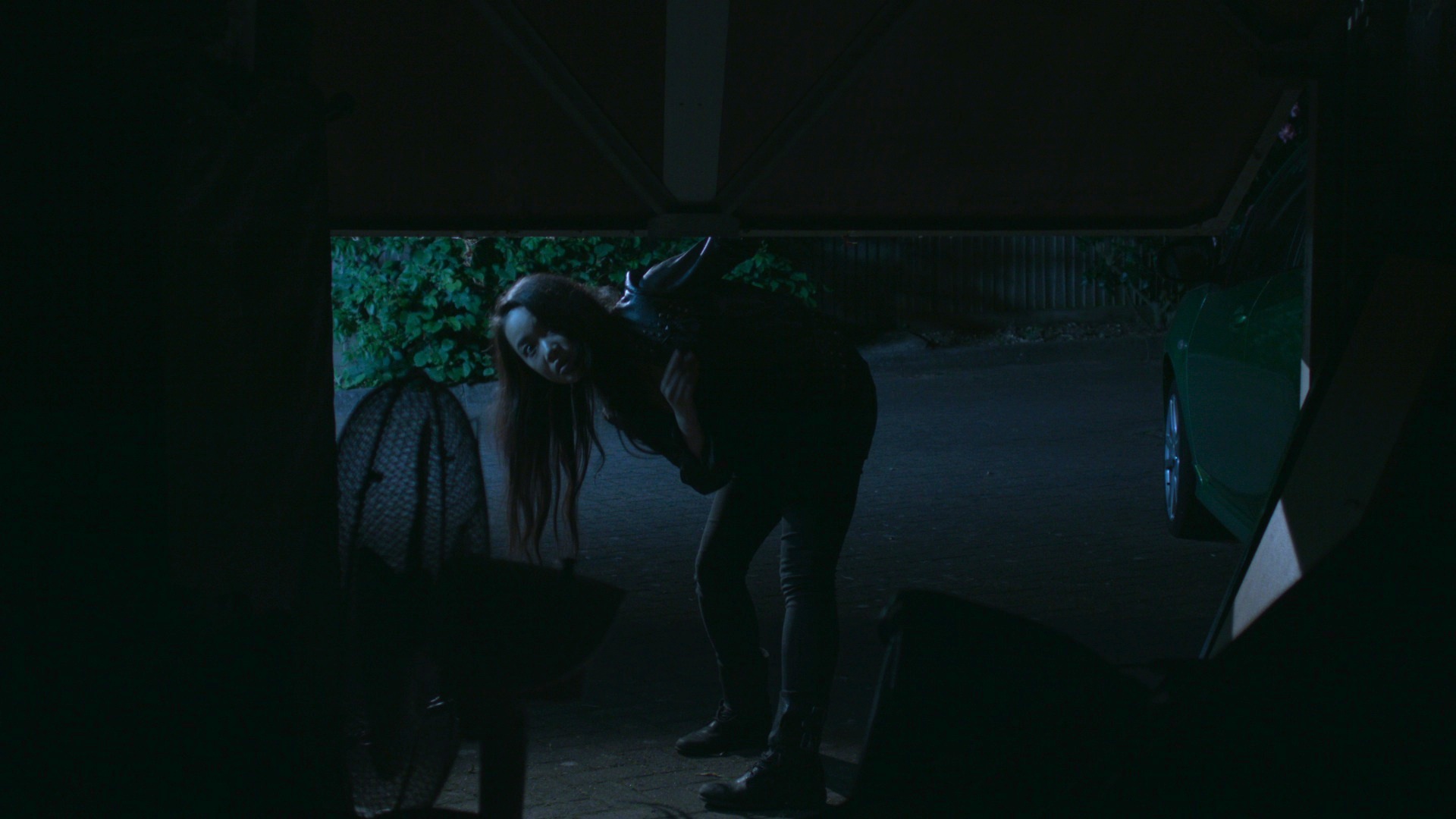
In the new year I’ll be teaming up with Sophie Black once again to photograph her new short film, Night Owls, a tale of unexpected friendship with echoes of Juno and Lost in Translation. It’s early days yet, but we’ve already discussed a fluid, handheld feel as being the dominant look.

Conveniently I came across this video recently, thanks to nofilmschool.com, in which DP Sean Bobbitt delivers a masterclass in handheld camera operation. He covers it from all angles, from wearing the right clothes and stretching beforehand, to developing a rapport with the actors you’re dancing around.

There are many variations of handheld cinematography. Bobbitt talks about trying to keep the camera as stable as possible, to reduce the shake to the absolute minimum the human body can transmit to an object it’s holding. But, as he also mentions, sometimes directors ask for more energy in the camerawork – they want a lot of sway and “fidgeting”.

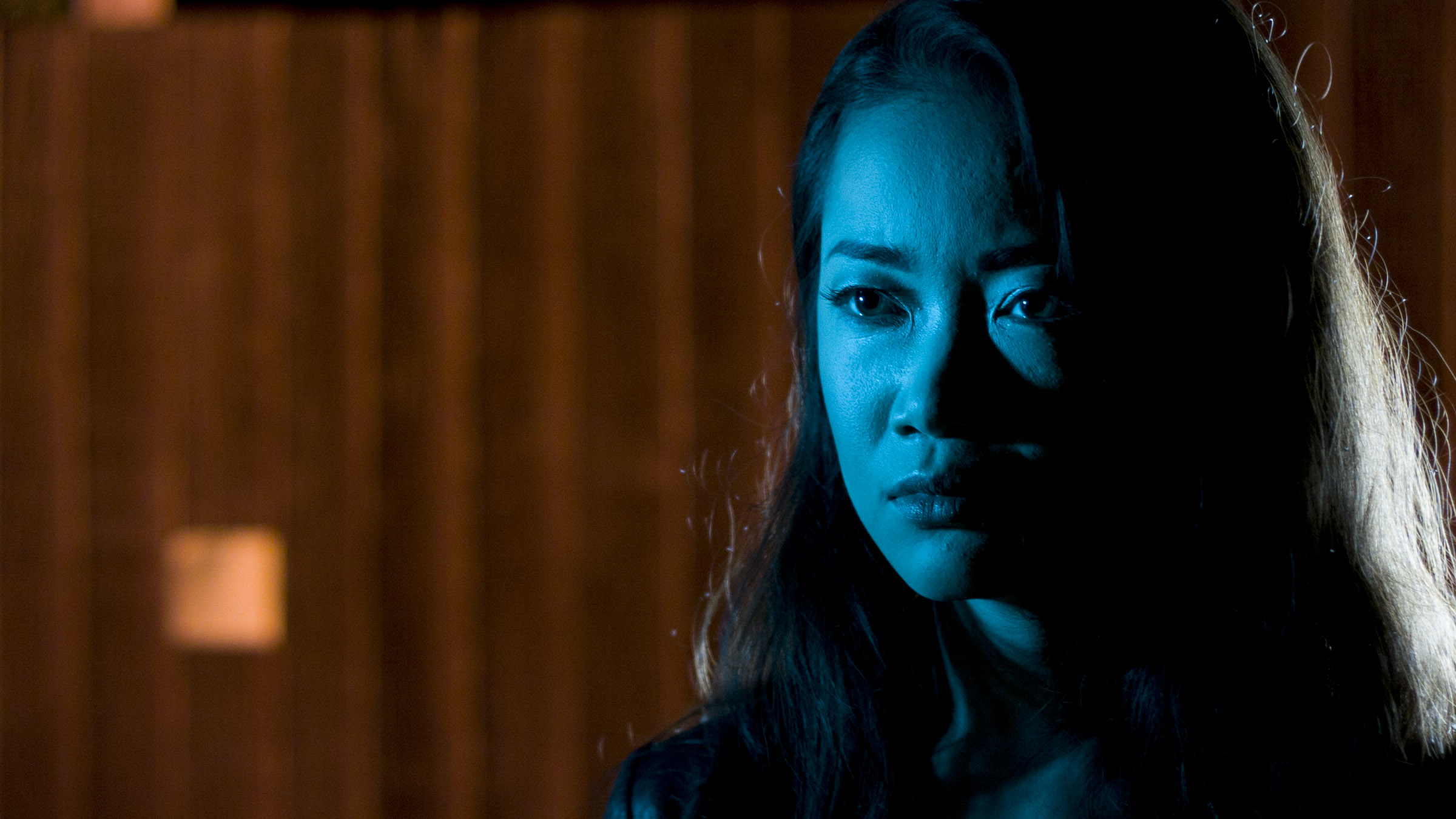
Halo Haynes and Mark Drake, the cast of Night Owls

A director may want you the operator to stay rooted to one spot, like a tripod with a bit of wobble, or they may want you to execute a carefully planned move – like a dolly or a steadicam with wobble. Or they might give you freedom to move around the action, framing one actor or another as you see fit. Crash zooms might be part of the agreed look, or they might be banned.

All this needs to be discussed in advance.

And if you’re going to do improvised movements, what does that mean for the lighting? It makes it more difficult. For an interior scene, which most of Night Owls is, it means relying heavily on practicals – light sources that are visible on camers, e.g. table lamps – and throwing light into the room from outside doors and windows. (Incidentally, I was lucky enough to attend a masterclass by DP Chris Menges last week and he spoke of his belief that lights should always be kept outside the room so as not to clutter up the actors’ space and eyelines with equipment.)

So these are some of the things that are swirling around in my head right now as I contemplate the Night Owls shoot on the horizon.

Now for the catch. That shoot can only happen if our crowd-funding campaign reaches its £2,000 total by January 2nd. Please check out Night Owls’ Kickstarter page and put a little bit of money in the pot if you can, or if you can’t, spread the word.

Thank you and merry Christmas!

Handheld Thoughts

Ten Tips for Running Auditions

With the casting for A Cautionary Tale fresh in my mind, here are a few tips on running auditions.

  1. Send all your auditionees the full script and/or audition sides in advance. Whether they read it all and how much they prepare will tell you a lot about their attitude to their craft and their enthusiasm for this particular role.
  2. Bring an assistant. If actor #2 turns up while actor #1 is mid-audition, it helps a lot to have someone to greet them.
  3. Make sure that the venue you’re using has an anteroom or corridor for people to wait in.
  4. Take signs (and Blutak) to direct people to the right room within the building.
  5. There will be no-shows. C’est la vie.
  6. Introduce yourself and the project before the reading, but don’t waffle because the more you keep the actor in suspense, the more nervous they will be when they finally get to read.
  7. If you’re filming the auditions, which I recommend, you should have a separate person doing that, so that you the director can watch and judge the performance with your naked eye.
  8. Check the actor’s ability to take direction by having them read a second time with a different emotional emphasis or motivation.
  9. Use an improv or two to gauge the actor’s creativity and get a sense of what they can do outside the confines of the sides.
  10. Take the time to answer any questions the actor may have about your previous experience. Remember that it’s just as much about whether they want to work with you as it is about whether you want to work with them.

How do you like to run auditions? Any tips you could add to these?

Casting for The Beacon, way back in 2001
Ten Tips for Running Auditions

Slating 101

Slating Brendan O'Neill's Fled. See www.sticklebackproductions.blogspot.co.uk
Slating Brendan O’Neill’s Fled. See www.sticklebackproductions.blogspot.co.uk

With dual system sound now the norm for even micro-budget shoots, a clapperboard (or slate as they call them in the US) is an indispensable bit of kit. It’s always best to keep this under the purview of the clapperloader or 2nd AC, rather than giving it to whichever crew member is free at the time. Otherwise you often end up with the camera operator calling “mark it” followed by an awkward pause because that crew member has left the set to perform some other duty, or has been too busy with other duties and is now scrambling to update the numbers on the slate. Incorrect slates can give the editor headaches down the line, so it’s important to get it right.

Slating Harriet Sams' The First Musketeer. See www.firstmusketeer.com
Slating Harriet Sams’ The First Musketeer. See www.firstmusketeer.com

With that in mind, here are the basic rules of slating.

Labelling the Board

The production name, scene number, DP’s and director’s names and the date are self-explanatory. DAY/NIGHT and INT/EXT (interior/exterior) are intended to ensure the labs process the film footage correctly, but should still be circled appropriately on a digital shoot. Shutter and frame rate information can be obtained from the camera operator or DP. Some slates will have a space for a roll number, and since “rolls” (memory cards) are recycled on a modern shoot, it is best to ask the DIT (Digital Imaging Technician, or data wrangler) how they would like these numbered.

Slates and Takes

The slate number should start at 1 for the first shot of the first day, and increment every time the camera position and/or lens is changed. Sometimes a director will ask instead for the slate number to match the numbers on their shotlist or storyboards, but this is a bad idea because inevitably shots will be dropped or added and it becomes very confusing. Besides, if the slate number simply starts at 1 and goes up, the DIT can easily tell if a shot is missing from their hard drive due to a card being overlooked or some technical fault.

The take number should reset to 1 each time the slate number changes, and increment every time the camera stops rolling, with certain exceptions and variations outlined below.

(The American system differs in that it omits slate numbers. Instead a letter is appended to the scene number, so the first shot filmed of scene 7 would be 7, then 7A, 7B, 7C, etc.)

Procedure

The clapperloader should always have the board up to date and ready to go. He or she should have checked the length of the lens being used and found a position for the slate in which it’s fully in frame and legibile. A torch may be required if the set is moodily lit.

The sound mixer will roll their device and announce “sound speed”.  The camera operator will then roll and ask the clapperloader to mark it. By this point the slate should already be in frame so that the first frame recorded, when the DIT looks at it as a thumbnail on their hard drive, has the slate on it.

Only the slate and take number need be announced, e.g. “30 take 3”. The board should then be clapped nice and cleanly to produce a sharp click on the soundtrack that is easy for the DIT or assistant editor to sync. If it’s necessary to clap a second time, the clapperloader should announce “second clap” or “second sticks” immediately before.

Pick-up
Slating a pick-up for The Deaths of John Smith. See www.thedeathsofjohnsmith.com

PU and AFS

If the director decides to do another take but to begin the action part way through rather than from the top, the take number should still increase but pick-up (PU for short) should be appended to the number. For example: take one, take two, take three pick-up, take four pick-up.

If camera and/or sound roll but cut before the board is clapped, the take number remains the same for the next attempt.

If camera and sound roll, the board is read and clapped, but the crew cuts before action is called, the take number remains the same but AFS (After a False Start) is appended.

If action is called, even if it’s immediately followed by cut, the take number always increases for the next attempt.

A mute slate for The First Musketeer

MOS

Sometimes the camera rolls without sound, if the mixer feels he or she cannot get any useful sound. In these cases the clapperloader should circle MOS (Mute Of Sound) on the slate. They don’t need to clap the board or announce the slate and take number; they simply need to hold the board up long enough for it to be read by the editor. As an additional indicator that there is no accompanying sound file, the clapperloader should hold the board with their fingers between the sticks.

An end board on Fled

End Board

Sometimes it’s impractical or inconvenient to shoot the slate at the start of a take, so instead it’s shot at the end. At the start of the take the camera operator announces “end board” instead of “mark it”. When the action is finished, the director typically forgets that it’s an end board (American term: tail slate) and calls “cut”. Hopefully the sound mixer and camera operator remember not to obey this command, and the latter calls “mark it”. The clapperloader should then mark the take in the usual manner, except that the board should be held upside-down. They should conclude their verbal announcement with “end board” or “on the end”, e.g. “27 take 2 on the end”. Only then can camera and sound cut.

Slating 101

Polymath: Behind the Scenes

I always enjoy a good behind-the-scenes video, and there’s often much to be learnt from them too. My friends at Polymathematics have just released a series of ‘making of’ videos for their recent music promos, all of which are exquisitely designed and shot (my own involvement in Droplets notwithstanding!). Check out Polymath’s Vimeo channel for more behind-the-scenes videos and of course the promos themselves.

Droplets

We Were Here

The Last Human / I Do (Come True)

Hands Up if You’re Lost

And here’s an equally fascinating look at a live puppetry project they did as part of the Olympic Torch Relay celebrations…


Polymath: Behind the Scenes

The DP’s Dilemma

So, you’re in the middle of shooting a scene. You’ve shot everything in one direction and now it’s time to turn around and shoot the reverses. The director of photography must make a decision: do I go for realistic or matching reverses?

Imagine you have a simple scene in which character A stands facing character B and they exchange dialogue. It’s night exterior so you’ve given A a blue backlight and a white frontlight. Realistically then, since B is facing in the opposite direction, he should have a white backlight and a blue frontlight. But do you really want one person’s face to be blue and the other’s to be white? Wouldn’t it be better for B to have a blue backlight and a white frontlight, to match nicely with A? That’s the dilemma.

A matching shot-reverse from Soul Searcher. Both characters have blue backlight, but somehow neither of them have blue frontlight.
A realistic shot-reverse from Stop/Eject. The magenta light strikes Alice (left) from the front but Kate (right) from behind.

TV shows seem to plump mostly for matching reverses, whereas movies tend to be a little more realistic, but this is a very rough generalisation. When deciding which style to go for, here are some things you might consider:

  • Is the overall look of the piece stylised or realistic?
  • Does lighting the characters differently help to underscore the power dynamics in their relationship, or enhance their characters in some way?
  • Will the audience have clearly seen a window or other prominent light source in the scene to show that more light would be coming from one direction than another?
  • Will the light that looks so great as a backlight on character A look unpleasantly harsh as a frontlight on character B? (The answer here is usually yes. That is the whole reason cinematographers have to relight when they do the reverses.)

There is of course middle ground between matching and realistic reverses – tweaking the lighting so that an audience can still buy the continuity of it but it looks good on character B. Usually that is the middle ground we tread, but you will have to decide which style to lean towards.

Incidentally, I believe that a cinematographer should always try to differentiate the status of the characters in a shot-reverse in some way, even if you go for a matching lighting scheme. For example, in the Soul Searcher shots above, Joe’s nervousness is reflected by his close-up being handheld, while Heather’s is locked off. Another example would be a higher angle for one character and lower angle for the other. Best to keep it subtle though!

The DP’s Dilemma

The Miniature Effects of “The Day of the Doctor”

The cannon miniature

The fiftieth anniversary special of Doctor Who has been lauded for its cinema quality FX; indeed, I saw it in a cinema and at no point did I feel like I was just watching a TV show on a big screen. The Time War sequence was particularly impressive, and in amongst the CGI and special effects you may be surprised to learn there were some miniature effects which helped to up the ante. These were created by Mike Tucker and his team at The Model Unit, who a few years back did such a brilliant job of building the Wooden Swordsman for my Dark Side of the Earth pilot. This press release from the Model Unit reveals their contribution and how it was done.

The Model Unit’s involvement in Doctor Who: Day of the Doctor was for the Time War section of this historic episode, providing several cutaways of the Time Lord staser cannon (including its destruction) and a longer sequence showing John Hurt’s TARDIS crashing through a wall and destroying several Daleks that are unlucky enough to be in its path.

Model Unit supervisor Mike Tucker working on the Wooden Swordsman for The Dark Side of the Earth back in 2008

Following an initial discussion with producer Marcus Wilson to establish the sort of shots that might be needed Miniature Effects Supervisor Mike Tucker met up with stereo supervisors Adam Sculthorp and David Wigram to work through the practicalities of shooting high speed miniature effects sequences in 3D – a first for a British television drama production.

A proof of concept test utilising an existing miniature established that the models shouldn’t be smaller than 1/6th scale, and ideally at 1⁄4 scale. Further research established that the miniature effects sequences for the Martin Scorsase movie ‘Hugo’ had been done at 1⁄4 scale and with the same Alexa high speed camera rigs that we were planning to use, and so we were able to proceed with a certain amount of confidence that what we were about to do was realistically achievable.

Blowing up the cannon

With a five-week lead-time and a two-day shoot in Cardiff in April of this year model construction was split between several Model Unit regulars. Alan ‘Rocky’ Marshal was given the task of constructing the staser cannon, Nick Kool took on the TARDIS model and associated rigs and Colin Mapson worked with new recruit Paul Jarvis on the ruined Arcadian buildings and breakaway wall sections.

In a nod to past effects sequences, the Dalek miniatures were achieved in the time honoured way by utilising off-the-shelf toys (in this case the 18 inch voice- interactive toys that had been produced by Character Options a few years back), albeit with a few careful modifications in order to match them more closely to the actual props. Further detail was added to the interiors, including a scaled model of the mutant creature.

Model Unit DoP Peter Tyler worked closely with main unit DoP Neville Kidd to establishing a lighting design for the miniatures as, due to camera rig availability, we were shooting our miniatures in advance of the live action unit – a complete reversal of how things are usually done.

Close collaboration was also needed with the production design team with Mike and assistant art director Richard Hardy constantly swapping notes about the final design details of both Time Lord machinery and architecture to ensure a seamless blend with the location.

Day one of the shoot concentrated on the shooting of the cannon allowing the more complex rig of the TARDIS to be set up and tested, whilst the second day took in several takes of the TARDIS shots. The 1⁄4 scale TARDIS miniature was fixed to a steel rig mounted on a trolley system that allowed us to fire it at the wall using bungee cord.

Filming the Tardis breaking through the wall

Two takes of each set up were shot on two high speed Alexa stereo rigs shooting at 120fps.

Mike and his crew watched the completed episode at the Doctor Who Celebration at Excel with an audience of 2000 fans.

Visit The Model Unit’s website at www.themodelunit.co.uk

The Miniature Effects of “The Day of the Doctor”

How to Make a Fantasy Action Movie for £28,000

The last of the Soul Searcher anniversary featurettes is a completely frank and open breakdown of the budget. Find out how I raised the money, what I offered my investors, what distribution deals were put on the table, how much the film made worldwide and how much of that money came back to me (you may be shocked). Most importantly, discover exactly what was spent on each element of the budget, from travel and catering to make-up and lighting.

Corrections: 1. UKTI stands for UK Trade & INVESTMENT, not Industry; 2. After completing the programme I discovered two more distribution contracts I was offered, both from Californian companies. Neither offered an advance. One proposed taking a 25% cut of the profits, the other 40%; 3. I misspelt Kevin MacLeod’s name, apologies. Visit his website at http://www.incompetech.com

For more information on film distribution I recommend The Guerrilla Filmmaker’s Movie Blueprint by Chris Jones.

How to Make a Fantasy Action Movie for £28,000

Prepping A Cautionary Tale

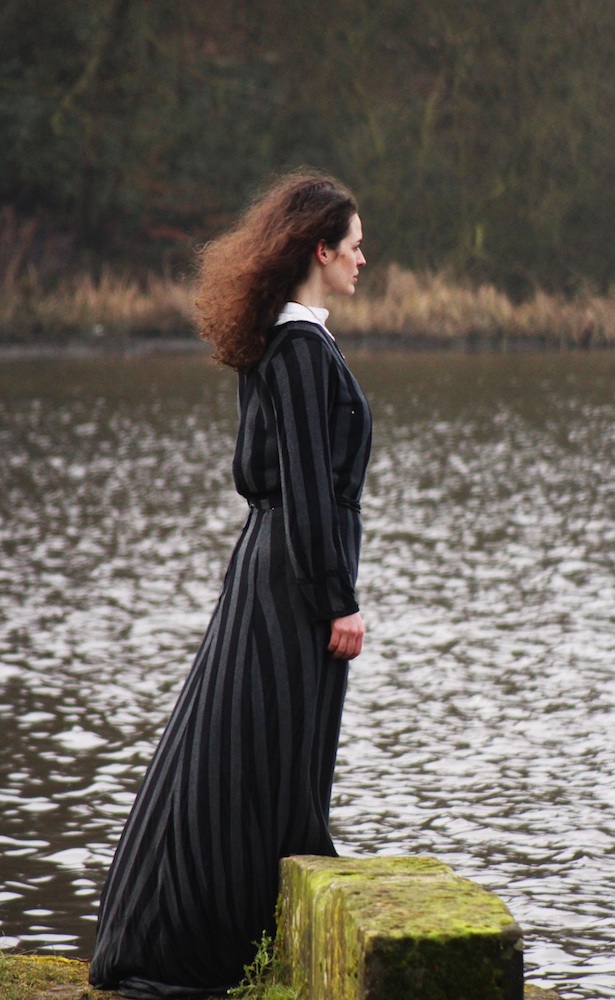
The Turn of the Screw, one of my references for A Cautionary Tale

In the new year I’ll be directing a short film called A Cautionary Tale, written by Steve Deery and produced by Sophia Ramcharan. This will be my first time directing without (co-)writing or (co-)producing too. (Steve got in touch with me after seeing the Stop/Eject trailer at a FiveLamps Film Night in Derby.) As usual, I’ll be documenting the filmmaking process on this blog.

A Cautionary Tale is a drama with a supernatural twist, featuring various authors who visit a cottage retreat to write, in several time periods from 1903 to the present.

It’s interesting in this prep stage how things I did unconsciously or which were inextricably entangled with the writing on other projects, require much more conscious thought and are much more clearly delineated when solely directing.

Other than providing notes on the various drafts of Steve’s screenplay, my first job was provide character breakdowns so Sophia could issue a casting call. First of all I went through the script and picked out all the clues Steve had provided about the characters. Then I sat down to compose backstories for them. There was an easy way into these, because two questions immediately arose for each of the authors: what kind of novel were they writing, and why had their publishers felt it necessary to pack them off to this retreat?

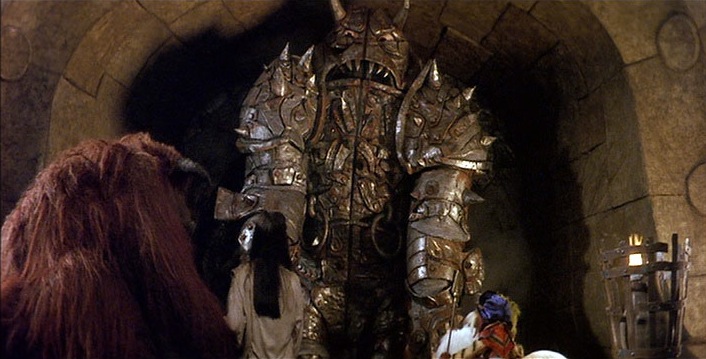
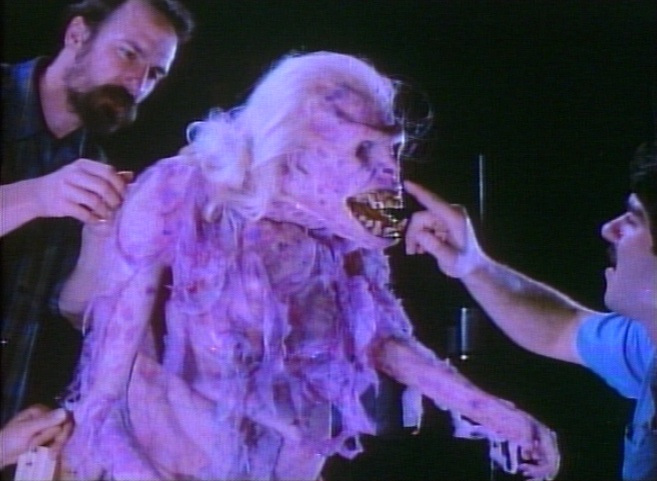
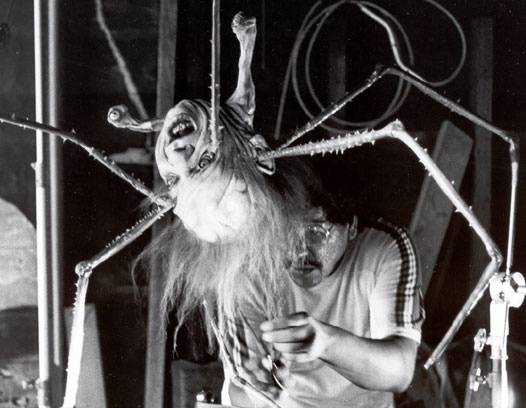
Another image from the moodboard

In the case of the 1903 authoress, I was highly influenced by a compendium of Frankenstein-related stories I was reading at the time; I decided to make her a gothic horror writer, with Mary Shelley her heroine. This fit neatly with the supernatural elements of the story, and led me to a key decision on the tone of the film: that I would give the whole thing a gothic edge.

I immediately began researching the genre, watching The Others, Sleepy Hollow, and The Elephant Man at a convenient BFI Gothic Season screening. I noted how framing and pacing were used to create atmosphere and sense of dread, and arrived at a keyword for my vision of A Cautionary Tale: trapped. Soon I had a page of notes on how this would come across in the camerawork, to go with my two pages of backstories for the characters and the house.

I’ve also started a moodboard on Pinterest. It’s weird to think that a year ago, before doing FilmWorks – on which, incidentally, Sophia was a fellow participant – I’d never even heard of a moodboard. Now I can’t imagine going into a project without one of these scrapbooks (virtual or otherwise) of visual references. The images in this post are from the board.

That’s all for now. Stay tuned for all the latest news on the making of A Cautionary Tale.

Prepping A Cautionary Tale

Lighting Droplets

The tarsier puppet in Droplets

Lighting in the controlled environment of a studio should theoretically be much easier than lighting a location, but I found recently that it doesn’t come without its challenges.

Last month I had the pleasure of working on a music promo for Droplets by Lewis Watson and Gabrielle Aplin. Directed by Tom Walsh and designed by First Musketeer veteran Amy Nicholson, this magical, handmade puppet fest was only the second or third studio-bound production of my career. Tom had secured the use of Giltbrook Studios, an impressively equipped 1,300 sq ft soundstage in Nottingham, complete with manager Andy Swain as gaffer.

Apart from the exclusion of pesky natural light, the biggest advantage offered by a stage over a location is the lighting grid; no more wondering if that polecat or K-clamp will take the paint off the wall, and no more compromising your backlight position to keep the stand out of frame. The downside of the grid is the time it takes to rig or adjust a light, particularly if the grid, like Giltbrook’s, has no catwalks, and every adjustment must be made by bringing in and scaling a huge ladder. In fact it may be impossible to rig or adjust lights once there is a finished set underneath. All of which means you’re going to need a pre-rig day.

Some of the ill-fated space lights can be seen here, as well as the cucoloris rigged beneath the 650W fresnel key light. At the top left is the 2K fresnel backlight.

In the case of Droplets, the pre-rig day was also used to assemble the set, a tree on top of a cave, which must have measured about fifteen feet in height. As soon as it had been erected we realised that the six space lights Andy had spent all morning rigging were going to be in frame, as the top of the tree reached above the bottoms of these lights. (A space light is a circular arrangement of six tungsten tubes inside a cylinder of white diffusion cloth. They’re typically used in large numbers to simulate daylight in a studio.)

Some of the par cans that supplied the colour wash on the backdrop.

In fact my options on where I could put lights were very narrow, because of the lack of space around the set, both vertically and horizontally. We shot against the studio’s white infinity cove, and Tom wanted colour washes over this to suggest various times of day. Andy achieved this with gelled par cans off to either side of the set, but then it was crucial that no other light spilled onto the backdrop or it would ruin the effect.

We rigged a 2K tungsten fresnel immediately behind and above the set, for backlight, but it was hard to put anything in from the sides or the front without contaminating the backdrop. The 650W key light had to be rigged almost directly above the set, and even then its shadow can be seen on the floor in the wide shots if you look carefully. We hung a cucoloris (sheet of wood with random shapes cut in it) below the 650 to created the dappled effect of woodland light, taking care that a patch of light fell on the tarsier puppet’s main position.

For fill I used an LED panel off to the right of the set, dimming it to find a balance between its light being barely visible on the backdrop while still lifting the set and the puppets enough. I placed a smaller LED panel inside the cave, with a turquoise gel to suggest phosphorescence.

The final day/sunset look. From each side an orange-gelled and a pink-gelled par can light the backdrop. A 2K tungsten fresnel provides backlight, while a 650W fresnel with a cucoloris provides dappled light on the tree and tarsier. An LED panel off right supplies fill, and a second panel is inside the cave with a turquoise gel.
For closer shots, a reflector below frame and/or a Dedolight behind camera were used to fill in unwanted shadows.

Another advantage of a studio is that you can easily run all the lamps into a dimmer board. This was very handy for Droplets because in addition to the day/sunset look, we had nighttime scenes and a storm to light for, and some on-screen transitions between the states. We were able to set these all up in advance and switch between them pretty much by just pushing a few sliders up and a few others down.

The night state involved a yellow-gelled redhead on the floor behind the cave, pointed straight at the backdrop. With its barn doors removed, this created a circle of light which reminded me strongly of the huge yellow moon in the posters for The Nightmare Before Christmas. I hadn’t been intending to create such a defined circle, but when I saw it I immediately loved its stylised look.

A second 650W fresnel was rigged, close to the first, and with ulcered black wrap in front of it to again created a dappled look, but with a purple gel on it. This took us away from the more traditional blue of nighttime scenes, adding to the stylised look again, and contrasting nicely in colour with the yellow “moon”.

The 2K backlight remained on for the night scenes, but the sunset colour wash on the backdrop was switched off, as was the fill.

Nighttime in puppet land: the 2K backlight remains on, a yellow-gelled redhead lights the backdrop from behind the set, and a purple-gelled 650W fresnel in the grid pushes through a cucoloris to highlight the tarsier.

For the storm scene we experimented with strobes, but they caused unpleasant rolling shutter artefacts. Instead I used the flash button on the 2K’s dimmer box to create lightning. Both 650W fresnels were turned off for this state, but the fill was turned back on. While the pink colour wash remained off, we brought up the orange wash just a little bit to suggest an angry sky in the background.

Stormy weather. The orange colour wash coming from the par cans, originally set up for the sunset look, is used here much more dimly to suggest an angry sky. The LED panel off right supplies fill while the 2K backlight is flashed periodically.

Copious smoke was used throughout (another advantage of studios – your smoke stays put!) to generate god rays as the backlight streamed through the tree. It also helped soften the backdrop and render the colour washes more convincing as a sky.

Watch the video here. Shot on a Red Epic operated by Chris Wetton. Big thanks to Andy and Giltbrook Studios for all their help. Visit www.polymathematics.co.uk to find out more about the amazing work of Tom Walsh and Amy Nicholson.

Lighting Droplets