Interview: KT Roberts and 3 Blind Mice

20131111-215247.jpg

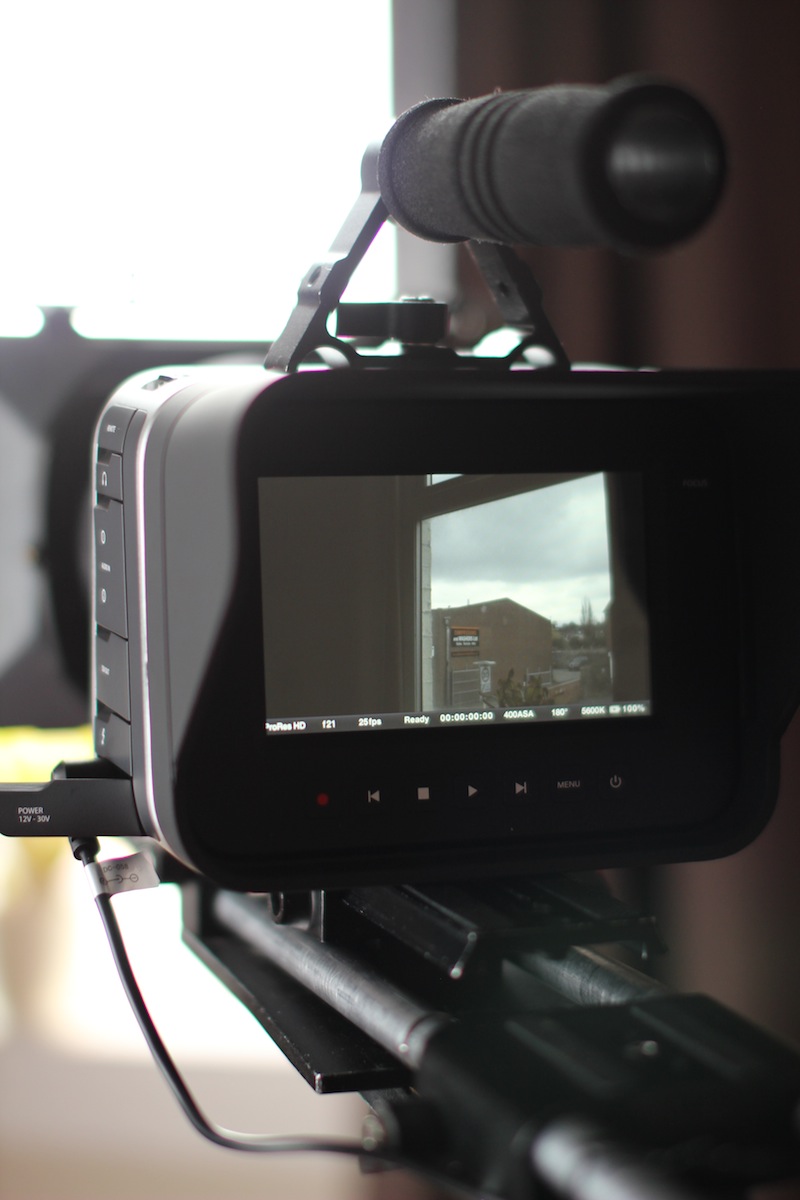
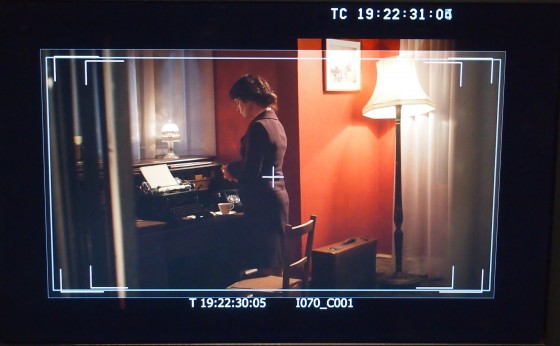
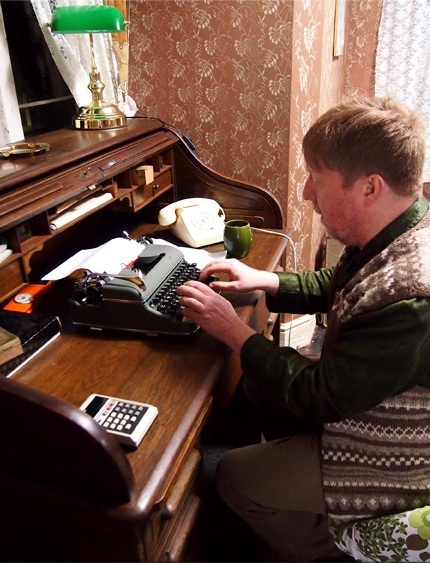
Earlier this year I met young filmmaker KT Roberts on a shoot in South Wales, and I remember her telling me all about her idea for a time travel feature film. This got my attention (a) because I love time travel movies and (b) because I always like to hear about low budget filmmakers who are not afraid to tackle a sci-fi or fantasy story. But before KT embarks on this feature, she’s making a short film called 3 Blind Mice. She asked me to help out and before I knew it I was the director of photography and drawing up an equipment list for Panalux.

KT, where did the concept for 3 Blind Mice come from?

I wrote two thirds of 3 Blind Mice on a plane back from a diving trip in Lanzarote – I’d had the ideas rattling around in my head for a while, but hadn’t yet put pen to paper but on that plane journey it came spilling out rather quickly. This is actually the first short film I’ve ever written that I like enough to want to take to the shooting stage. I have this writing thing all backwards in that I’ve already written a feature and have another in the pipeline, but I find it much harder to write short films as there’s so little time to explore anything in any detail. Paradoxical as it may seem, features are easier for me to write (though not necessarily to write well – only time will tell!) because they give you time to explore, examine and dissect your characters: a deep sea dive in the Caribbean as opposed to pressing your nose against the glass in an aquarium.

With this in mind I didn’t want to focus on just one character as I didn’t feel I’d be able to do them justice, or tell the sort of story I wanted to tell, in the shortened format of a short film. Instead I decided I wanted to make a film about a single idea and examine it in depth from different angles and perspectives – through the eyes of different people. I’m not entirely sure what drew me to death – no-one I know has died, not even a pet, so I’m not drawing directly from my own experience on that front. However I have had a massively overactive imagination since a very young age (I was one of those hyper children battling dragons with wooden sticks) – and I’m fascinated by the very human tendency to tell ourselves stories to help us deal with things we don’t understand. The stories we tell ourselves about death – from concepts of heaven and hell, to ghosts, the supernatural and the grim reaper- allow us to categorise and quantify this great unknown and thereby make it less scary. All three stories depict someone struggling with death and making up an imaginary companion to help them through it – each is coming from a different perspective and has a different outlook on what death means, but each of them must come to terms with it. I hope I have managed to convey the idea that while death can be scary and sudden and confusing, there are other, brighter facets to it if you look in a certain way.

How does 3 Blind Mice fit into your plans for future filmmaking?

I’m really looking forward to making this short and hope it will mark the start of a career which sees some of my bigger projects realised. Ultimately I would like to make one of my feature films, and my producer Julia and I have already discussed how we might film the opening to use as a pilot to try and raise the necessary funds. My work is slightly tricky in that I almost always have a science fiction, fantastical or supernatural angle in my writing, which can be difficult to bring to the screen for obvious reasons! However my work isn’t fiction in the same vein as something like Star Wars – it normally has just one element (for example my finished screenplay, Timelines, revolves around people who live in our world, but who can move through time). This means that with clever camera work and minimal special effects, my stories can be realised without the multi-million pound budgets that most science fiction films made today need. I’m not aiming to make art house films and I am very much aiming to entertain not preach, but if I can sneak in themes and perspectives that interest me or I feel strongly about then the story is always better for it, even if many people watching don’t realise it’s there. I want people to work to understand the storyline and the characters, not just sit back to watch mindless fluff.

So if I could look forward 20 years, I hope I’ll be writing and/or directing that sort of film and be able to look back on 3 Blind Mice as the first step on my way.

Right now KT and her dedicated production team are in the middle of a crowd-funding campaign to cover the modest costs of making 3 Blind Mice. Myself, Colin and the rest of the cast and crew are volunteering our time, but there are some costs you can’t escape. This is an all-or-nothing campaign, so if we don’t reach the target we get none of the money and cannot make the film. So please head on over to the Kickstarter page, contribute what you can and help get KT on the road to achieving her dreams.

Interview: KT Roberts and 3 Blind Mice

Where to Put Your Key Light

What angle the key light hits a character at is a KEY (groan) decision for a director of photography. The lighting featurette in my last post looked at some of the options, but today I’d like to expand on those with some more up-to-date examples.

Imagine a clock face. You’re looking down on the scene and your talent is at the centre with their eyeline to twelve o’clock.

The key light clock
The key light clock

With that in mind, consider the following shots. The camera is at between twelve and one o’clock in each case.

Rewind
Key light at almost twelve o’clock
Half past eleven
Half past eleven
Eleven o'clock
Eleven o’clock
Quarter to eleven
Quarter to eleven
Half past nine (Aimee Denaro in See Saw)
Half past nine (view the See Saw trailer)

Clearly the level of fill makes a big difference, but you can already see that a key light at noon gives a flawless, evenly lit look which is great for a leading lady, while a half-past-nine casts half of the face into darkness for a threatening or mysterious feel. There is a sweet spot I love at about quarter to eleven where, on one side of the face, only the eye and a triangle on the cheek are lit. But generally between half past ten and half past eleven models the face nicely.

In all of the above examples, with the camera at one-ish, the key was between nine and twelve, i.e. the key was on the opposite side of the eyeline to the camera. This is known as lighting the “downside” – the side away from camera. Most cinematographers, myself included, consider this the most pleasing side to light from, as it shows the shape of the face and gives a nice shadow area on the camera side into which you can dial your preferred amount of fill.

Here is an example of lighting the upside:

Key light at eleven o'clock, camera at eleven thirty (click here to link through to this interview with renowned designer Dick Powell, by Astute Graphics)
Key light at eleven o’clock, camera at eleven thirty (Click here to link through to this interview with renowned designer Dick Powell, by Astute Graphics)

In many scenes, the position of the keylight will be dictated by the layout of the set or location, so a DP should consider this in pre-production discussions with the production designer, on location scouts or when the director is blocking the actors.

Where to Put Your Key Light

Soul Searcher: 10 Minute Lighting Masterclass

Continuing the tenth anniversary releases of the Soul Searcher DVD extras, this week we have the 10 Minute Lighting Masterclass. It’s a quick guide to some of the basic set-ups and techniques used to give the film its cinematic, moody look. Since making this featurette digital cameras have improved vastly and so has my lighting, so these days I would light more subtly with fill and soft sources, but the basic building blocks in this video are still valid. Later in the week I’ll expand on some of those building blocks here on the blog.

Soul Searcher: 10 Minute Lighting Masterclass

Kickstarter: The Facts

Crowdfunder success
Crowdfunder success

Crowd-funding has had an almost revolutionary effect on micro-budget filmmaking. No longer are we reliant on public funding bodies or a friend of a friend who wants to write off some income against tax to get our projects financed; we can go to the crowd and build up legions of fans whilst accruing our budget.

As many of us know, however, it’s not that easy. With so many people using Kickstarter, Indiegogo et al it’s increasingly difficult to stand out from the (irony of ironies) crowd, and many campaigns fail as a result.

This morning I read a very interesting blog by writer and producer Stephen Follows. He’s compiled some data about Kickstarter campaigns, the success rates, optimal targets, the best duration, the benefits of having a pitch video and so on.

Some of it confirms my own anecdotal findings (see here for my top ten crowd-funding tips) – e.g. longer campaigns are less likely to succeed than shorter ones – but some of it I had never even considered – like the fact that living in a city with a high population of creative people increases your chances of success.

Read Stephen Follows’ article here.

If you’re planning a crowd-funding campaign I suggest you take a long, hard look at the statistics first. A lot of people are still launching campaigns “to raise a bit of extra cash for my short” without making any real effort to promote them, or to make potential donors feel their contribution is important. Crowd-funding is not a license to print money. You must be prepared to work incredibly hard, harder even perhaps than you work to actually make the film.

I believe that the most successful campaigns are the ones that are short, intense, focused, have elements like minor celebrities attached, have broadcast quality pitch videos and crucially the public is made to understand that this film will not get made without MY contribution.

Kickstarter: The Facts

Soul Searcher: Low Tech FX

In this 2005 featurette I break down many of the visual effects in my feature film Soul Searcher, revealing how they were created using old school techniques, like pouring milk into a fishtank for apocalyptic clouds. Watch the shots being built up layer by layer, starting with mundane elements like the water from a kitchen tap or drinking straws stuck to a piece of cardboard.

Soul Searcher: Low Tech FX

Understanding Shutter Angles

A revised and updated version of this article is available.

How many of us see that 1/50 or 1/48 in the bottom of our viewfinders and aren’t really sure what it means? Shutter angles or shutter intervals are part of the cinematographer’s toolkit, but to use them most effectively an understanding of what’s going on under the hood is useful. And that begins with celluloid.

This animation from Wikipedia shows how the shutter's rotation works in tandem with the claw moving the film through the gate.
This animation from Wikipedia shows how the shutter’s rotation works in tandem with the claw moving the film through the gate. The shutter angle here is 180 degrees.

Let’s imagine we’re shooting on film at 24fps, the most common frame rate. Clearly the film can’t move continuously through the gate (the opening behind the lens where the focused light strikes the film) or we would end up with just a long vertical streak. The film must remain stationary long enough to expose an image, before being moved on four perforations (the standard height of a 35mm film frame) so the next frame can be exposed. And crucially light must not hit the film while it is being moved or vertical streaking will occur.

This is where the shutter comes in. The shutter is a portion of a disc that spins in front of the gate. The standard shutter angle is 180°, meaning that the shutter is a semi-circle. A 270° shutter would be a quarter of a circle; we always talk about shutter angles in terms of the portion of the disc which is absent.

The shutter spins continuously at the same speed as the frame rate – so at 24fps the shutter makes 24 revolutions per second. So with a 180° shutter, each 24th of a second is divided into two halves, or 48ths of a second:

  • During one 48th of a second, the missing part of the shutter is over the gate, allowing the stationary film to be exposed.
  • During the other 48th of a second, the shutter blocks the gate to prevent light hitting the film as it is advanced. The shutter has a mirrored surface so that light from the lens is reflected up the viewfinder, allowing the camera operator to see what they’re shooting.

Frame rate * (360/shutter angle) = shutter interval denominator

24 * (360/180) = 48

So we can see that a film running at 24fps, shot with a 180° shutter, shows us only a 48th of a second’s worth of light on each frame. And this has been the standard frame rate and shutter angle in cinema since the introduction of sound in the late 1920s. The amount of motion blur captured in a 48th of a second is the amount that we as an audience have been trained to expect from motion pictures all our lives.

Saving Private Ryan's Normandy beach sequence uses a decreased shutter interval
Saving Private Ryan’s Normandy beach sequence uses a decreased shutter interval

A greater (larger shutter angle, longer shutter interval) or lesser (smaller shutter angle, shorter shutter interval) amount of motion blur looks unusual to us and thus can be used to creative effect. Saving Private Ryan features perhaps the best-known example of a small shutter angle in its D-day landing sequence, where the lack of motion blur creates a crisp, hyper-real effect that draws you into the horror of the battle. Many action movies since have copied the effect in their fight scenes.

Large shutter angles are less common, but the extra motion blur can imply a drugged, fatigued or dream-like state.

In today’s digital environment, only the top-end cameras like the Arri Alexa have a physical shutter. In other models the effect is replicated electronically (with some nasty side effects like the rolling shutter “jello” effect) but the same principles apply. The camera will allow you to select a shutter interval of your choice, and on some models like the Canon C300 you can adjust the preferences so that it’s displayed in your viewfinder as a shutter angle rather than interval.

I advise always keeping your shutter angle at 180° unless you have a solid creative reason to do otherwise. Don’t shorten your shutter interval to prevent over-exposure on a sunny day; instead use the iris, ISO/gain or better still ND filters to cut out some light. And if you shoot slow motion, maintain that 180° angle for the best-looking motion blur – e.g. at 96fps set your shutter interval to 1/192.

Understanding Shutter Angles

Soul Searcher Bonus Features to be Released

My feature film Soul Searcher started shooting on October 20th 2003. To celebrate the tenth anniversary of the six week shoot, I’ll be releasing one of the DVD extras online every week starting this Sunday with the acclaimed feature-length documentary Going to Hell: The Making of Soul Searcher.

Going to Hell was chosen by Raindance as one of the six best behind-the-scenes docs ever, alongside classics like Heart of Darkness and Lost in La Mancha. Here is the trailer…

In subsequent weeks you can look forward to informative featurettes on lighting, props and martial arts choreography, a breakdown of the sound design of a key scene and a look at how some of the visual effects were created in incredibly low-tech ways using ordinary household items.

Haven’t seen Soul Searcher? Check it out below.

Update: Going to Hell is now online.

Soul Searcher Bonus Features to be Released

Gaffering Basics

A director of photography should always be backed up by a good gaffer. They will ensure that all the lights are rigged safely and that the appropriate power supply is provided for each one. Here are some basics you need to know if you’re stepping into this role.

Redheads draw 800W each

P=IV

Remember that from GCSE Physics? Power = current x voltage, or watts = amps x volts. From this we can calculate that an ordinary 13 amp domestic socket on the 240V UK mains supply can provide up to 3,120W.

A redhead draws 800W, so we can run three off one socket (3 x 800 = 2,400W which is under the 3,120W limit) without blowing a fuse.

Most UK houses have two separate circuits (known as ring mains) for the sockets: one for upstairs and one for downstairs. Usually these are each on a 30 or 32 amp breaker. So although you can only draw 3,120W off one socket, you can draw 7,200W (30 amps x 240 volts) total off one floor’s sockets.

Always carry spare fuses

The first thing the gaffer should do on arriving at a location is to find the fusebox to check how many ring mains there are, where they are and what amperage of breaker they’re on. Beware that large commercial/industrial buildings may have multiple fuseboxes in different parts of the building. Make sure you have access to all of them so you can reset any circuit breakers you trip.

Also ensure you have a supply of fuses in case you blow any in the plugs of your lights or extension leads. When a bulb blows due to reaching the end of its natural life it will take the fuse with it.

Check the wound and unwound ratings of your extension reels

You need to make sure your cabling is appropriate for the load you’re drawing. Extension leads can melt if you try to run too much power through them. All extension reels will have two maximum wattages written on the front of them: one for when the reel is fully wound, and one for when it’s fully unwound. When the cable is wound up it can overheat very easily, so pay attention to those quoted limits.

16 amp C form plug
16 amp C form plug

Professional hired kit is often fitted with heavy duty cabling, signified by round blue “C form” plugs and sockets. C form outlets can be found in soundstages and factories, on generators and occasionally on exterior walls of houses. They are weather resistant, so much safer for use outdoors than domestic cabling.

32 to 16 amp jumper
32 to 16 amp jumper

The associated cable comes in 16 amp and 32 amp flavours, the latter being thicker with larger plugs and sockets. A 13 to 16 amp jumper – a short adapter cable with an ordinary square UK plug on one end and a 16 amp C form socket on the other – will enable you to plug an appliance with a smaller C form plug into a standard domestic socket. Jumpers exist in every other possible direction and combination too, so it’s important you get the right ones.

13 to 16 amp jumper
13 to 16 amp jumper

Also remember that, although a 13 to 32 amp jumper will let you physically plug, say, a 4KW HMI into a domestic wall socket, that 13 amp plug will not support a 4KW load; you’ll blow the fuse. In fact if something has a 32 amp plug on it then the only way to run it safely off a house is to have a qualified electrician wire a 32 amp socket into the fusebox. Definitely don’t try to do that yourself.

In fact if you’re in any doubt about any of the above, consult an experienced gaffer or electrician. Be safe!

Gaffering Basics