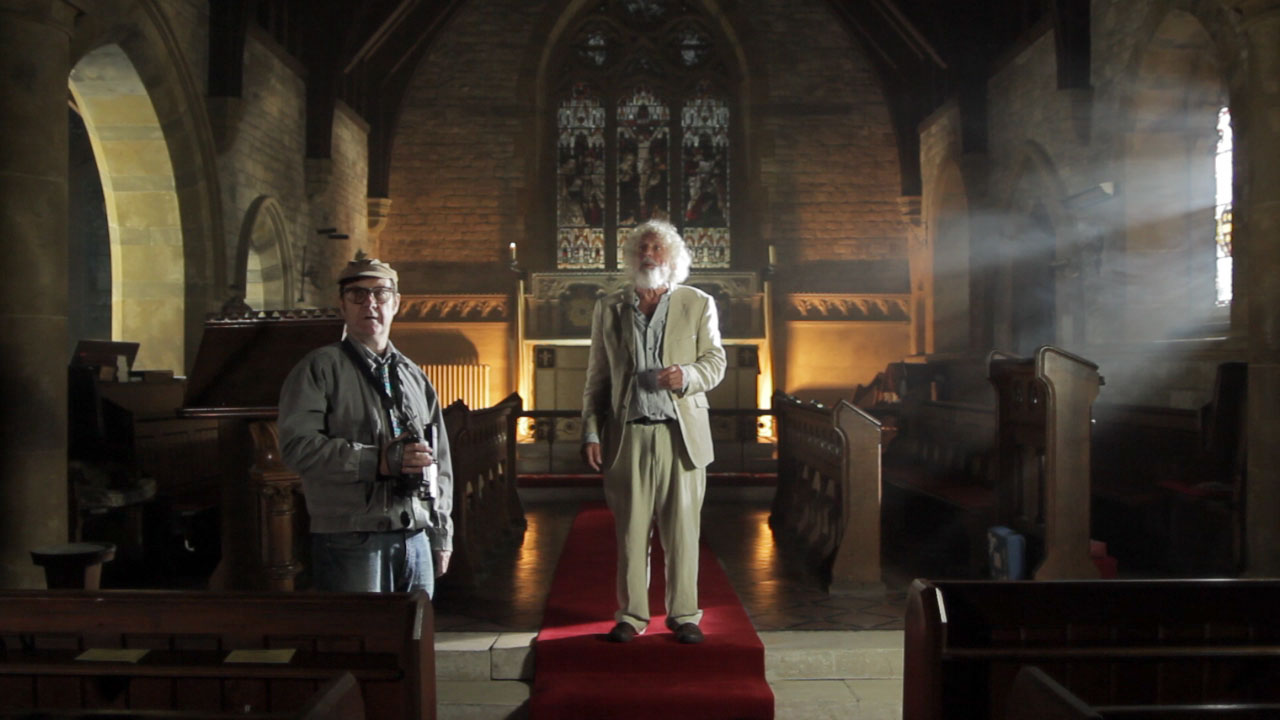
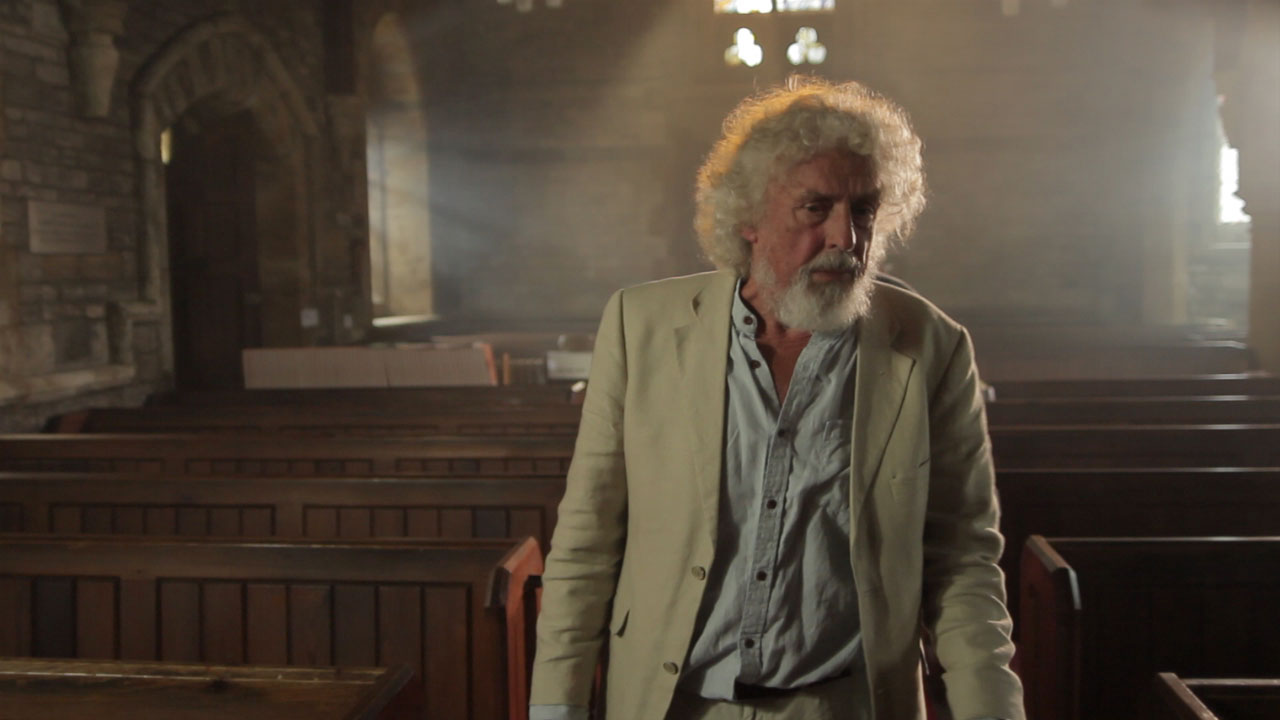
Consulting with editor Adam Hale (left) and director Brendan O’Neill (right). Photo: Anneliese Cherrington
Last weekend I participated in my first 48 hour film challenge, serving as both director of photography and postproduction supervisor. This is the first time I’ve ever done the latter role and I made the huge mistake of failing to prepare for it. This, coupled with the fact that I wasn’t around during the start of the editing process because I was busy DPing, meant that some avoidable errors were made. We got the film finished on time to a good standard, but I learnt several things that will be useful if I ever take on the role of postproduction supervisor again.
Here are the top five things I’d recommend to anyone wishing to have a quick and painless postproduction process:
Sit down with the camera and post departments before the shoot to make sure everyone knows the workflow and what’s expected of them. This includes agreeing on a format and frame rate to shoot, and a format to edit from, and making sure that all hard drives and memory sticks to be used during post are formatted appropriately so they can be read by all the computers being used.
Have a dedicated clapper person on set and make sure they understand the importance of getting the right info on the board. Too often on a low budget the job of slating is given to a crew member with several other responsibilities, increasing the chances of them writing the wrong thing on it and confusing the hell out of the editor. (We got this right on last weekend’s shoot, and it helped enormously.)
Beware of shooting too much footage, particularly if you have a B camera or second unit. We had so much that there simply wasn’t time to view it all in post. Also avoid shooting series (multiple takes without cutting in between) as a time-pressured editor will often miss the fact that there are several takes within the same clip.
Keep logs if at all possible, noting any technical problems with each take and the director’s preferences.
Ideally the DIT (Digital Input Technician) or an assistant editor should do three things once he or she has ingested the material, besides the obvious backing up: 1. Transcode the footage to ProRes or whatever format has been pre-arranged for editing, 2. Sync the sound, 3. Associate information from the logs with the clips, or at least rename the clips with slate and take number. It’s a bad idea to rename the files themselves because it can cause re-linking headaches down the line, but if the DIT has access to the editing software they can rename the clips within the bins.
Watch this space for a forthcoming interview with writer-director-producer Brendan O’Neill on the whole process of making a 48 hour challenge film. Meanwhile, here’s the film:
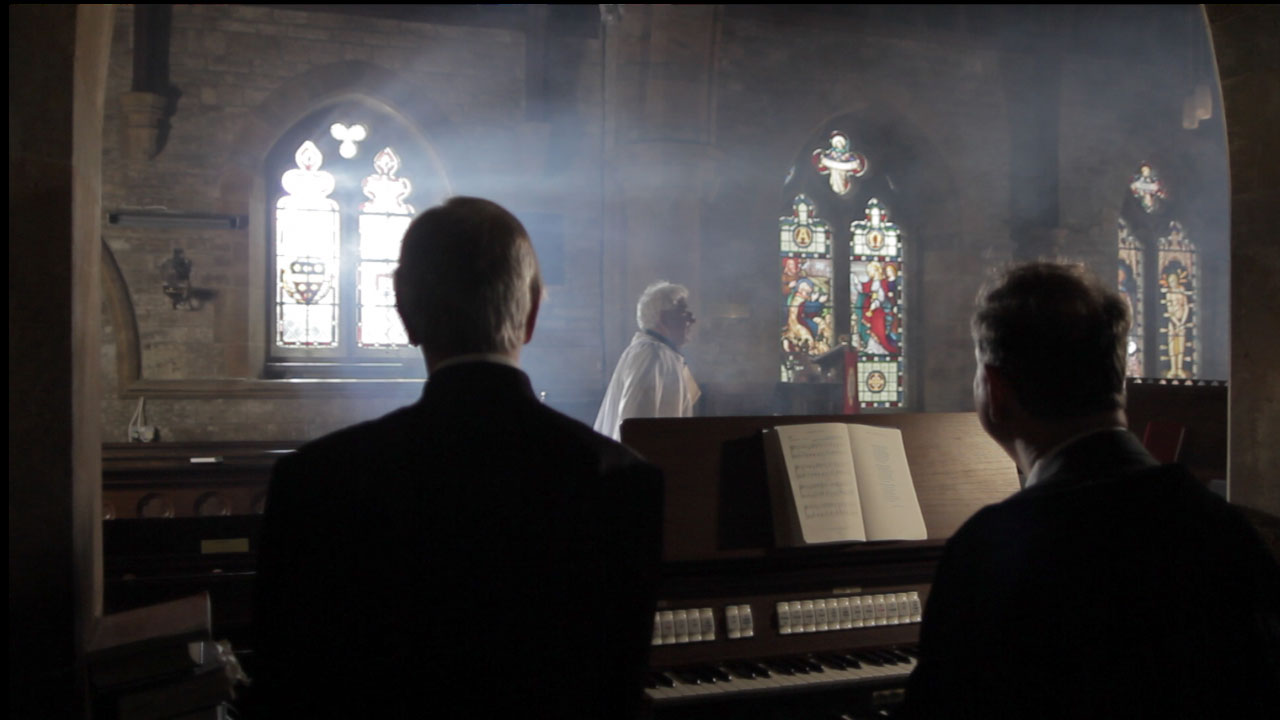
Paul Bellamy rehearses Colla Voce ahead of the choral recording for Soul Searcher in January 2005. Photo: Mike Staiger
Next week we record the music for Stop/Eject at Worcester College of Technology with players from the Film Orchestra. I think it’s a shame that many low budget filmmakers are content to let the composer create the music in their home studio, often without using any real instruments at all. It’s true that it takes a little more organisation to record a score with live players, but the richness and authenticity of the sound you get is well worth the effort.
Let me explain how I was able to arrange this recording session, because it demonstrates the importance of building your contacts.
Once the score was written, I started with a simple shout-out on Facebook for musicians. This was seen by Simon Munn, who is part of my social media network because I gave a talk at the Worcestershire Film Festival, which he organises, last year. There are many benefits of giving talks, paid or otherwise (which I touched on in a previous post) and making contacts is one.
Simon put me in touch with Jane Whittle at the Film Orchestra, a group of amateur musicians based in Worcester. Several of their members expressed an interest in performing the music, so I knew that I needed to find a recording studio in Worcester to make it as convenient as possible for them.
Recording Colla Voce. David Staiger can be seen at the keyboard (top right). Photo: Mike Staiger
Years ago I hung out with some friends while they were recording a demo for their band (King Monkey) at Worcester College of Technology, so I knew there was a studio there. I contacted Paul Bellamy and David Staiger, both Worcester-based musicians who were involved in the recording of Soul Searcher’s score back in 2005. I figured one of them probably had some link to the college and I was right; Paul works there. He put me in touch with the Head of Performing Arts and Music Technology, who was very enthusiastic about the whole idea, and from there it was just a case of working out the details. In return I offered to give a free guest lecture at the college, citing my prior experience at Hereford College of Art, the SAE Institute, etc.
There are two morals to this story. One is the value of networking, making new contacts and maintaining those contacts (which Facebook makes it really easy to do now). The second is, if you’re a young filmmaker struggling to get stuff made, remember that collaboration not only benefits your current project; you could be sowing seeds which will help your future projects too.
Here is a video podcast from the ADR (Automated Dialogue Replacement / Additional Dialogue Recording) session on March 15th, in which the actors explain some of the challenges of recreating their performances in a studio.
To finish my look back at the decisions, successes and failures of the Stop/Eject crowd-funding campaigns, here are my ten top tips based on the sum of our experiences on this project:
You need “elements” – aspects of the project which have an existing audience base, such as a name actor or a director with a strong social media following. Sometimes people will donate because the film is being shot in their home town, or maybe it’s about a subject they have an interest in. Whatever it is, figure out where that existing audience base is and what they want, and create your rewards and promotions accordingly.
Work out in advance how much your rewards will cost to produce, and reject any that aren’t cost or time efficient. I suggest they should consume no more than ten percent of your budget.
Make your pitch video professional – tightly edited, well lit, well shot and with broadcast quality sound. No-one will sponsor a filmmaker who can only be bothered posting a five minute ramble shot on a webcam. Your “elements” should appear in the video.
Whether building your own crowd-funding platform or using an existing one, make sure it’s extremely quick and easy to donate, with a minimal number of clicks.
A longer campaign doesn’t necessarily mean more money raised, but it does mean more work for you promoting it.
If you take a day off from promoting your campaign, people will take a day off from donating. You cannot sit back and expect the money to roll in. It doesn’t work that way.
Keep reminding people about your campaign, but do it indirectly by publishing new content like blogs, behind-the-scenes videos or storyboards. Most sponsors will have to see your campaign several times before deciding to donate.
The internet isn’t the only way to promote your campaign. Go to events in the real world and plug it. Take a donations bucket or hand out cards or flyers with the campaign address on.
Make people feel involved in your project, both during and after crowd-funding. Run competitions, invite feedback on things like poster designs, issue updates and answer questions.
The endorsement of a well-recognised person or entity can give your campaign a massive boost. BBC Midlands Today putting a Stop/Eject report on their Facebook page worked for us, but the holy grail is getting a celebrity to retweet your campaign link.
The single biggest tool we had to promote our second fundraising campaign for Stop/Eject was the trailer. This was followed by a crowd-funding pitch in the same video file, so as soon as people had been wowed by the trailer, they found out how to get involved and support it, wherever that trailer was screened or embedded. There are lots of tips on editing trailers in a blog post I wrote last year.
You can’t just post on Facebook every day of your crowd-funding campaign (particularly if it runs for eight months as ours did) asking for money. You have to find other ways to remind people of the project’s existence without directly holding out your begging cap.
One way to do this is through uploading content like blogs and behind-the-scenes videos. As previously discussed, our system of public rewards hampered this to some extent, but we still blogged regularly about the project’s progress, also updating people via the Facebook page, Twitter and emails to the sponsors. Any time we did any interesting work on the film we took photos or video and shared them with the community we were building.
Speaking of community, you have to nurture it by allowing them to engage with the project. For example, we ran a poster design competition and later invited the public to submit interview questions to be posed to the cast.
Whenever we needed additional crew, those shout-outs served not only as a form of crowd-sourcing but also as promotion of the crowd-funding.
You shoudn’t neglect “real world” promotional opportunities. I gave a couple of talks about Stop/Eject during the campaign, each time encouraging audiences to donate. It’s best to provide a bucket for cash by the exit, because if you tell people to go home and donate online, the vast majority of them will forget.
Georgie helped a lot, making her fanbase aware of the campaign, and we tried to seek out Worst Witch sites and communities to post on too. In fact all of the cast and crew helped to spread the word.
We discovered it was the 50th anniversary of the invention of cassette tapes halfway through our campaign, but too late to do much about it except get interviewed on BBC Radio Hereford & Worcester. Sophie and I also managed to get some local newspaper coverage, but our biggest coup was Sophie’s appearance on BBC East Midlands Today. That didn’t lead directly to any donations, but a Stop/Eject article on a website about Matlock, one of the towns we shot in, did lead to a few.
Stop/Eject on BBC East Midlands Today
The final part of my evaluation will take the form of ten top tips for crowd-funding, based on our experiences with Stop/Eject. Watch this space.
One of the key lessons learnt from Stop/Eject‘s first crowd-funding campaign is that people don’t tend to donate unless they have a pre-existing connection to some element of the project, e.g. they know the filmmaker, it’s being shot in their home town, it has an actor in it they like, or it’s about a subject they’re interested in. That first campaign was very much dependent on people knowing me and wanting to support me, as we had no other “elements” at that stage.
Georgina Sherrington as Kate in Stop/Eject
When, a week prior to shooting Stop/Eject, we cast Georgina Sherrington in the lead role, the last thing on our minds was crowd-funding. But her cult status as the former child star of ITV’s The Worst Witch provided a new “element” when we came to launch our second campaign.
Popularity of the individual rewards
We found that sponsors of the second campaign generally fell into two camps: Georgina Sherrington fans, and sponsors putting in larger amounts who were either doing so purely philanthropically or who wanted custom rewards to help them with their own filmmaking endeavours. Other than these custom requests, the rewards aimed at filmmakers were unsuccessful (most of them got zero sales, so aren’t included on the above graphs), proving beyond a doubt that I was not the major “element” in this second campaign.
The “Memoirs of the Worst Witch” reward was added after our campaign had already been running for a few months and the total had been stuck for a while around the halfway point. It was a download of a 20 minute interview with Georgina about her time on The Worst Witch, and it turned out to be one of the most popular rewards in terms of units sold.
A headband by Sophie Black, one of the more unusual Stop/Eject-themed gifts offered in the Collections
In an effort to combat the disadvantages of a campaign without a deadline (see part 5), we introduced “Collections” – groups of four new rewards that were only available in limited numbers and for a limited time. These helped keep awareness of the campaign up, but didn’t bring much money in.
In general, several of the rewards required a ridiculous amount of time (and in some cases money) to produce in relation to the amount of sponsorship they brought in, most notably the glossy photo books. If I had to run this campaign all over again, I’d offer a smaller number of rewards, and most of them at the lower price breaks (£10-£50), with just a couple of suggestions for custom rewards at maybe £100 and £200.
Next time I’ll talk about how we promoted the campaign and engaged with the audience, before summing up my overall thoughts and feelings on crowd-funding Stop/Eject in the eighth and final part.
In January of last year, following the successful completion of Stop/Eject‘s preproduction crowd-funding campaign, I posted a series of four blogs evaluating the campaign. I’m now going to extend this to the postproduction campaign, once again looking at the choices we made, good and bad, and the lessons we learnt.
We knew we didn’t want to use crowdfunder.co.uk again, because it required an off-putting number of clicks for people to donate – so one of the first discussions we had was about what platform to use instead. We quickly ruled out the “all or nothing” sites. Now that the film was in the can, the important thing was to get at least some money to finish it with; the possibility of getting none at all was too risky.
My intial thought was to use Sponsume, but producer Sophie Black and my wife Katie both believed we needed to try something completely different. In the end we decided to run a campaign with no deadline, since it didn’t matter how long it took to finish the film.
The individual rewards initially offered in the second campaign
We also came up with the idea of “public rewards”, so that as well as individuals receiving (for example) DVDs or premiere tickets when they donated, additional rewards would be published online for every £100 the total went up. These mostly took the form of video podcasts documenting the shoot, though a few were special blog entries breaking down the production design, lighting or budget.
As for the individual rewards, I decided to offer two options at most of the price breaks: one related to Stop/Eject, and one aimed at other filmmakers – since they had made up a significant proportion of the sponsors in the first campaign. The former type included the obvious things like DVD or Blu-ray copies of the film, invites to the premiere and glossy photo books. The latter type included a budget breakdown of my last feature film, script feedback or storyboards for your project, homemade sandbags for weighing down lighting stands, and a Skype chat with yours truly.
The public rewards and the lack of a time limit meant that no existing crowd-funding platform was suitable, so I had to knock up our own website – www.stopejectmovie.com – with a bit of simple Flash and PHP scripting and some Paypal buttons. One advantage of doing this is that only Paypal are taking a cut of the money, but a disadvantage is that a visitor to the site has less reason to trust that everything is above board.
We launched the campaign in late May of last year, with a target of £1,500. This was simply the amount we needed; it wasn’t compromised by any considerations of how much we thought we could raise.
Graph of the cumulative total rising over time
I’m not convinced that public rewards were a good idea. When the total got stuck for a long time we were unable to use what could have been our best tool to encourage donations – releasing a podcast – because we had set up this system of releasing them only when people did donate. On the other hand, there was a knock-on effect whereby one donation would trigger the release of a public reward which would in turn trigger further donations.
I’m not sure a campaign without a deadline is something I can recommend either. In fact, I’ve since read that there’s statistical evidence showing that longer crowd-funding campaigns do not raise more money than short ones. Without the urgency of a looming deadline, many potential sponsors will say to themselves, “I’ll get around to that later,” and never do. There is also the risk that people will get fed up of being tapped for cash repeatedly over a long period.
In the next instalment I’ll look at who donated and why.
Adiabatic Demagnetisation Refridgeration, or ADR, is a cooling technology based on the magnetocaloric effect. I don’t know what that means, but it doesn’t have anything to do with Automated Dialogue Replacement, which is what ADR stands for in the film industry.
Alternative Democratic Reform
Last Friday, Georgina Sherrington, Oliver Park, Therese Collins and I all got together for the first time since we shot Stop/Eject – almost a year ago. Along with sound designer Henning Knoepfel and behind-the-scenes camera operator Gerard Giorgi-Coll, alumni of The Dark Side of the Earth, we descended on Soundtree in East London to re-record some of Stop/Eject’s dialogue.
Applied Data Research
Recreating a performance in the sterile environment of a studio can be difficult for an actor. I remember struggling with a line of Kate Burdette’s on Dark Side where she was crawling backwards along the floor while a seven-foot-tall wooden robot with a massive sword bore down on her. Standing still and alone in an empty, soundproof room, it’s hard to summon up the same energy.
If I’ve learnt anything about ADR it’s that – as with any aspect of directing – you have to figure out what conditions each actor requires to do their best work and then try your best to provide those conditions. So while Georgie’s years of ADR experience on The Worst Witch meant she was quite happy acting and lip-syncing at the same time, Therese’s performance was best when delivering the lines wild, straight after hearing the production audio. Your sound crew has to be up for this, though. Kudos to Henning, who recognised and accepted that this was the best way for Therese to work, even though it would mean extra graft for him manipulating the audio to match the picture.
Artificial Disc Replacement
Breaking further with convention, I had the actors feed each other lines sometimes. You have to be careful; at one point they started to overlap each other, which is exactly why we were ADRing the scene in the first place. (You want each character’s voice to be on a clean, separate track when you come to mix.) But even just rehearsing the scene a few times before recording can help recreate the performance. That’s why it’s always good to have all your principal actors present at the same time for ADR, if at all possible.
After wrapping the ADR we recorded the People’s Choice Reward, which you have probably seen already, followed by the cast commentary for the DVD and Blu-ray. With the music written, many of the VFX complete and now the ADR done, it is really starting to feel like there is light at the end of the tunnel for Stop/Eject.
You asked the questions and the cast of Stop/Eject have answered them.
Thanks to Gerard Giorgi-Coll for filming this, www.soundtreemusic.com for the studio space and everyone who submitted questions. Sorry there wasn’t time to include them all.
Borderlines Film Festival draws to a close this weekend. The UK’s largest rural film festival, centred around The Courtyard here in Hereford, is an event I have a long-standing association with. At the inaugural festival in 2003 I had a little stall selling VHS copies of The Beacon and displaying a few pieces of early concept art for an ambitious fantasy action movie called Soul Searcher. Two years later Soul Searcher premiered at Borderlines with great success. (Read my blog entry in which I total up the Ego Puff Points I acquired that weekend.)
Kes (1969. dir. Ken Loach) – photographed by Chris Menges
Aside from a screening of Stop/Eject’s trailer, my involvement in this year’s festival was purely spectatorial. And although I normally avoid reviewing films on this site, I’m going to make an exception and say a few words about each of the events and screenings I’ve seen at Borderlines 2013. I should point out that Borderlines isn’t a film festival in the normal sense of the term; rather than inviting submissions of unreleased work, the organisers choose the best films released in the last twelve months along with some classics.
Chris Menges in Conversation
Chris is the Herefordshire-born director of photography behind Kes, The Reader, Notes on a Scandal, The Killing Fields and many others. I’m embarrassed to say I haven’t seen a single one of his films, but I was still keen to attend to further my understanding of the art of cinematography. In this respect I was slightly disappointed, as time constraints and a quite understandable desire not to bore what was largely a lay audience meant that there was little opportunity for Chris to get into the nitty-gritty of his approach to lighting. That being said, there were one or two useful gems and I came away with a general impression of an extremely modest man with a profound respect for the fragility of natural light and a gentle touch in moulding it.
Sightseers (2012, dir. Ben Wheatley)
Sightseers
Directed by Ben Wheatley (The Kill List) and starring Alice Lowe (Garth Marenghi’s Dark Place), Sightseers is a black comedy about a woman who escapes her overbearing mother to go on a caravanning holiday with her closet pscyhopath of a boyfriend (Steve Oram). The boyfriend promptly begins murdering people at the slightest provocation (e.g. littering) and Lowe soon joins in in an attempt to impress him. While not the kind of film I’d normally choose to see, I’d heard good things about it and, sure enough, it was great fun. Lowe and Oram, who also wrote the script, give brilliantly judged comic performances in a film which soundly lampoons the stereotypical British holiday (rain, crap caravans, even crapper tourist attractions). Heartily recommended.
Silver Linings Playbook (2012, dir. David O. Russell)
Silver Linings Playbook
Winning Best Actress for Jennifer Lawrence at the Academy Awards and Best Adapted Screenplay for David O. Russell (who also directs) at the Baftas, Silver Linings Playbook has certainly been much talked about in recent weeks. I was surprised to find the film is really just a formulaic romantic comedy, albeit one that starts off in darker territory than most. Bradley Cooper plays a manic depressive just out of a psychiatric hospital who strikes up a relationship with Lawrence’s recently widowed character after she tells him she can get a letter to his estranged wife. In return, Cooper must learn to dance so he can partner with Lawrence in an upcoming contest. Silver Linings Playbook is solidly acted by both the leads and the great supporting cast, which includes Chris Tucker and Robert de Niro. It’s also consistently funny throughout, but like many romcoms it sheds its unique elements as it enter its third act – forgetting the mental health issues of its lead characters – in order to play out the same old clichés. This is particularly disappointing from such a lauded film, but depsite this flaw I thoroughly enjoyed the movie.
Blackmail (1929, dir. Alfred Hitchcock)
Blackmail
Although not a particular fan of Hitchcock, I was keen to see Blackmail – one of the portly auteur’s silent films – because it was a unique opportunity to see a movie with live musical accompaniment. This came courtesy of Stephen Horne, a master of the art – so much so that he somehow played the flute and the piano simultaneously at a couple of points. What staggered me was the revelation that there was no score; the music was entirely improvised. As for the film itself, it had been digitally remastered to such a high quality that I sometimes forgot that I was watching a movie over 80 years old – often only the captioned dialogue, under-cranked gaits and occasional clunky pacing gave it away. The cinematography was beautiful, with some typically inventive camera moves from Hitchcock and a lot of charming humour which held the attention despite a very slight plot (detective’s girlfriend commits murder in self-defence and tries to escape the law). All in all, this screening was an enriching experience and it was very gratifying to see the accompanist’s amazing art kept alive and kicking.
A Liar’s Autobiography: The Untrue Story of Monty Python’s Graham Chapman
A Liar’s Autobiography (2012, dir. Bill Jones, Jeff Simpson & Ben Timlett)
Best known as the dead one from Monty Python, Graham Chapman succumbed to cancer in 1989, but not before writing his autobiography and recording it as an audiobook. That recording forms the spine of this film, as Chapman narrates his (alleged) life story from beyond the grave while fourteen different animation houses provide the visuals. While not a Monty Python film, there are many common traits – surreality, silliness, rudeness and the vocal talents of messrs. Jones, Gilliam, Palin and Cleese (but not Idle). In a non sequitur worthy of Monty Python, Cameron Diaz cameos as the voice of Sigmund Freud. And like much of the Pythons’ work, A Liar’s Autobiography is never quite as funny as you hoped it would be. This fact, coupled with a highly episodic narrative, meant the film was just starting to outstay its welcome when it wrapped up and ended. Nevertheless, it’s a delightfully creative film and one which seems a fitting tribute to a man who was not the messiah, but was definitely a very naughty boy.
Men Can’t Make Beds (2013, dir. David Jones)
Herefordshire Media Network
The network presented five pieces by its members: four short films and the trailer for Stop/Eject. The first short was Injured Birds, a gentle tale of an 11-year-old boy’s search for adventures in a rural town during the summer holidays. This was the second time I’d seen it, and I again enjoyed its charm, warmth and humour. Two short films directed by Rachel Lambert for The Rural Media Company were screened, both made on a participatory basis with people living in sheltered housing. Getting Close was a low-key drama highlighting some of the issues faced by the participants, while A Letter Every Day took the form of an oral history in which an elderly lady recounted her brief marriage to a man who was tragically killed in the second world war. This latter was an engaging story and cleverly illustrated with tableaux of miniature figurines found by the camera amongst the ornaments of the lady’s living room. But the highlight of the evening for me was Men Can’t Make Beds, a live action slapstick comedy in the vein of Tex Avery cartoons. Directed by David Jones of Wind-up World Films, the film made great use of a delightfully rubber-faced lead actor (Lawrence Russell) and exaggerated music and sound design to produce five minutes of wonderful silliness.
Side by Side (2012, dir. Christopher Kenneally)
Side by Side
Keanu Reeves produces and interviews for this documentary about the transition from photochemical to digital technology, not just in capturing motion picture images but in editing them, manipulating them for visual effects, exhibiting them and archiving them. Views are canvassed from some of the biggest names in the business: George Lucas, who drove much of the change, James Cameron, a staunch supporter of digital 3D filmmaking, Christopher Nolan, one of the few directors still shooting on film and physically cutting his negative, and many others. Sadly, the film doesn’t let any of these filmmakers go into great depth, instead giving a history of the last twenty years’ technical upheavals, with which most viewers (if they’re interested enough to see Side by Side in the first place) will already be familiar. So while containing a few telling nuggets (such as several DPs bemoaning the lack of mystique and power they now wield when everyone can see the images they’re capturing immediately on set), this documentary overall has the feel of a slightly overlong DVD bonus feature.
Thanks to the team at Borderlines for a great festival.