Flog It!

Thanks to everyone who’s sponsored Stop/Eject so far, and also to everyone who’s shared and forwarded the call for sponsors. It’s been a great start to the crowd funding campaign.

Paul Martin
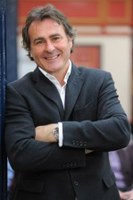
Flog It! presenter Paul Martin, a favourite with the senior ladies

The BBC’s Flog It! programme came to Hereford Cathedral yesterday, and since they were looking for stewards I decided to sign up. I’ve been a filmmaker for twelve years but I have almost no experience of broadcast TV, so this was a good opportunity to dip my toe into a different section of the industry.

If, like me, you’ve never seen Flog It! it seems to be exactly the same as Antiques Roadshow only they take your stuff to an auction at the end and sell it. Yesterday was a valuation day, meaning members of the public show up with the tat from their attic and a few will discover they were sitting on a nice little nest egg. Any items whose owners wished them to be sold would then be packaged up and sent off to auction at a later date.

The day kicked off around 7am with the usual rearranging of chairs and tables, unloading of vans and setting-up of the green room. Representing the cathedral was Dominic Harbour, who I last worked with back in 2003 when we filmed a couple of scenes from Soul Searcher in the Chained Library. (Veteran blog followers may wonder at his ever letting me back into the building.)

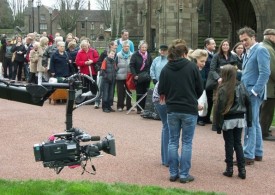
Filming the queue with a crane

Filming was meant to begin at 9am with shots of the huge crowd waiting outside, but only about fifteen Herefordians had shown up so things were delayed for a while as we waited for people to get up. It actually wasn’t long before the queue was quite impressive – almost as impressive as the jib which was being used to film it and the speed with which this jib’s two man crew could move it and set it up. At this point my job was to stop passers-by from wandering into shot. The very first person I stopped and asked to walk around the back of the jib turned out to be one of the presenters – well done, Neil.

When the doors opened, us stewards had to lead the throng into an elaborate snaking queue which, at its peak, would represent a three hour wait for the dollar-eyed hopefuls. Once that was up and running, my job was to stand at the door and ask people entering if they were here for Flog It! (since the cathedral was still open to the public as normal) and if they were then to hand them an information sheet and apologetically point them towards the very back of the queue. It made me weep for the soul of humanity how many people were dull-witted enough to answer the question “Are you here for Flog It?” with “How much can I get for my wife?” Anyway, this job wasn’t very demanding and I was able to observe the shooting MO.

A view from behind the cameras

The crew had obviously done this many times and they had their system down pat. The front part of the queue formed a horseshoe around three sides of the main open space which was evenly lit with four 1.2K HMIs bounced off large polyboards. (Flog It! banners hid all the stands from the cameras.) This area was treated like a three-walled studio set. The cameras always stayed at the “fourth wall” end, where two or three kinoflos provided extra kick for the foreground tables. At these tables the show’s resident experts were filmed discussing items with their owners. This meant no re-lighting, apart from a bit of moveable fill which was provided by handheld or camera-mounted LED lights. In the background, two further 1.2K HMIs were angled up at the roof and attractive gubbins of probable religious significance around the altar. Job’s a good ‘un.

HMIs bounced off polyboards provided the main light source

I was surprised at the number of cameras in use – five or six split into three units each with its own director and support crew. Two units were constantly shooting valuations at the aforementioned tables, while the third was at the other end of the cathedral shooting other valuations which had been picked out by the production team as particularly interesting.

At lunchtime I got a bit of a shock by how civilised the arrangements were. On low budget films I’m used to half a slice of pizza out the back of someone’s car, but this being a BBC production we were treated to hot cottage pie with steamed veg and bread at proper tables with real plates and cutlery and nicely folded napkins.

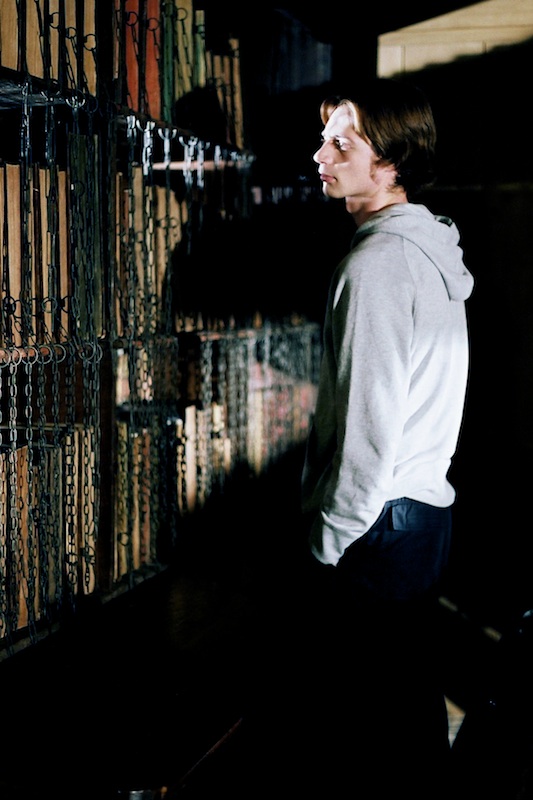
Ray Bullock Jnr. during filming in the Chained Library for Soul Searcher

At 4:15pm we derigged in the cathedral to make way for evensong and moved everything into the narrow museum area leading to the Mappa Mundi exhibit and Chained Library. Here several more valuations were filmed and I was called upon to sit in the background of shot to fill up the frame. I was also put on tea and coffee duty around this time. To deliver the drinks to the unit at the back of the museum area I first had to get past the other two units, which involved a wait of several minutes at each one for a break in recording, like city traffic lights.

Filming wrapped a little after 6pm and after helping carry stuff back to the vans and put the cathedral’s furniture back where it had come from I bade goodnight to all and sundry and headed home.

It’s a long time since I’ve been right at the bottom of the crew structure, but it was a great experience – everyone was really friendly – and I was reminded of a few things I learnt earlier in my career about how to make a good impression as a runner. So here are my top tips:

  1. Get the tea and coffee orders right. Write it all down, including names, and then transfer that info to the polystyrene cup when you’re making the drinks so they’re easy to distribute. If there’s any chocolate around distribute that too. It’s always good for people to associate you with receiving tasty snacks.
  2. Your tasks will invariably be boring but complaining about this is a definite no-no. Make use of the time to observe what the crew are doing – but not to the detriment of carrying out your task.
  3. Make sure you’re projecting “keen and eager” at all times. Don’t dawdle eating your lunch and get back to the action as soon as your plate’s clear.
  4. If you have to walk in front of a camera (not while it’s rolling of course) remember to say “crossing” as a courtesy to the camera op.
  5. If there’s an opportunity to stay a bit later than most other people and help load those last few cases into the van when everyone’s knackered, do it and you’ll be remembered with warm feelings.
Flog It!

Stop/Eject: Get Involved

Our crowd-funding campaign has launched today. We need your help to bring Stop/Eject, a heartbreaking story of love and loss, to the screen. Donate as little or as much as you’re able, and don’t forget to tell all your friends to do the same. You can link to our Crowdfunder page or you can embed the widget (see sidebar on right) on your own site.

Although Light Films have kindly funded the development and initial pre-production, we still need money to buy more props, costumes and materials for the set, and to cover travel, catering and accommodation. For those of you who have been following my filmmaking exploits online for a while, this is your chance to get personally involved. Everyone who donates will get a thank you in the credits, plus there are various great rewards available if you donate over certain amounts, such as exclusive posters, signed artwork and DVDs of my films, some of which have never been available to own before.

Still not convinced? Check out my previous Stop/Eject blog posts to read about all the hard work that’s already gone into this project. I believe this film will be something really special, but I can’t make it without your help. Sponsor it here. Thanks everyone!

Stop/Eject: Get Involved

Shane Hurlbut on Available Light

Col recently put me on to this fascinating blog by DP Shane Hurlbut. His most recent post looks at how he lit eight city blocks in Puerto Rico using minimal equipment. This was possible due to the low-light capabilities of modern DSLRs and high-end HD cameras. Apart from a couple of rented HMIs lighting background buildings, his gear mostly came from Home Depot (America’s equivalent of B&Q).

Lighting courtesy of Homebase

I remember arriving in upstate New York in 2002 to begin shooting Tom Muschamp’s first feature Beyond Recognition and being horrified by the suggestion from someone on the production team that I could get all the lighting kit I needed from Home Depot. That was a Mini-DV shoot and I did eventually get provided with some Arri lamps, but it just goes to show how times have changed.

Crucially what Shane’s blog illustrates is that even if you’re going with existing light sources, your job as DP is not over. You still have to mould them using flags, gels, black wrap or whatever. Just because you can physically expose a picture, that doesn’t mean it’s “lit” in the artistic sense of the word.

Read Shane’s blog here.

Shane Hurlbut on Available Light

Open University

Open University programming isn’t what it used to be. Gone are the men with tweed jackets and unfathomable beards who haunt your TV screen at 3am. In their place are men with no chins and terrible haircuts who loiter on YouTube 24/7.

This video is part of the OU’s Digital Film School course, which my good friend Rick Goldsmith co-wrote. You can find out more about him, his company and perhaps even his tweed jacket at www.catchermedia.co.uk

Open University

Crash Deconstruction

Sarah on the roof rack

Following on from my last post, let’s take a closer look at how part of The Beacon‘s car chase sequence was created, in particular the bit where Sarah goes flying out through her windscreen during the crash and miraculously lands on the roof rack of the villain’s speeding car. This ridiculous feat garnered a round of applause at the premiere, but how was it done?

The car crash was done for real, as previously explained, but clearly I couldn’t afford the stunt team and wire rigs necessary to catapult someone through the air and then composite in the vehicles below, which is how you would probably do it if you had a proper budget.

In fact there are no visual FX in this sequence at all. The illusion is created entirely through editing, using quick cuts of Sarah (LJ Hamer) leaning through the pre-smashed windscreen, a close-up of her legs being pulled out through the windscreen by a couple of crew members stood on the bonnet, a low angle shot against sky where she’s not moving at all, and a dummy being thrown at the villain’s car. The dummy was pulled together from whatever items we had to hand and looked terrible, but only eight frames of it were needed in the edit before cutting to an angle of LJ (already on the roof rack) dropping from all fours onto her front.

They say a picture is worth a thousand words, so a video must be worth at least a million. So I’ve put together a little compilation of the rushes so you can see exactly what I mean.

Crash Deconstruction

Chasing Cars

A decade ago I was editing The Beacon, my stupid Malvern-based action movie made for about £3,000. The Cardboard Chase is most people’s favourite scene, but a close second for me would have to be the car chase:

Setting up car-mounted cameras

Pretty silly, huh?

The car chase was shot over three days, mostly on Castlemorton Common in Malvern. It was done totally guerrilla style – no permissions, no insurance, no safety briefings, no stunt co-ordinator. The red car belonged to one of the crew, whilst the blue one was purchased secondhand for the production at a cost of £120, then taxed for £90 and insured for LJ, the lead actress, to drive at £235. (This was just standard car insurance so she could drive it on the road legally, and in no way covered it for film stunt use.)

The crash was shot on private land. The white car belonged to a friend of mine who was going to scrap it anyway. Crazy cast member Si Dovey offered to double for LJ driving the blue car towards the white one (sorry, I know nothing about makes of cars so colours will have to suffice to identify them) and miraculously came out alive, despite not even wearing a seatbelt on the second take. Getting the wrecked cars towed away afterwards (which was a major hassle) cost £75, bringing the grand total for the sequence to £520.

So an action-packed car chase can be shot pretty cheaply, but of course you shouldn’t try it under any circumstances because it’s extremely dangerous and highly illegal on public land.

Additional (27/10/11): By the way, you can download the whole budget for the film, if you’re so inclined, from The Beacon page.

Chasing Cars

Batman Miniatures

Just wanted to share this video I came across on YouTube. A very recent but classic example of a miniature sequence that no-one would ever have known wasn’t done full-scale. Try doing that with CGI!

Additional (26/10/11): On a similar subject, check out Gavin Rothery’s blog about the making of the excellent Moon. Gavin was the conceptual designer and visual effects supervisor on the film, apparently having a creative involvement in the project second only to writer-director Duncan Jones. His blog reveals all kinds of interesting nuggets from what military vehicles were originally going to be used to portray the moon buggies, to how he and Duncan used to lock themselves in the studio overnight, hiding from the security guards, to work on the set. Thanks to Matt Collett for this link.

Batman Miniatures

Saw See Saw Again

Aimee Denaro as Katherine in the stairwell of The Supreme Court of New York
Aimee Denaro in the stairwell of The Supreme Court of New York

Today I saw “See Saw” again. This is the feature-length thriller I DPed in Manhattan back in 2007, where I met my wife Katie. Amazingly the film is still in post-production after more than four years – enough time for Katie and I to get married and for director Tom Muschamp and producer/actress Aimee Denaro to sadly get divorced. We saw a rough cut a couple of years ago and recently Tom sent me a newer version with some significant changes.

One of my favourite things about the filmmaking process is the power you can wield over the narrative in post-production. Think outside the box a little, perhaps add a little ADR, and you can completely repurpose a scene or change the entire meaning of a film. The changes to See Saw haven’t been quite that extreme, but Tom has still taken the pretty major step of cutting the entire first act. Carl was forever telling me trim down the first act of The Dark Side of the Earth‘s script, and I’m sure it’s a battle many writers and filmmakers face: to set up the world and the characters with the utmost economy in order to get to that end-of-act-one plot point as fast as possible. So why not cut the first act all together?

See Saw actually seemed to get away with it for the most part. The lead character has amnesia, so the lack of set-up enables the viewer to share in her disorientation. There are one or two little bits of plot that probably do need to be re-inserted in order to give the climax its fullest impact, but overall I think this brave decision has worked for this particular film.

Watching it again brought back lots of memories of the shoot, a crazy three weeks in the punishing heat of a Manhattan August, with only two days off. Tom and Aimee secured some amazing locations, including a boat circling Liberty Island, Tavern on the Green (the exclusive restaurant used in the Ghostbusters scene where the terror dog finally catches up with Louis), Central Park and The Supreme Court of New York. I still can’t believe how lax security was at the latter.  Seeing the crew approaching with large cases and assorted metal poles and stands, the security guard simply moved aside a barrier and directed us around the metal detector. The actors even managed to smuggle in their prop guns with great ease.

But my main reaction on seeing See Saw again is to cringe at my lighting. Back then I was all about hard-lighting everything with clearly-defined and very black shadows. While this looks great in the nighttime scenes, nowadays I would be much more subtle in the daylight scenes, using kinos and hard sources bounced off reflectors to give a more naturalistic look. This is the problem with feature films, no matter in what position you work on them: they take so long to make that by the time they’re finished they no longer represent your best work.

Well, that’s enough disjointed rambling for now. I’ll be sure to let you know when See Saw’s finally released.


Saw See Saw Again

Stopped and Ejected

Ejected
Ejected

Disaster has struck.  My “Top Five Worst Things to Happen While Making a Film” has a new entry.  It wouldn’t be appropriate to give all the details, but broadly here’s what happened.

For the last week or two I’ve been spending almost all my time on Stop/Eject and though there were a few heart-stopping moments, like losing one and almost both of the lead actors, last week it was finally starting to come together.  Katie and I spent all of Thursday packing equipment, props and costumes and preparing several meals and snacks for Katie to eat during the shoot (she has allergies).  On Friday morning we set out for Derby along with Colin, two cars rammed full of people and stuff.

We arrived at the house of a key crew member where we were to be staying during the shoot.  I was worried to find that certain key aspects of the production were still not sorted out.  Having received very little in the way of practical or moral support, my stress levels had been steadily building as the shoot approached, and now I was feeling like I could throw up at any moment.

To make matters worse, it slowly became clear that other members of the family in whose house we were staying were not happy with us being there.  The final blow fell when two more relatives showed up and kicked us out of the house.

At this point the producer was forced to cancel the shoot.  I then had the unpleasant task of ringing round the cast and crew – one of whom, Ray, was already half way to Derby – and giving them the bad news.  Colin, Katie and I spent the night at Sophie’s house in Belper, where her parents were very kind and hospitable to us.  Yesterday morning we were faced with the problem of how to get two car-loads of equipment and people back to Hereford in only one car, and in the end I had to call my parents and ruin their Saturday by having them drive up to Derby and get us.

Although I must confess to a degree of relief that I didn’t have to shoot the film with the preparations not as complete as I would have liked them to be, today it’s really sinking in how gutted I am that the film has been stopped, ejected and thoroughly chewed up.  It’s now a question of not just when but if Stop/Eject gets made.

Anyone who’s followed my blogs for any length of time will know that I’m no stranger to filmmaking disasters.  Here’s how my top five shape up now:

  1. After building a 25 metre earth embankment in a muddy Gloucestershire field for Soul Searcher‘s miniature train to run along, Colin and I were forced to put all the earth back where we found it at 1am in the pouring rain without having used the embankment at all, due to the train constantly derailing.
  2. When we wrapped on day one of The Dark Side of the Earth‘s pilot shoot – which was personally costing me over £30,000 – due to delays with the set construction and an over-stretched lighting crew, we had only shot one of the sixteen set-ups scheduled.
  3. Stop/Eject‘s shoot being cancelled a mere 12 hours before the call time.
  4. At the age of 19, while shooting my first paid directing job – a community drama about skateboarders and BMX riders in Droitwich – one of the kids came off his bike during a trick and fractured his skull.
  5. Halfway through principal photography on Soul Searcher, after being battered by set-back after set-back, we discovered that footage from the previous night’s apparently successfully shooting at Doodies cafe was corrupt.
Stopped and Ejected