My award-winning short fantasy-drama Stop/Eject is just coming to the end of its festival run, and soon I’ll be publishing a breakdown of that run, how much it cost and how many festivals it got into. But in the meantime, here’s the director and producer’s commentary which Sophie Black and I recorded at the Cannes Film Festival in 2013.
If you haven’t seen the film, you can watch it without commentary below.
Next week I’ll be posting the cast commentary with Georgina Sherrington, Oliver Park and Therese Collins.
Late last year I secured a great feature film job as DP, on the basis of a personal recommendation followed by a meeting with the director which went really well. Making a good impression at a meeting like this is clearly crucial. But although such meetings are essentially job interviews, they are much less formal and rely much more heavily on the director and DP having similar tastes. Here are a few tips to help you give your next one your best shot.
Be prepared. This means reading the script and any other documents provided, ideally more than once if you have the time and you’re serious about wanting the job. Look up the director’s previous work to get a sense of their tastes.
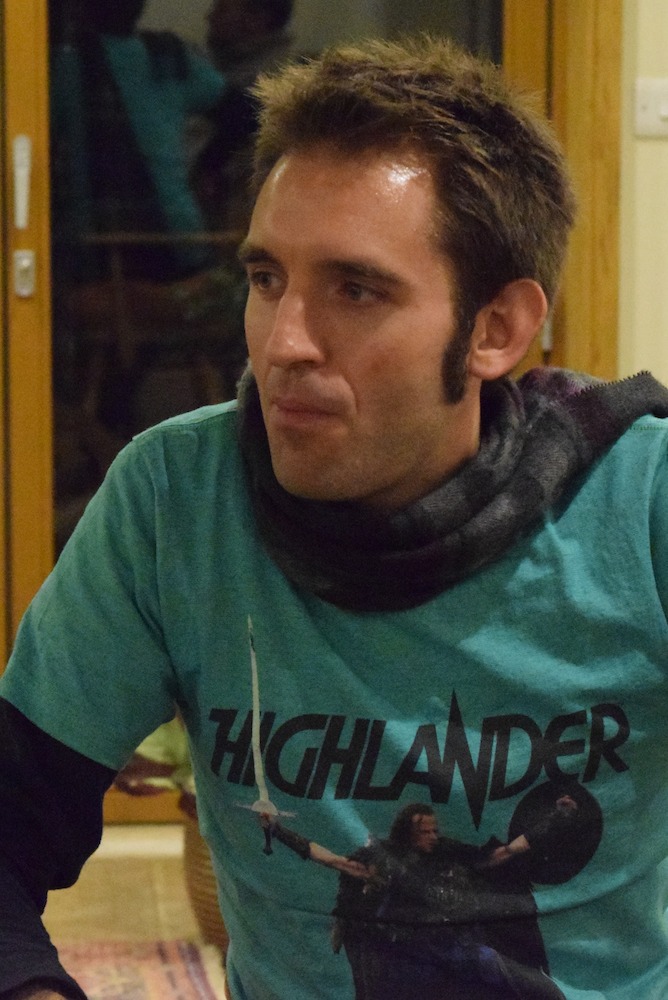
Dress to impress. What you wear to a meeting can influence its outcome, just as wearing a smart suit to a traditional job interview can. During the shooting of the feature, the director commented that the Highlander t-shirt I wore to the meeting reassured him that my cinematic tastes were broadly in line with his own.
Be willing to travel. If you don’t live in London, you’re going to have to travel there for most meetings. Don’t complain about it, don’t even mention it if you can avoid it. But also don’t do it if you have doubts about the quality of the production and what it’s going to do for your career.
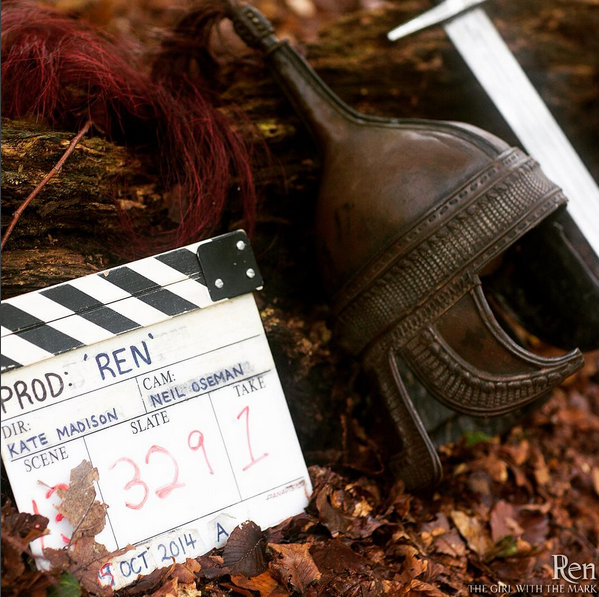
Bring showreel footage. The director will likely have seen your showreel before you meet, but it doesn’t hurt to bring additional clips or stills that are particularly relevant to this project. In my feature meeting, frame grabs from Ren: The Girl with the Mark helped demonstrate what I could do with a period setting.
Bring some creativity to the table. Put some reference images together to show the visual ideas that came to your mind when you read the script, and how you think the cinematography of the project could be approached. I found an image of some monks with a shaft of light coming in the window that perfectly summed up how I saw the feature, and the director really responded to it.
Be flexible. Be prepared to listen to the director’s vision and bounce off their ideas.
Bring people and/or kit to the table. What do you have access to that puts you ahead of other applicants? Often in the micro-budget world this will be your camera, or maybe a drone or a jib, but once you get into the realm of more reasonable budgets, directors and producers appreciate skilled crew more. The feature director really wanted to use a lot of steadicam in the film, so before being offered the job I contacted a talented steadicam op I knew and got an expression of interest from him which I was then able to go back to the director with. I think this was a big part of the reason I got the job.
Be OK with the budget. If it’s late enough in preproduction that the crew fees and the kit hire budget are fixed, don’t grumble about them. All you will achieve is to make the director think you’re going to be difficult to work with. Instead cite examples of how you achieved great results with similarly limited resources in the past.
Don’t be cheap. Offer to pay for the drinks. I’d probably take it as a bad sign if the director allowed me to, but offer nonetheless!
Follow up. We all think of great things we should have said when we’re halfway home. Send an email with those extra thoughts, any links you may have discussed in the meeting, and a thank you for their time taken in meeting you.
Shooting Ballet Pointe Shoes, my first time working with an Alexa
Where has the year gone? Can you believe that all of the Back to the Future trilogy is now set in the past? It’s been a great year for me, one of moving in the right direction.
At the end of last year I said, “In 2015 the goal is very simple: keep DPing drama, with a bit of gaffering in the gaps.” And that’s exactly what I’ve done. That and postproduction supervising a web series – but more on that in a minute.
Last year I made the huge but entirely correct decision to stop doing corporates, and that did lead to some gaps in my schedule. 2015 started slowly, with a couple of gaffering jobs on Oliver Park’s short Vicious and John Quarrell’s The Gift.
Meanwhile, I asked Kate Madison if she needed any help with post on Ren: The Girl With the Mark, the awesome fantasy web series I had DPed for her the previous autumn. By Easter I had cut 30 or 40 behind-the-scenes and production diary videos for the show, become postproduction supervisor for the series and moved into Kate’s spare room! Between the paying jobs this year I’ve overseen the show’s many VFX – even doing several of them myself – created an EPK, organised ADR sessions, appeared on Comic Con panels, and shot hours of interviews for a DVD documentary.
Moving out of Hereford was a much-needed change, although the place treated me well over the years. Cambridge, my new home, is a beautiful city which encourages lots of healthy cycling, and London is much more accessible from here.
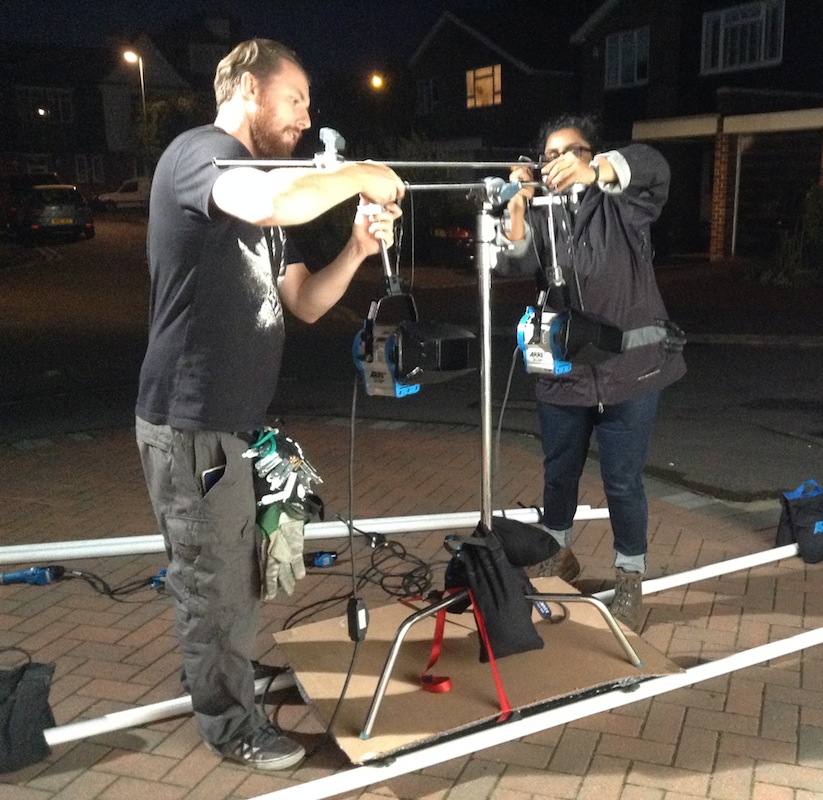
Some of the crew rigging lights on Exile Incessant
Work picked up as the summer approached. Shorts I’ve cinematographed this year include Gisella Pereira’s fairytale Ballet Pointe Shoes, James Reynolds’ race drama Exile Incessant, Stanislava Buevich’s black comedy Self Control, Douglas Morse’s medieval comedy The Second Shepherds’ Play, and Ben Bloore’s mysterious drama Crossing Paths, plus the period comedy web series pilot Owl House by Mark Keegan. And I was delighted to visit Japan for a few days to shoot pick-ups for a sci-fi feature called Synced, directed by Devon Avery. Most of these projects have blog posts about them, so click the links above to check those out.
But 2015 saved the best for last, with my first paid feature film job coming out of the blue in November, courtesy of a glowing recommendation from sound recordist David Bekkevold. I learnt so much from this project, some of which you can read in the daily blogs I posted, and others of which I’ll be blogging about soon. I now feel like I could walk onto almost any set as a DP and acquit myself reasonably well.
As 2016 approaches I have an ambitious 30-minute fantasy short booked in for the end of January, and attachments to three features. A lot of my work is now in the period/fantasy arena, which is exactly what I was hoping for after doing The First Musketeer back in 2013. It’s taken sixteen years, but I finally feel like I’m getting there – wherever there is!
As usual, I’ll leave you with my ten favourite blog posts from this year…
Distribution and the M&E (Music and Effects) Mix – an explanation of how films are dubbed, what materials a producer needs to deliver to a foreign distributor, and a video showing the various stages in creating Soul Searcher’s Japanese dub
The last day. A splinter unit is in a studio in Swansea shooting a body burn stunt, but I miss that because the main unit are shooting exteriors at Margam. There is heavy rain in the middle of the day and it becomes unsafe to do the chase scene amongst the trees that is scripted. I wander around the castle grounds with Paul, Bali the 1st AD and Mikey from locations in an effort to find somewhere safe but visually suitable in which to re-imagine the scene.
After lunch we find a path in the woods and Paul comes up with a way to stage it all in one dynamic steadicam shot. Rupert shoots it beautifully and as the daylight fades Bali calls a main unit wrap.
Many hugs and goodbyes later, I arrive at the studio to join the splinter unit for their last few hours. They are setting up a wire rig from a cherry-picker against a green screen to shoot FX elements of a creepy girl. While that is being rigged, 2nd unit DP Keefa is getting tight inserts of gory prosthetics on a table nearby, shooting on his Red Dragon and referring to main unit footage on a laptop so he can match my lighting.
Producer Mike asks me to shoot a green screen element of the creepy girl staring while the wire rig is being set up. Rupert and Max arrive with the Alexa and we hook up to the mix and overlay system. This keys out the green in real time and allows us to see the creepy girl against the plate we shot at Margam yesterday. She can’t see the monitor herself so she doesn’t know where she is. I ask her to take two steps to her left. It is EXACTLY like Knightmare. Welcome, watchers of illusion.
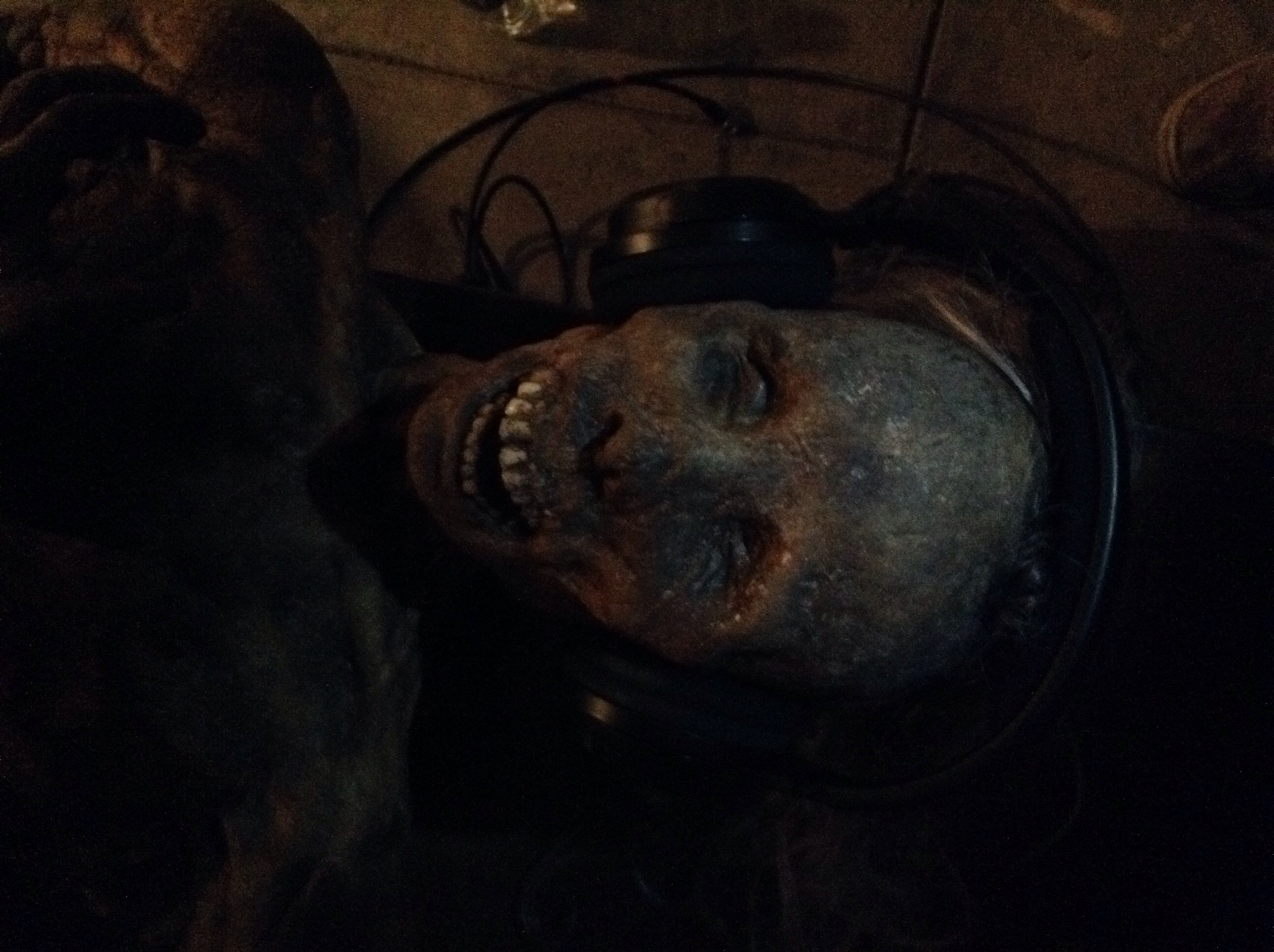
Keefa takes over to shoot the wire rig stunt, while I work with Paul to shoot inserts. The art department have recreated little pieces of some of the sets in this cavernous studio space. We also shoot a prosthetic head cast of one of the lead actors having her eyes poked out. Lovely. Then we grab some more green screen elements, including fake blood spraying in various directions. Co-writer and prothestics make-up artist Conal is using a fire extinguisher to spray the blood. It goes everywhere.
We wrap at last, and I’m very glad I got to come along and do this last fun little bit at the studio.
Overall the project has been great, and a fantastic opportunity for me. With a budget ten times greater than anything I’ve previously worked on, and a much bigger crew, and the Alexa and Cooke S4s to play with for five weeks, and all those HMIs, I’ve been quite spoilt. All the other heads of department are older than me and have worked on huge TV shows, and I can safely admit now that I was incredibly nervous when we started, but everyone is very, very happy with how the film looks, including me. Hopefully it will lead to more good things.
Jimmy, one of the runners, has written a song about the shoot. He heard the 1st AD ask our steadicam operator, “Rupert, are you ready?” and that inspired him to go home and write and record a pretty awesome song. Some of the crew have been shooting a music video for it on a phone during the lunch-breaks.
We shoot in the corridor in the morning. Lots of chippies are waiting to break down the set as soon as we’ve finished on it. We move upstairs and once again reap the rewards of rigging the chapel lighting so thoroughly as we bash through a critical scene.
After work there is a pre-wrap party. A bunch of us end up at the holiday cottage where one of the actors is staying. The cottage has a VHS deck and a well-worn copy of Free Willy. Of course we put it on. Michael Ironside is in it.
More corridor and nun cell scenes today. Everyone is tired, including the actors, and as a result they need more help from the lighting to look good.
We fly out the wall that has the window in it, but we still need the light to look like it’s coming through the (off-camera) window. So the art department remove the window from the wall and the sparks rig it to a C-stand, surrounded by flags.
We do a fight scene involving a sharp item being used as an improvised weapon. We’re about to shoot a cool 2-shot of the actors struggling on the floor, dutched almost 90 degrees. But the point of the sharp item isn’t showing up on camera and looking threatening enough. We’re short on time, so I prop up two torches on my wallet on the floor behind the actors, to edge-light the weapon. Not the first shot I’ve lit with my torch, and it probably won’t be the last.
Just two days left now.
After 16 hours at home (half of those asleep) I returned to Wales late last night. Only four days of the shoot left, including today, and we’re powering through the material at a good lick. All the sets are rigged so it’s not hard for lighting, but we still have to be careful. We rush the first take of a close-up on one of the lead actors and she doesn’t look good. I insist on another take and we take five minutes to massage the lighting and help her out. It’s totally worth it. The DP has to make the cast look good, and the fact that the pressure was on from the 1st AD is not an excuse that the producers will give two hoots about when they watch the rushes.
We do more steadicam shots going from corridor to corridor and another 360 degree shot in the chapel. There are few easy shots with Paul and that’s a great challenge to meet. This shoot has given me a lot of confidence.
Today we shot over eight minutes of screen time. We’re all very chuffed about that.
Christmas music is playing in the dining room as we eat breakfast. There is a deer feeding event featuring Father Christmas in the grounds of the castle today.
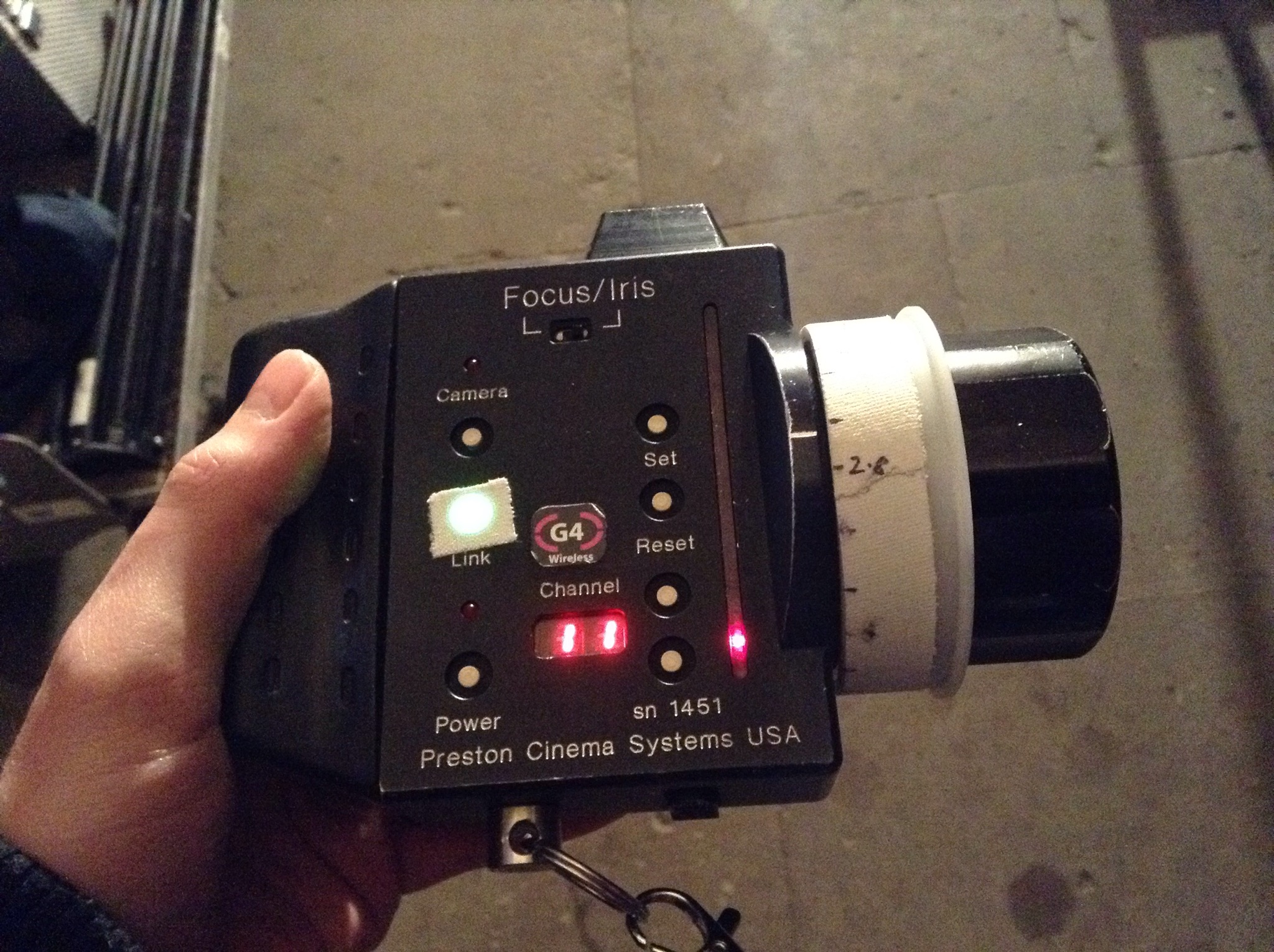
We shoot mostly in the cell and corridor again. For the first time we venture into a second corridor linked to the first. But this one has windows, so the guys put up a 6K and a 4K firing in from outside. We don’t have the space to back them off enough to match the light levels of the adjacent “candlelit” corridor. So we rig up the iris motor and I do a stop pull from about T2.8 to T5.8 as Rupert steadicams from the darker corrridor to the brighter one.
Sometimes when you set up for a scene you put in lights through the obvious windows and it just looks great straight away. Today there were a lot of scenes like that. Half the battle is getting your backlight in without the lamp being in frame. Then it’s coming in with a key that’s sidey enough to have shape. If you’re doing the kind of spinning steadicam shots Paul loves it can be very difficult not to have somewhere in the move where the lighting looks flat. Today the coverage was a little more conventional and that really helped.
In our last hour we move up to the chapel and bash out a small scene in three set-ups which all look great. The camera and lighting teams move like well-oiled machines so I can deliver the goods in record time.
We wrap five minutes early and I’m off like a shot with a runner/driver to the station. I’m heading home to Cambridge tonight for a brief but needed break from the world of this film.
A week to go. A party atmosphere is already developing. Rupert has decorated the magliners with tinsel and Xmas lights, and a box of Roses has appeared by the checks monitor.
Bex from Ren joins the crew for a couple of days as camera trainee. She covers for George in the never-ending battle to get a Teradek signal from one room to another.
I do a lot of walking up and down stairs while talking into a radio.
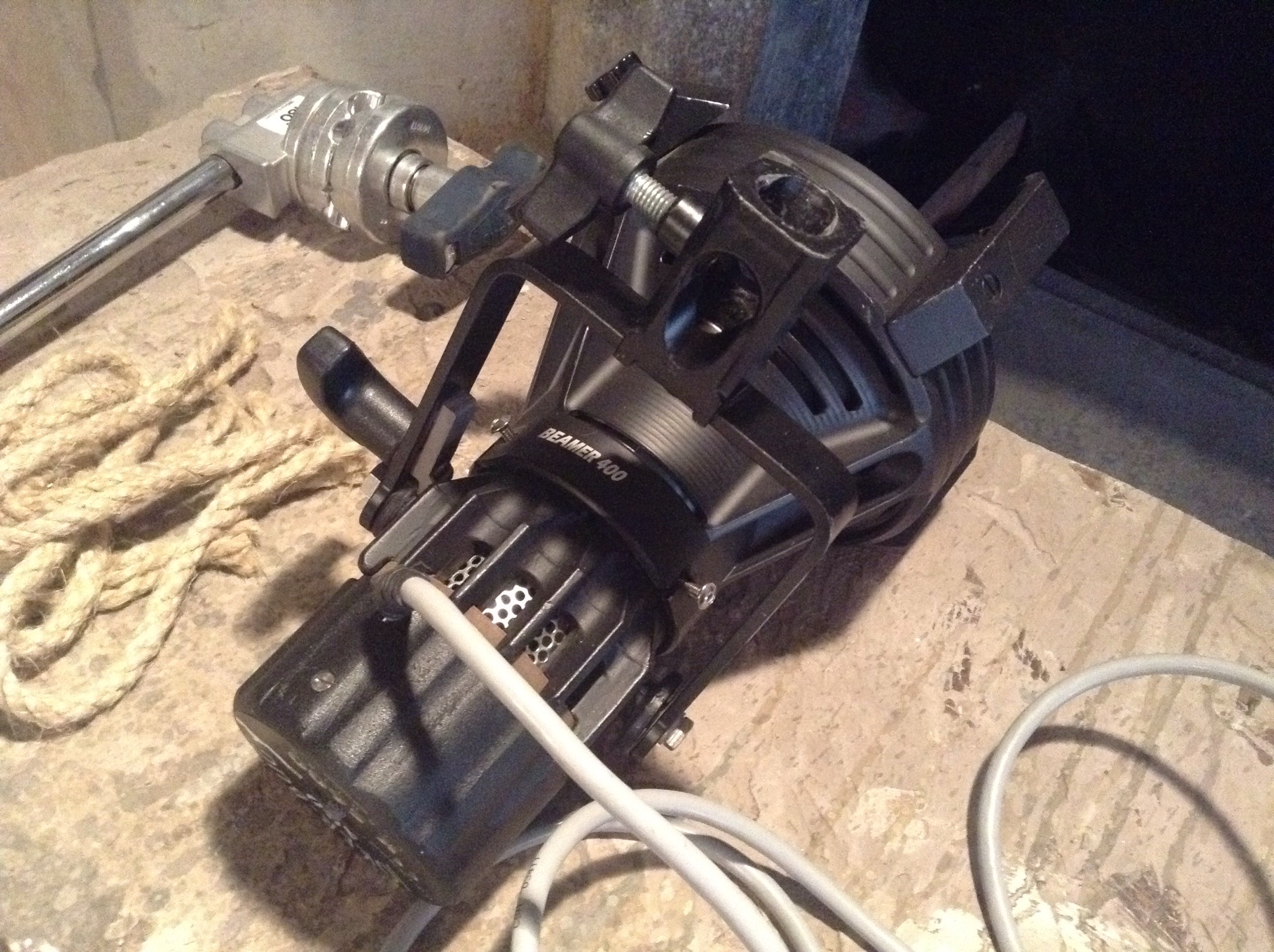
Rain messes with our plans. We shoot bits in the nun cell and surrounding corridors, and a scene in the chapel upstairs. This latter set we light for daylight for the first time. We have 15KW of lamps burning. Ben rigs a Joker Bug, a small 400W HMI, behind the false window, and we have larger HMIs coming in from the corridor and the loft above.
We shoot the nun cell redressed as a different room. It’s very hard to light a desk that is away from the window and the ceiling gobo. I shall ponder this problem before we shoot in there again.
I feel like crap when I wake up, but by the time we start shooting I’m merely sniffly and a bit achey.
Last night I spotted on today’s call sheet that heavy rain was forecast and a day exterior was scheduled! After I pointed this out, the scene was bumped and so we’re shooting mostly in the nun cell and corridor today. After reviewing Javier’s edits with Ben, we decided that 650s on the ceiling simulating candlelight look best with a layer of tough-spun diffusion on, as per the chapel set, so this morning we diff the 650s in the corridor set too.
The nun cell has one small window and a gobo grill in the ceiling, so the lighting options are very limited. Though sometimes less is more. We do a night scene and, for the first time, I eliminate the 2.5K HMI punching in the window, going just with the 575W HMI coming in through the ceiling gobo (with opal diffusion and steel blue gel) and a kino in the window (with steel blue). We use bounce boards to bend the light onto the actors when these sources cannot reach them.
We bump up a candle in the room with a 300W tungsten fresnel. Ben fashions a black-wrap snood for it which makes its patch of light very controllable. Max fades it up and down in sync with the candle being lit and blown out.
Later, for a different scene, the 2.5K comes back into play. It works best when the beam misses our heroine. She’s just lit by the natural bounce and the diffusion caused by the impure ‘glass’ in the window. The shaft of light, combined with the textures of the set, give the image a beautiful painterly quality.
I regret that I cannot give a more convincing impression of nighttime in the cell. I would love there to be black outside the window, but any lamp powerful enough to put sufficient light into the set also makes the window itself turn white, as if there is a bright sky outside. If the window was modern, clean, fully transparent glass that would not happen, but this is a period film. I would also love to make the candlelight appear to be a much brighter source than the ‘moonlight’ coming in from the window. But there isn’t room. We can bump up the candlelight slightly in a mid or close-up, but in a wide there’s nowhere to hide anything.
One of the last shots of the day is a pick-up from a Tretower scene with an off-camera fire. The FX boys, Warwick and Aaron, bring in a fishtail – a small flame bar – along with a wind machine and smoke to replicate the exterior conditions indoors.