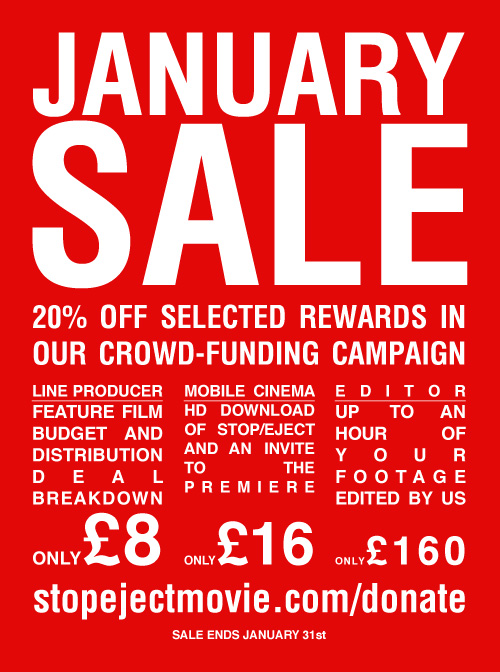
Pick up a bargain in our January sale and support Stop/Eject at the same time – win, win!

If your new year’s resolution is to get out and make a film, perhaps you need a bit of inspiration to get you going. For the past decade, one of my biggest sources of both inspiration and knowledge of the craft has been DVD extras. The days of DVDs may be numbered, but that does mean you can pick them up cheaply, so there’s no excuse. Here’s my run-down of the most interesting extras out there.
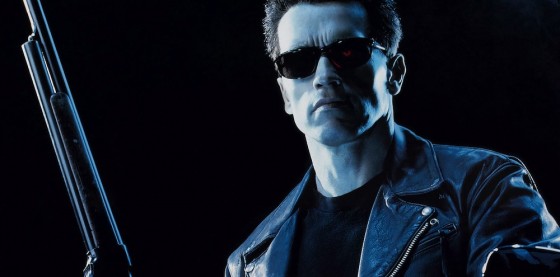
Without doubt the most comprehensive set of extras I’ve ever seen is that on TERMINATOR 2: JUDGMENT DAY. Although a lot of it is text, it leaves absolutely no stone unturned, covering every part of the process from scripting and scheduling through to marketing, release prints, telecine and foreign dubbing. It also breaks down every single VFX shot and special make-up gag in the movie.
PIRATES OF THE CARIBBEAN: DEAD MAN’S CHEST includes a fascinating feature-length documentary following the huge cast and crew as they island-hop with ships full of equipment, building roads as they go to get to some of the remote locations, and weathering a storm that nearly destroys their picture boats. At one point an AD gives some staggering statistics about the shoot; you will not believe how many walkie talkies went missing during production.
The Tarantino-Rodriguez collaboration FROM DUSK TILL DAWN comes with an unusual feature-length doc called Full Tilt Boogie. Rather than dwelling on the action on set, director Sarah Kelly interviews many of the crew – right down to the PAs and runners – to get a unique set of perspectives on the production. Throw in a dispute with the union and the result is a much more revealing doc than we’ve come to expect.
LEMONY SNICKET’S A SERIES OF UNFORTUNATE EVENTS is a movie with a unique look, using traditional techniques like forced perspective and painted backdrops to create its fantasy world. A DVD documentary called A Woeful World explores the incredible artistry that went into this sorely underrated film.
Viewers of the FIGHT CLUB DVD get to come along on the tech scouts – detailed recces where the director tells his heads of department everything he’s going to need at that location so that all the logistical problems can be anticipated.
TITANIC’s four-disc release includes interesting featurettes on previz, the process of creating moving storyboards. Although previz is a CG thing these days, there is much to be learnt from the military precision with which James Cameron plans his deep dives to the shipwreck using miniatures.
For an unedited, fly-on-the-wall view of a small portion of a shooting day on a Hollywood movie (albeit one shot in New Zealand), Peter Jackson’s THE FRIGHTENERS is the place to go.
MISSION: IMPOSSIBLE 2 has a good set of featurettes on the film’s varied stunt sequences, including one which reveals the terrifying way the knife-coming-towards-Tom-Cruise’s-eye shot was achieved.
If cinematography’s your thing, you could do worse than listen to DP John Schwartzman’s commentary track on ARMAGEDDON, where you can learn how to shoot under UV tubes, how to light half a desert and how to make Liv Tyler look her best when she’s on her period.
For a fascinating look at the construction and on-set operation of puppets and animatronics – from little chest-bursters to the huge alien queen – look no further than the ALIENS DVD.
Post-production
THE MATRIX: REVOLUTIONS’ DVD includes an interesting featurette on the specific use of miniatures for a crash shot in a film which mainly relied on CGI to create its illusions.
Staying with traditional FX, SUPERMAN: THE MOVIE includes a great documentary on how they made us believe a man could fly before the digital days with such classic techniques as front projection and optical compositing.
But if the digital era floats your boat, THE FELLOWSHIP OF THE RING has a nice featurette on digital colour timing (a very new process at the time). In general, THE LORD OF THE RINGS trilogy has a remarkable plethora of extras on all aspects of the blockbuster-making process.
Finally, I’m not sure any DVD extra has yet fully explored the world of post-production sound, but Sound & Music on the bonus disc of SPIDER-MAN 2 gives a nice glimpse. Legendary foley artist Gary Hecker takes us through some of the ingenious combinations of mundane items he used to make such sounds as Spidey’s shooting web and Doc Ock’s claws ripping open a bank vault.
Any good ones I’ve missed? Comment and let me know!
As 2012 draws to a close, it’s time for me to reflect on how things have gone for me this year.
Up until mid-2011 my filmmaking strategy was very simple: I would make a film, focus and work on that film and that film only (apart from rent-paying jobs), then when it was complete I would move onto the next one. Thus, since going freelance in December 1999 I made Traction, Soul Searcher (short), Cow Trek, The Beacon, Soul Searcher (feature) and began working on The Dark Side of the Earth. Eventually, after six years of trying to get the latter project made, I realised that I had to change my MO.

As well as having multiple films on the go at once, I realised that I needed to work more on others’ projects, and crucially I needed to promote myself, to network and to make more contacts. Undoubtedly the thing that’s helped me most with this in 2012 is crowd-funding Stop/Eject. It forces me to promote myself and the project regularly, and has made me lots of new contacts on the social media sites and in more traditional arenas like the Herefordshire Media Network.
Giving talks and workshops is also a great way to get yourself known, and so I wanted to do at least six of these in 2012. In the end I’ve managed to do seven: three on the funding, making and distribution of Soul Searcher, three on the funding and making of Stop/Eject and one on freelancing in general. I also had Video8 screened at The Worcestershire Film Festival and attended Short-Sighted, a conference at BAFTA. Then in September I was lucky enough to be accepted onto the FilmWorks programme, the ultimate networking event, and came out of it with some great contacts.

My directing goals for this year were to make a Virgin Media Shorts entry again, complete Stop/Eject and shoot a third short film of at least five minutes in length. Unfortunately I only succeeded in the first of these, with Stop/Eject still having much of post-production ahead of it and not even a script yet ready for the third short. I’m still keen to do another short, but without any clue of how to finance it I have difficulty feeling any impetus to get going on it.
In 2013 I definitely need to complete Stop/Eject and have a rough cut of my next short film by the end of the year, as well as entering Virgin Media Shorts again. I also want to have the Stop/Eject feature script at second draft stage and the beginnings of a package (actor attachments, outline budget and so on) by this time next year. I’d like to get at least one more feature script worked up as well. I want to get more directing gigs for other people, like SAS Couriers, and do more talks and screenings. It would be great to get Video8 into at least one more festival.
We’ll see how it goes.
But to finish off the year, here are what I think are the most interesting or useful of my ramblings on this blog in 2012:

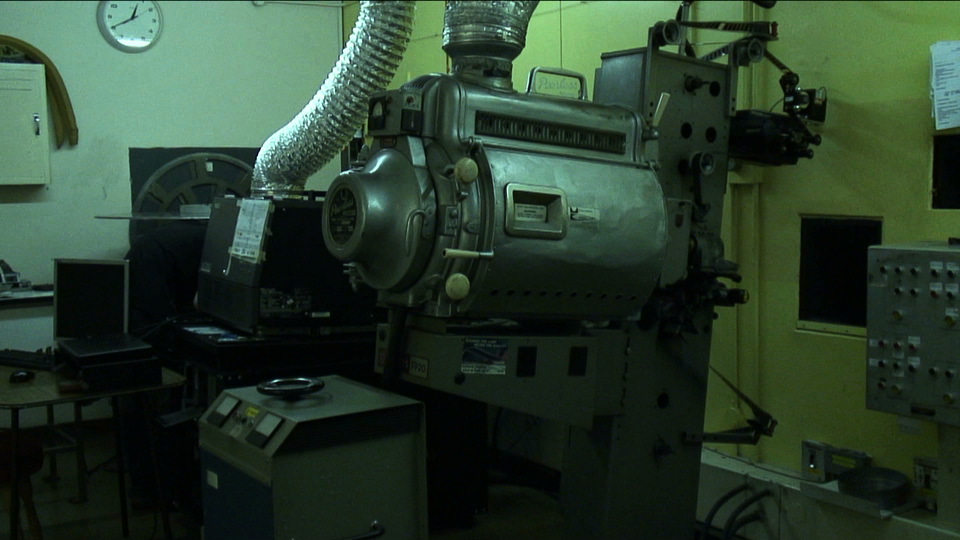
A couple of weeks ago I screened the 35mm print of The Dark Side of the Earth‘s pilot at the last FilmWorks session in Bristol. It had been about 18 months since I last ran the print, and I was shocked how much attitudes towards celluloid had changed in that time. People were acting like they hadn’t seen a roll of film in 20 years, like I was some kind of whacked-out nostalgia hippy for wanting to shoot on 35mm. (But it still looked fucking awesome on the big screen.)
Digital cinema is one of those things that’s been lurking on the horizon for ages, then suddenly, silently… it’s here, like it’s always been here. Projection of moving images from celluloid is very, very quickly becoming extinct, as is acquisition of moving images on celluloid. Suddenly the likes of Christopher Nolan and Quentin Tarantino, staunch defenders of shooting films on film, are starting to look a bit loony, although I agree with them completely.
In September Fuji announced it would cease manufacturing of film stock, leaving only Kodak in the “market”, if such a word can be applied to an unwitting monopoly.

So we’re quickly heading towards a world in which “film” is a word completely divorced from its original meaning. Plastic strips coated in light sensitive emulsion will no longer play any part in the production or consumption of “films”.
The other day I went to see The Hobbit: An Unexpected Journey. Although I chose to see a 2D 24fps screening, Peter Jackon’s sedate trilogy has been made in 3D at 48fps. The higher frame rate produces smoother motion which most people will associate with news broadcasts and documentaries. Overall the aim seems to be to make watching a film more like experiencing real life – sharper, smoother, three-dimensional. But is that what we really go to the cinema for?
It’s not what I go for. I want the scratches and the weave and the flicker because without them there is no magic, there is no suspension of disbelief. I want escapism. I want film. It seems I’m to be disappointed for the rest of my life.
A thank you from Georgina Sherrington and an announcement about an exciting new reward for Stop/Eject sponsors: access to an exclusive 20 minute interview with Georgina about her experience of playing Mildred Hubble in the popular ITV children’s series The Worst Witch.

For low-to-no-budget filmmakers, it wasn’t so long ago that stock footage and sound effects were out of our price range, and the only way to get music legally was to have someone compose it specially. Today the situation is very different, with plenty of sites out there offering material that’s not only free to download but royalty-free too. (This is an important distinction. Always read the license carefully to ensure that no further fees are due when the material is used in the territories, media and manner you wish to use it.)
Here are some of my favourite sites for free stuff. Again, please check the FAQs and licenses on these sites to make sure your intended useage is approved. If you’re serious about filmmaking, you’ll want to commission a composer, sound designer and second unit to generate original material for you, but we all have times when we need a quicker, off-the-shelf solution, and these are the places that help me out in those times.
Do you know of any more sites I could add to this list? If so, leave a comment.
FilmWorks, the networked professional development scheme I’ve been on for the last few months, came to an end this Wednesday with a big event at the Watershed in Bristol. The fifteen of us “native” to the Bristol hub were joined by the 30 participants from the other two hubs – Sheffield and Nottingham, plus a number of invited industry figures who would all be mercilessly pitched to throughout the day.

Stop/Eject is the project I have been focusing on throughout FilmWorks, but somehow in the last few weeks The Dark Side of the Earth – a project that’s been on the back burner for a while – returned to the fore. I was lucky enough to be able to screen the 35mm pilot for this epic fantasy-adventure in the Watershed’s biggest cinema to all the participants and mentors. When it came to the speed-pitching session at the heart of the day’s event, having arrived without any fixed ideas, I ended up covering both Dark Side and Stop/Eject, but with the emphasis on the former.
The event ended FilmWorks on a real high, after some mixed feelings for me earlier on. I have to confess that there were weeks when I didn’t want to go to Bristol and hear yet again how hard the industry is to crack into, how it’s full of catch 22s, how the statistical likelihood of getting into festivals is so tiny… It was seriously depressing me. But what always picked me up were the other participants. It was inspirational to be surrounded by so many talented and enthusiastic people, and triply so when the other hubs joined us this week.
And that networking is the biggest thing I’m taking away from FilmWorks. Right now I can’t tell exactly how these contacts will help me in the future, but I have no doubt whatsoever that they will.

A few months ago I was approached, via a comment on this blog, by John Harrington. A Herefordshire-based writer, John had completed a script for the pilot episode of SAS Couriers, a sitcom based on his experiences as a driver for a rural courier firm. The BBC had displayed some interest in the script, but wanted him to go away and shoot some of it before they would take it any further.

So John’s hired me to direct a ten minute section of the pilot episode, which will be used as proof of concept and which we hope will lead to a TV commission. I was immediately attracted by the opportunity to do something about Herefordshire, a place I rarely get to shoot any fiction in, despite living here, and by the quirky but complex characters John had created.
We’ll be shooting early in the new year, and work has already begun on casting, crewing and location scouting. The other week Louise Wright – who doesn’t really have a job title yet, but I’m going to call her the production manager – took me into the beautiful west Herefordshire countryside to look at some locations. We quickly found a stunning setting for our sheep farm and an ideal dairy farm for an escaping cow scene.
More on this project as it develops.

It’s high time for an update on the progress of Stop/Eject, my magical and moving fantasy-drama about a tape recorder that can stop and rewind time.
First up, thanks to the auctioning-off of a hat worn by lead actress Georgina Sherrington (The Worst Witch), our fundraising total has crossed the £1,200 mark. That means we’re over 80% of the way to our £1,500 target. It also means that the last in our series of behind-the-scenes podcasts from the set of Stop/Eject has been released.
Down in Hay-on-Wye, editor Miguel Ferros is hard at work cutting Stop/Eject itself. I went down there on Tuesday and had a sneak peek at the first few minutes, which is already streets ahead of the version I edited. A fresh pair of eyes is indeed a very valuable thing at this stage in a film’s creation.
Meanwhile, I’ve also been editing – editing Record & Play: The Making of Stop/Eject, a 30 minute documentary which will form the centrepiece of the DVD and Bluray’s bonus features. Several brand-new interviews have been filmed for this, including one with Georgina. At the same time we interviewed her on another subject, and we hope to be revealing this soon as an exciting new reward for sponsors.

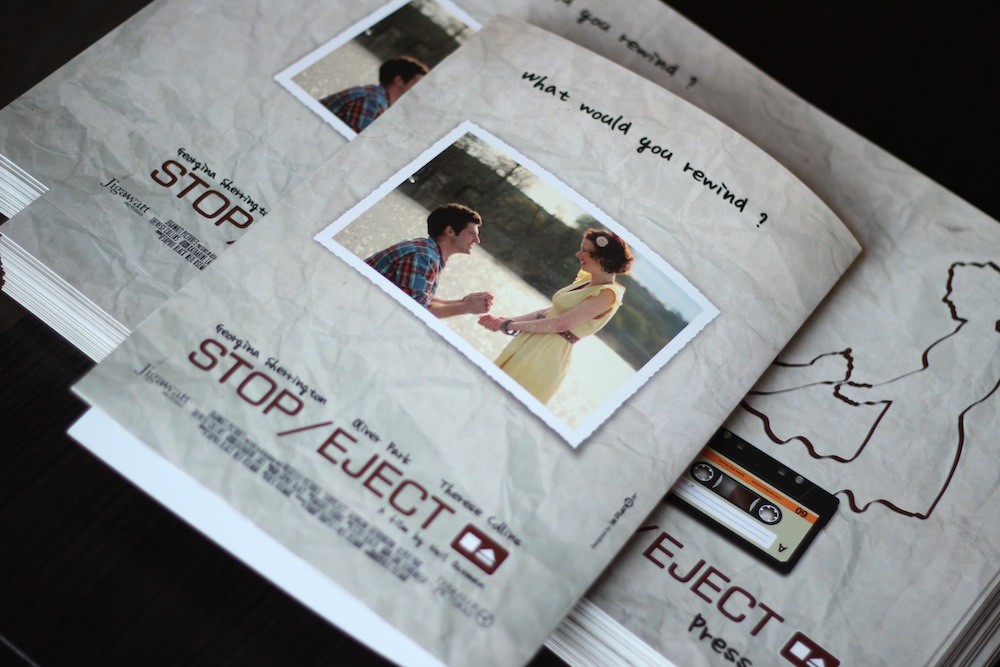
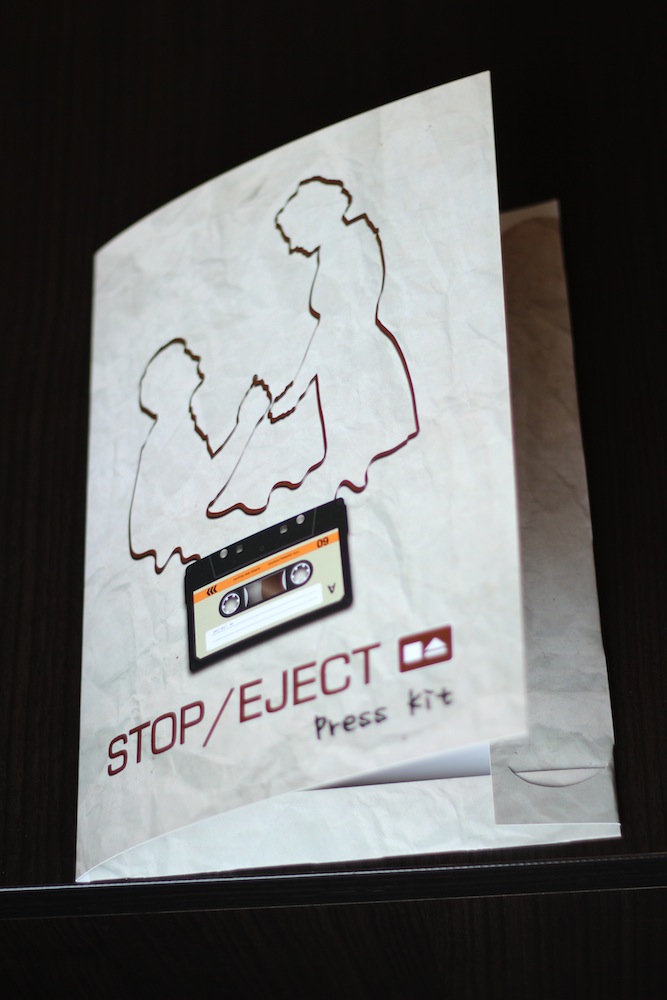
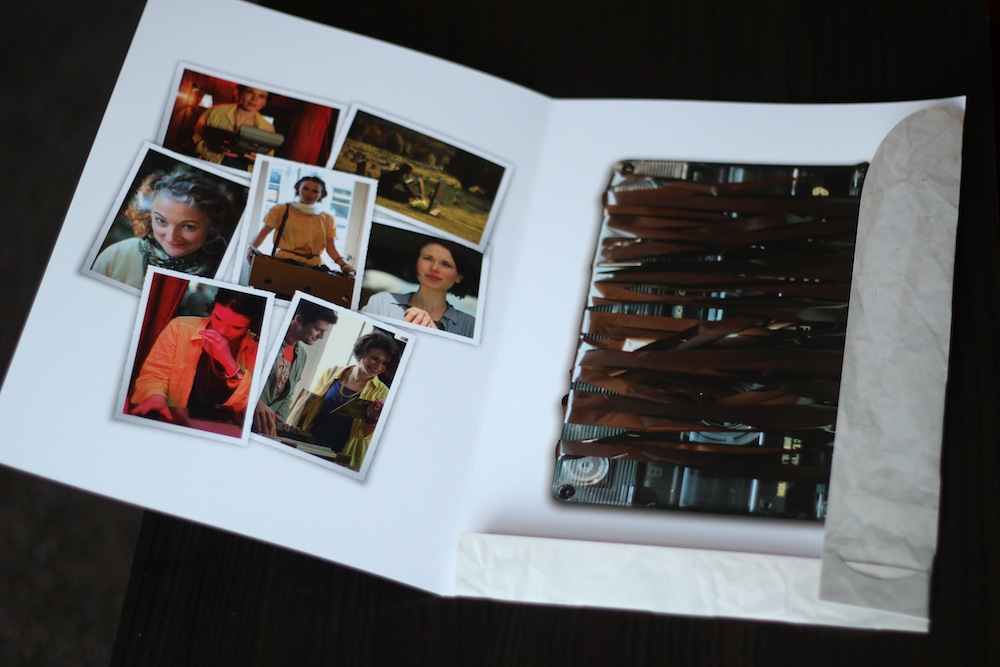
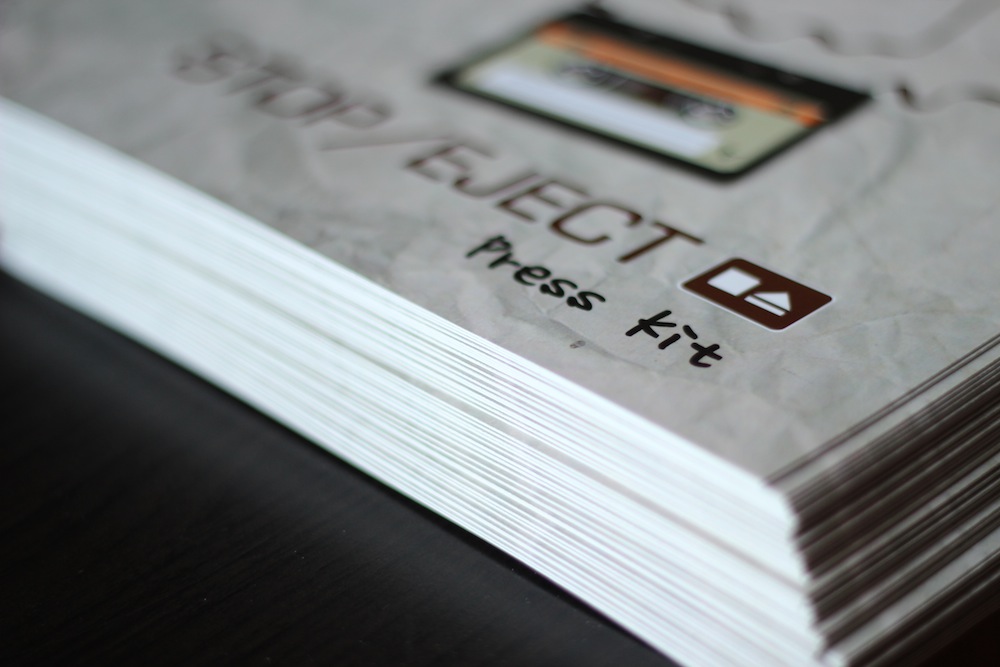
Alain Bossuyt, who won our poster design competition earlier in the year, has adapted and expanded his eye-catching design into a folder for the press kits. Although it will probably be quite a while before these kits are needed, it’s always useful to have them around just in case. You can find out more about Alain and his work (with the help of Google Translate) at leplanb.fr
Another designer, Andy Roberts, who did all the graphics for the Worcestershire Film Festival, is busy laying out the illustrated script book for those sponsors who selected the Unit Publicist reward. I’m looking forward to seeing what he comes up; I’m sure it will be a fantastic souvenir. Andy’s website is at speakersfive.co.uk

This afternoon I was interviewed by Toni McDonald on BBC Radio Hereford & Worcester. If you missed it, you can listen to it online. My part is about 2 hrs 45 mins into the programme.
And on Tuesday, Stop/Eject’s trailer will be screened at the Underwire networking event in Wolverhampton, along with the trailer for producer Sophie Black’s own short film, Ashes. Tickets can be bought online for £5.
Remember – apart from the hat, which was of course a one-off – all of the sponsor rewards mentioned above are still available. So if you want to secure yourself a copy of the DVD or Bluray, bag a ticket to the premiere or get one of the illustrated script books, head on over to stopejectmovie.com/donate and make your contribution.
This video from the last official day of production on Stop/Eject features interviews with many of the cast and crew reflecting on the shoot.
Thanks once again to Sophie Black for editing this, and indeed all of the behind-the-scenes podcasts.