Inspiration and information for filmmakers everywhere
January 14, 2013 by neiloseman

Planning VFX

A few years back I taught a module on Visual Effects for filmmaking degree students at the SAE Institute in north London. Rather than getting into the nitty gritty of how to actually do VFX, it focused instead on how directors and producers should approach and plan for them.

Here is one of the examples I gave, using a shot from my 2005 feature Soul Searcher. Joe Fallow (Ray Bullock Jnr.) sprints down the platform of Hereford station as the Hades Express departs, bearing away the villain of the piece and the kidnapped love interest.

Finished shot from Soul Searcher

Finished shot from Soul Searcher

The train was a 1:18 scale miniature and was dropped into the live action plate by means of a simple, static matte drawn in Photoshop – essentially a splitscreen effect.

But what if I, as director, had chosen a different camera angle?

Alternate angle 1

To achieve this version, the model train would have needed to have been shot against a green screen to make it appear in front of Joe and the platform. This would have complicated shooting the miniature slightly, as lighting for a green screen can be quite time-consuming.

Alternate angle 2

Here we have the opposite; now Joe is in the foreground, so he’s the one that needs to be shot against a green screen. Since he and the station are full size, the green screen would need to be much bigger and would require much more light. And remember we’re now talking about an impact on the main unit’s time on a location, rather than a small model unit in a studio, so the cost implications are magnified.

Alternate angle 3

Finally, what if I’d gone for a camera move? Now we’re into motion control rigs, to record the camera’s movement on location and applied a scaled-down version of that same move to the camera shooting the miniature. Either that or the live action plate has to be 3D-tracked in post-production, and that tracking data fed into the motion control rig that shoots the miniature. More time, more people, more equipment, more money.

This is the first step in planning for VFX: understanding how your choice of shots influences the techniques required to achieve them and therefore impacts on the schedule and the budget. Stay tuned for more on this topic, and remember you can watch Soul Searcher in full for free at neiloseman.com/soulsearcher

  •   •   •   •   •
November 4, 2012 by neiloseman

Stop/Eject Production Budget Breakdown

The one that got away was this big...

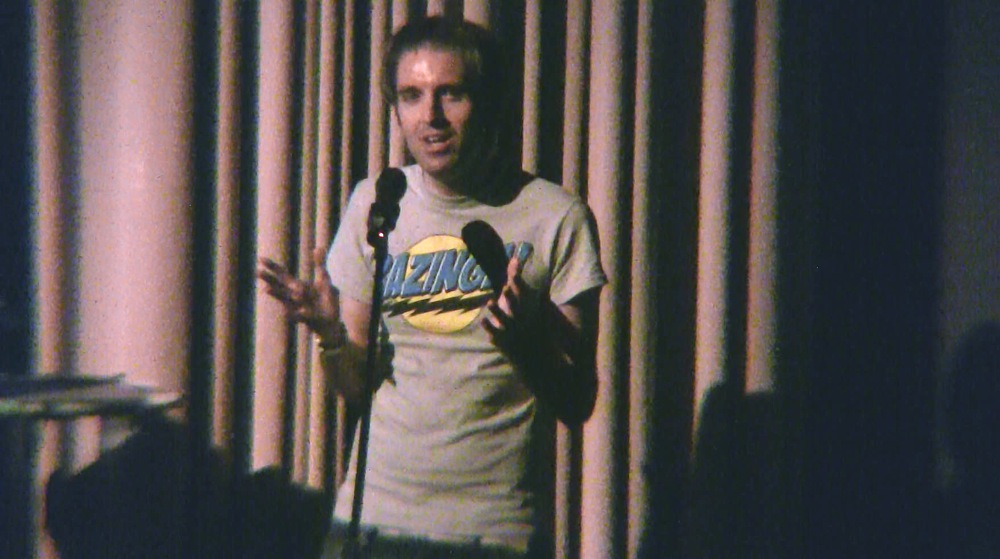
Delivering the Derby fundraising lecture in March

This post has been created and published because the total raised in Stop/Eject‘s post-production crowd-funding campaign has passed the £1,100 mark. I’m going to look at how the money you all contributed in pre-production was spent in order to get Stop/Eject in the can.

Stop/Eject was originally meant to be filmed in autumn 2011 under the auspices of another production company. Prior to the project’s postponement and subsequent resurrection as a crowd-funded movie, Sophie and I spent some money on set dressing (£149.76), costumes (£206.20) and travel (£60). We absorbed these costs personally and they’re not included in the budget.

Download the budget here as a PDF (34Kb).

(If you don’t follow my blog regularly, you may wish to check out the following resources first so you have a clearer picture of the project I’m discussing: the trailer, a blog post summarising how the shoot went, an evaluation of the shooting schedule, a playlist of behind-the-scenes videos from the shoot. Stop/Eject was a twenty page script that took five and a half days to shoot.)

As you can see, the crowdfunder.co.uk campaign was the main source of income, although a significant amount was donated after this campaign closed, in cash or via the Paypal button I had on this website for a while. Two of the three Soul Searcher lectures were failures, with few or no attendees; only the Derby lecture (done as part of a Five Lamps Film Night) took more cash than it cost me to travel there. Selling Benedict Cumberbatch’s costume from The Dark Side of the Earth’s pilot was the last part of the pre-production funding jigsaw.

Costume designer Katie Lake models one of the outfits purchased in 2011.

Costume designer Katie Lake models one of the outfits purchased in 2011.

Moving onto the expenditure, the first thing you have to do with any type of fundraising is deduct the costs involved in that fundraising process – in this case crowdfunder.co.uk’s fee and the production and postage of the rewards/perks for sponsors. These costs represent less than 8% of the budget, which I think is pretty good value.

Under pre-production you can see that more props and costumes were purchased in 2012, in addition to those we’d already bought in 2011. The total costumes outlay across the two years was £407.94, making it one of the largest costs of the production. This was due to the high number of story days in the script (eleven), each of which required a new outfit. A significant chunk of the props budget went on 400 cassette cases for the scene in the Tape Archive, while the construction materials included the wood and antique doors which the alcove set was made from. Auditions were held at Conway Hall in Holborn, London, owned by the very strange but pleasingly cheap South Place Ethical Society.

If you have a problem, if no-one else can help...

If you have a problem, if no-one else can help... (photo: Colin Smith)

Travel is the biggest expense under production and indeed for the entire project, totalling £1,049.49 if you include the van costs and the pre-production and 2011 costs, even though some of the local crew waived their mileage and parking expenses. The high travel expenditure was partly due to many key cast and crew members living at least a two hour journey away from where we were filming, but even on more local projects I’ve often found that travel can be the most expensive element (assuming you’re not paying anyone fees). Hiring the van was relatively cheap in the grand scheme of things, and was worth every penny and more. Without it we couldn’t have moved the alcove set or some of the larger props around, and squeezing all the equipment into cars would have been a nightmare.

I was very surprised how little we spent on food and catering. £248.33 fed about ten people for five and a half days. Many of the meals were cooked in advance, frozen and reheated on set or cooked from scratch on set by Katie or Debs, but we bought takeaways for everyone on at least two occasions. That figure also includes supplies like plastic beakers, disposable plates, bowls and cutlery and a thermos flask. We borrowed a fridge and a hotplate and brought our own microwave along.

When drawing up a new budget for Stop/Eject after its initial postponement, accommodation seemed like a killer cost that might prevent the film from ever being made. Research indicated that I could expect to pay around £2,000 to hire a holiday cottage large enough to house everyone for a week. As it turned out, we found Magpie, not only a brilliant location for the shop and many other settings, but also a place where some of us could stay (albeit in less than ideal conditions). The owner asked just for a token amount to cover the utilities costs, and with Sophie’s spare room also put to good use we only had to hire one hotel room for one night.

If you’re wondering where I got the public and employers’ liability insurance from, the answer is Essex Insurance Brokers. They specialise in short-term policies for low-budget filmmakers and you can get a quote and activate a policy in just a few minutes using their web form. If that sounds like a blatant advert, let me counter it by saying they were utterly unhelpful and a bit rude when I tried to get insurance for The Dark Side of the Earth‘s pilot from them.

Steve Lawson's kindly-lent jib in action outside Magpie. Photo: Paul Bednall

Steve Lawson's kindly-lent jib in action outside Magpie. Photo: Paul Bednall

Finally, a word on the stuff we didn’t spend money on. None of the cast and crew were paid, which caused lots of stress and hassle in the month leading up to the shoot as several crew and both lead actors pulled out in order to do paying work that clashed. As a result I’ve sworn never to do anything again but simple little one-day shoots unless I can afford to pay people. Feel free to remind me of this if I ever seem to be going astray. We also spent nothing on equipment hire. Most of it (camera, lenses, tripod, dolly, shoulder rig, smoke machine) was mine and the rest of it was borrowed. Thanks to Steve Lawson for loan of the jib, Colin Smith for the Glidecam and additional lights, The Rural Media Company for an additional light and some sound kit, and Ian Preece for the sound recorder.

When all the figures were totted up, I was as shocked as anyone to see we’d come in more than £400 under budget. This meant we were able to set our post-production crowd-funding target at £1,500 rather than the £2,000 we had planned. We’re now less than £400 away from that target, so please help us get there by toddling over to stopejectmovie.com and hitting Donate. And if you’re curious to know how the budget of a indie feature film breaks down, choose the £10 “Line Producer” reward and you’ll get a full and detailed analysis of Soul Searcher’s monetary ins and outs.

  •   •   •   •   •
October 26, 2011 by neiloseman

Chasing Cars

A decade ago I was editing The Beacon, my stupid Malvern-based action movie made for about £3,000. The Cardboard Chase is most people’s favourite scene, but a close second for me would have to be the car chase:

Setting up car-mounted cameras

Setting up car-mounted cameras

Pretty silly, huh?

The car chase was shot over three days, mostly on Castlemorton Common in Malvern. It was done totally guerrilla style – no permissions, no insurance, no safety briefings, no stunt co-ordinator. The red car belonged to one of the crew, whilst the blue one was purchased secondhand for the production at a cost of £120, then taxed for £90 and insured for LJ, the lead actress, to drive at £235. (This was just standard car insurance so she could drive it on the road legally, and in no way covered it for film stunt use.)

The crash was shot on private land. The white car belonged to a friend of mine who was going to scrap it anyway. Crazy cast member Si Dovey offered to double for LJ driving the blue car towards the white one (sorry, I know nothing about makes of cars so colours will have to suffice to identify them) and miraculously came out alive, despite not even wearing a seatbelt on the second take. Getting the wrecked cars towed away afterwards (which was a major hassle) cost £75, bringing the grand total for the sequence to £520.

So an action-packed car chase can be shot pretty cheaply, but of course you shouldn’t try it under any circumstances because it’s extremely dangerous and highly illegal on public land.

Additional (27/10/11): By the way, you can download the whole budget for the film, if you’re so inclined, from The Beacon page.

  •   •   •   •   •