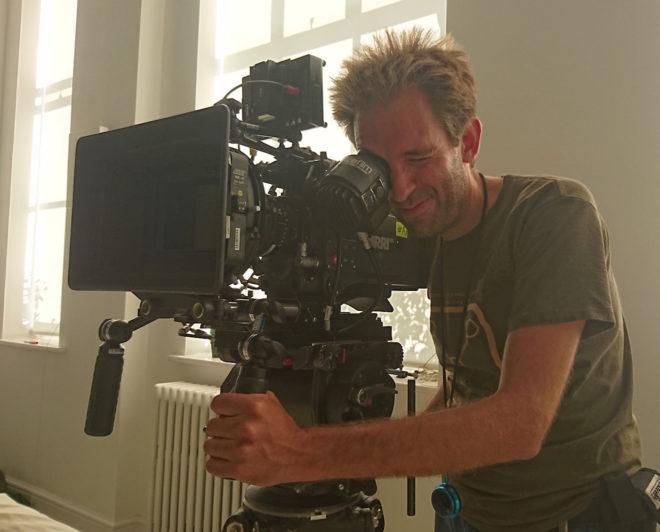
I have just embarked on producing an independent film project, something I haven’t done since Stop/Eject in 2012.
I have just been looking through some of the many blog posts I wrote evaluating different aspects of making Stop/Eject, and it’s interesting to note some of the advice I left to my future self, like this from “T Minus 2 Days” (April 2012):
In all seriousness, I don’t think I’ll ever make another film… unless there’s money to pay everyone. It just isn’t worth the stress and hassle caused by having to re-cast and re-crew when people pull out.
My new project will definitely break at least two of the lessons I claimed to have learnt when looking back on Stop/Eject in “Back to the Future” (April 2013):
Pay people.
Don’t do multiple jobs, even if you have the necessary skills.
Get the script right before you shoot.
Directors shouldn’t edit their own films.
Don’t shoot without a 1st AD, or at least a script supervisor.
… making unpaid short films will always be a messy, unpleasant business and if you’re at all rational you’d do well to avoid such shoots like the plague.
But where’s the fun in that?
I have been contemplating doing this new project for two years, so I’ve had plenty of time to weigh the pros and cons.
On the con side it will be extremely stressful and I will make no money from it.
On the pro side, as a younger man I might have claimed that it would help my career and perhaps even bring Hollywood a-knocking. Now in my early 40s with over 20 years in the business I know perfectly well that the odds of that happening are – to all intents and purposes – zero.
So why do it? The simplest answer is: for the love of it.
When I stopped writing, directing and producing in 2013 I believed that focusing on a cinematography career would make me most happy. I certainly love cinematography, and I have been lucky enough to do some amazing things over the last few years, like going to the States for 11 weeks to shoot The Little Mermaid, and working with Sir Ian McKellen on a feature adaptation of Hamlet.
But in the gaps when I’m not working, I get the itch to create something myself.
You may have noticed that I’ve missed a couple of weeks of posting on this blog, and indeed after this entry I plan to pause it altogether. However, information about my adventures will certainly be available in due course, and I’ll let you know where to look for that when the time comes.
Thanks for reading, and the best of luck following your own cinematic dreams.
I first drafted this article in 2016. For reasons that may become apparent in the coming weeks I thought it was finally time to dust it off, polish it up, and put it out there. The question is: is it right to ask people to work for free?
Before I offer my opinions, here’s why I have the right to do so. Over 22 years as a freelancer I’ve been on both ends of the deal. When I was a self-producing director I was responsible for several productions where no-one was paid, but I’ve also worked for free on many other people’s productions. This peaked in 2013 when I did over 50 unpaid days as a DP, and would happily have done more if they’d been offered to me. (Some of the fun productions I did that year included the period/action web series The First Musketeer, puppet-based music video Droplets and never-completed comedy feature The Deaths of John Smith.)
Shooting “The First Musketeer” in 2013. Photo: Jessica Ozlo
The last unpaid project I shot was Ren: The Girl with the Mark in autumn 2014. The production values of that show were so high that, once I had it on my showreel, I didn’t need to take unpaid work any more. I was getting enough paid drama work to scrape by on. I’ve written before about how giving up shooting corporate videos was another important factor in being able to transition away from unpaid work, but that’s not the focus of this post. The question is: should anyone do unpaid work in the first place?
Well, I used to do unpaid work because I enjoyed it. It allowed me to exercise a degree of creativity I usually did not get from the corporate work that typically used to pay the bills. The material I got for my showreel was also useful.
But is it enough to say, “If a person is willing to do unpaid work, then there is no harm done”? Surely no-one is forced to do unpaid work? We only do it because we’re getting something out of it, be it an IMDb credit, showreel material, or simply enjoyment.
If you banned unpaid work you would shut down a vast number of productions. The general public wouldn’t care because they’d be productions that don’t generally reach much of an audience, but you’d be denying a huge number of people the chance to be on a set.
On set for “Ren: The Girl with the Mark” in 2014
The problem is, there are far, far more people wanting to work in the industry than there are paid jobs for them to take. Geoff Boyle, NSC, FBKS said in a Cooke Optics interview that the number of people graduating from film and TV courses every year is about equal to the number of people already employed by the industry. So unless no one wants to have a career longer than a year, there are always going to be a lot of people who can’t get paid work.
So doing unpaid work can help you get the experience and contacts you need to fight your way to the paid jobs. But if my career is anything to go by, you have to do a hell of a lot of the unpaid stuff. For many people, no matter how much unpaid work they do, it will never lead to enough paid work to live on.
So perhaps all the unpaid work has become a sort of commiseration prize. You couldn’t get into the over-subscribed paid industry, but you can still work on films so long as you’ve got some other way of paying the bills. There’s the rub though: not everyone can pay the bills and still have enough free time to do an unpaid shoot. There is an argument that by making a shoot unpaid you’re discriminating against people from certain backgrounds who are less likely to have the requisite financial freedom.
Nonetheless, it is probably better that these unpaid shoots happen than not at all. The skills, confidence, creative outlet and friendships that come out of them are worthwhile. It would be lovely to wave a magic wand and make them all suddenly paid, but that isn’t going to happen. So I think unpaid shoots are justified on the basis that they allow some people at least the “commiseration prize”.
If you’re weighing up whether you should take an unpaid job or not, hopefully I’ve helped you to decide. It may help you get to the paid work, but that’s far from guaranteed. Don’t see unpaid work as something you simply have to suffer through to “pay your dues”. Only do it if you’re enjoying it.
And if you’re weighing up whether to produce a project where people will have to be unpaid, be realistic about what you’re offering them. Feed them well, make sure they have a good time, and don’t promise them things you can’t give them. I have more tips on looking after your cast and crew here.
A Micro Cinema Camera for a micro budget, on “Above the Clouds”, fittingly kept in place by a wallet
I recently read a document – I think it was published by the BFI – that gave some definitions of the different scales of feature film productions: low-, micro- and no-budget. While admitting that there is no universal agreement on figures for these categories, the document suggested the following:
No budget: up to £50,000
Micro budget: up to £250,000
Low budget: up to £1,000,000
I have shot features in all three of these categories (and at least one above them, presumably ranking as a medium-budget film) so I thought it would be interesting to look at the differences between them as experienced by the director of photography. I’m going to focus mainly on the contrast between no- and low-budget, because micro-budget is often very similar to no-budget in every respect except that the cast and crew are paid.
Prep
The biggest difference is in pre-production. On a low budget the DP tends to get a period of paid prep time equal to the number of shooting days, so if there are five weeks of filming, you get five weeks of prep beforehand. On a no-budget film you are likely to get a single day of location recces and nothing else.
Some of the things you’d do during your low-budget prep period will have to get done in your spare time on no budget: lining up your crew, watching any reference films the director suggests, making an equipment list. You won’t be conducting any camera tests (but you probably won’t get much of a choice about the camera anyway – see below). The chances are that you will not be reading and breaking down the script as carefully. You may cobble a few images together as references, but you will not be creating an extensive mood board. You might read through a shot list which the director sends you, but you won’t be giving a great deal of advance thought to shot ideas of your own. Inevitably a no-budget project will be less of a collaboration between director and DP than a low-budget one.
Your relationship with the gaffer will also be different. On a low budget you can expect to have at least one good recce of every location with them, maybe two, and lengthy meetings where you can really hash out how each scene will be lit. On no-budget films they might never be able to attend a recce, and all you get is a Zoom call where you screen-share your location photos and talk in general terms about the look. Lighting has to be much more improvised on the day.
Crew
No-budget vs. medium-budget camera dept.
This brings us onto crew. Most no-budget producers plan for a single camera assistant and a one-person lighting team, and don’t really think about who is going to back up the footage. On a low budget you can expect to get a 1st AC, 2nd AC, camera trainee, data wrangler, grip, gaffer, best boy or girl, and spark, though you may have to push the line producer for one or two of these. There is usually some allowance for spark dailies too when bigger scenes are shot.
When we wrap for the day on a low-budget film, I have no problem walking straight off set because I know there is a full camera and lighting crew to take care of packing away the gear. I can spend what remains of my energy reviewing the dailies, meeting with the director and planning for upcoming scenes. On a micro-budget film I will help pack up because the small crew needs all the hands it can get, but then I probably won’t get to the other stuff. So I might not spot the things in the rushes that I could improve on, or be as well prepared for the next day as I could have been.
Equipment
Equipment, of course, is hugely budget-dependent. Many no-budget films are unable to hire anything at all, relying on gear owned by the director and/or DP, and other bits begged, borrowed or scrounged. Emphasis is often placed on having a decent camera, with everything else neglected – cheap lenses, no filters, few of the accessories that make the camera dept run smoothly, and very limited lighting.
Getting kit around is often very challenging for no-budget producers. Just hiring a van and finding someone to drive it are big deals when you have no money. Sending someone to a rental house in London to collect the gear – even if renting can be afforded – is a logistical headache which a low-budget production doesn’t think twice about. This is why gear owned by crew members is so attractive to no-budget producers, because they don’t have to worry about how it gets to set, or the insurance.
On a low-budget production you will draw up your camera list maybe a couple of weeks into prep, with the assistance of the 1st AC, and the gaffer will handle the lighting list. Usually the first drafts of these lists will prove too expensive when the line producer has got the quotes back from the rental house, and you’ll have to cut a few things, but you’ll get most of what you wanted.
Seven years ago, I transitioned to making a living purely as a director of photography on drama. I’ve since added writing and making an online course to my repertoire, but drama is still paying most of the bills. If you’re doing bits of what you love around a day job in an office, or freelance corporate videos, being able to leave those things behind you and pay the rent with stuff you enjoy doing can seem like the Holy Grail. So below I’m going to list the three things which I think, in combination, allowed me to make that transition.
1. Quantity of experience: putting in the hard graft
When I stopped doing corporates in 2014, I had been in the industry for a decade and a half. I had made two no-budget features off my own back, and photographed half a dozen other no-budget features and countless shorts, as well as the rent-paying work on participatory films, training videos and web video content. (Whether this kind of stuff really counts as being in “the industry” is debatable, but that’s a subject for another post.)
When I apply for a job I always start by introducing myself as a DP with x years of experience, because I think it speaks volumes about my passion and commitment, and proves that I must have talent and be pleasant to work with, if I’ve been able to keep doing it for so long.
The number of IMDb credits I had is also important. I had almost 50 at the time I made the jump, over half of those as a cinematographer.
How many years of experience and how many IMDb credits you need before you can make the jump could be more or fewer than I needed, depending on the other two factors on this list and the quality of the contacts you make. (I haven’t included contacts as a separate item on this list because it comes naturally out of the jobs you do. Artificially generating contacts, for example by attending networking events, does not lead to jobs or career progression, at least not in my experience.)
2. Quality of experience: getting that killer production on your reel
What was it about these two projects which enabled them to do for my career what fifteen years’ worth of other no-budget projects couldn’t? Production value. Simple as that. They looked like “real” TV or film, and not in the way that your friends and family will look at anything you shot and go, “Wow, that looks like a real film!” They looked – even to people in the industry – like productions that had serious money behind them. And people are lazy when they’re looking at showreels. If they’re hiring for a job that has serious money behind it, they want to see material on your showreel that appears to have serious money behind it.
Most scripts that you will read for shorts or no-budget features will be written to make them achievable with little or no money. Often they will be set mainly in one house (the director’s, or a bland-looking Airbnb) in the present day, with no production design and only three or four characters. If the script is well written, and you’re an actor, then working on such a project could be great for your career. For most crew members, it’s a waste of time.
For DPs in particular, quality production design is incredibly important on your showreel. Most people who watch your reel won’t really be able to separate the cinematography from the overall look of the piece – the art, the costumes, the make-up, the locations – so getting showreel material that is visually stunning from all departments is the only way to kick your career up to the next level.
3. The Fear: making a living at it because you have to
Before I stopped doing corporates, I thought I was making every effort to get work as a drama DP. But I was wrong. As soon as I gave up the safety net of corporates, my whole attitude to drama work changed. Suddenly I had to do it, and I had to get paid reasonably well for it, otherwise I wouldn’t be able to pay my rent. It made me drive a harder bargain when negotiating my fee, it made me turn down unpaid projects and as a consequence it changed the way producers and directors saw me, and the kinds of projects they would consider me for.
Do not underestimate the value of The Fear. It’s not a magic wand, and you do need to have the experience and the killer production(s) on your reel before you make the jump, but The Fear will give you wings and help you get to the other side.
Today is the 20th anniversary of my first ever blog post. On March 4th, 2001 I wrote the inaugural “journal” entry on the-beacon.com, a website about a terrible no-budget action move I was writing, directing, producing, etc, etc. (clip below). My blog continued across two other project-specific websites for the next few years before they all got integrated into neiloseman.com in 2011.
There is a history of my blogging exploits in my 1,000th post from January 2015, and if you’re interested in blogging yourself, I shared some tips not long afterwards. (The post you’re reading now is the 1,261st, in the unlikely event that you care.) If you visit the Blog Archive page you can delve back into my old posts, either by month and year, by production or by topic.
It is strange to think how different the world was when I wrote that first post. The Twin Towers were still standing. Buying a take-away latte was swanky and cosmopolitan. Ordering something remotely meant getting a catalogue, then filling in a form and posting off a cheque and waiting up to 28 days. Your choice of filming formats came down to celluloid or standard definition DV. Everyone still took their holiday snaps on 35mm. The internet was all dial-up. VHS was still the dominant home video format, though DVD was on the rise. “Netflix” was probably something fishermen did. Superhero movies were rare. Flat screens and touch-screens were a sci-fi dream. I for one didn’t own a mobile phone. There was no social media. The term “blog” had been coined but wasn’t widely known. And the idea of a pandemic shutting down the world for a year, keeping us from our loved ones and making us all mask up in Tesco’s was utterly inconceivable.
Blogging has certainly been useful to me. It helps me to organise my thoughts, and I frequently check my old posts to remind myself how I did something so that I can repeat the trick… or avoid making the same mistake again! It’s even got me work, writing for RedShark News since 2017 – a website edited by none other than Simon Wyndham, fight choreographer for that blog-starting film of mine, The Beacon. That in turn has led to me writing for British Cinematographer magazine since the end of last year.
It’s quite fitting that now, as back in March 2001, I am prepping for a feature film, and sharing that process on this blog (albeit in vague terms, as the project hasn’t been officially announced yet). The budget may be a tad bigger, and I may only be DPing rather than doing pretty much all the major jobs myself, but some things haven’t changed; in my second ever post, I complained about my main location being closed due to a disease outbreak…
This year hasn’t been great for anyone. It certainly hasn’t for me. Even as I’m writing this I’m hearing the news that, in a staggeringly foreseeable U-turn, the Christmas bubble rules have been severely restricted. So how to wrap up this stinker of a year?
I considered making this article about the pandemic’s impact on the film and TV industries and speculating about which changes might be permanent. But who needs more doom and gloom? Not me.
Instead, here are six positive things that I accomplished this year:
We shot the final block of War of the Worlds: The Attack in February/March, and I was recently shown a top-secret trailer which is very exciting. There is plenty of post work still to do on this modern-day reimagining of the H.G. Wells classic, but hopefully it will see the light of day in a year or so.
After a couple of lax years, I got back to blogging regularly. This site now has a staggering 1,250 posts!
I completed and released my first online course, Cinematic Lighting, which has proven very popular. It currently has over 1,000 students and a star rating which has consistently hovered around 4.5 out of 5.
I made a zoetrope and shot several 35mm timelapses and animations for it, which was a nice lockdown project. Even though the animations didn’t come out that well they were fun to do, and the zoetrope itself is just a cool object to keep on the shelf.
I wrote my first article for British Cinematographer, the official magazine of the BSC, which will be published on January 15th. In the process I got to interview (albeit by email) several DPs I’ve admired for a while including David Higgs BSC, Colin Watkinson ASC, BSC and Benedict Spence.
The lockdown gave me the time to update my showreel. Who knows if I’ll ever work again as a DP, but if not, at least I can look back with pride at some of the images I’ve captured over the years.
Despite the restrictions, I hope all my readers manage to find some joy, love and comfort over the festive period. And if not, just consume a lot of mulled wine and chocolate; it’s the next best thing.
In a tradition I’ve neglected for a few years, I’ll leave you with a rundown of my ten favourite blog posts from 2020.
“5 Ways to Fake Firelight” – a range of ways to simulate the dynamics of flames, from the low-tech to the cutting edge
“A Post-lockdown Trip to the Cinema” – an account of the projection sacrilege commited against a classic movie in my first fleapit trip of the Covid era
“Exposure” (four-part series) – in-depth explanations of aperture, ND filters, shutter angles and ISO
Recently I discovered Tailslate, a podcast by DPs Ed Moore, BSC and Benedict Spence. The second episode focuses on equipment, and the two men discuss the pros and cons of having your own gear. I have some pretty strong feelings on this myself, so I thought I’d share them here.
I owned equipment for the first 17 years of my career. I was fortunate that at the time I first went freelance (late 1999) I had a small inheritance which I was able to invest in the wonderful new Mini-DV/Firewire technology that had recently emerged. I bought my first semi-professional camera, a Canon XM-1, along with a decent Manfrotto 501/520 tripod, a basic tracking dolly, sound gear, and for editing a PowerMac G4, Mini-DV/VHS deck and a pair of Yamaha MSP5 active nearfield speakers. (The speakers are the only things I still have, and I’m using them as I write, 20 years on. They are the best thing I’ve ever bought. Nothing else has ever served me for so long, so frequently and so reliably.)
Shooting on my Canon XL1-S back in 2003
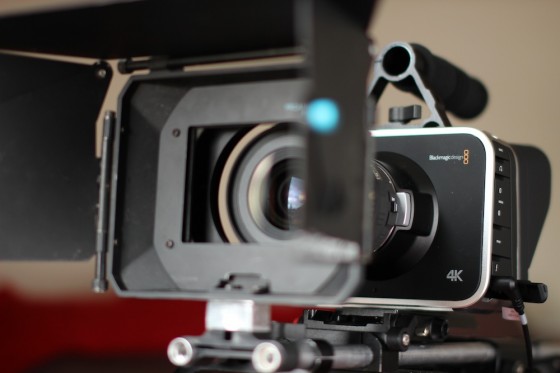
Apart from the speakers, everything else got replaced every few years as it fell into obsolescence or simply packed up. The XM-1 was replaced with an XL-1S, then I moved onto HDV with a Sony A1, then onto DSLRs with a Canon 600D/T3i, then a Blackmagic Production Camera, which turned out to be my last camera.
Immediately you can see one of the key problems with owning equipment: the fast pace of technological progression and the need to upgrade regularly to keep up. But owning equipment had disadvantages even before the fast-paced digital revolution. In a fascinating Clubhouse Conversation from the American Society of Cinematographers, M. David Mullen, ASC recounts his own experience with gear:
I ended up never owning a camera package. Because of that, I shot mostly 35mm in my early days… People I know who bought a [super]-16 camera, they ended up shooting [super]-16 films for the next ten years or so. So you can get tied to your own equipment.
But there are benefits to owning kit, of course. Corporate clients expect you to provide the gear yourself or to hire it in without any fuss. Clearly the former allows you to make more money from these jobs.
My last camera, the Blackmagic Production Camera 4K
For creative jobs, things aren’t so cut and dried. Owning a camera will certainly get you more work of a certain type. That type is unpaid and low-paid. If you expect to charge a hire fee on your gear, forget it. The type of productions that want you to have your own gear is the type that can’t afford to hire, either from you or from a facilities house. They’ll expect you to come along and bring your gear for free.
We all need to do this type of work at the start of our careers, which is why owning equipment is great at that point. But ultimately I sold my Blackmagic in 2017 and didn’t replace it because I no longer wanted that type of work.
I think things are a little different if you can afford to own a high-end camera. I’m pretty certain that I’ve lost jobs in the past, despite being a better cinematographer than the successful applicant, because they had a Red and I only had a DSLR or a Blackmagic. If you can afford an Alexa then you might well be able to get quality jobs off the back of it, but most of us aren’t in that position!
A camera that I could never afford to buy
The best thing about not owning gear is that you’re free to select the best equipment to tell each particular story (budget and production mandates notwithstanding). Each production is different, and there is no single camera or lens set that is best for all of them. Resolution, high frame rates, colour science, contrast, sharpness, weight, size, cost – all these factors and more influence a DP’s choice, and it’s a critical choice to make. If you’re pushing your own camera or lenses to the production just so you can recoup some of the cash you spent to buy them, you’re doing the story a disservice.
In conclusion, whether or not to invest equipment depends on your budget and the type of work you want to do. But if you’re shooting a drama, even if you own equipment, you should be asking yourself what camera and lenses will best set the tone and tell this story.
20 years ago today, I was on TV. I had my fifteen seconds of fame on a slightly obscure BBC2 Sunday morning show in the late nineties, primarily watched by stoned students. Yes, I was a King of the Show on Lee & Herring’s This Morning with Richard Not Judy.
https://youtu.be/9LXCjx97_-o?t=1084
The year was 1999. All anyone could talk about was The Phantom Menace and the Y2K bug. I had a rubbish beard that looked like the strap of a helmet. (Thank God beards have gone out of fashion, eh?) And I worked as an admin assistant for the Ministry of Agriculture, Fisheries and Food in Worcester.
On Sunday mornings (or sometimes Friday teatimes, for the edited repeat) I would turn on my comically huge cathode ray tube TV, receiving its hilariously archaic analogue UHF signals, and watch Stewart Lee and Richard Herring squeeze as many blasphemies and euphemisms as possible into what was most definitely a pre-watershed slot.
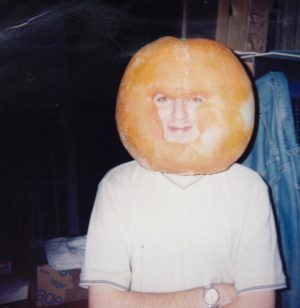
Trying on the Curious Orange head
Broadcast live, TMWRNJ (“TMWRNJ!“) was a surreal, sketch-packed affair loosely hung on the format of a spoof daytime show. Memorable characters included the Curious Orange, Simon Quinlank and his weak lemon drink, Jesus (“Aaaaah!”/”No, not ‘aaaah’!”) and an inexplicably jelly-obsessed Rod Hull.
Each week Lee and Herring would crown someone “King of the Show”, a largely ceremonial office with no real power. Usually it was a random member of the studio audience, but in an episode which saw Rich taking a shady product placement deal from Ian Cress of the Cress Marketing Board, a competition was announced. The next week’s King of the Show would be whoever could make the best advert for cress.
Immediately I picked up my amusingly quaint landline and tediously placed a call to my friend Matt Hodges by pressing a sequence of numbers associated with his own, equally quaint landline, a sequence of numbers I had to remember using my actual brain or possibly pen and paper. Do you remember the nineties, Stew? Weren’t they hilarious? Ahahahahahahaha!
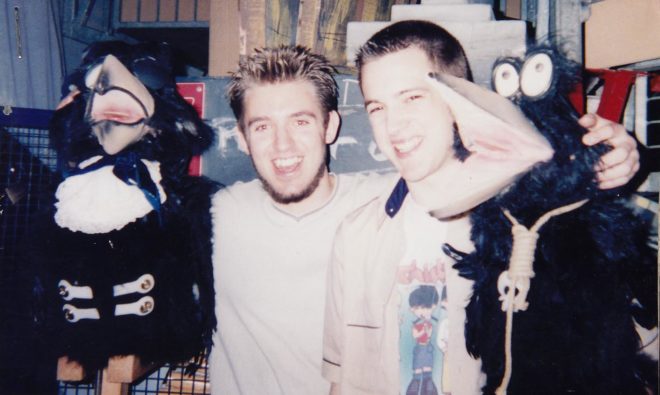
Matt and I backstage with the Curious Alien, TV’s Emma Kennedy and Darth Maul
Matt was one of the poor unfortunates who regularly got roped into appearing in my amateur filmmaking efforts with my Video-8 camcorder. A massive Python fan, Matt’s influence had ensured that I churned out many surreal comedies in those halcyon days.
We quickly came up with four ideas for cress commercials, each one spoofing a different type of ad: McDonald’s, army recruitment, charity appeal and gay exchange. Sadly I no longer have copies of the latter three. I recall the army one involved a punnet of cress with a cardboard machine gun glued to it, abseiling down ropes to a bombastic voiceover (“Be the best!”). The charity appeal, shot in the sandpit of our local primary school, featured a cardboard cut-out of Mark Hamill pathetically farming in a desert. (“If you give Mark a punnet of cress, he can feed his family for a day. But give him the means to grow his own cress…”) The less said about the gay exchange one the better.
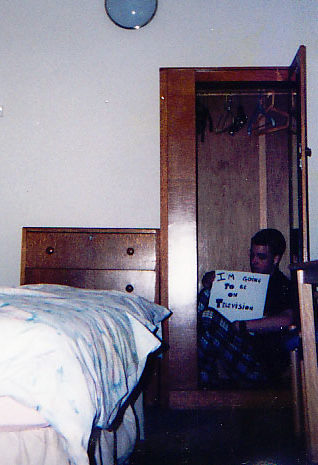
Matt contemplates his upcoming moment of fame in the glamorous BBC B&B. “I’m going to be on television,” reads the sign.
We sent off the four ads on a VHS tape (imagine Netflix but… oh, never mind) and crossed our fingers.
A few days later, I was sitting at my desk at MAFF, probably trying to skive proper work by writing macros in Excel, when the phone rang. I couldn’t quite believe it when the voice at the other end told me he was calling from TMWRNJ (“TMWRNJ!“), they loved our ads, we were going to be on the show on Sunday, travel and accommodation all paid by the BBC.
That Saturday, Matt and I caught the train to London. Even the decidedly-unglamorous Bayswater B&B we were booked into couldn’t quell our ex-like-a-bird’s-eggs-citement. We spent most of the evening trying to come up with witty proclamations to make when we were crowned. “I’d like to see Jamie open a passage with his magic torch,” was the punchline, but I forget the set-up.
The following morning a taxi dropped us at Riverside Studios in Hammersmith, where we felt very important muscling past the queueing audience and into the backstage area. I remember awkwardly hanging around Stew and Rich, agog at meeting actual famous people in real life.
Awkward
The show itself seemed to go by very quickly, and we didn’t get chance to deliver our hilarious Jamie gag. But afterwards we got to hang out and properly meet the cast, having lunch with them in the studio canteen.
Less awkward
Then we were given a tour of the studio and allowed to sit and watch – just the two of us, the rest of the audience having departed – while sketches for the next week’s episode were pre-recorded. These included an instalment of Histor & Pliny, a spoof children’s series featuring a pair of time-travelling crows puppeteered by Stew and Rich, whose dialogue on set that day was considerably bluer than what would ultimately be broadcast. (“Eat the fucking eggs, you cunt!”)
I vividly recall TV’s Emma Kennedy walking past us, dressed in some typically outlandish costume, remarking that she might have just farted a baked bean out of her bumhole. What a great day!
With TV’s Emma Kennedy
Later that year, Matt and I bumped into Stewart Lee on the platform of Worcester Foregate Street station while on our way to the Reading Festival. I asked Stew if we could have a regular slot on the next series of TMWRNJ (“TMWRNJ!“) and he replied in his usual lugubrious tone, “Firstly, we don’t know if we’re going to get another series. And secondly, no.”
We may not have become the next Adam & Joe, but my brief moment in the spotlight did have an impact on my career. It was only when I told the Rural Media Company’s head of production that I had appeared on TV because of a spoof advert I’d made that she agreed to look at my amateur showreel. She saw some potential and started hiring me, kicking off two decades of freelancing.
Egg egg egg-egg egg egg egg-egg-egg egg.
I’ll leave you with Rich’s own thoughts from his blog at the time…
Thanks to everyone who sent in cress photos etc. The lads from Malvern were actually two of the nicest people we’ve had as king and to be honest the clip we showed was not the best thing they sent us, but it was the shortest and most TV friendly. They did a great Gay Exchange parody which was just a bit too rude. We were also very impressed by the editing and choice of shots. Those 2 guys will go far, but I’ve already forgotten their names! Sorry!
We’ve all heard the shocking statistics about the tiny proportion of DPs who are women. So when you watch film and TV, sadly, you might assume that you’re always watching the cinematography of a man. Today’s post encourages you to think again.
To mark International Women’s Day, I’m highlighting the work of seven female DPs who are lensing mainstream productions, and whose cinematography you’ve probably seen. All of these women are great role models for aspiring DPs.
Sharon Calahan, ASC
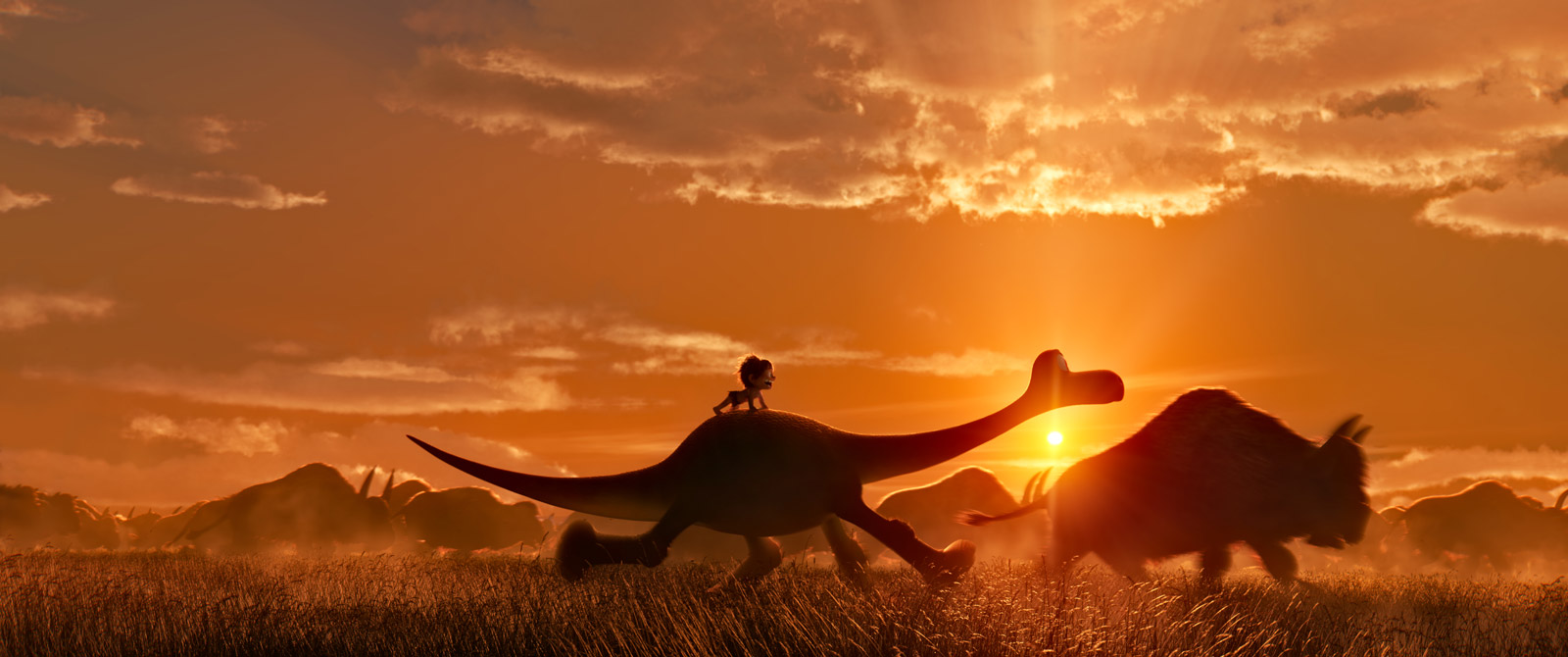
Raised in the USA’s Pacific Northwest, Calahan studied advertising art, illustration, and graphic design. Her first job was at a TV station, where she worked as an art director but also got involved in lighting sets. She joined Pixar just as the company was starting out, becoming the lighting supervisor on Toy Story, before graduating to director of photography for A Bug’s Life, Toy Story 2 and Finding Nemo. In 2014, Calahan became the first DP working purely in CGI to be admitted into the American Society of Cinematographers. By this time, her extensive experience of studying and mimicking natural light had led her to take up landscape painting, and for Pixar’s next release, The Good Dinosaur, director Peter Sohn used Calahan’s landscapes as the visual template for the entire look.
Anna Foerster, ASC
A German cinematographer and director, Foerster is perhaps best known for her collaborations with her fellow countryman Roland Emmerich. After working as an FX unit DP for him on Independence Day and Godzilla (1998), then second unit DP and director on Tomorrow and 10,000 BC, she graduated to first unit DP on Anonymous and White House Down. Anonymous is an independent historical thriller suggesting Shakespeare’s plays were actually written by Lord Oxford, while White House Down is of course an all-out action thriller. On the latter, Foerster came up with a number of clever tricks to hide the lighting units from the wide lenses she favoured. She also worked hard to sell the sound-stages that most of the movie was shot on as real day-lit interior and exterior locations. Foerster’s directing credits include Underworld: Blood Wars, and episodes of Outlander and Criminal Minds.
Sue Gibson, BSC
Derbyshire-born Gibson developed an interest in photography at the age of fourteen. She studied at Newport College of Art, then at the National Film and Television School (NFTS), graduating in 1981. After starting out in commercials, she shot her first feature, Hear My Song, in 1989, which won The Evening Standard Award for Technical Achievement. Her other feature credits include Mrs Dalloway and – in a very different genre – second unit on Alien vs. Predator. She worked extensively in British TV, particularly murder mystery, lensing episodes of Poirot, Marple, Lewis, Spooks and The Forsyte Saga.In 1992 Gibson became the first female member of the British Society of Cinematographers, and later served as its president between 2008-2010. She passed away last summer, and was posthumously awarded The Philips Vari-Lite Award for Drama at The Knight of Illuminations Awards for two of her Death in Paradise episodes, her final work.
Ellen Kuras, ASC
Born in New Jersey, Kuras studied photography and 8mm filmmaking after university, with a view to becoming a documentary filmmaker. After lensing the award-winning short doc Samsara: Death and Rebirth in Cambodia, her career diversified to eventually include such big-budget features as Blow and Analyze That. Kuras has also collaborated twice with French director Michel Gondry. In Eternal Sunshine of the Spotless Mind, she used her documentary background to put the realism into Gondry’s magical realism, with handheld cameras and naturalistic lighting. But she brought the magic too; for example, using a camera-mounted spotlight for a tunnel vision effect during the sequence in which Jim Carey and Kate Winslet try to hide within Carey’s memory. Although more classically composed, 2008’s Be Kind Rewind was similarly creative, featuring low-fi VHS recreations of big movies, and a memorable montage captured in a single developing shot. Kuras’ many awards include an unprecedented hat-trick of Best Dramatic Cinematography gongs at Sundance, and an Oscar nomination for The Betrayal – Nerakhoon, a documentary feature she directed.
Suzie Lavelle, ISC
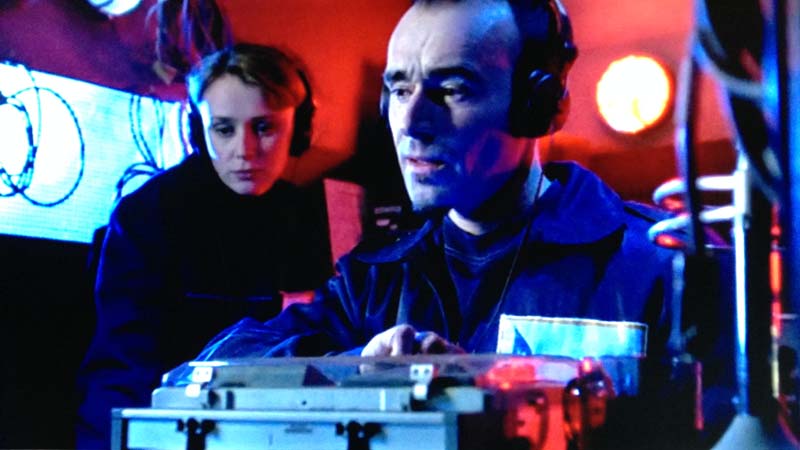
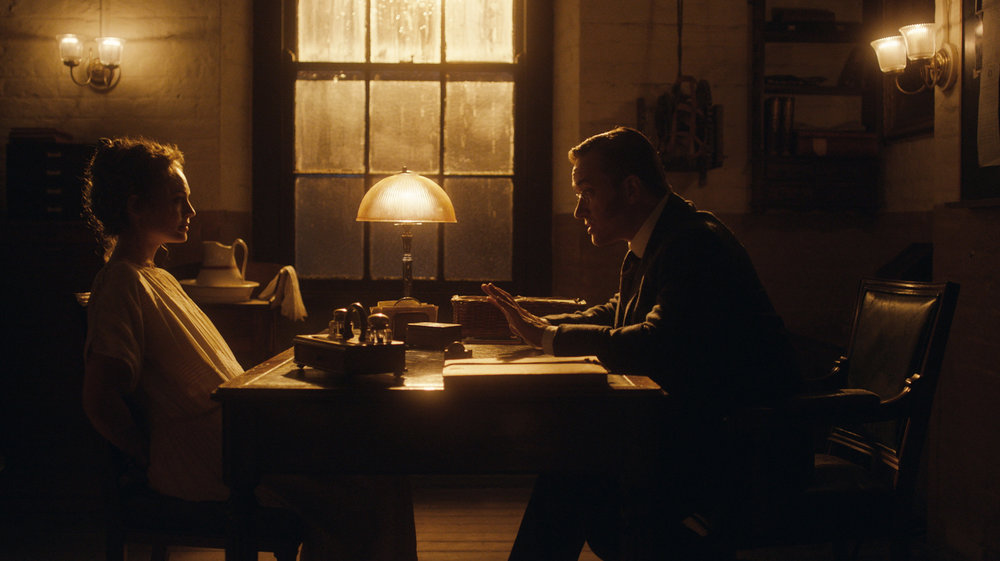
Lavelle is an Irish DP who studied at NFTS before entering the TV industry as an AC. Her sumptuous, colourful and contrasty lighting has featured in some of the BBC’s most high-profile TV dramas. “The Abominable Bride”, her Sherlock outing, was nominated for a Primetime Emmy in 2016. “Cold War”, her contribution to Doctor Who‘s 2013 season, is one of the best-looking and most atmospheric episodes the venerable series has ever produced. And, along with James Mather, she swept away the dull photography of Ripper Street‘s first two seasons and established the much moodier style for season three that would continue for the rest of the show’s run. Lavelle’s other TV credits include Vikings, The Living and the Dead, Endeavour and Jekyll & Hyde, and she photographed the award-winning features One Hundred Mornings and The Other Side of Sleep.
Urszula Pontikos, BSC
Hailing from Gdynia in Poland, Pontikos has photographed a number of indie features, including Weekend, Second Coming and Lilting. The latter won her the Cinematography Award for World Cinema (Dramatic) at Sundance 2014, but she’s also shot some of the most interesting British TV shows of recent years. Despite a self-confessed nervousness about the scale of the show’s night exteriors, Pontikos delivered confident, slick and atmospheric cinematography for BBC 1’s Cold War spy thriller The Game in 2014. The following year she photographed the first two episodes of Humans, setting the style for this hugely popular C4 sci-fi drama. She employed unusual eye-lights, symmetrical composition and linear camera moves for scenes featuring the robotic “synths”. Her other TV credits include the crime dramas Glue for E4 and Marcella for ITV.
Mandy Walker, ACS, ASC
Born and raised in Melbourne, Walker got her first industry contacts from a short film course she took after graduation. Persistently calling these contacts yielded some unpaid work and her first feature at the age of just 25. More Aussie features followed, until a Chanel Nº 5 commercial with Baz Luhrmann and Nicole Kidman propelled Walker into the big-time with an epic drama, entitled – of course – Australia. Since then, Walker has lensed the likes of Natalie Portman (Jane Got a Gun) and Robert Redford (Truth). Her latest release is Hidden Figures, an inspiring and important drama about African-American women who worked on Nasa’s space programme. Walker used subtle techniques to enhance the themes of racism and sexism, like placing the camera below the heroine’s eye-lines so that they were always looking up at the white men. Hidden Figures is in cinemas across the UK right now, and I highly recommend it.
That’s all for now, but some other great DPs to check out are Charlotte Bruus Christensen (The Girl on the Train), Uta Briesewitz, ASC (The Wire) and Cynthia Pusheck, ASC (Magnolia).
2016 has not been the best of years, at least not according to the sinister algorithms that run my Facebook feed. The year has been kinder to me than it has been to seventies and eighties celebrities, however.
Ren: The Girl with the Mark, the short-form fantasy action series I photographed in 2014 and spent parts of 2015 postproduction supervising on, met with great success in 2016. The series was released on YouTube in March, and episode one has to date had over 100,000 views, with overwhelmingly positive feedback.
Alongside the series, I released Lensing Ren, a set of companion videos that broke down the lighting design and other cinematography choices in each episode. I thought it would be interesting to make frame grabs part of the lighting diagrams, so you can really see the effect of each lamp. It’s an idea that I’ve carried through to my Instagram feed, so if you’re the kind of person who often looks at a shot and wonders, “How was that lit?” then be sure to follow me and find out.
We’ve lost track of how many awards nominations Ren: The Girl with the Mark has received at festivals this year, but the tally of wins stands at a dozen, including four Best Series and Grand Jury Awards. And although a trio of nominations for Best Cinematography didn’t yield me a win, Ren has already been selected for several 2017 festivals, so there will be plenty more chances!
2016 did supply me with my first ever Best Cinematography award though, courtesy of the Festigious International Film Festival and Sophie Black’s short film Night Owls. This was one of three awards which Night Owls collected this year. And two other shorts I photographed have scooped awards during the year: race drama Exile Incessant, and supernatural drama Crossing Paths. Congratulations to everyone who helped make all these projects such a success.
As regards new productions, my 2016 was dominated by two feature films: family fantasy The Little Mermaid, and comedy road movie Above the Clouds. You can already read my daily blogs about the latter film, and I hope to publish plenty of content about the cinematography of the former film when it’s released next year.
The Little Mermaid was the perfect follow-up to last year’s Heretiks, going from my first six-figure-budget film to my first seven-figure-budget film. It also gave me the opportunity to light and shoot Oscar-winner and Hollywood royalty Shirley MacLaine, film in an incredible 1930s circus, go swimming with an Alexa, and gate-crash Baywatch‘s wrap party. There were tremendous challenges and lessons to be learnt along the way, and I came out stronger, far more experienced and eagerly anticipating the release of what should be a really magical family film.
I also got to work on my first eight-figure-budget movie this summer, although I only did two days as pick-ups DP, recreating the lighting and camerawork of the extremely experienced cinematographer Javier Aguirresarobe, which was very instructional. Again, I hope to post a blog about that when The Etruscan Smile is released.
Meanwhile I have continued, as ever, to both acquire and share knowledge of the craft of cinematography. For example, in September I attended Cinefest, Bristol’s International Festival of Cinematography, while the same month I published a series of posts covering all the main types of lighting unit currently available. I learnt quite a bit while researching those posts, and hopefully readers got a lot out of them too.
And in that vein I’ll be releasing a new YouTube programme in January 2017. Lighting I Like is a 6 x 3 minutes series that aims to raise awareness of the contribution which cinematography makes to a film or TV show, while educating aspiring DPs about the hows and whys of lighting design. Each week I’ll look at a scene I’ve picked from a major movie or series, explaining what makes the lighting so good and how I think it was achieved. Simple as that!
Lighting I Like will be released on Wednesdays starting January 4th, with the first episode discussing a scene from the Netflix series Daredevil. Be sure to subscribe to my YouTube channel so you don’t miss it.
And with that I will sign off for 2016. Enjoy your new year celebrations, and I wish you all the very best in 2017.