Undisclosed Project: Experimentation

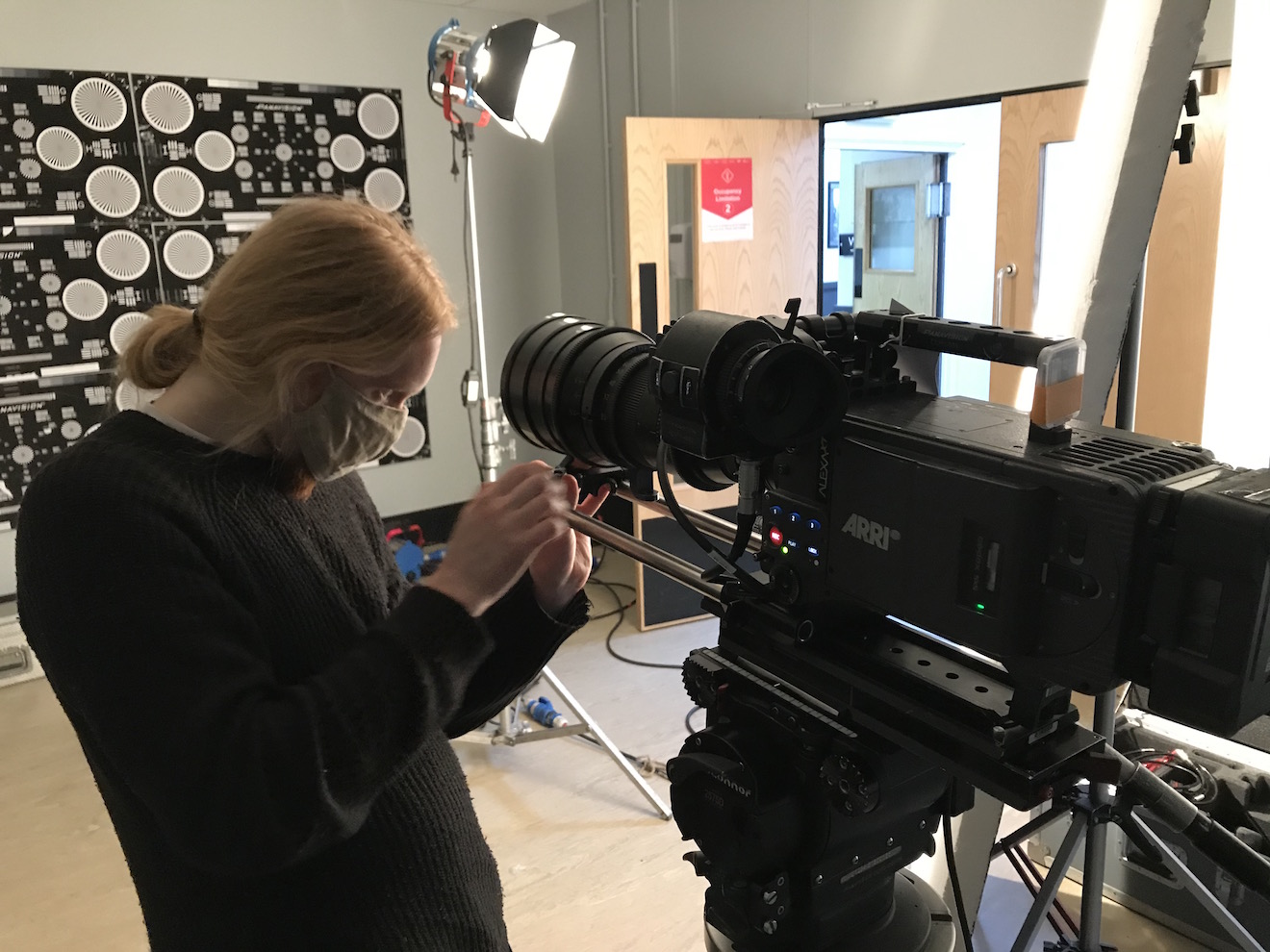
The main event of last week’s prep was a test at Panavision of the Arri Alexa XT, Red Gemini and Sony F55, along with Cooke Panchro, Cooke Varotal, Zeiss Superspeed and Angenieux glass. More on that below, along with footage.

The week started with Zoom meetings with the costume designer, the make-up artist, potential fight choeographers and a theatrical lighting designer. The latter is handling a number of scenes which take place on a stage, which is a new and exciting collaboration for me. I met with her at the location the next day, along with the gaffer and best boy. After discussing the stage scenes and what extra sources we might need – even as some of them were starting to be rigged – I left the lighting designer to it. The rest of us then toured the various rooms of the location, with the best boy making notes and lighting plans on his tablet as the gaffer and I discussed them. They also took measurements and worked out what distro they would need, delivering a lighting kit list to production the next day.

Meanwhile, at the request of the producer, I began a shot list, beginning with two logistically complex scenes. Despite all the recces so far, I’ve not thought about shots as much as you might think, except where they are specified in the script or where they jumped out at me when viewing the location. I expect that much of the shot planning will be done during the rehearsals, using Artemis Pro. That’s much better and easier than sitting at home trying to imagine things, but it’s useful for other departments to be able to see a shot list as early as possible.

So, the camera tests. I knew all along that I wanted to test multiple cameras and lenses to find the right ones for this project, a practice that is common on features but which, for one reason and another, I’ve never had a proper chance to do before. So I was very excited to spend Wednesday at Panavision, not far from my old stomping ground in Perivale, playing around with expensive equipment.

Specifically we had: an Arri Alexa – a camera I’m very familiar with, and my gut instinct for shooting this project on; a Sony F55 – which I was curious to test because it was used to shoot the beautiful Outlander series; and a Red Gemini – because I haven’t used a Red in years and I wanted to check I wasn’t missing out on something awesome.

For lenses we had: a set of Cooke Panchros – again a gut instinct (I’ve never used them, but from what I’ve read they seemed to fit); a set of Zeiss Superspeeds – selected after reviewing my 2017 test footage from Arri Rental; a couple of Cooke Varotal zooms, and the equivalents by the ever-reliable Angenieux. Other than the Angenieux we used on the B-camera for The Little Mermaid (which I don’t think we ever zoomed during a take), I’ve not used cinema zooms before, but I want the old-fashioned look for this project.

Here are the edited highlights from the tests…

You’ll notice that the Sony F55 disappears from the video quite early on. This is because, although I quite liked the camera on the day, as soon as I looked at the images side by side I could see that the Sony was significantly softer than the other two.

So it was down to the Alexa vs. the Gemini, and the Cookes vs. the Superspeeds. I spent most of Thursday and all of Friday morning playing with the footage in DaVinci Resolve, trying to decide between these two pairs of very close contenders. I tried various LUTs, did some rough grading (very badly, because I’m not a colourist), tested how far I could brighten the footage before it broke down, and examined flares and bokeh obsessively.

Ultimately I chose the Cooke Panchros because (a) they have a beautiful and very natural-looking flare pattern, (b) the bokeh has a slight glow to it which I like, (c) the bokeh remains a nice shape when stopped down, unlike the Superspeeds’, which goes a bit geometric, (d) they seem sharper than the Superspeeds at the edges of frame when wide open, and (e) more lengths are available.

As for the zoom lenses (not included in the video), the Cooke and the Angenieux were very similar indeed. I chose the former because it focuses a little closer and the bokeh again has that nice glow.

I came very close to picking the Gemini as my camera. I think you’d have to say, objectively, it produces a better image than the Alexa, heretical as that may sound. The colours seem more realistic (although we didn’t shoot a colour chart, which was a major oversight) and it grades extremely well. But…

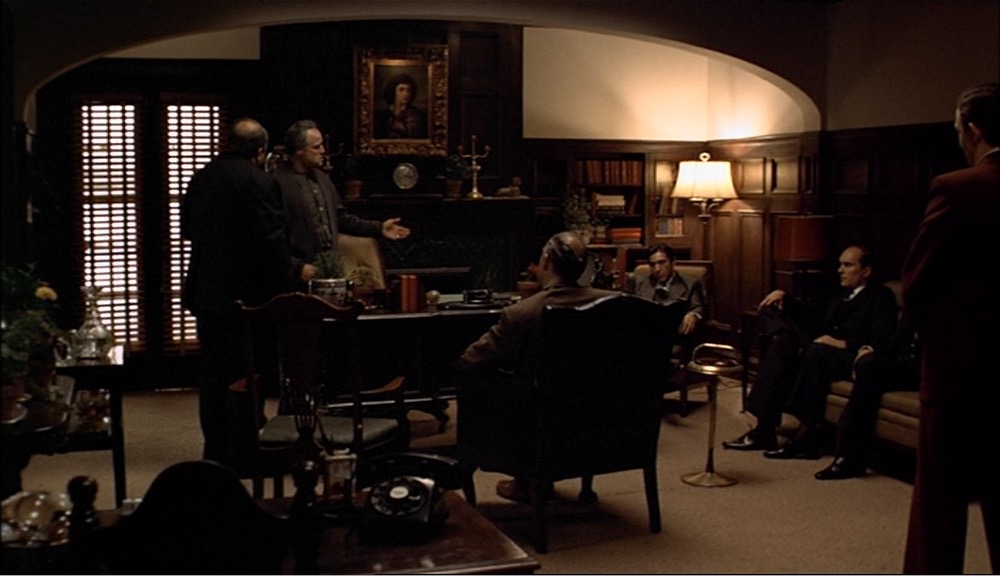
I’m not making a documentary. I want a cinematic look, and while the Gemini is by no means un-cinematic, the Alexa was clearly engineered by people who loved the look of film and strove to recreate it. When comparing the footage with the Godfather and Fanny and Alexander screen-grabs that are the touchstone of the look I want to create, the Alexa was just a little bit closer. My familiarity and comfort level with the Alexa was a factor too, and the ACs felt the same way.

I’m very glad to have tested the Gemini though, and next time I’m called upon to shoot something great and deliver in 4K (not a requirement on this project) I will know exactly where to turn. A couple of interesting things I learnt about it are: (1) whichever resolution (and concomitant crop factor) you select, you can record a down-scaled 2K ProRes file, and this goes for the Helium too; (2) 4K gives the Super-35 field of view, whereas 5K shows more, resulting in some lenses vignetting at this resolution.

Undisclosed Project: Experimentation

Undisclosed Project: Elevation

Prep for the yet-to-be-announced Shakespearian feature continued last week. Tuesday and Wednesday saw me on Zoom calls with the producers – discussing camera kit quotes – and the costume designer. “Will we see enough of his face through this headgear?” was a question for the latter. She in turn asked how white a white coat should be, and how dark surrounding characters should be to make one person in black stand out. Difficult things to quantify, but important.

The week’s main event was another two-day recce with the director and production designer. The designer had produced beautiful and detailed mood-boards for every room, and had even started to bring in the right furniture and test paint colours. The main aim of the recce was to discuss and sign off on his decisions so that decoration and dressing could step up to full steam.

As we moved from room to room, trying to keep in story order whenever possible, the director revealed lots of his thoughts about the tone and key beats of each scene. I was pleased to find that these were largely in a similar vein to notes I had amassed on my own spreadsheet. And when they weren’t in sync, that was very useful to know at this stage! For most scenes I showed him a reference image or two, again from my spreadsheet, to double-check that we were on the same page.

We were visited during the recce by a grip who had come to see whether a crane would fit into our main location, and if so what kind of crane and whether it could achieve the shots we wanted. I had envisaged using a Giraffe like the one we had on The Little Mermaid, but the grip suggested we would be much better off with a 23ft Technocrane and a basic remote head, as this can telescope and retract rather than only sweeping around in an arc. We measured the distances to see where the camera could end up, and then I used Artemis Pro – a director’s viewfinder app – to see what framing that would translate to with various lenses. One of our most important shots should just be possible at the full extent of the arm, combined with the full range of a 25-250mm zoom.

Whether the budget can afford the crane, however, is yet to be confirmed. This week I am due to conduct camera and lens tests, and once I’ve made a decision on those then we will know what is left for fancy grip equipment!

The only other thing to happen last week was the hiring of a data wrangler. Since I lined up the 1st and 2nd ACs quite soon after my own hiring, the camera department is now complete.

Undisclosed Project: Elevation

Undisclosed Project: Iteration

I continue to saturate myself in the script for the yet-to-be-announced Shakespearian film. Some other little projects I had going on have now wrapped up, leaving me free to concentrate purely on this production, which is due to start shooting a month from now.

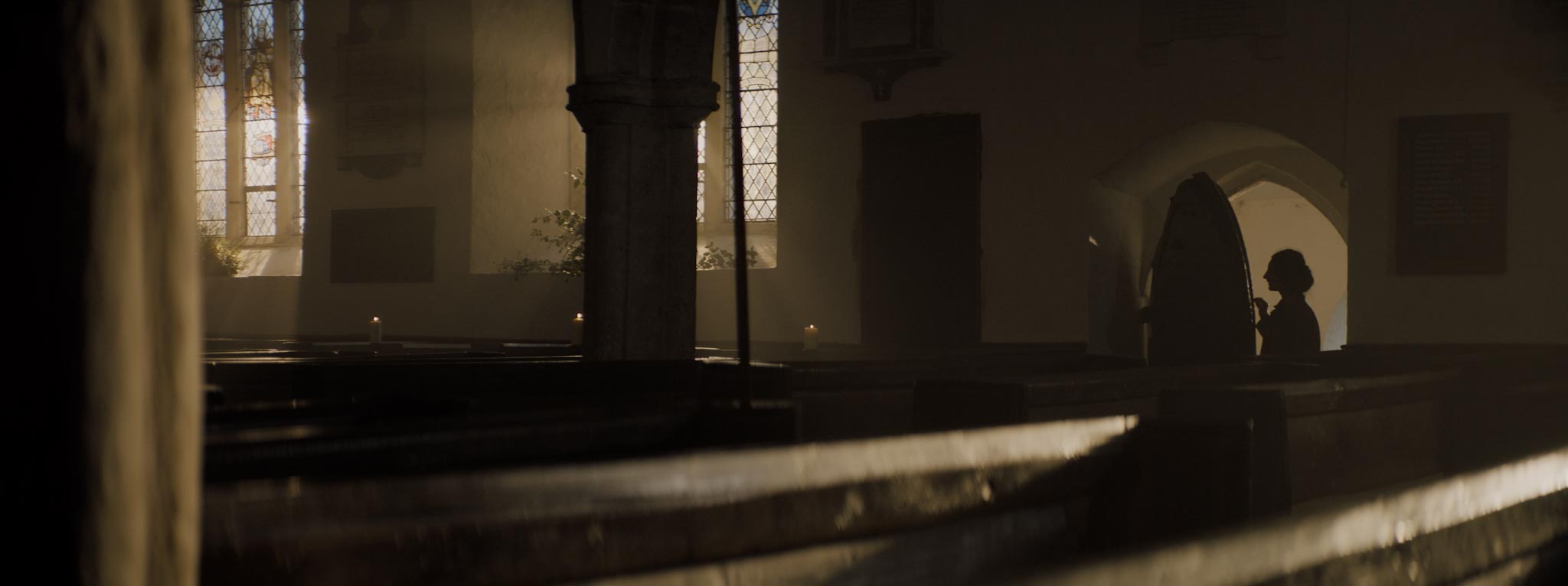
I spent the best part of last Monday reading a new draft of the screenplay and updating my spreadsheet of notes to reflect the changes. Going back over this spreadsheet and the script and re-evaluating them from different angles formed a signficant part of the rest of the week. On Thursday, for example, I focused on the swordfight (narrows it down, Shakespeare fans!), scouring YouTube for reference videos and noting which camera angles seem most dangerous and engaging. In fact, watching references was another big part of the week. I worked my way through the whole Godfather trilogy (above), some more episodes of Servant, bits of several action movies that have a specific type of night exterior, and a couple of the lead actor’s recent films, to see how other DPs have lit and lensed him.

At the end of the week I went back over the spreadsheet and filled in at least one idea for every scene that did not yet have an entry in its “camera” or “lighting” column. Sometimes this would be an idea for a specific shot – e.g. “angle from outside the window looking in”; sometimes it would be a general vibe for the camerawork – e.g. “close, handheld, intimate”; sometimes a specific source – e.g. “soft top-light rigged to ladder”; sometimes a more general lighting note – e.g. “group in a patch of light, surroundings dark”.

Production sent over the quotes they have received for my camera list. At least one of them was within the budget, so that’s good! This week I’ll discuss that with the producers and hopefully decide which rental house we’re going with.

Speaking of equipment, a cheap novelty optical item arrived from eBay. I used this and my iPad to shoot a very rough demonstration of how we might achieve a special effect in camera, sending the video to the director for his feedback. He liked it, and wants to add in a few more instances of it throughout the film.

Another idea I proposed was a lighting effect, for which I sent the director this video I’d found online (below). I don’t intend to do something exactly like this in the film, but I saw a way it could be modified to our story. I ended up shooting my own rough test that is closer to how I see it working in our film.

Less exciting than any of the above, but very important, was taking an online Screenskills course in Covid awareness. I’d done the Basic Awareness course already, which takes about 30 minutes including a brief quiz, but Screenskills were offering free places for HoDs on a more in-depth course, so I signed up. This consisted of a three-hour presentation about the virus, how it can spread on set and what can be done to mitigate it in various departments, followed by another quiz. I learnt a few new things and my awareness was indeed raised.

Undisclosed Project: Iteration

Undisclosed Project: Collaboration

Prep on the yet-to-be-announced Shakespearian feature continued last week. (Read the previous week’s post here.)

On Monday I went back to the location with the gaffer, someone I’ve worked with several times before, and looked at all the spaces we will be using. It is too early to start any lighting plans, but we talked in general terms about what sort of instruments we might want to use and roughly where. The gaffer had already seen my lighting mood board (above) and we had discussed the overall look on the journey to location, so we were already on the same page about what we are trying to achieve. He had some technical conversations with staff at the location about the existing lighting and power sources, and we finished the day by checking out one of the film’s few exteriors as it was getting dark, in order to see what existing sources there are for the night scene we will be shooting there.

I spent a significant chunk of Wednesday on a Zoom call with the production designer, and a couple of other crew, going through each of the spaces again and finding out what changes the art department are planning to make to them. It was great to see the designer’s reference images and to show him some new ones of my own so that we can bounce off each others’ ideas and keep the film on a coherent track. This is especially important as we intend to rely heavily on practical lights for many of the rooms. The location has some already in place, but we will be adding lots more.

The designer mentioned The Shining as a useful reference for the project. To my shame, I had never seen it, a mistake I swiftly corrected. I immediately saw that the designer was right, as the film’s setting of a single, large, empty location lit almost entirely by tungsten practicals in the public areas and fluorescents in the service areas has a lot in common with our intended look for this project.

I lost no time in passing the reference on to the gaffer, and to the director, who I spoke with on Friday. We discussed a number of general topics – approaches I think is the best word – and he updated me on some changes to the script.

I’ve been developing a large spreadsheet breaking the script down scene by scene, with basic info like location, time of day and a brief summary of the action, as well as notes on character, camera and lighting, and a couple of the most relevant reference images. This will get more detailed and specific as prep progresses.

Watching reference material is a big part of the process at the moment. As well as The Shining, I’ve recently checked out Alfonso Cuarón’s Roma, M. Night Shyamalan’s Servant, Ingmar Berman’s Fanny and Alexander, and I have Francis Ford Coppola’s Godfather trilogy on my list too. Shoot for the moon and you might land on the roof, right?

Finally, with the help of my 1st AC, I put a very rough camera list together. My hope is that soon I can conduct tests to make a final decision on camera and lenses.

Undisclosed Project: Collaboration

Undisclosed Project: Exploration

Last week saw the start of prep for me on a new feature film. The project hasn’t officially been announced yet, so I’ll simply say that it’s an adaptation of a Shakespeare play.

Prepping a feature can seem a bit overwhelming sometimes, more so than actually shooting it. At least when you’re shooting, you only have to worry about one scene at a time. Where do you start when prepping 100 minutes of moving images?

Familiarity with the script is the first thing. I’m one of those people who was put off Shakespeare by being forced to study him at school, so – other than a few famous lines – I knew nothing about this play until I was hired a few weeks ago. Since then I’ve endeavoured to become as familiar as possible with the material, both the play and the film script.

The director wrote a 24-page treatment which makes very clear the themes he wishes to draw out of the play, but last week was my first opportunity to sit down with him and start to get inside his head. This was part of a two-day recce of the film’s single location: the first day exploring the space and seeing what was available; the second day starting to pin down exactly where we would shoot what.

This is an unusual adapation set in no particular period (the director says it should have “a feeling that’s not now”) so the possibilities are wide open. I have developed a mood board of 60-odd reference images, and last week was a chance to see what chimed with everyone else.

Also present at the recce were the production designer and other members of the team, and I began to see the directions they were going in with their own creative contributions. These of course inspired further ideas for my cinematography, as did a conversation I had with the lead actor. “The camera is a character,” he said as we discussed how to handle the soliloquys.

I always think about how camerawork can reflect and enhance character, but I’ve rarely thought of the camera as its own character. On a similar theme, the director’s treatment describes a “clever, all-seeing camera”. Actualising that idea is a fascinating challenge for me. What does the camera want? What is its relationship with the other characters? How do those relationships develop as the film goes on?

These are the kind of broad, over-arching ideas that must be grappled with in these early days of prep. Soon I will have to draft an equipment list and get into all kinds of other specifics, but it’s important to allow time for exploration.

Undisclosed Project: Exploration

“The Little Mermaid”: Prep Diary Part 2

This is the second part of my flashback to spring 2016 and the pre-production for The Little Mermaid. Part one is here.


Weeks 3 & 4

Nothing much seems to happen the third week of prep. After the Shirley shoot finishes on Monday, I take Tuesday off. I’m so exhausted I can barely move, which bodes ill for the 26-day slog of principal photography that’s coming up! Things are quiet in the office on Wednesday and Thursday, and Friday is Good Friday so it’s a holiday. The three-day weekend is enjoyable but also frustrating given how much prep there is still to do.

Next Monday I go scouting with Anthony, the new locations manager. He takes us to a quarry ten minutes down the road from the office, where we finally find the cliff we’ve been searching for since prep began. The location has a lot of potential for many scenes, so we’re very pleased. (Ultimately it went unused because of safety concerns.)

On Tuesday there’s a page turner, which is like a table read only without the cast. We spend five hours going through the script, asking questions and addressing issues that might come up. I try to clarify certain things in the script and make sure everyone knows how Chris, the director, wants to approach things. (He’s just a talking head on my iPad right now, due to visa delays.)

Gaffer Mike and key grip Jason have arrived in town for the page turner, and on Wednesday morning we get down to the business of writing a lighting list. It’s difficult for me to get my head around the crew structure here in the States. The gaffer is the head of the electrical department, so they only deal with lamps and distro. Flags, cutters, nets, black-out, bounce boards and so on are handled by the grip department, led of course by the key grip… who also handles the camera grip, like cranes and dollies.

Most of the rest of the week is spent visiting locations with Anthony, Mike and Jason, while the latter two finesse the list and get quotes. On Wednesday evening I convene the camera department to debrief from the Shirley shoot and discuss what can be done to improve the crew structure, equipment package and workflow.

By the weekend it stills feel like there is much to figure out, and there is only one week left before principal photography begins. Still, I won’t be sorry to say goodbye to office work and get back on set.


Week 5

It’s the last week of preproduction and we should be spending it doing tech scouts and production meetings. But unfortunately many HoDs have been hired late, and there are lots of locations left to find, so it’s a frustrating week for me, waiting for stuff to happen. I try to nail down the grip and electrical items which are only required on specific dates, but it looks like some of that will have to be done as we go along.

I spend more time location scouting with Anthony, during which I realise just how time-consuming it is to drive around, spot possible places, make friends with the owners and just get to the stage where any of the crew can check it out.

We visit a possible beach location, a nice little spot on the same island we did the Shirley Shoot on. Chris, still unable to enter the US, participates by video call. He wants me to roll up my trousers and test the water, because the principal cast will have to spend hours in it. It’s nice enough for a paddle, but I don’t think I’d want to spend a day up to my waist in it. (Actually, that’s exactly what I and several other cast and crew end up doing.)

As the week goes on I spend less and less time at the office, because there simply isn’t much left I can do. I occupy my evenings swimming in the pool and binge-watching season one of Outlander, which Starz have made free for a couple of weeks here in the US. The cinematography in the first couple of episodes is utterly stunning, in fact it’s the most beautiful cinematography I’ve ever seen. It’s very inspirational, and I have a couple of good ideas for lighting A Little Mermaid as I watch it. (Recently I had the exciting chance to ask David Higgs BSC about lighting the Outlander pilot, for an article in the January issue of British Cinematographer.)

Chris finally arrives on Saturday, two days before the shoot. In the evening there’s a “pre-game” party by the pool. It finally feels like we’re making a movie. The equipment has all arrived, and there are trucks and trailers parked outside the production office.

On Sunday we do the closest we’re going to get to a tech scout. It’s great to be able to walk around a location with the directors at last. (Writer Blake has joined Chris as a co-director.) I try to use Helios, a sun tracker app, to work out when the sun will hit the back of the house, but in the end I trust my own estimation better. I whip out my light meter to check the contrast ratio between sunlight and shade; it’s 8:1 (3 stops), well within the Alexa’s dynamic range, but setting up an ultrabounce to fill in the shadows, as the key grip suggests, will make the image much more pleasing to the eye.

I figure out the broad strokes of the lighting for the interiors and let the G&E (grip and electric) team know the plan. With Larry, the 1st AD, I discuss how we’re going to maximise our two cameras in order to make our day.

I can’t believe we’re about to start principal at last. Five weeks is by far the longest prep time I’ve ever had for a movie. It’s feels like I’ve been here forever! But I’m only halfway through my time in Savannah…

Here are links to my diary entries from the shoot:

The Little Mermaid is currently available on Netflix around the world.

“The Little Mermaid”: Prep Diary Part 2

“The Little Mermaid”: Prep Diary Part 1

I’ll soon be starting five weeks of prep for a feature, and it’s got me thinking about the five weeks I spent in the spring of 2016 prepping The Little Mermaid. I published a number of entries from my production diary when the film was released, but the entries from pre-production have gone unseen… until now…


JANuary 12th, 2016

It is four or five months since Chris, the director, first mentioned the project to me. In that time he has been developing the script with the writer and producers, and I’ve read a draft or two. Last week I was introduced to the producers by email, and today Chris and I get together to start chatting about the film.

It’s just broad strokes today, nothing structured, nothing firm. He talks me through the next round of script changes and we watch some bits of DVDs I’ve brought. I’m not thinking photographically yet, just tone and genre, so we watch parts of The Rocketeer and Big Fish. I start to get some basic ideas of what Chris does and doesn’t like.
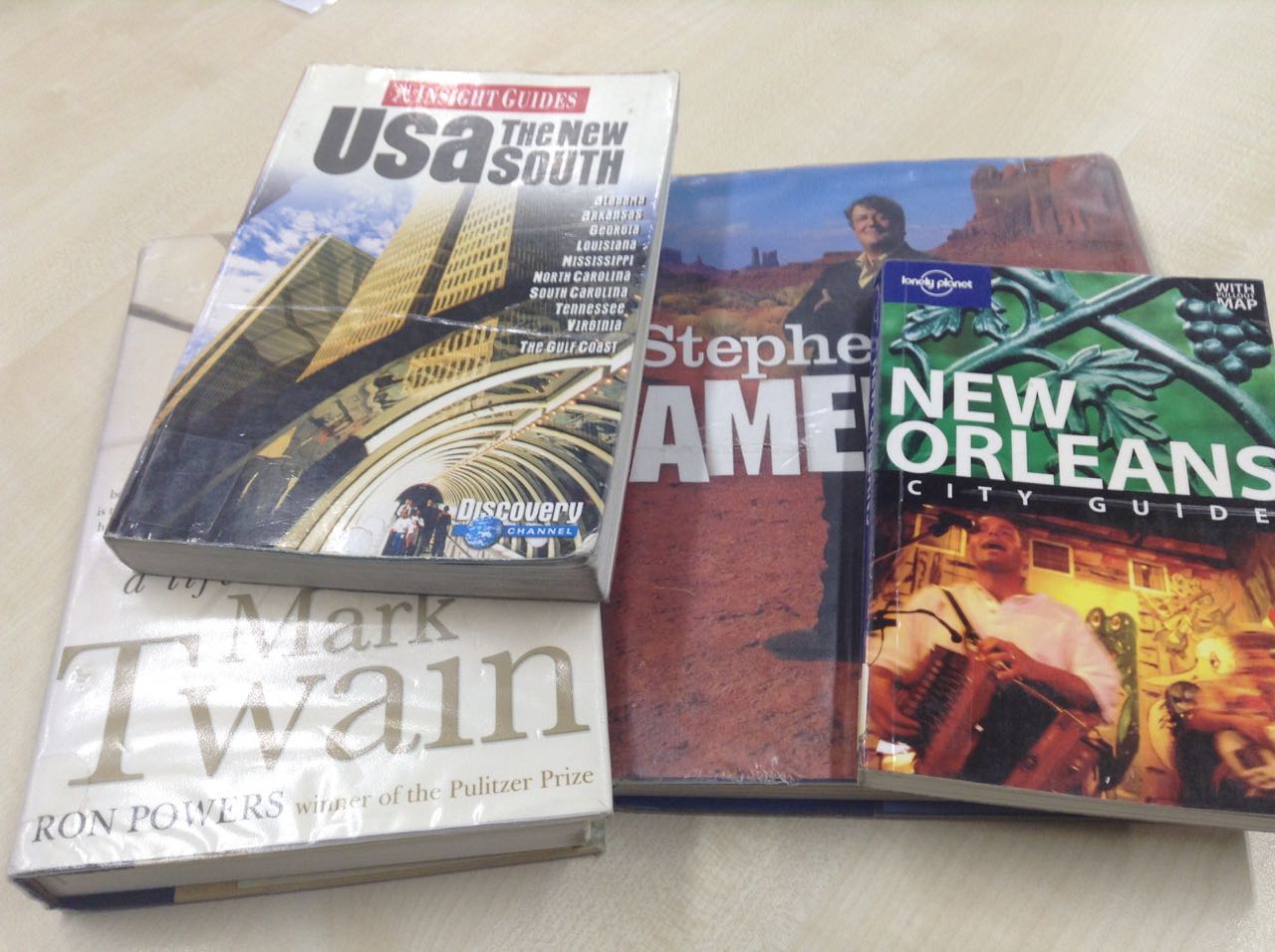
Yesterday I went to the library to get my head around the geography of the state our story is set in, and bit of the history and culture. I found a book called Photographing America and it has some interesting plates from the Deep South in the 30s and 40s. They set the stage for me in terms of architecture, landscape and clothing, but their gritty black and white photography is not appropriate for this film.

Chris and I Skype Fabio, the line producer, and later have a brief conference call with producers Armando and Rob. At this stage it is just about introductions. Chris enthuses about me to them, and curates some stills from Ren: The Girl with the Mark to wow them with. Armando responds positively – it’s just the look he’s after for this. Well, this is the second feature job Ren’s got me. Cheers, Kate!


Week 1

Since that day in London with Chris, I’ve done bits and pieces of prep around finishing up post on Ren. The script went through a few more drafts, I joined in a few conference calls with members of the team, and started a shot list.

But on March 5th I fly into Savannah, Georgia and I’m straight into full-time prep, living and breathing A Little Mermaid.

On Sunday I wake early, my body still five hours ahead of US East Coast Time. After talking to Chris, who’s still in the UK due to visa delays, I take a ten-minute walk through the sunny streets of Savannah to meet David, the storyboard artist. We eat blueberry pancakes with maple syrup and he shows me his boards for the movie’s finale. Chris Skypes in and we discuss the priorities. We need about 15 more sequences boarded – at least key frames – ASAP so that production designer Jay can be sure to accommodate our needs in the sets he is already starting to build.

At noon I head over to an apartment complex where Jay and line producer Fabio are staying. This place has a pool so I’m getting myself moved here as soon as I can. We spend seven or eight hours, with Chris on Skype, going through the schedule line by line, making sure everything is doable and everything is in the most efficient order.

Poppy Drayton is playing our mermaid. Back at the apartment I watch a trailer for The Shannara Chronicles and screen-capture all her close-ups. I analyse the lighting in each one, labelling them accordingly in a folder. Her time on this production is limited so I probably won’t get to camera-test her; I need to figure out how to light her based on what other DPs have done.
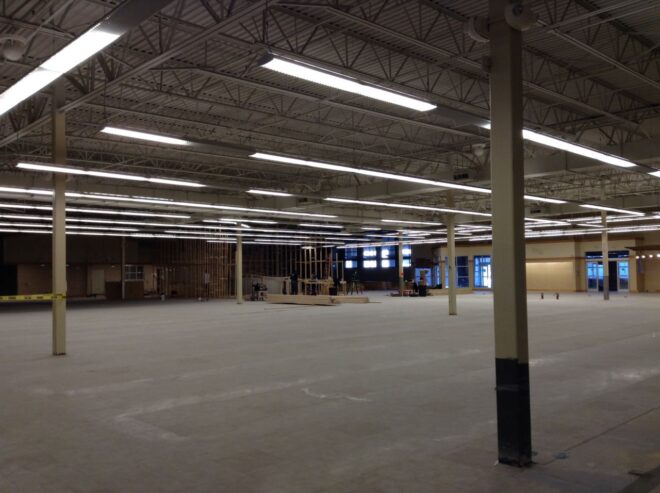
Monday is my first day at the warehouse. It’s an old supermarket that’s been gutted. There are four or five small offices and then a huge open space, part of which is occupied by the bones of the “rocky pool” set.

The week soon settles into a blur of video calls with Chris, interviews with potential camera assistants and gaffers, and lots of discussions about sets and locations. It’s really exciting to be shown around the space by Jay as he describes all the sets he’s going to build. For some scenes there is a lot of back and forth about whether they should be studio or location. We are working with a child actress and Chris is very keen to get the best performances, so the level of control we could get in the studio is very appealing, but that must be balanced against our art department budget.
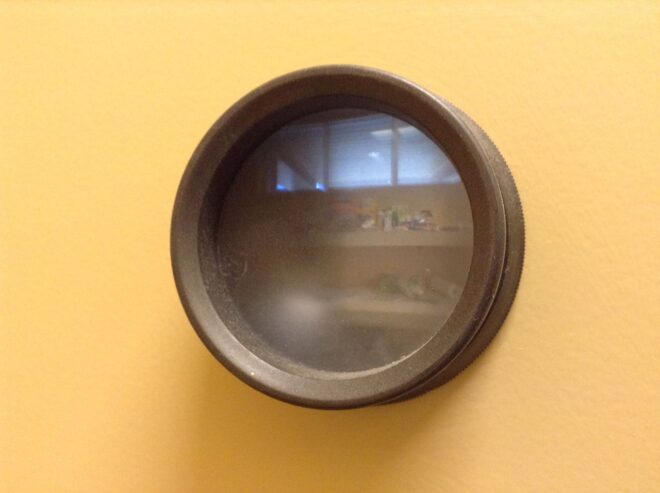
I’m assigned an office that’s just 6ft square but is very cool because it has a sort of camera obscura in the door so I can see a little projection of what’s outside. Of course the door doesn’t really close properly (particularly once I’ve run an extension cable in to compensate for the lack of functioning power sockets in the room) but never mind. By mid-week I have a monitor to hook my Mac Mini up to and I’m properly in business.

I task the PAs with printing out the script and taping it in a long line of pages along a wall along with the corresponding storyboards. Eventually we will add reference images and concept art, if I can ever get access to a functioning colour printer!

A little bit of location scouting takes place during the week. We check out a nice rustic field behind the studio where we’ll set up our circus, we visit a fort in the hope that it might work for a scene near the finale (it doesn’t) and I take a look around the beach house we’ll be shooting the film’s present-day book-ends in on March 20th and 21st. (Principal photography starts April 11th.)

Another issue to be decided is which camera to shoot on. Initially we discussed having lots of cameras, which meant going with Reds for budgetary reasons. The Panasonic Varicam is suggested, and I’m almost flown to Atlanta to test it, but in the end we decide to go with Alexas, thank God. (With hindsight, I really should have gone and tested that Varicam. I was irrationally against all non-Alexa cameras at this time.) We’ll have two bodies, one for me and one for a B camera operator who will sometimes splinter off into a 2nd unit. The glass will be Cooke S4s with a half Soft FX filter, the exact same recipe as Heretiks. I know this will give me the organic, period feel that A Little Mermaid needs, as well as the magical quality. We’ll also have a couple of Optimo zooms in the kit, a luxury we couldn’t afford on Heretiks.

By the end of the week I’ve pretty much locked down the camera kit, finished the shot list for the whole movie, and hired 1st and 2nd ACs and a 2nd Unit DP. We still don’t have a gaffer, which is worrying. The crew pool in Savannah is not huge and we’re struggling to find people with enough experience.

On Saturday, aside from a couple of hours in the studio, I chill out. I’ve now moved to the same apartment complex as the rest of the crew, and I’ve just had a very nice dip in the pool. I think I might just have the best job in the world.


Week 2
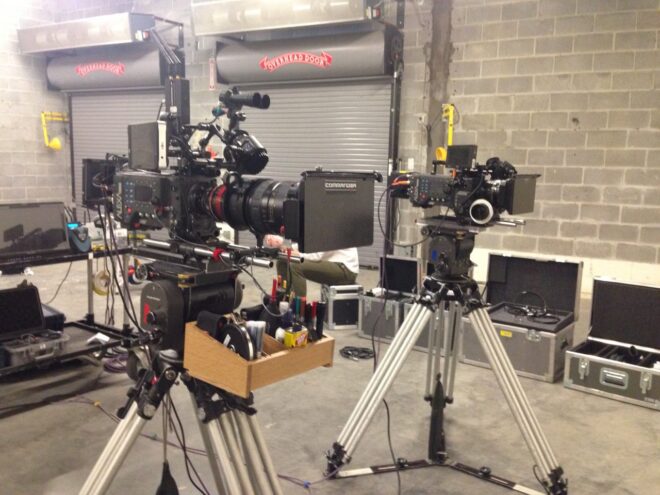
At the end of this week we have our two-day “pre-shoot” with Shirley MacLaine, to capture the contemporary bookends to what is otherwise a 1930s story. Peter Falk’s scenes in The Princess Bride are an inevitable reference for these.

Director Chris is still having visa issues, so writer Blake will be on helming duty for the pre-shoot. He gives me Maggie Smith’s storytelling scene in Hook as a reference. I haven’t seen the movie in ages, so I rent it and watch the whole thing, delighting in the beautiful cinematography. I love the candy blues and hot pinks of Wendy’s London home, and will aim to emulate them.

A lot of this week is taken up with locking down equipment and personnel for the pre-shoot. The biggest issue as the week opens is that I still don’t have a gaffer. With my options limited – and despite a brief panic during which flying my UK gaffer out here seems like a very real possibility – I pick someone on a trial basis. If they do a good job for the pre-shoot they’ll get hired for principal.

Because the gaffer is hired so late, putting together a lighting list is my responsibility. I hate doing this, because I always forget stuff and piss everyone off at the last minute by making additions or changes. Like forgetting to check whether the HMIs are pars or fresnels. (I always want fresnels because they produce better shafts of light.)
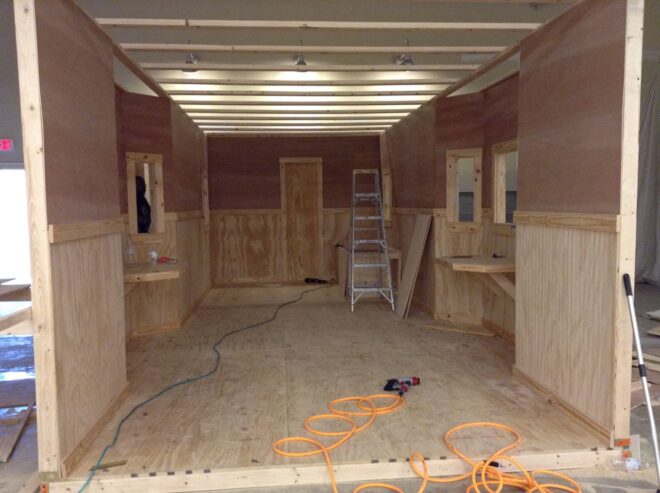
With equipment and crew in place, my attention turns towards principal for a little while. The VFX supervisor, Rich, has flown in from LA, and together we scout some locations. Unfortunately none of the locations are locked yet and the options we are given to look at are far from ideal. But we have a good session going through the shot list together, checking that there aren’t any VFX requirements that he missed in his breakdown.

We also discuss shooting format, which is generally going to be 2K ProRes 4444. He wants me to shoot green-screen shots in Arri Raw, but after he’s gone I realise that we don’t have the right Codex on our cameras for that. 3.2K ProRes will have to do. Another good tip Rich gave me is to expose the green-screen at key (i.e. the same light reading on the green-screen as on the talent’s face) or up to half a stop over.

I’m glad I invested in a light meter, which arrived at the studio this week. It also comes in handy during another scout of the pre-shoot location. We have some night shots on the beach, which will have to be shot at dusk because it’s too big an area to light artificially. During the scout I take light readings on the beach at dusk, and determine that we have until 7:50pm, 20 minutes after sunset, before it is too dark to shoot.

If you want to follow the chronology, my diary entries about the “pre-shoot” are here.

Tune in next week for my diary entries from the remaining three weeks of prep. The Little Mermaid is still on Netflix if you fancy checking it out.

“The Little Mermaid”: Prep Diary Part 1

The Hardest Shot I’ve Ever Done

It is night. We Steadicam into a moonlit bedroom, drifting across a window – where a raven is visible on the outside ledge, tapping at the glass with its beak – and land on a sleeping couple. The woman, Annabel, wakes up and goes to the window, causing the bird to flee. Crossing over to her far shoulder, we rest on Annabel’s reflection for a moment, before racking focus to another woman outside, maybe 200ft away, running towards a cliff. All in one shot.

Such was the action required in a scene from Annabel Lee, the most ambitious short I’ve ever been involved with. Based on Edgar Allen Poe’s poem, the film was the brainchild of actor Angel Parker, who plays the titular character. It was directed by Amy Coop, who had already to decided to shoot on an Alexa Mini with Cooke Anamorphics before I was even hired.

Working with animals has its own difficulties, but for me as director of photography the challenges of this particular shot were:

  1. Making the bedroom appear moonlit by the single window, without any lamps being visible at any point in the Steadicam move.
  2. Lighting the view outside.
  3. Ensuring the live raven read on camera even though the shot was quite wide.
  4. Making Annabel bright enough that her reflection would read, without washing out the rest of the scene.
  5. Blocking the camera in concert with Annabel’s move so that its reflection would not be seen.

I left that last one in the capable hands of Steadicam op Rupert Peddle, along with Angel and Amy. What they ended up doing was timing Angel’s move so that she would block the window from camera at the moment that the camera’s reflection would have appeared.

Meanwhile, I put my head together with gaffer Bertil Mulvad to tackle the other four challenges. We arrived at a set-up using only three lights:

  1. A LiteMat 1 above the window (indoors) which served to light Annabel and her reflection, as well as reaching to the bed.
  2. Another LED source outside the window to one side, lighting the raven.
  3. A nine-light Maxibrute on a cherry-picker, side-lighting the woman outside and the cliffs. This was gelled with CTB to match the daylight LEDs.

Unfortunately the outside LED panel backlit the window glass, which was old and kept fogging up, obscuring the raven. With hindsight that panel might have been better on the other side of the window (left rather than right, but still outside), even though it would have created some spill problems inside. (To be honest, this would have made the lighting direction more consistent with the Maxibrute “moonlight” as well. It’s so easy to see this stuff after the fact!)

Everything else worked very well, but editor Jim Page did have to cut in a close-up of the raven, without which you’d never have known it was there.

The Hardest Shot I’ve Ever Done

Beautiful/Realistic/Cheap: The Lighting Triangle

We’re all familiar with the “good/fast/cheap” triangle. You can pick any two, but never all three. When it comes to lighting films, I would posit that there is a slightly different triangle of truth labelled “beautiful/realistic/cheap”. When you’re working to a tight budget, a DP often has to choose between beautiful or realistic lighting, where a better-funded cinematographer can have both.

I first started thinking about this in 2018 when I shot Annabel Lee. Specifically it was when we were shooting a scene from this short period drama – directed by Amy Coop – in a church. Our equipment package was on the larger side for a short, but still far from ideal for lighting up a building of that size. Our biggest instrument was a Nine-light Maxi Brute, which is a grid of 1KW par globes, then we had a couple of 2.5K HMIs and nothing else of any signifcant power.

Director Amy Coop during the church recce for “Annabel Lee”

The master shot for the scene was a side-on dolly move parallel to the central aisle, with three large stained-glass windows visible in the background. My choices were either to put a Maxi Brute or an HMI outside each window, to use only natural light, or to key the scene from somewhere inside the building. The first option was beautiful but not realistic, as I shall explain, the second option would have been realistic but not beautiful (and probably under-exposed) and the third would have been neither.

I went with the hard source outside of each window. I could not diffuse or bounce the light because that would have reduced the intensity to pretty much nothing. (Stained-glass windows don’t transmit a lot of light through them.) For the same reason, the lamps had to be pretty close to the glass.

The result is that, during this dolly shot, each of the three lamps is visible at one time or another. You can’t tell they’re lamps – the blown-out panes of glass disguise them – but the fact that there are three of them rather gives away that they are not the sun! (There is also the issue that contiguous scenes outside the church have overcast light, but that is a discontinuity I have noticed in many other films and series.)

I voiced my concerns to Amy at the time – trying to shirk responsibility, I suppose! Fortunately she found it beautiful enough to let the realism slide.

But I couldn’t help thinking that, with a larger budget and thus larger instruments, I could have had both beauty and realism. If I had had three 18K HMIs, for example, plus the pre-rig time to put them on condors or scaffolding towers, they could all have been high enough and far enough back from the windows that they wouldn’t have been seen. I would still have got the same angle of light and the nice shafts in the smoke, but they would have passed much more convincingly as a single sun source. Hell, if I’d had the budget for a 100KW SoftSun then I really could have done it with one source!

There have been many other examples of the beauty/realism problem throughout my career. One that springs to mind is Above the Clouds, where the 2.5K HMI which I was using as a backlight for a night exterior was in an unrealistic position. The ground behind the action sloped downwards, so the HMI on its wind-up stand threw shafts of light upwards. With the money for a cherry-picker, a far more moon-like high-angle could have been achieved. Without such funds, my only alternative was to sacrifice the beauty of a backlight altogether, which I was not willing to do.

The difference between that example and Annabel Lee is that Clouds director Leon Chambers was unable to accept the unrealistic lighting, and ended up cutting around it. So I think it’s quite important to get on the same page as your director when you’re lighting with limited means.

I remember asking Paul Hyett when we were prepping Heretiks, “How do you feel about shafts of ‘sunlight’ coming into a room from two different directions?” He replied that “two different directions is fine, but not three.” That was a very nice, clear drawing of the line between beauty (or at least stylisation) and realism, which helped me enormously during production.

The beauty/realism/cost triangle is one we all have to navigate. Although it might sometimes give us regrets about what could have been, as long we’re on the same page as our directors we should still get results we can all live with.

Beautiful/Realistic/Cheap: The Lighting Triangle

Working with White Walls

White walls are the bane of a DP’s existence. They bounce light around everywhere, killing the mood, and they look cheap and boring in the background of your shot. Nonetheless, with so many contemporary buildings decorated this way, it’s a challenge we all have to face. Today I’m going to look back on two short films I’ve photographed, and explain the different approaches I took to get the white-walled locations looking nice.

Finding Hope is a moving drama about a couple grieving for the baby they have lost. It was shot largely at the home of the producer, Jean Maye, on a Sony FS7 with Sigma and Pentax stills glass.

Exit Eve is a non-linear narrative about the dehumanisation of an au pair by her wealthy employers. With a fairly respectable budget for a short, this production shot in a luxurious Battersea townhouse on an Arri Alexa Classic with Ultra Primes.


“Crown”-inspired colour contrast

Cheap 300W dimmers like these are great for practicals.

It was January 2017 when we made Finding Hope, and I’d recently been watching a lot of The Crown. I liked how that series punctuated its daylight interior frames with pools of orange light from practicals. We couldn’t afford much of a lighting package, and I thought that pairing existing pracs with dimmers and tungsten bulbs would be a cheap and easy way to break up the white walls and bring some warmth – perhaps a visual representation of the titular hope – into the heavy story.

I shot all the daylight interiors at 5600K to get that warmth out of the pracs. Meanwhile I shaped the natural light as far as possible with the existing curtains, and beefed it up with a 1.2K HMI where I could. I used no haze or lens diffusion on the film because I felt it needed the unforgiving edges.

For close-ups, I often cheated the pracs a little closer and tweaked the angle, but I chose not to supplement them with movie lamps. The FS7’s native ISO of 2500 helped a lot, especially in a nighttime scene where the grieving parents finally let each other in. Director Krysten Resnick had decided that there would be tea-lights on the kitchen counter, and I asked art director Justine Arbuthnot to increase the number as much as she dared. They became the key-light, and again I tweaked them around for the close-ups.

My favourite scene in Finding Hope is another nighttime one, in which Crystal Leaity sits at a piano while Kevin Leslie watches from the doorway. I continued the theme of warm practicals, bouncing a bare 100W globe off the wall as Crystal’s key, and shaping the existing hall light with some black wrap, but I alternated that with layers of contrasting blue light: the HMI’s “moonlight” coming in through the window, and the flicker of a TV in the deep background. This latter was a blue-gelled 800W tungsten lamp bounced off a wobbling reflector.

When I saw the finished film, I was very pleased that the colourist had leant into the warm/cool contrast throughout the piece, even teasing it out of the daylight exteriors.


Trapped in a stark white townhouse

I took a different approach to colour in Exit Eve. Director Charlie Parham already knew that he wanted strong red lighting in party scenes, and I felt that this would be most effective if I kept colour out of the lighting elsewhere. As the film approaches its climax, I did start to bring in the orange of outside streetlamps, and glimpses of the party’s red, but otherwise I kept the light stark and white.

Converted from a Victorian schoolhouse, the location had high ceilings, huge windows and multiple floors, so I knew that I would mostly have to live with whatever natural light did or didn’t shine in. We were shooting during the heatwave of 2018, with many long handheld takes following lead actor Thalissa Teixeria from room to room and floor to floor, so even the Alexa’s dynamic range struggled to cope with the variations in light level.

For a night scene in the top floor bedroom, I found that the existing practicals were perfectly placed to provide shape and backlight. I white-balanced to 3600K to keep most of the colour out of them, and rigged black solids behind the camera to prevent the white walls from filling in the shadows.

(Incidentally, the night portions of this sequence were shot as one continuous take, despite comprising two different scenes set months apart. The actors did a quick-change and the bed was redressed by the art department while it was out frame, but sadly this tour de force was chopped up in the final cut.)

I had most control over the lighting when it came to the denouement in the ground floor living area. Here I was inspired by the work of Bradford Young, ASC to backlight the closed blinds (with tungsten units gelled to represent streetlights) and allow the actors inside to go a bit dim and murky. For a key moment we put a red gel on one of the existing spotlights in the living room and let the cast step into it.

So there we have it, two different approaches to lighting in a while-walled location: creating colour contrast with dimmed practicals, or embracing the starkness and saving the colour for dramatic moments. How will you tackle your next magnolia-hued background?

For another example of how I’ve tackled white-walled locations, see my Forever Alone blog.

Working with White Walls